Oil prices rebound, polls reveal voter sentiment, and the US-Iran standoff may be turning hawkish?
2026-06-10 20:11:40
High oil prices have dragged down Trump's approval ratings, with 63% of Americans expressing dissatisfaction. However, surveys show that Americans' views on the economy are deeply correlated with their political stances.
According to the latest news from Fox News on the 10th, US President Trump said he is about to order a new strike against Iranian power plants and bridges, while there are also reports that Israel is preparing to launch another strike against Iran.
The United States may have realized that a tougher stance is more likely to gain voter approval than a dovish delay. Recent surveys show that American voters tend to influence their judgments based on their political stance; if voters approve of the ruling party, they are more likely to accept it even if the data is not good.
According to the latest Economist survey, most Americans believe the U.S. economy is heading in the wrong direction, with a record 63% disapproving of Donald Trump's economic performance. The surge in oil prices, leading to higher gasoline prices, has become the core driver of this poll crisis, directly impacting the logic of global oil trading.
This data is probably also available in the US president's office.
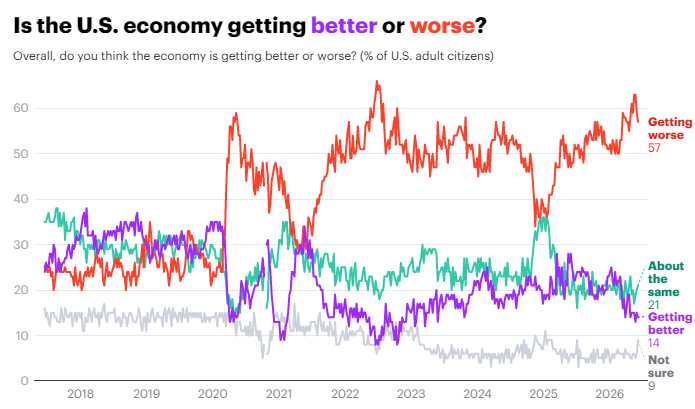
57% of Americans say the economy is deteriorating, a figure lower than in recent weeks but still higher than the average over the past four years, while only 14% believe the economy is improving.
Pessimistic market expectations for the US economic recovery, coupled with the suppression of consumption by high oil prices, have put pressure on crude oil demand expectations. Recently, WTI crude oil prices have fallen back to around $89.2 per barrel, reflecting market concerns about weak demand.
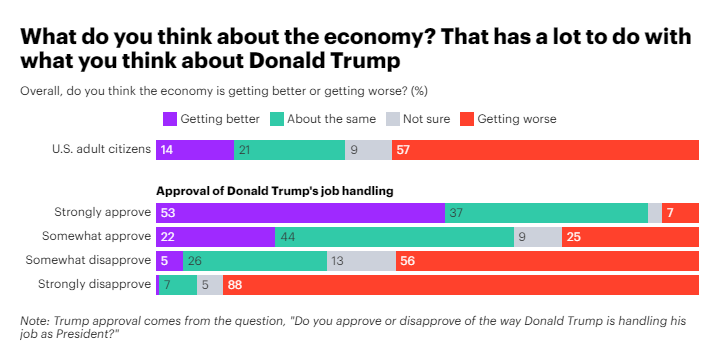
Americans’ views on the economy are deeply correlated with their political stances, with supporters of the current president having a far more positive view of the economy than opponents.
Current data shows that 53% of those who strongly support Trump believe the economy is improving, compared to 22% of those who support Trump, only 5% of those who oppose Trump believe the economy is improving, and as few as 1% of those who strongly oppose Trump believe the economy is improving.
This political divergence directly impacts the Trump administration's energy policy space—if it pushes forward the Iran nuclear deal and reopens the Strait of Hormuz to regain approval ratings, it could lead to increased crude oil supply and suppress oil prices; if it condones Israel's military actions in the Middle East, it could exacerbate geopolitical risks and push up oil prices.
However, as a sensitive indicator for the entire population, fluctuations in gasoline prices have a direct impact on all groups. 76% of Americans felt the sharp rise in gasoline prices. This nationwide anxiety about inflation forced the Trump administration to make stabilizing oil prices a core policy objective, thereby affecting the supply and demand pattern of the crude oil market.
Americans' assessment of the economy is also related to their stock market participation. 37% of Americans own stocks, and overall, 20% of stock market investors believe the economy is improving, which is about twice that of non-investors (11%).
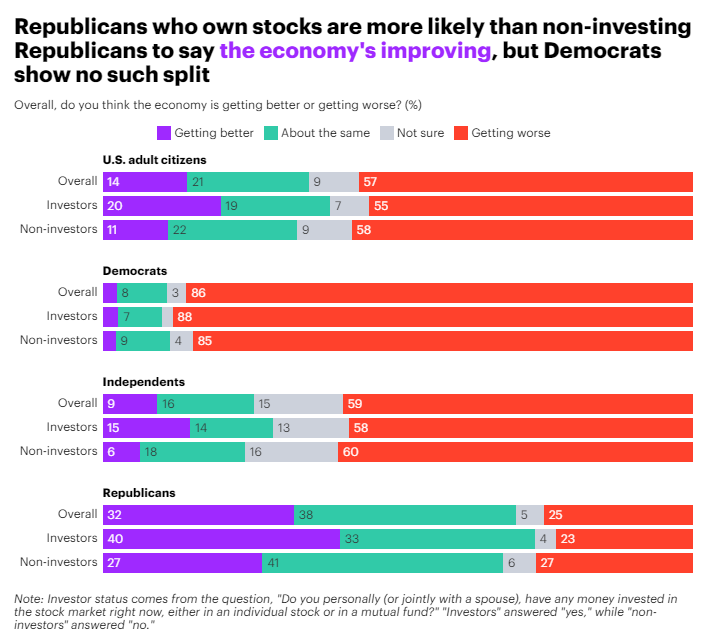
Democrats who own shares and those who don't share shares are converging on their views of the economy, while among independents, the percentage of investors and non-investors who believe the economy is improving differs by 9 percentage points (15% vs. 6%). Among Republicans, shareholders have a significantly higher positive outlook on the economy (40%) than a negative one (23%), while non-shareholders are evenly matched (27% vs. 27%).
This divergence means that the Trump administration needs to find a balance between stabilizing asset prices and reducing inflation in people's livelihoods, and oil policy has become a key tool—measures such as releasing strategic oil reserves and promoting the implementation of the Iran nuclear deal may directly affect short-term oil price trends.
Only 29% of Americans approve of Trump’s economic policies, while 63% disapprove, resulting in a net approval rating of -34, the lowest during his two terms in office.
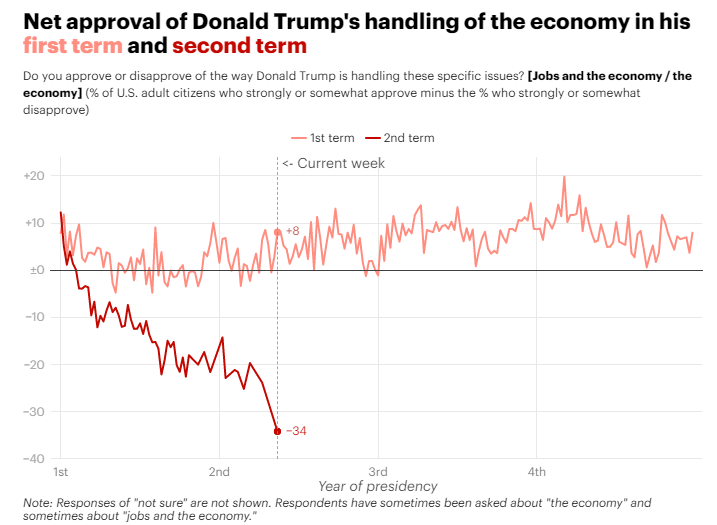
This figure is significantly lower than the same period in his first term (+8), with the core difference being the energy price environment: during his previous term, US shale oil production grew rapidly, and the increase in energy self-sufficiency suppressed oil prices.
The current geopolitical conflicts in the Middle East, coupled with Iran's control of the Strait of Hormuz, have led to a widening crude oil supply gap and high gasoline prices, which directly dragged down his poll numbers.
The widespread dissatisfaction among Americans with Trump's economic policies is essentially a protest against rising prices, with oil prices being the core link in this chain.
Most Americans said that car and housing prices rose sharply over the past year, and almost everyone felt the pressure of food and gasoline prices. 76% said gasoline prices rose sharply, 14% said they rose slightly, and only 7% thought prices had not risen or had fallen.
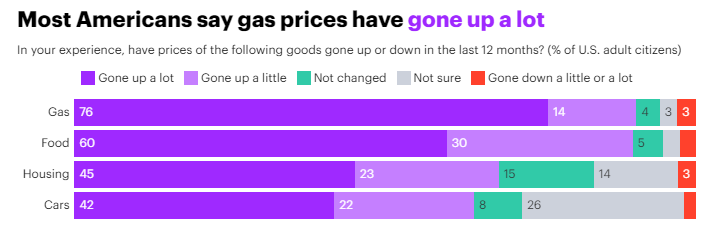
As a core downstream product of crude oil, the high price of gasoline has directly translated into widespread inflationary anxiety, becoming the biggest burden on Trump's economic policies.
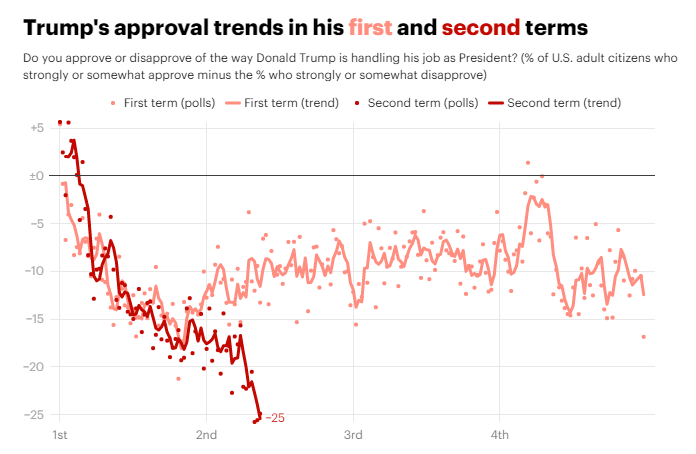
Americans’ overall assessment of Trump’s job performance (35% approve, 60% disapprove, net approval rating -25) is slightly better than his economic policies, but still close to historic lows.
In an effort to salvage its election prospects, the Trump administration has accelerated negotiations on the Iran nuclear deal and attempted to increase crude oil supply and stabilize oil prices by reopening the Strait of Hormuz.
From a trading perspective, if the agreement is implemented, global crude oil supply will increase, suppressing Brent and WTI oil prices; if the negotiations break down, geopolitical risks in the Middle East will escalate, and oil prices may break through the $90/barrel mark and move toward $100/barrel.
The current 63% public dissatisfaction rate has become a strong catalyst for the Trump administration to reach an agreement. At present, it may be easier to make dissatisfied voters believe that a tough America is powerful than to let them live with low oil prices.
If the United States changes its hawkish stance, the geopolitical situation may become tense again in the short term, prompting a sharp rebound in oil prices.
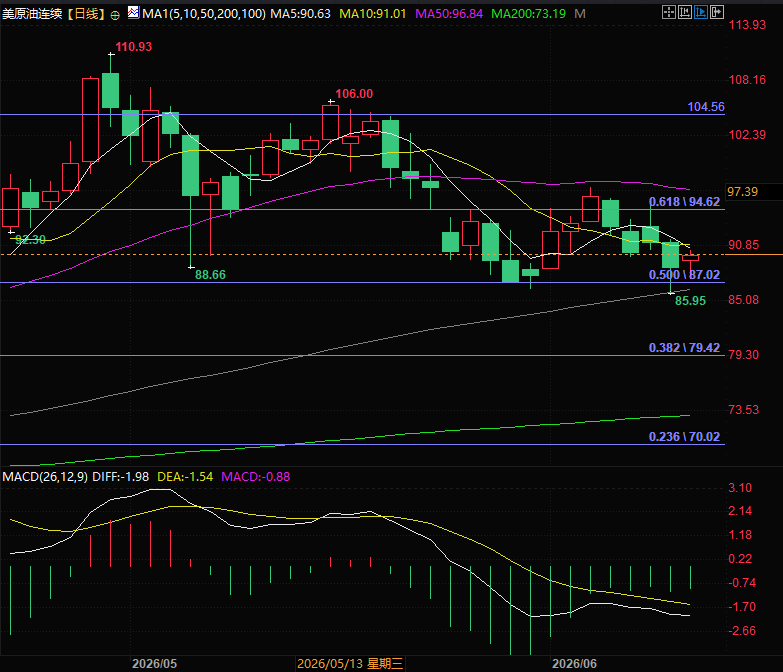
(WTI crude oil futures daily chart, source: EasyForex)
At 20:09 Beijing time, WTI crude oil futures were trading at $90.00 per barrel.
According to the latest news from Fox News on the 10th, US President Trump said he is about to order a new strike against Iranian power plants and bridges, while there are also reports that Israel is preparing to launch another strike against Iran.
The United States may have realized that a tougher stance is more likely to gain voter approval than a dovish delay. Recent surveys show that American voters tend to influence their judgments based on their political stance; if voters approve of the ruling party, they are more likely to accept it even if the data is not good.
High oil prices trigger poll crisis, political stances tear apart public opinion on economic matters.
According to the latest Economist survey, most Americans believe the U.S. economy is heading in the wrong direction, with a record 63% disapproving of Donald Trump's economic performance. The surge in oil prices, leading to higher gasoline prices, has become the core driver of this poll crisis, directly impacting the logic of global oil trading.
This data is probably also available in the US president's office.
57% of Americans say the economy is deteriorating, a figure lower than in recent weeks but still higher than the average over the past four years, while only 14% believe the economy is improving.
Pessimistic market expectations for the US economic recovery, coupled with the suppression of consumption by high oil prices, have put pressure on crude oil demand expectations. Recently, WTI crude oil prices have fallen back to around $89.2 per barrel, reflecting market concerns about weak demand.
Americans’ views on the economy are deeply correlated with their political stances, with supporters of the current president having a far more positive view of the economy than opponents.
Current data shows that 53% of those who strongly support Trump believe the economy is improving, compared to 22% of those who support Trump, only 5% of those who oppose Trump believe the economy is improving, and as few as 1% of those who strongly oppose Trump believe the economy is improving.
This political divergence directly impacts the Trump administration's energy policy space—if it pushes forward the Iran nuclear deal and reopens the Strait of Hormuz to regain approval ratings, it could lead to increased crude oil supply and suppress oil prices; if it condones Israel's military actions in the Middle East, it could exacerbate geopolitical risks and push up oil prices.
However, as a sensitive indicator for the entire population, fluctuations in gasoline prices have a direct impact on all groups. 76% of Americans felt the sharp rise in gasoline prices. This nationwide anxiety about inflation forced the Trump administration to make stabilizing oil prices a core policy objective, thereby affecting the supply and demand pattern of the crude oil market.
Whether or not one holds shares exacerbates the divergence in public perception of the economy.
Americans' assessment of the economy is also related to their stock market participation. 37% of Americans own stocks, and overall, 20% of stock market investors believe the economy is improving, which is about twice that of non-investors (11%).
Democrats who own shares and those who don't share shares are converging on their views of the economy, while among independents, the percentage of investors and non-investors who believe the economy is improving differs by 9 percentage points (15% vs. 6%). Among Republicans, shareholders have a significantly higher positive outlook on the economy (40%) than a negative one (23%), while non-shareholders are evenly matched (27% vs. 27%).
This divergence means that the Trump administration needs to find a balance between stabilizing asset prices and reducing inflation in people's livelihoods, and oil policy has become a key tool—measures such as releasing strategic oil reserves and promoting the implementation of the Iran nuclear deal may directly affect short-term oil price trends.
Approval rating for economic policies hits a two-term low
Only 29% of Americans approve of Trump’s economic policies, while 63% disapprove, resulting in a net approval rating of -34, the lowest during his two terms in office.
This figure is significantly lower than the same period in his first term (+8), with the core difference being the energy price environment: during his previous term, US shale oil production grew rapidly, and the increase in energy self-sufficiency suppressed oil prices.
The current geopolitical conflicts in the Middle East, coupled with Iran's control of the Strait of Hormuz, have led to a widening crude oil supply gap and high gasoline prices, which directly dragged down his poll numbers.
The root cause of nationwide inflation anxiety: Crude oil drives up prices across all categories.
The widespread dissatisfaction among Americans with Trump's economic policies is essentially a protest against rising prices, with oil prices being the core link in this chain.
Most Americans said that car and housing prices rose sharply over the past year, and almost everyone felt the pressure of food and gasoline prices. 76% said gasoline prices rose sharply, 14% said they rose slightly, and only 7% thought prices had not risen or had fallen.
As a core downstream product of crude oil, the high price of gasoline has directly translated into widespread inflationary anxiety, becoming the biggest burden on Trump's economic policies.
Overall governance ratings are near historical lows, making a policy shift imminent.
Americans’ overall assessment of Trump’s job performance (35% approve, 60% disapprove, net approval rating -25) is slightly better than his economic policies, but still close to historic lows.
In an effort to salvage its election prospects, the Trump administration has accelerated negotiations on the Iran nuclear deal and attempted to increase crude oil supply and stabilize oil prices by reopening the Strait of Hormuz.
Trading Perspective: The Future of the US-Iran Agreement Will Determine the Medium- to Long-Term Direction of Oil Prices
From a trading perspective, if the agreement is implemented, global crude oil supply will increase, suppressing Brent and WTI oil prices; if the negotiations break down, geopolitical risks in the Middle East will escalate, and oil prices may break through the $90/barrel mark and move toward $100/barrel.
The current 63% public dissatisfaction rate has become a strong catalyst for the Trump administration to reach an agreement. At present, it may be easier to make dissatisfied voters believe that a tough America is powerful than to let them live with low oil prices.
If the United States changes its hawkish stance, the geopolitical situation may become tense again in the short term, prompting a sharp rebound in oil prices.
(WTI crude oil futures daily chart, source: EasyForex)
At 20:09 Beijing time, WTI crude oil futures were trading at $90.00 per barrel.
- Risk Warning and Disclaimer
- The market involves risk, and trading may not be suitable for all investors. This article is for reference only and does not constitute personal investment advice, nor does it take into account certain users’ specific investment objectives, financial situation, or other needs. Any investment decisions made based on this information are at your own risk.