Falling oil prices weakened support for the Canadian dollar, while better-than-expected US PPI pushed the USD/CAD pair higher.
2026-06-12 11:28:59
The US dollar continued its upward trend against the Canadian dollar in Asian trading on Friday, rising to around 1.3980. The market is simultaneously digesting multiple factors, including easing tensions in the Middle East, adjustments in international oil prices, and rising inflationary pressures in the United States. The decline in oil prices has put significant pressure on the Canadian dollar, becoming a key reason for the continued strength of USD/CAD.
US President Trump stated that the US and Iran could reach a peace agreement as early as this weekend, and previously planned military action against Iran's energy infrastructure has been postponed. The market believes that if the agreement is ultimately implemented, shipping conditions in the Strait of Hormuz will gradually return to normal, and the risk of global oil supply disruptions is expected to ease, leading to a rapid decline in the energy risk premium previously driven by geopolitical conflict.
Because the Canadian economy is highly correlated with energy exports, a drop in international oil prices typically diminishes the Canadian dollar's appeal. The recent decline in WTI crude oil to around $85 per barrel has put additional selling pressure on the Canadian dollar, which has partially offset the negative impact of reduced demand for the US dollar as a safe haven due to easing tensions in the Middle East. Therefore, the USD/CAD exchange rate remains near its recent highs.
On the other hand, the latest US inflation data continues to provide fundamental support for the US dollar. Data released by the US Bureau of Labor Statistics shows that the Producer Price Index (PPI) rose 6.5% year-on-year in May, higher than April's 5.7% and exceeding market expectations of 6.4%, reaching its highest level since November 2022; month-on-month growth was 1.1%, significantly higher than the market expectation of 0.7%. Strong producer-side inflation indicates that price pressures in the US remain persistent.
The market believes that the PPI data reinforces expectations that the Federal Reserve will maintain high interest rates for a longer period, and even increases the possibility of further rate hikes this year. Higher US interest rates have expanded the relative advantage of dollar assets, providing sustained support for the dollar index. Going forward, investors will continue to focus on US economic data, speeches by Federal Reserve officials, and changes in the energy market to determine whether the USD/CAD pair can break through its current high range.
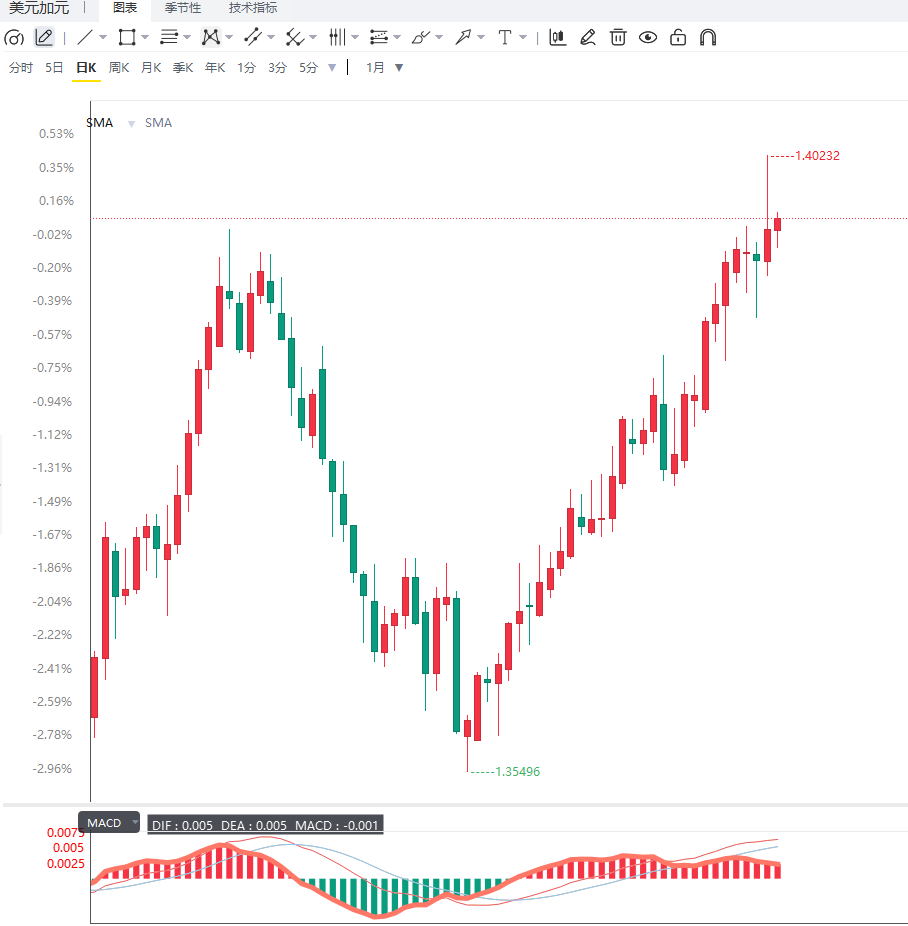
From a daily chart perspective, the USD/CAD pair recently found support around 1.3800 and has since strengthened again. Currently, the price is approaching the important psychological level of 1.4000, with the overall trend leaning upwards. If the exchange rate can effectively break through the 1.4000 resistance, the bulls may further test the 1.4050 and 1.4100 areas. On the downside, watch for support at 1.3920, 1.3850, and 1.3800. A break below 1.3800 could weaken the short-term upward structure.
From a 4-hour chart perspective, USD/CAD maintains a short-term rebound trend, with the price trading near key short-term moving averages and market momentum gradually improving. Strong technical resistance remains around 1.4000; if bulls break through this level with the help of a strong dollar, further upside potential may open up in the short term. Conversely, if oil prices stabilize and rebound or the dollar experiences profit-taking, the exchange rate may retest the support zone of 1.3920 to 1.3850.
Editor's Summary : The current USD/CAD exchange rate is primarily influenced by US inflationary pressures, monetary policy expectations, and changes in international oil prices. Better-than-expected US PPI data strengthened market bets on the Federal Reserve maintaining a hawkish stance, while expectations of a US-Iran peace agreement led to a decline in oil prices, weakening the Canadian dollar's performance. In the short term, the 1.4000 level will be a key area for directional choice. If the US dollar remains strong and crude oil continues to be under pressure, USD/CAD may have the potential to rise further; however, if geopolitical risks ease and the US dollar weakens, the Canadian dollar may rebound with the help of stabilization in the energy market.
US President Trump stated that the US and Iran could reach a peace agreement as early as this weekend, and previously planned military action against Iran's energy infrastructure has been postponed. The market believes that if the agreement is ultimately implemented, shipping conditions in the Strait of Hormuz will gradually return to normal, and the risk of global oil supply disruptions is expected to ease, leading to a rapid decline in the energy risk premium previously driven by geopolitical conflict.
Because the Canadian economy is highly correlated with energy exports, a drop in international oil prices typically diminishes the Canadian dollar's appeal. The recent decline in WTI crude oil to around $85 per barrel has put additional selling pressure on the Canadian dollar, which has partially offset the negative impact of reduced demand for the US dollar as a safe haven due to easing tensions in the Middle East. Therefore, the USD/CAD exchange rate remains near its recent highs.
On the other hand, the latest US inflation data continues to provide fundamental support for the US dollar. Data released by the US Bureau of Labor Statistics shows that the Producer Price Index (PPI) rose 6.5% year-on-year in May, higher than April's 5.7% and exceeding market expectations of 6.4%, reaching its highest level since November 2022; month-on-month growth was 1.1%, significantly higher than the market expectation of 0.7%. Strong producer-side inflation indicates that price pressures in the US remain persistent.
The market believes that the PPI data reinforces expectations that the Federal Reserve will maintain high interest rates for a longer period, and even increases the possibility of further rate hikes this year. Higher US interest rates have expanded the relative advantage of dollar assets, providing sustained support for the dollar index. Going forward, investors will continue to focus on US economic data, speeches by Federal Reserve officials, and changes in the energy market to determine whether the USD/CAD pair can break through its current high range.
From a daily chart perspective, the USD/CAD pair recently found support around 1.3800 and has since strengthened again. Currently, the price is approaching the important psychological level of 1.4000, with the overall trend leaning upwards. If the exchange rate can effectively break through the 1.4000 resistance, the bulls may further test the 1.4050 and 1.4100 areas. On the downside, watch for support at 1.3920, 1.3850, and 1.3800. A break below 1.3800 could weaken the short-term upward structure.
From a 4-hour chart perspective, USD/CAD maintains a short-term rebound trend, with the price trading near key short-term moving averages and market momentum gradually improving. Strong technical resistance remains around 1.4000; if bulls break through this level with the help of a strong dollar, further upside potential may open up in the short term. Conversely, if oil prices stabilize and rebound or the dollar experiences profit-taking, the exchange rate may retest the support zone of 1.3920 to 1.3850.
Editor's Summary : The current USD/CAD exchange rate is primarily influenced by US inflationary pressures, monetary policy expectations, and changes in international oil prices. Better-than-expected US PPI data strengthened market bets on the Federal Reserve maintaining a hawkish stance, while expectations of a US-Iran peace agreement led to a decline in oil prices, weakening the Canadian dollar's performance. In the short term, the 1.4000 level will be a key area for directional choice. If the US dollar remains strong and crude oil continues to be under pressure, USD/CAD may have the potential to rise further; however, if geopolitical risks ease and the US dollar weakens, the Canadian dollar may rebound with the help of stabilization in the energy market.
- Risk Warning and Disclaimer
- The market involves risk, and trading may not be suitable for all investors. This article is for reference only and does not constitute personal investment advice, nor does it take into account certain users’ specific investment objectives, financial situation, or other needs. Any investment decisions made based on this information are at your own risk.