European Central Bank officials signaled the possibility of further interest rate hikes, while Nagel emphasized the need to prevent inflation expectations from spiraling out of control.
2026-06-12 14:47:13
European Central Bank (ECB) Governing Council member Jean-Claude Nagel's latest remarks indicate that the ECB will remain highly vigilant about inflation risks after the June rate hike and will not rule out the possibility of further tightening of monetary policy in the future. As one of the potential successors to Christine Lagarde as ECB president, Nagel's hawkish stance has attracted widespread attention from investors.

Nagel pointed out that the European Central Bank's next monetary policy meeting will be held in July, and policymakers are prepared to take necessary actions based on changes in the economic situation. He emphasized that the ECB retains all policy tools and is ready to further adjust interest rate policy if energy prices rise further or inflation exceeds expectations again.
He believes the June rate hike was the right and necessary decision, as current inflationary pressures in the Eurozone are no longer confined to the energy sector but are gradually spreading to goods and services prices, indicating that price increases have a broader basis. The energy supply shock caused by the Middle East conflict has proven to be persistent, and the ECB cannot choose to wait for the situation to ease on its own; it must take policy action to prevent inflation expectations from spiraling out of control.
Previously, sources close to internal discussions at the European Central Bank (ECB) revealed that a further rate hike in July was not the current base case for most policymakers. However, if the energy market experiences another significant rise or inflation data unexpectedly strengthens, the ECB may still reassess its policy path and take further rate hikes if necessary.
Market analysts believe that Nagel's remarks reinforced the ECB's policy approach of "relying on data and remaining flexible." Although the ECB has completed its recent policy adjustments, energy price trends, core inflation changes, and wage growth will still determine whether further tightening of financial conditions will be necessary in the future.
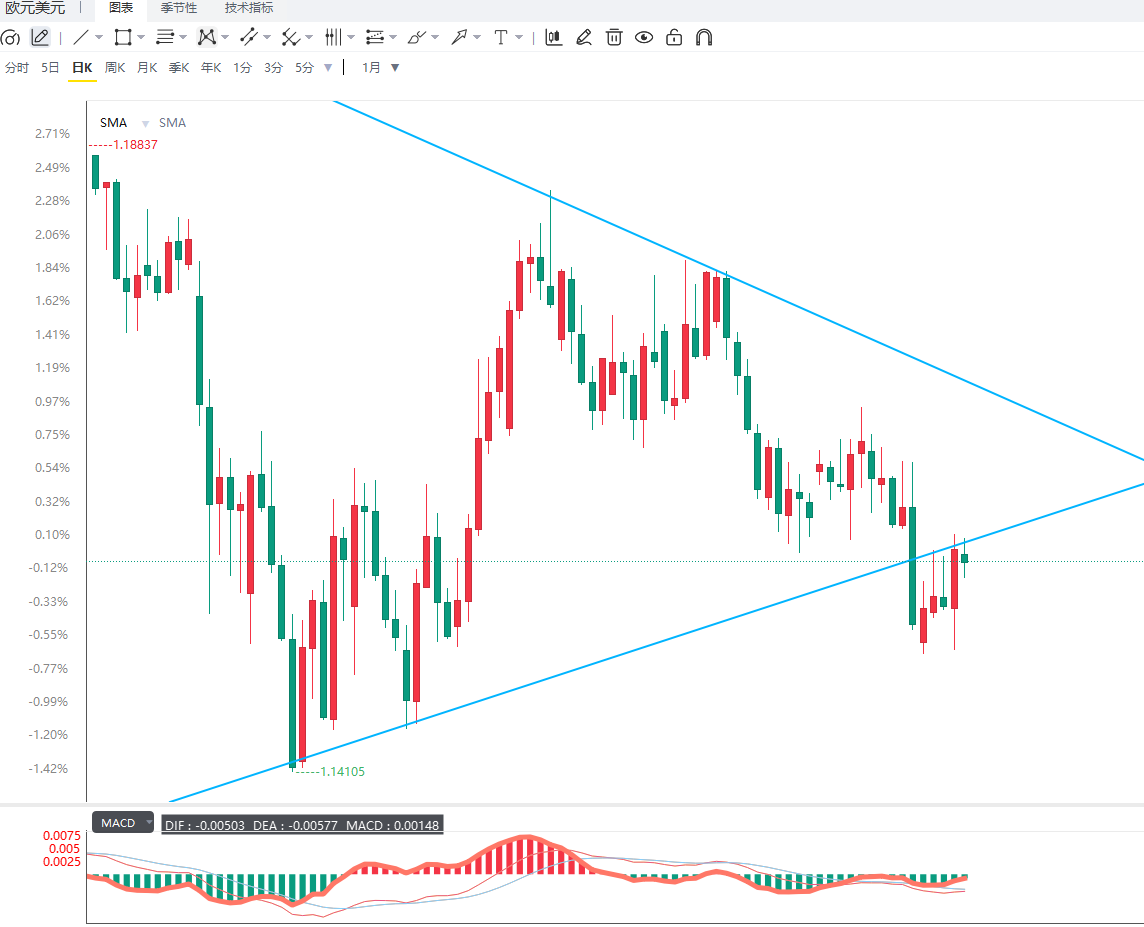
From the daily chart of EUR/USD, the ECB's hawkish rhetoric provided some support for the euro, but the exchange rate is still in a recovery phase after breaking below the consolidation range. Currently, EUR/USD has not yet entered the area of dense resistance above. If it can effectively hold above the 1.1600 level, it is expected to return to the previous trading range and continue its rebound. On the downside, the key support level to watch is 1.1500. A second pullback and break below this level could accelerate the downside.
From a 4-hour chart perspective, the euro/dollar pair is maintaining a short-term low-level rebound structure, with market momentum showing some improvement compared to before. However, the current rebound is more of a technical correction after breaking below the consolidation range. Only a decisive break and hold above 1.1600 can confirm a further strengthening of the short-term trend; if the rebound is resisted and falls back below 1.1500, the bears may regain control, and the exchange rate risks further declines.
Editor's Summary : Nagel's latest remarks indicate that while the ECB did not consider a July rate hike as its primary scenario, it still maintains the possibility of further policy tightening in the face of continued energy pressures from the Middle East situation and the risk of inflation spreading to goods and services. In the short term, the ECB's hawkish stance helps stabilize the euro's performance, but the future direction of monetary policy remains highly dependent on changes in energy prices and Eurozone inflation data. The market needs to pay attention to key economic indicators released before the July meeting to determine whether the ECB will take further action.
Nagel pointed out that the European Central Bank's next monetary policy meeting will be held in July, and policymakers are prepared to take necessary actions based on changes in the economic situation. He emphasized that the ECB retains all policy tools and is ready to further adjust interest rate policy if energy prices rise further or inflation exceeds expectations again.
He believes the June rate hike was the right and necessary decision, as current inflationary pressures in the Eurozone are no longer confined to the energy sector but are gradually spreading to goods and services prices, indicating that price increases have a broader basis. The energy supply shock caused by the Middle East conflict has proven to be persistent, and the ECB cannot choose to wait for the situation to ease on its own; it must take policy action to prevent inflation expectations from spiraling out of control.
Previously, sources close to internal discussions at the European Central Bank (ECB) revealed that a further rate hike in July was not the current base case for most policymakers. However, if the energy market experiences another significant rise or inflation data unexpectedly strengthens, the ECB may still reassess its policy path and take further rate hikes if necessary.
Market analysts believe that Nagel's remarks reinforced the ECB's policy approach of "relying on data and remaining flexible." Although the ECB has completed its recent policy adjustments, energy price trends, core inflation changes, and wage growth will still determine whether further tightening of financial conditions will be necessary in the future.
From the daily chart of EUR/USD, the ECB's hawkish rhetoric provided some support for the euro, but the exchange rate is still in a recovery phase after breaking below the consolidation range. Currently, EUR/USD has not yet entered the area of dense resistance above. If it can effectively hold above the 1.1600 level, it is expected to return to the previous trading range and continue its rebound. On the downside, the key support level to watch is 1.1500. A second pullback and break below this level could accelerate the downside.
From a 4-hour chart perspective, the euro/dollar pair is maintaining a short-term low-level rebound structure, with market momentum showing some improvement compared to before. However, the current rebound is more of a technical correction after breaking below the consolidation range. Only a decisive break and hold above 1.1600 can confirm a further strengthening of the short-term trend; if the rebound is resisted and falls back below 1.1500, the bears may regain control, and the exchange rate risks further declines.
Editor's Summary : Nagel's latest remarks indicate that while the ECB did not consider a July rate hike as its primary scenario, it still maintains the possibility of further policy tightening in the face of continued energy pressures from the Middle East situation and the risk of inflation spreading to goods and services. In the short term, the ECB's hawkish stance helps stabilize the euro's performance, but the future direction of monetary policy remains highly dependent on changes in energy prices and Eurozone inflation data. The market needs to pay attention to key economic indicators released before the July meeting to determine whether the ECB will take further action.
- Risk Warning and Disclaimer
- The market involves risk, and trading may not be suitable for all investors. This article is for reference only and does not constitute personal investment advice, nor does it take into account certain users’ specific investment objectives, financial situation, or other needs. Any investment decisions made based on this information are at your own risk.