Weakening UK economic growth momentum has dampened expectations of interest rate hikes, with institutions predicting the Bank of England may keep rates unchanged this year.
2026-06-12 16:19:12
In her latest report, Capital Economics economist Ruth Gregory points out that the Bank of England still reserves the possibility of further interest rate hikes, but considering economic growth, consumption performance and inflation prospects, maintaining the current interest rate level is likely to remain the most probable policy path this year.
The report suggests that the UK's GDP contracted by 0.1% month-on-month in April, ending the positive momentum of a 0.3% month-on-month increase in March. This indicates that after a strong start to the year, the UK economy's growth momentum has begun to weaken. The slowdown in economic activity will help alleviate demand-side pressures, thereby limiting the potential for further inflationary increases.
With the Middle East wars driving up energy prices, British households are facing renewed pressure on real incomes, potentially impacting their spending power. Capital Economics predicts that the UK economy may stagnate this quarter and into the next, hindering the recovery of business investment and household consumption.
In terms of industry performance, the service sector is expected to be the most significantly impacted by the energy shock. As rising energy costs weaken household spending power, service industries related to household expenditures may face slower demand. Meanwhile, the industrial sector, which previously benefited from short-term inventory buildup, is seeing this temporary factor gradually fade, and industrial production data is expected to weaken further in May and beyond.
While rising energy prices may push up overall inflation in the short term, Capital Economics believes that the UK economy currently lacks the conditions for sustained high inflation. Slower economic growth, cooling demand, and squeezed household incomes will, to some extent, curb the pressure for continued price increases.
Therefore, market expectations for further tightening by the Bank of England may gradually cool. While continued rises in energy prices or a significant increase in inflation could still prompt the Bank of England to reconsider raising interest rates, maintaining the current interest rate is still the more probable scenario in the current economic environment.
From a daily chart perspective, the British pound against the US dollar has entered a high-level consolidation phase after its previous strong upward trend. While the overall upward trend hasn't completely reversed, slower UK economic growth and cooling expectations for a Bank of England interest rate hike may limit further gains. Currently, the key resistance area to watch is 1.3450 to 1.3500. Failure to break through this level could lead to a period of consolidation. On the downside, key support levels to watch are 1.3350 and 1.3300. A break below these levels could extend the pullback further.
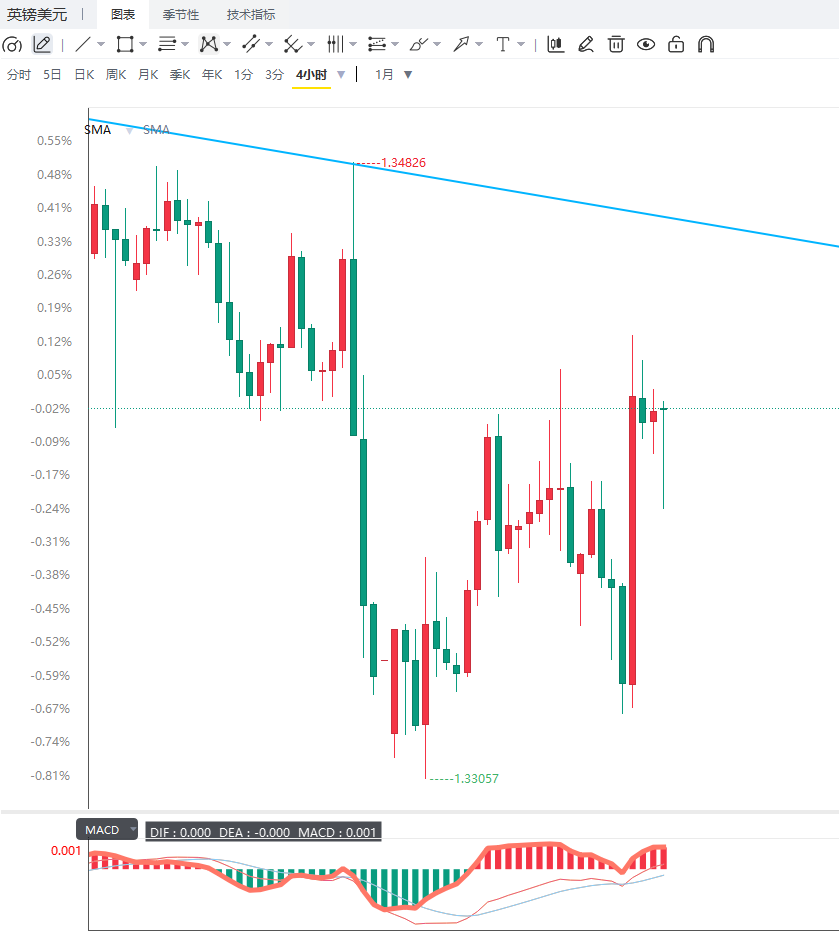
From a 4-hour chart perspective, the GBP/USD pair is consolidating around 1.3400 in the short term, with bullish momentum slowing somewhat as the market awaits new economic data and policy signals for direction. If it can subsequently regain a foothold above 1.3430, there is still a chance to retest the 1.3450-1.3500 resistance zone; however, if it breaks below the 1.3350 support, it may turn downwards in the short term and further test the 1.3300 area.
Editor's Summary : Slowing UK economic growth is altering market expectations regarding the Bank of England's future policy path. A decline in April GDP, rising energy costs, and increased consumer pressure suggest the UK economy may enter a period of low growth in the coming quarters, weakening the foundation for sustained high inflation. While energy factors may continue to push up prices in the short term, the likelihood of the Bank of England maintaining interest rates this year is increasing given the cooling demand. For the pound, economic data and changes in Bank of England policy expectations will be key factors influencing its future trajectory.
The report suggests that the UK's GDP contracted by 0.1% month-on-month in April, ending the positive momentum of a 0.3% month-on-month increase in March. This indicates that after a strong start to the year, the UK economy's growth momentum has begun to weaken. The slowdown in economic activity will help alleviate demand-side pressures, thereby limiting the potential for further inflationary increases.
With the Middle East wars driving up energy prices, British households are facing renewed pressure on real incomes, potentially impacting their spending power. Capital Economics predicts that the UK economy may stagnate this quarter and into the next, hindering the recovery of business investment and household consumption.
In terms of industry performance, the service sector is expected to be the most significantly impacted by the energy shock. As rising energy costs weaken household spending power, service industries related to household expenditures may face slower demand. Meanwhile, the industrial sector, which previously benefited from short-term inventory buildup, is seeing this temporary factor gradually fade, and industrial production data is expected to weaken further in May and beyond.
While rising energy prices may push up overall inflation in the short term, Capital Economics believes that the UK economy currently lacks the conditions for sustained high inflation. Slower economic growth, cooling demand, and squeezed household incomes will, to some extent, curb the pressure for continued price increases.
Therefore, market expectations for further tightening by the Bank of England may gradually cool. While continued rises in energy prices or a significant increase in inflation could still prompt the Bank of England to reconsider raising interest rates, maintaining the current interest rate is still the more probable scenario in the current economic environment.
From a daily chart perspective, the British pound against the US dollar has entered a high-level consolidation phase after its previous strong upward trend. While the overall upward trend hasn't completely reversed, slower UK economic growth and cooling expectations for a Bank of England interest rate hike may limit further gains. Currently, the key resistance area to watch is 1.3450 to 1.3500. Failure to break through this level could lead to a period of consolidation. On the downside, key support levels to watch are 1.3350 and 1.3300. A break below these levels could extend the pullback further.
From a 4-hour chart perspective, the GBP/USD pair is consolidating around 1.3400 in the short term, with bullish momentum slowing somewhat as the market awaits new economic data and policy signals for direction. If it can subsequently regain a foothold above 1.3430, there is still a chance to retest the 1.3450-1.3500 resistance zone; however, if it breaks below the 1.3350 support, it may turn downwards in the short term and further test the 1.3300 area.
Editor's Summary : Slowing UK economic growth is altering market expectations regarding the Bank of England's future policy path. A decline in April GDP, rising energy costs, and increased consumer pressure suggest the UK economy may enter a period of low growth in the coming quarters, weakening the foundation for sustained high inflation. While energy factors may continue to push up prices in the short term, the likelihood of the Bank of England maintaining interest rates this year is increasing given the cooling demand. For the pound, economic data and changes in Bank of England policy expectations will be key factors influencing its future trajectory.
- Risk Warning and Disclaimer
- The market involves risk, and trading may not be suitable for all investors. This article is for reference only and does not constitute personal investment advice, nor does it take into account certain users’ specific investment objectives, financial situation, or other needs. Any investment decisions made based on this information are at your own risk.