Expectations of Iranian crude oil returning to the market are putting downward pressure on oil prices. Have geopolitical risks really dissipated?
2026-06-23 16:36:02
On Tuesday (June 23) during the European session, Brent crude oil futures fell by more than 1% and are currently trading around $77 per barrel.
The United States on Monday issued a 60-day license allowing Iran to sell oil on the international market, providing Tehran with an economic lifeline as the two sides continue negotiations for a permanent peace agreement. The anticipated return of Iranian crude to the global market and increased supply quickly suppressed oil prices.
After attending negotiations in Switzerland, U.S. Vice President Vance described the first round of talks as "very, very good" and said that Iran had agreed to allow nuclear inspectors to return to the country—a statement later endorsed by Trump.
However, while acknowledging progress, Iranian officials directly refuted Vance's claims, calling them "false and unrealistic."
This disagreement highlights the significant challenges both sides face in implementing the memorandum of understanding signed last week, ending the conflict, and paving the way for a long-term agreement. The agreement suspends the resolution of key issues while providing immediate economic benefits to Iran—an arrangement that has drawn strong criticism from Trump's Republican allies.
The U.S. Treasury Department announced a 60-day sanctions waiver on Monday, allowing Iran to sell crude oil and related products and earn revenue. This is one of the core economic benefits offered to Iran in the memorandum of understanding signed by the U.S. and Iran last week—after years of punitive sanctions.
Iranian Foreign Minister Araqchi stated that the mediators have successfully eased some tensions regarding the situation in Lebanon, and Iran has begun to reap economic benefits from last week's agreement. Iran will also receive a commitment to a reconstruction and development fund.
Trump told reporters on Monday that Iran should use the unfrozen funds to buy U.S. agricultural products because "Iran has 91 million people and can't feed them."
He also emphasized that the funds would "flow back" to American farmers "in the form of purchasing the food they desperately need."
Vance stated that Tehran had agreed to allow UN nuclear inspectors to return to Iran—a key concession. Trump subsequently stated on social media: "It is clear to everyone that Iran will agree to major weapons inspections to ensure long-term 'nuclear honesty'."
However, Iran immediately denied this claim. Iranian Foreign Ministry spokesman Bagaei stated that the nuclear issue was "not discussed" during the talks, and that Iran will continue to cooperate with the International Atomic Energy Agency (IAEA) in accordance with existing procedures.
This disagreement highlights that the fundamental differences in the two sides' positions on the nuclear issue are far from being bridged.
The core issues hanging over the negotiations are the status of the Strait of Hormuz and the ongoing conflict in Lebanon—where Israel is launching a military operation against the Iranian-backed Hezbollah.
After returning to Tehran following the conclusion of negotiations, Iranian Parliament Speaker Ghalibaf stated unequivocally that the Strait of Hormuz "will never return to its pre-conflict state" and will be governed by Iran in accordance with international law. This statement signifies Iran's attempt to institutionalize its wartime strategic advantage.
Vance stated that negotiators had "established mechanisms" to ensure the Strait remains open. However, he did not directly answer when asked whether the United States wanted Israel to withdraw its troops from southern Lebanon.
The market has been closely watching for any signs of progress between the US and Iran. Brent crude is currently trading around $77 per barrel. Benefiting from the lifting of the US naval blockade, Iran has increased its oil exports in recent days, raising expectations of a potential short-term supply glut.
The Trump administration responded to criticism of the interim agreement, insisting that it would benefit the American people by lowering energy prices and emphasizing that safeguards would prevent Iran from developing nuclear weapons—one of Trump’s core objectives.
Israel is not a party to the peace agreement. Israel's UN ambassador, Danon, told the media that when asked if the Lebanese army could fight Hezbollah militias alone, he responded, "Unfortunately, that's not the case." "We have the capability to fight Hezbollah, but we are not in a hurry to remain in Lebanon," Danon added.
This statement suggests that Israel will continue to maintain a military presence and operational capabilities in southern Lebanon, which directly conflicts with Iran's position that the ceasefire in Lebanon is a red line for compliance—constituting the biggest geopolitical variable in the next 60 days of negotiations.
Trump faces immense political pressure to end the war—soaring energy prices have accelerated global inflation and eroded Republican support ahead of the November election.
However, hardliners on Israel and Iran argue that the memorandum of understanding provides excessive economic relief without curbing Iran’s ballistic missile program or limiting its support for regional armed groups.
The 60-day oil waivers granted by the US and Iran have provided Iran with a much-needed economic lifeline, but the negotiation process remains fraught with obstacles. Public disagreements over nuclear inspections, Iran's declaration of permanent control over the Strait of Hormuz, and Israel's military action in Lebanon all pose significant obstacles to a final agreement.
Trump faces a similarly thorny political dilemma: on the one hand, he needs to control energy prices to alleviate domestic inflationary pressures, and on the other hand, he must contend with criticism from hardliners regarding his appeasement of Iran. Whether the US and Iran can make substantial progress on their three core differences—nuclear issue, Straits governance, and a ceasefire in Lebanon—within the next 60 days will determine whether this economic lifeline leads to lasting peace or merely a brief respite before the next conflict.
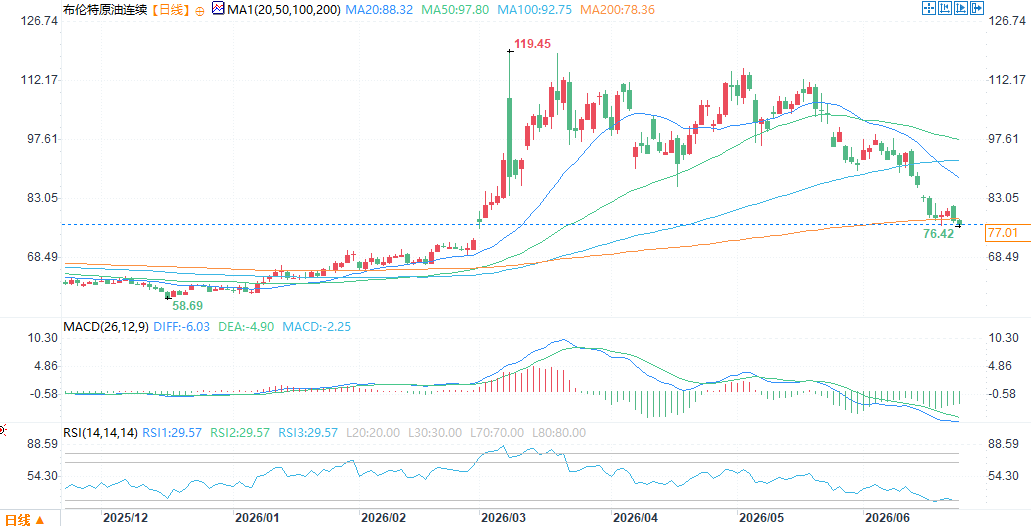
(Brent crude oil daily chart, source: EasyForex)
At 16:00 Beijing time on June 23, Brent crude oil was trading at $77.11 per barrel.
The United States on Monday issued a 60-day license allowing Iran to sell oil on the international market, providing Tehran with an economic lifeline as the two sides continue negotiations for a permanent peace agreement. The anticipated return of Iranian crude to the global market and increased supply quickly suppressed oil prices.
After attending negotiations in Switzerland, U.S. Vice President Vance described the first round of talks as "very, very good" and said that Iran had agreed to allow nuclear inspectors to return to the country—a statement later endorsed by Trump.
However, while acknowledging progress, Iranian officials directly refuted Vance's claims, calling them "false and unrealistic."
This disagreement highlights the significant challenges both sides face in implementing the memorandum of understanding signed last week, ending the conflict, and paving the way for a long-term agreement. The agreement suspends the resolution of key issues while providing immediate economic benefits to Iran—an arrangement that has drawn strong criticism from Trump's Republican allies.
Oil waivers granted, giving the Iranian economy a breather
The U.S. Treasury Department announced a 60-day sanctions waiver on Monday, allowing Iran to sell crude oil and related products and earn revenue. This is one of the core economic benefits offered to Iran in the memorandum of understanding signed by the U.S. and Iran last week—after years of punitive sanctions.
Iranian Foreign Minister Araqchi stated that the mediators have successfully eased some tensions regarding the situation in Lebanon, and Iran has begun to reap economic benefits from last week's agreement. Iran will also receive a commitment to a reconstruction and development fund.
Trump told reporters on Monday that Iran should use the unfrozen funds to buy U.S. agricultural products because "Iran has 91 million people and can't feed them."
He also emphasized that the funds would "flow back" to American farmers "in the form of purchasing the food they desperately need."
Nuclear inspection dispute: US and Iran stick to their own stories
Vance stated that Tehran had agreed to allow UN nuclear inspectors to return to Iran—a key concession. Trump subsequently stated on social media: "It is clear to everyone that Iran will agree to major weapons inspections to ensure long-term 'nuclear honesty'."
However, Iran immediately denied this claim. Iranian Foreign Ministry spokesman Bagaei stated that the nuclear issue was "not discussed" during the talks, and that Iran will continue to cooperate with the International Atomic Energy Agency (IAEA) in accordance with existing procedures.
This disagreement highlights that the fundamental differences in the two sides' positions on the nuclear issue are far from being bridged.
Strait of Hormuz: Iran insists on permanent control
The core issues hanging over the negotiations are the status of the Strait of Hormuz and the ongoing conflict in Lebanon—where Israel is launching a military operation against the Iranian-backed Hezbollah.
After returning to Tehran following the conclusion of negotiations, Iranian Parliament Speaker Ghalibaf stated unequivocally that the Strait of Hormuz "will never return to its pre-conflict state" and will be governed by Iran in accordance with international law. This statement signifies Iran's attempt to institutionalize its wartime strategic advantage.
Vance stated that negotiators had "established mechanisms" to ensure the Strait remains open. However, he did not directly answer when asked whether the United States wanted Israel to withdraw its troops from southern Lebanon.
Market reaction: Oil prices remain stable as supply expectations shift.
The market has been closely watching for any signs of progress between the US and Iran. Brent crude is currently trading around $77 per barrel. Benefiting from the lifting of the US naval blockade, Iran has increased its oil exports in recent days, raising expectations of a potential short-term supply glut.
The Trump administration responded to criticism of the interim agreement, insisting that it would benefit the American people by lowering energy prices and emphasizing that safeguards would prevent Iran from developing nuclear weapons—one of Trump’s core objectives.
The Israeli factor: not reliant on the Lebanese army, but "not in a hurry to remain in Lebanon."
Israel is not a party to the peace agreement. Israel's UN ambassador, Danon, told the media that when asked if the Lebanese army could fight Hezbollah militias alone, he responded, "Unfortunately, that's not the case." "We have the capability to fight Hezbollah, but we are not in a hurry to remain in Lebanon," Danon added.
This statement suggests that Israel will continue to maintain a military presence and operational capabilities in southern Lebanon, which directly conflicts with Iran's position that the ceasefire in Lebanon is a red line for compliance—constituting the biggest geopolitical variable in the next 60 days of negotiations.
Domestic political pressure: Trump's dilemma
Trump faces immense political pressure to end the war—soaring energy prices have accelerated global inflation and eroded Republican support ahead of the November election.
However, hardliners on Israel and Iran argue that the memorandum of understanding provides excessive economic relief without curbing Iran’s ballistic missile program or limiting its support for regional armed groups.
Summary: The direction is clear, but numerous obstacles remain.
The 60-day oil waivers granted by the US and Iran have provided Iran with a much-needed economic lifeline, but the negotiation process remains fraught with obstacles. Public disagreements over nuclear inspections, Iran's declaration of permanent control over the Strait of Hormuz, and Israel's military action in Lebanon all pose significant obstacles to a final agreement.
Trump faces a similarly thorny political dilemma: on the one hand, he needs to control energy prices to alleviate domestic inflationary pressures, and on the other hand, he must contend with criticism from hardliners regarding his appeasement of Iran. Whether the US and Iran can make substantial progress on their three core differences—nuclear issue, Straits governance, and a ceasefire in Lebanon—within the next 60 days will determine whether this economic lifeline leads to lasting peace or merely a brief respite before the next conflict.
(Brent crude oil daily chart, source: EasyForex)
At 16:00 Beijing time on June 23, Brent crude oil was trading at $77.11 per barrel.
- Risk Warning and Disclaimer
- The market involves risk, and trading may not be suitable for all investors. This article is for reference only and does not constitute personal investment advice, nor does it take into account certain users’ specific investment objectives, financial situation, or other needs. Any investment decisions made based on this information are at your own risk.