With seven oil tankers crossing the border on the same day, will oil prices be completely driven back to their original levels?
2026-06-23 17:38:25
On Tuesday, June 23, the Strait of Hormuz, a crucial passage connecting the Persian Gulf with global energy markets, has long been considered a significant indicator of risk pricing in the crude oil market. With the recent phase-one agreement between the US and Iran, regional tensions have eased, and shipping activity has rebounded significantly. Market expectations for the stability of the waterway are being revised. During the previous conflict, traffic nearly came to a standstill, but the current resumption of ship position broadcasts signifies a rapid reduction in risk premiums, indicating that the global crude oil pricing system is entering a rebalancing phase.

The most structurally significant change is the renewed widespread adoption of Automatic Identification System (AIS) signals. Previously, during high-risk phases, many ships opted to turn off their signals to avoid potential safety risks. However, recently, an increasing number of oil tankers have restarted their broadcast functions, enabling the market to track shipping routes and traffic flow changes in real time.
The restoration of AIS signals is not merely a technical change; it reflects the renewed binding force of transparency requirements within the insurance, financing, and legal systems. In normal market conditions, shipping transparency is a fundamental condition for risk pricing, and the restoration of signals signifies a gradual recovery of confidence in shipping safety within the financial system.
The latest observations show that seven oil tankers passed through the waterway in a single day, including two fully loaded Very Large Crude Carriers (VLCCs) leaving the Persian Gulf, three product oil tankers sailing outwards, and two Iranian-flagged Suezmax tankers entering from the opposite direction.
In addition, a very large crude carrier (VLCC) reappeared in the system after completing a crossing without continuous broadcasting, indicating that some shipping companies are still maintaining a cautious strategy in stages.
It is noteworthy that some very large crude carriers (VLCCs) transporting Saudi crude oil are sailing eastward, heading towards Northeast Asian markets, indicating that regional energy flows are returning to their pre-conflict structural state. This restoration of two-way flows signifies that supply and demand chains are being reconnected.
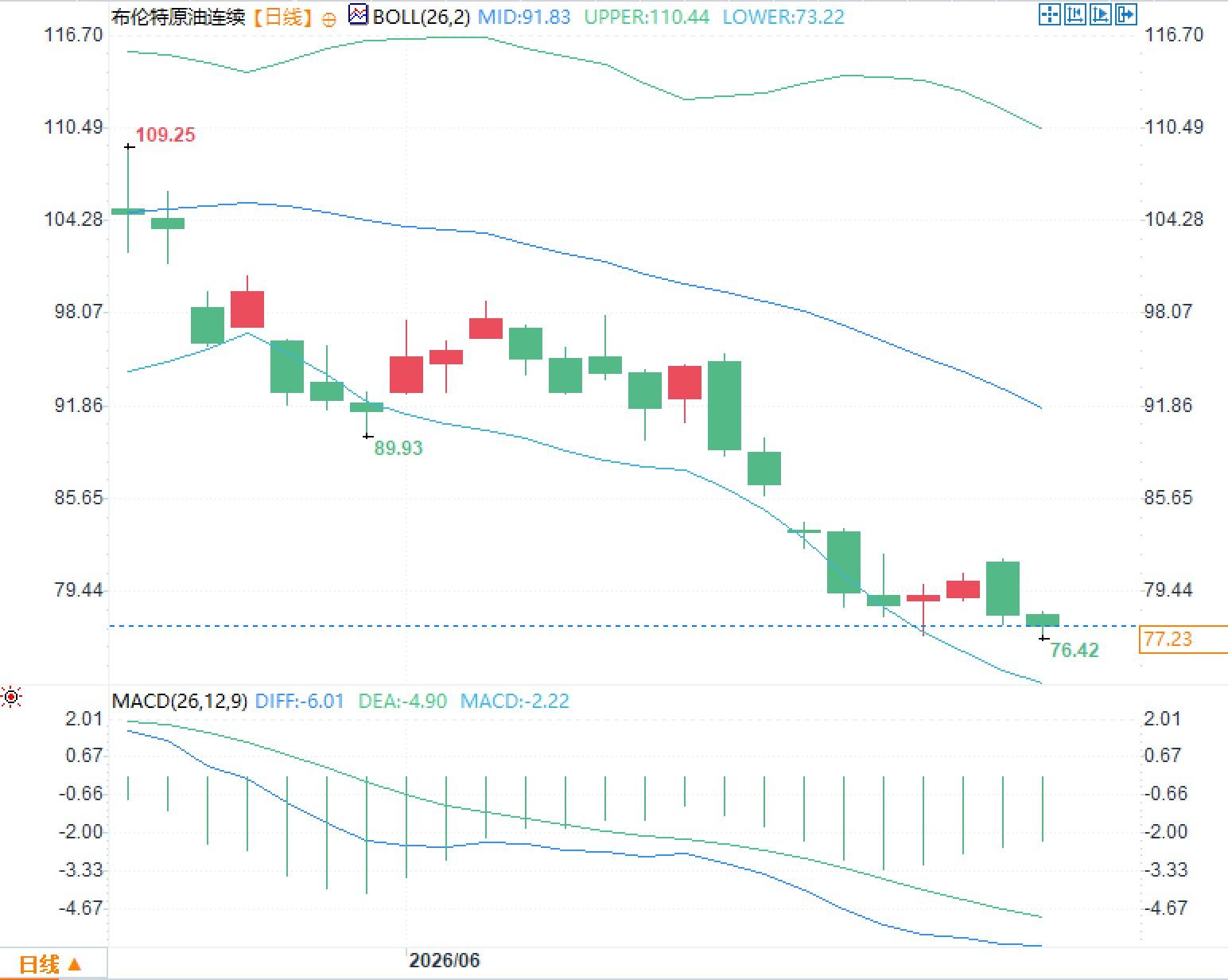
As expectations for the resumption of traffic have strengthened, crude oil futures prices have seen a significant correction, with Brent crude oil prices falling below $80, a substantial drop from the highs during the conflict. The premium previously priced in by the market due to supply disruption risks is being gradually digested.
From a pricing perspective, oil price changes primarily reflect adjustments on three levels: firstly, improved actual supply stability; secondly, reduced transportation bottleneck risks; and thirdly, a market reassessment of the probability of extreme scenarios. The current price decline indicates that the market is gradually shedding the short-term premium driven by geopolitical risks and returning to a fundamental pricing framework.
Despite significant improvements in shipping data, uncertainty has not completely disappeared. The US and Iran are continuing communication in the neutral zone, attempting to push for a longer-term stability arrangement. Against this backdrop, some vessels are still choosing to turn off their AIS signals in key sections, indicating that the market remains cautiously defensive regarding the security environment.
Furthermore, historical experience shows that the risk status of this waterway exhibits highly non-linear characteristics; even if the overall environment improves, local disturbances can still have a rapid impact on transportation behavior. Therefore, the current market is closer to a "low-risk expected recovery period" than a completely stable state.
Question 1: Why is the recovery of AIS signals considered a sign of improved market confidence?
A: AIS signals represent shipping transparency and are typically linked to insurance coverage and financing terms. The restoration of the signal indicates that shipowners are willing to accept standard insurance terms, suggesting a decrease in risk perception and serving as an important indicator of improved market confidence.
Question 2: Does the drop in oil prices mean that supply risks have been completely eliminated?
A: No, that's not the case. The decline in oil prices mainly reflects a decrease in risk premiums, rather than a complete stabilization of physical supply. If shipping safety deteriorates again, prices could still react quickly.
Question 3: Has shipping recovered to pre-conflict levels?
A: Not fully restored yet. Although traffic flow has rebounded significantly, some vessels are still shutting off signals and navigating cautiously, and the overall system is still in the recovery process. Structurally, the waterway is undergoing a critical transition from a high-risk disruption to normalization, with market prices and shipping behavior both in the process of repricing, but its stability still needs time to be verified.
Shipping signal recovery and AIS system regression
The most structurally significant change is the renewed widespread adoption of Automatic Identification System (AIS) signals. Previously, during high-risk phases, many ships opted to turn off their signals to avoid potential safety risks. However, recently, an increasing number of oil tankers have restarted their broadcast functions, enabling the market to track shipping routes and traffic flow changes in real time.
The restoration of AIS signals is not merely a technical change; it reflects the renewed binding force of transparency requirements within the insurance, financing, and legal systems. In normal market conditions, shipping transparency is a fundamental condition for risk pricing, and the restoration of signals signifies a gradual recovery of confidence in shipping safety within the financial system.
Traffic data rebounds and tanker structure changes
The latest observations show that seven oil tankers passed through the waterway in a single day, including two fully loaded Very Large Crude Carriers (VLCCs) leaving the Persian Gulf, three product oil tankers sailing outwards, and two Iranian-flagged Suezmax tankers entering from the opposite direction.
In addition, a very large crude carrier (VLCC) reappeared in the system after completing a crossing without continuous broadcasting, indicating that some shipping companies are still maintaining a cautious strategy in stages.
It is noteworthy that some very large crude carriers (VLCCs) transporting Saudi crude oil are sailing eastward, heading towards Northeast Asian markets, indicating that regional energy flows are returning to their pre-conflict structural state. This restoration of two-way flows signifies that supply and demand chains are being reconnected.
Crude oil prices fell and risk premiums narrowed.
As expectations for the resumption of traffic have strengthened, crude oil futures prices have seen a significant correction, with Brent crude oil prices falling below $80, a substantial drop from the highs during the conflict. The premium previously priced in by the market due to supply disruption risks is being gradually digested.
From a pricing perspective, oil price changes primarily reflect adjustments on three levels: firstly, improved actual supply stability; secondly, reduced transportation bottleneck risks; and thirdly, a market reassessment of the probability of extreme scenarios. The current price decline indicates that the market is gradually shedding the short-term premium driven by geopolitical risks and returning to a fundamental pricing framework.
Policy negotiations remain progressed and uncertainties persist.
Despite significant improvements in shipping data, uncertainty has not completely disappeared. The US and Iran are continuing communication in the neutral zone, attempting to push for a longer-term stability arrangement. Against this backdrop, some vessels are still choosing to turn off their AIS signals in key sections, indicating that the market remains cautiously defensive regarding the security environment.
Furthermore, historical experience shows that the risk status of this waterway exhibits highly non-linear characteristics; even if the overall environment improves, local disturbances can still have a rapid impact on transportation behavior. Therefore, the current market is closer to a "low-risk expected recovery period" than a completely stable state.
Frequently Asked Questions
Question 1: Why is the recovery of AIS signals considered a sign of improved market confidence?
A: AIS signals represent shipping transparency and are typically linked to insurance coverage and financing terms. The restoration of the signal indicates that shipowners are willing to accept standard insurance terms, suggesting a decrease in risk perception and serving as an important indicator of improved market confidence.
Question 2: Does the drop in oil prices mean that supply risks have been completely eliminated?
A: No, that's not the case. The decline in oil prices mainly reflects a decrease in risk premiums, rather than a complete stabilization of physical supply. If shipping safety deteriorates again, prices could still react quickly.
Question 3: Has shipping recovered to pre-conflict levels?
A: Not fully restored yet. Although traffic flow has rebounded significantly, some vessels are still shutting off signals and navigating cautiously, and the overall system is still in the recovery process. Structurally, the waterway is undergoing a critical transition from a high-risk disruption to normalization, with market prices and shipping behavior both in the process of repricing, but its stability still needs time to be verified.
- Risk Warning and Disclaimer
- The market involves risk, and trading may not be suitable for all investors. This article is for reference only and does not constitute personal investment advice, nor does it take into account certain users’ specific investment objectives, financial situation, or other needs. Any investment decisions made based on this information are at your own risk.