The rise of the Alternative for Germany (AfD): A key turning point may be approaching in German politics.
2026-07-03 18:22:50
In Erfurt, a city in eastern Germany, the far-right Alternative for Germany (AfD) party held its national congress as scheduled, with supporters both inside and outside the venue in high spirits and creating a strong atmosphere for campaigning. Reports indicate that the party is seizing the window of public opinion—disturbed governance by the current federal government and the obstruction of several reforms—to make a strong push in the Saxony-Anhalt state council elections this September. If the party wins, it will achieve a historic breakthrough, becoming the first party since its founding to either lead or dominate a state government, completely breaking the decades-long monopoly of mainstream parties on local governance in post-war Germany. German media outlets have judged that this local election is highly likely to become a landmark watershed event in the evolution of German politics since the end of World War II.
With its popularity continuing to rise, it holds a comprehensive advantage in the elections across all eastern states.
The Alternative for Germany (AfD) broke the record for the most votes won by a far-right party in Europe in the 2025 federal election, securing 20.8% of the vote. A year later, its popularity continues to rise across the country, with data from several independent polling agencies showing that its support is approaching or even slightly ahead of traditional established parties.
In Saxony-Anhalt, a key constituency in the east, the AfD's support has remained stable between 38% and 42%, significantly outpacing the established center-right CDU's 25% lead. It is only a few percentage points away from securing a majority of seats in parliament and forming an independent government, making its prospects for governing the region very bright. In Mecklenburg-Western Pomerania, which is holding elections shortly after, local voters also express strong dissatisfaction with current federal policies. The AfD also holds a clear advantage in local polls, suggesting that both eastern state elections may see a strong breakout by the far-right party.
Domestic divisions intensify: Governing blueprint triggers violent clashes within the rule of law system.
German mainstream media closely followed the AfD's policy plans after taking office. Der Spiegel revealed the full contents of his campaign platform: if he wins the election and takes power, the AfD plans to carry out a large-scale personnel restructuring of the state-level administrative system, replacing 150 to 200 core public officials at all levels. The personnel adjustments will focus on two key departments: internal security and public education.
The current interior ministers of several states have already held joint assessment meetings regarding this worst-case scenario. The interior minister of Thuringia publicly issued a stern warning, stating that the plan for a large-scale reshuffle of public officials is highly likely to fundamentally conflict with Germany's written rule of law, and its nature is almost equivalent to an "administrative coup." Der Spiegel further warned of the risks: if the AfD takes control of the state's Office for the Protection of the Constitution, the core institution holding counter-terrorism and counter-extremism intelligence will fall into the hands of far-right forces. There is a huge risk of a large amount of classified citizen information and internal national security intelligence being leaked and abused by extremist forces, and a major vulnerability will appear in the local security defenses.
The Frankfurter Allgemeine Zeitung criticized the policy's shortcomings from the perspective of science and education development: the AfD advocates overthrowing the current internationalized university management model and completely restoring the traditional closed "professorial governance" system. Essentially, this resists transnational academic exchange and excludes foreign research talent. Long-term implementation will directly weaken the research competitiveness of universities in the eastern states and lead to the loss of high-quality industrial R&D resources. The MDR, a local broadcaster in eastern Germany, analyzed its campaign platform in light of local sentiment: slogans such as strictly controlling the influx of immigrants, completely reforming public media, and significantly adjusting the federal unified energy transition policy accurately capture the real discontent of the lower classes. While this may garner a large number of protest votes in the short term, its long-term implementation will continue to deepen social antagonism between local residents and immigrant groups, and between different social classes, further tearing apart the already highly divided society of eastern Germany.
Despite enjoying considerable public support, the German media generally believes that the AfD's path to power is fraught with practical obstacles: numerous nepotism scandals involving cronyism and the transfer of benefits have surfaced within the party, casting serious doubt on the core leadership's governance capabilities; the party has lacked comprehensive governing experience since its inception and is incapable of formulating and implementing policies or balancing fiscal revenue and expenditure; furthermore, all major German political parties have reached an implicit consensus to refuse to form a coalition government with the AfD, regardless of the election results, thus creating an institutional "firewall." Even if the AfD manages to secure a majority in parliament, it will be difficult to establish a stable and sustainable local government.
The rapid rise of this far-right force is rooted in the long-standing and difficult-to-heal social divisions between eastern and western Germany. For decades after reunification, East Germany experienced slow economic transformation, with wages, job opportunities, and infrastructure development lagging far behind the west. The integration of immigrant cultures continued to fester, and widespread public dissatisfaction with the federal government's policies on energy transition, price controls, and pension benefits created fertile ground for the AfD (AfD to gain traction). While the current Merz coalition government has implemented tax reforms and pension increases, the overall economic recovery in Germany has fallen far short of public expectations. Inflation, industrial outflows, and employment pressures persist, eroding public patience. The AfD has precisely absorbed all this negative public sentiment, translating it into a tangible electoral advantage.
EU integration is facing new structural challenges, and its stance on Russia is tearing apart European consensus.
The rise of the right wing in German politics has been characterized by several European media outlets as a long-term risk that threatens the foundations of EU integration. The AfD (German Association of the German Faction) has long advocated weakening the central power of the EU and a complete restructuring of the European integration cooperation framework. Its radical factions have even openly promoted the idea of Germany leaving the EU, similar to Brexit. On the foreign policy front, the party runs completely counter to the Berlin federal government and the mainstream EU policy: it continues to oppose the EU's long-term military aid to Ukraine, calls for the complete lifting of multiple rounds of sanctions against Russia, and the resumption of gas and oil trade cooperation between Russia and Germany.
An analysis by the German broadcaster Tagesspiegel points out that once the AfD gains local administrative power in the eastern states, it can continue to voice its opinions through the German Federal Council, amplifying internal divisions on Russia policy and directly undermining the unified stance of EU member states on the Ukraine crisis that has been maintained for years. At the same time, an AfD victory would provide a successful model for populist right-wing parties in Hungary, France, Italy, and other European countries, stimulating a synchronized expansion of far-right forces across Europe, accelerating the division within the EU, and significantly reducing the efficiency of multilateral coordination mechanisms.
Economy and Euro Under Pressure: Aggressive Policies Hide Huge Economic Losses
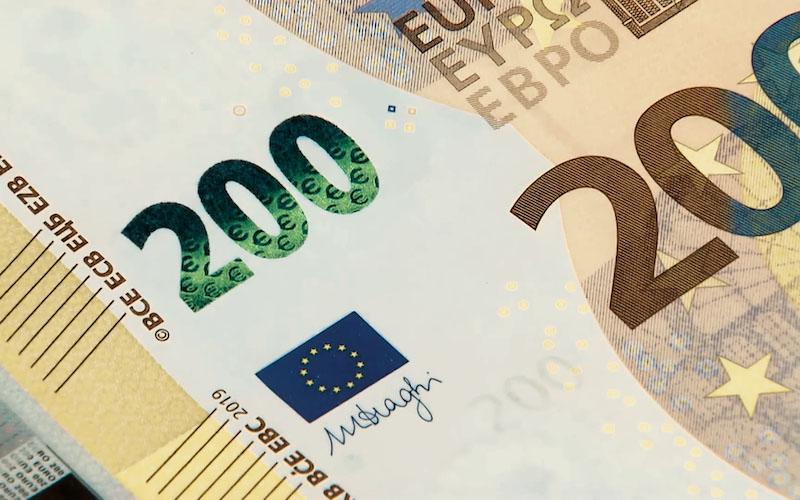
On the economic front, the uncertainty brought about by the rise of the AfD continues to loom over Germany and even the Eurozone. Data from the Cologne Institute for Economic Research (IW) shows that if the AfD pushes for radical policies such as Brexit and exiting the Eurozone, the German economy could suffer direct economic losses of nearly 700 billion euros over the next five years. As a typical export-oriented industrial nation, Germany's pillar industries—automobiles, machinery, and chemicals—will face a double blow from tariff barriers and shrinking foreign trade orders, leading to large-scale disruptions to the industrial and supply chains.
The German Trade Union Confederation (DGB) has publicly stated that the AfD's entire economic policy package completely harms the vital interests of ordinary wage earners. While high electricity prices and the continued outflow of manufacturing are the AfD's core tools for attacking the current government, its own radical energy, foreign trade, and monetary policies will instead amplify market panic, dampen foreign investment confidence, and consequently impact the stability of the euro exchange rate and the overall economic order of the eurozone.
Future Outlook: Democratic Resilience and a Key Stress Test for the European Order
German mainstream media have adopted a complex and multifaceted approach to the rise of the AfD: on the one hand, they are highly vigilant about its policies impacting the country's democratic and legal foundations and subverting core EU values; on the other hand, they objectively acknowledge that its consistently high approval ratings are a true reflection of the real plight of the grassroots. Mere condemnation and administrative restrictions cannot eradicate the breeding ground for the far right. Traditional mainstream parties such as the CDU, SPD, and Green Party must develop long-term solutions to improve people's livelihoods and effectively address core issues such as the economic disparity in the east, high inflation, and job security in order to regain the trust of lost voters.
Poll data shows that 69% of Germans predict that at least one state governor belonging to the AfD will be elected after the local elections in the fall of 2026. This widespread pessimism underscores the severity of the current political situation in Germany. The series of state elections starting in September will not only test the AfD's ability to govern effectively, but also pose a triple challenge to the resilience of Germany's post-war democratic system, the degree of unity within the EU, and the Eurozone's ability to withstand risks.
For Germany and the entire European continent, this "super election year" with its concentrated holding of multiple local elections is far more than a localized political event confined to the east; rather, it represents a high-intensity stress test on the mainstream European political order established after World War II. The subsequent developments will depend on two factors: firstly, whether the center-left and center-right mainstream parties can address the demands of the people and implement effective policies that benefit the people; and secondly, whether the AfD can shed its image as a purely protest party, adjust its radical platform, and transform into a responsible governing force.
With its popularity continuing to rise, it holds a comprehensive advantage in the elections across all eastern states.
The Alternative for Germany (AfD) broke the record for the most votes won by a far-right party in Europe in the 2025 federal election, securing 20.8% of the vote. A year later, its popularity continues to rise across the country, with data from several independent polling agencies showing that its support is approaching or even slightly ahead of traditional established parties.
In Saxony-Anhalt, a key constituency in the east, the AfD's support has remained stable between 38% and 42%, significantly outpacing the established center-right CDU's 25% lead. It is only a few percentage points away from securing a majority of seats in parliament and forming an independent government, making its prospects for governing the region very bright. In Mecklenburg-Western Pomerania, which is holding elections shortly after, local voters also express strong dissatisfaction with current federal policies. The AfD also holds a clear advantage in local polls, suggesting that both eastern state elections may see a strong breakout by the far-right party.
Domestic divisions intensify: Governing blueprint triggers violent clashes within the rule of law system.
German mainstream media closely followed the AfD's policy plans after taking office. Der Spiegel revealed the full contents of his campaign platform: if he wins the election and takes power, the AfD plans to carry out a large-scale personnel restructuring of the state-level administrative system, replacing 150 to 200 core public officials at all levels. The personnel adjustments will focus on two key departments: internal security and public education.
The current interior ministers of several states have already held joint assessment meetings regarding this worst-case scenario. The interior minister of Thuringia publicly issued a stern warning, stating that the plan for a large-scale reshuffle of public officials is highly likely to fundamentally conflict with Germany's written rule of law, and its nature is almost equivalent to an "administrative coup." Der Spiegel further warned of the risks: if the AfD takes control of the state's Office for the Protection of the Constitution, the core institution holding counter-terrorism and counter-extremism intelligence will fall into the hands of far-right forces. There is a huge risk of a large amount of classified citizen information and internal national security intelligence being leaked and abused by extremist forces, and a major vulnerability will appear in the local security defenses.
The Frankfurter Allgemeine Zeitung criticized the policy's shortcomings from the perspective of science and education development: the AfD advocates overthrowing the current internationalized university management model and completely restoring the traditional closed "professorial governance" system. Essentially, this resists transnational academic exchange and excludes foreign research talent. Long-term implementation will directly weaken the research competitiveness of universities in the eastern states and lead to the loss of high-quality industrial R&D resources. The MDR, a local broadcaster in eastern Germany, analyzed its campaign platform in light of local sentiment: slogans such as strictly controlling the influx of immigrants, completely reforming public media, and significantly adjusting the federal unified energy transition policy accurately capture the real discontent of the lower classes. While this may garner a large number of protest votes in the short term, its long-term implementation will continue to deepen social antagonism between local residents and immigrant groups, and between different social classes, further tearing apart the already highly divided society of eastern Germany.
Despite enjoying considerable public support, the German media generally believes that the AfD's path to power is fraught with practical obstacles: numerous nepotism scandals involving cronyism and the transfer of benefits have surfaced within the party, casting serious doubt on the core leadership's governance capabilities; the party has lacked comprehensive governing experience since its inception and is incapable of formulating and implementing policies or balancing fiscal revenue and expenditure; furthermore, all major German political parties have reached an implicit consensus to refuse to form a coalition government with the AfD, regardless of the election results, thus creating an institutional "firewall." Even if the AfD manages to secure a majority in parliament, it will be difficult to establish a stable and sustainable local government.
The rapid rise of this far-right force is rooted in the long-standing and difficult-to-heal social divisions between eastern and western Germany. For decades after reunification, East Germany experienced slow economic transformation, with wages, job opportunities, and infrastructure development lagging far behind the west. The integration of immigrant cultures continued to fester, and widespread public dissatisfaction with the federal government's policies on energy transition, price controls, and pension benefits created fertile ground for the AfD (AfD to gain traction). While the current Merz coalition government has implemented tax reforms and pension increases, the overall economic recovery in Germany has fallen far short of public expectations. Inflation, industrial outflows, and employment pressures persist, eroding public patience. The AfD has precisely absorbed all this negative public sentiment, translating it into a tangible electoral advantage.
EU integration is facing new structural challenges, and its stance on Russia is tearing apart European consensus.
The rise of the right wing in German politics has been characterized by several European media outlets as a long-term risk that threatens the foundations of EU integration. The AfD (German Association of the German Faction) has long advocated weakening the central power of the EU and a complete restructuring of the European integration cooperation framework. Its radical factions have even openly promoted the idea of Germany leaving the EU, similar to Brexit. On the foreign policy front, the party runs completely counter to the Berlin federal government and the mainstream EU policy: it continues to oppose the EU's long-term military aid to Ukraine, calls for the complete lifting of multiple rounds of sanctions against Russia, and the resumption of gas and oil trade cooperation between Russia and Germany.
An analysis by the German broadcaster Tagesspiegel points out that once the AfD gains local administrative power in the eastern states, it can continue to voice its opinions through the German Federal Council, amplifying internal divisions on Russia policy and directly undermining the unified stance of EU member states on the Ukraine crisis that has been maintained for years. At the same time, an AfD victory would provide a successful model for populist right-wing parties in Hungary, France, Italy, and other European countries, stimulating a synchronized expansion of far-right forces across Europe, accelerating the division within the EU, and significantly reducing the efficiency of multilateral coordination mechanisms.
Economy and Euro Under Pressure: Aggressive Policies Hide Huge Economic Losses
On the economic front, the uncertainty brought about by the rise of the AfD continues to loom over Germany and even the Eurozone. Data from the Cologne Institute for Economic Research (IW) shows that if the AfD pushes for radical policies such as Brexit and exiting the Eurozone, the German economy could suffer direct economic losses of nearly 700 billion euros over the next five years. As a typical export-oriented industrial nation, Germany's pillar industries—automobiles, machinery, and chemicals—will face a double blow from tariff barriers and shrinking foreign trade orders, leading to large-scale disruptions to the industrial and supply chains.
The German Trade Union Confederation (DGB) has publicly stated that the AfD's entire economic policy package completely harms the vital interests of ordinary wage earners. While high electricity prices and the continued outflow of manufacturing are the AfD's core tools for attacking the current government, its own radical energy, foreign trade, and monetary policies will instead amplify market panic, dampen foreign investment confidence, and consequently impact the stability of the euro exchange rate and the overall economic order of the eurozone.
Future Outlook: Democratic Resilience and a Key Stress Test for the European Order
German mainstream media have adopted a complex and multifaceted approach to the rise of the AfD: on the one hand, they are highly vigilant about its policies impacting the country's democratic and legal foundations and subverting core EU values; on the other hand, they objectively acknowledge that its consistently high approval ratings are a true reflection of the real plight of the grassroots. Mere condemnation and administrative restrictions cannot eradicate the breeding ground for the far right. Traditional mainstream parties such as the CDU, SPD, and Green Party must develop long-term solutions to improve people's livelihoods and effectively address core issues such as the economic disparity in the east, high inflation, and job security in order to regain the trust of lost voters.
Poll data shows that 69% of Germans predict that at least one state governor belonging to the AfD will be elected after the local elections in the fall of 2026. This widespread pessimism underscores the severity of the current political situation in Germany. The series of state elections starting in September will not only test the AfD's ability to govern effectively, but also pose a triple challenge to the resilience of Germany's post-war democratic system, the degree of unity within the EU, and the Eurozone's ability to withstand risks.
For Germany and the entire European continent, this "super election year" with its concentrated holding of multiple local elections is far more than a localized political event confined to the east; rather, it represents a high-intensity stress test on the mainstream European political order established after World War II. The subsequent developments will depend on two factors: firstly, whether the center-left and center-right mainstream parties can address the demands of the people and implement effective policies that benefit the people; and secondly, whether the AfD can shed its image as a purely protest party, adjust its radical platform, and transform into a responsible governing force.
- Risk Warning and Disclaimer
- The market involves risk, and trading may not be suitable for all investors. This article is for reference only and does not constitute personal investment advice, nor does it take into account certain users’ specific investment objectives, financial situation, or other needs. Any investment decisions made based on this information are at your own risk.