The pound sterling has rebounded to near a strong resistance level against the dollar and is expected to remain range-bound in the short term.
2026-07-06 10:41:18
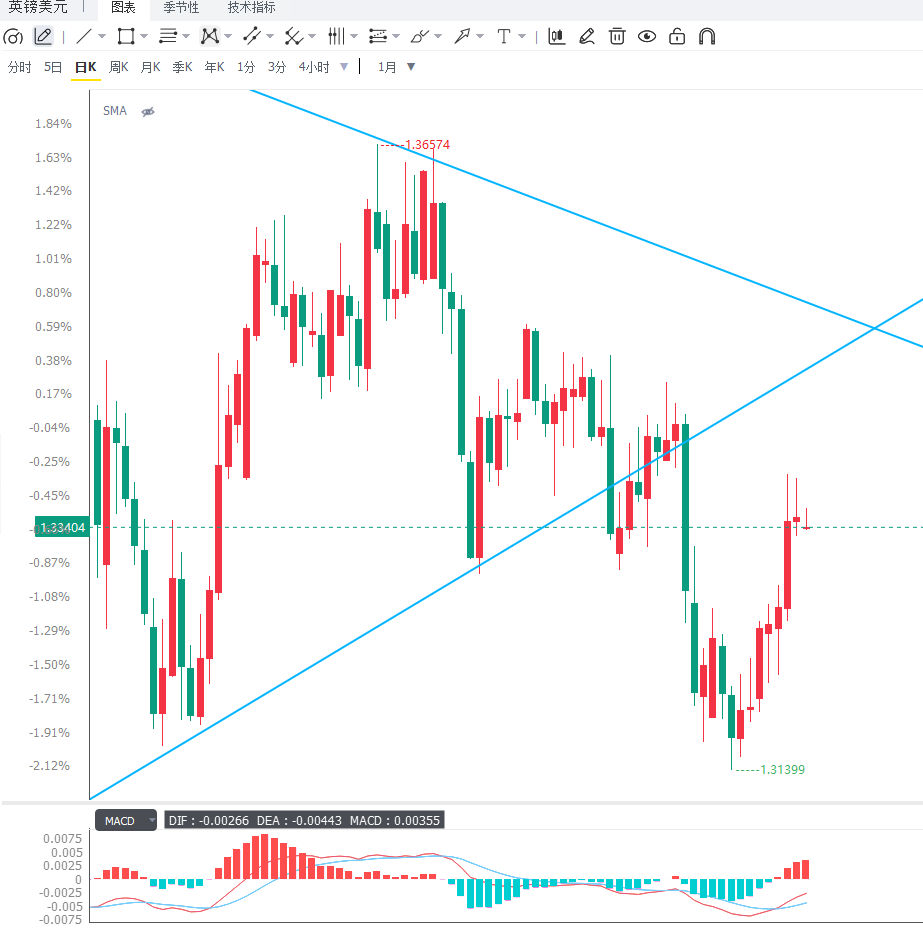
GBP/USD remained range-bound during Monday's Asian session, trading around 1.3340 , failing to maintain last week's rebound momentum. Although the price recovered significantly from its lows near 1.3140, it remains capped below the 200-day simple moving average (SMA) , a technical resistance that keeps the market cautious until a trend is confirmed.
Regarding the US dollar, geopolitical risks have once again become the dominant short-term variable. Renewed tensions in the Strait of Hormuz have kept the market highly sensitive to shipping safety and energy supply risks. Against this backdrop, the US dollar has received some safe-haven support, limiting further upside potential for the British pound. Particularly with increased uncertainty surrounding oil transport routes, market risk premiums are being re-incorporated into the pricing structure of US dollar assets.
However, the overall strength of the US dollar is also constrained by fundamentals. Recent US employment data has been weak, with non-farm payrolls increasing by only about 57,000 , significantly lower than expected, indicating a cooling labor market. Meanwhile, inflationary pressures have eased due to the decline in oil prices, significantly reducing market expectations for the Federal Reserve to maintain high interest rates for an extended period or even continue raising rates. Market surveys show that interest rate expectations have gradually shifted from multiple rate hikes to only 0-1 rate hikes left this year. This change in expectations has suppressed the dollar's upward trend, providing some support for the GBP/USD exchange rate.
In the UK, the pound received some fundamental support, mainly from improved expectations of fiscal discipline. Andy Burnham, a potential UK leader, pledged to maintain strict fiscal rules, which helped stabilize market confidence regarding debt and policy path. However, at the same time, the latest UK PMI data showed a significant slowdown in economic momentum, particularly a decline in service sector activity, which dragged down overall growth and limited the pound's upward momentum.
In the UK, the pound received some fundamental support, mainly from improved expectations of fiscal discipline. Andy Burnham, a potential UK leader, pledged to maintain strict fiscal rules, which helped stabilize market confidence regarding debt and policy path. However, at the same time, the latest UK PMI data showed a significant slowdown in economic momentum, particularly a decline in service sector activity, which dragged down overall growth and limited the pound's upward momentum.
Overall, GBP/USD is currently in a complex balance between "the safe-haven support of the US dollar and the cooling of interest rate expectations, and the coexistence of stable pound policy and economic slowdown." The price lacks the momentum for a trend breakout and is more likely to consolidate at high levels.
From a daily chart perspective, GBP/USD has entered a mid-term correction phase after rebounding from the 1.3140 area, but it has not yet shaken off the influence of the previous downtrend. The price is currently trading below the 200-day moving average , indicating that the medium-to-long-term trend remains in a weak corrective structure. The 1.3400–1.3450 area above forms a significant resistance zone; if this area cannot be effectively broken, the rebound is more of a technical correction than a trend reversal. On the downside, the 1.3250–1.3200 area forms the initial support zone.
From a 4-hour chart perspective, the exchange rate has entered a clear range-bound trading pattern, with short-term volatility narrowing and the market repeatedly fluctuating between 1.3300 and 1.3400. The MACD indicator shows a flattening momentum, with frequent switching between red and green bars but lacking a sustained directional signal, indicating a balance between bullish and bearish forces. The RSI remains in the neutral range, without any obvious overbought or oversold signals. If the price breaks through and holds above 1.3400, it may open up room for a correction towards 1.3500; if it falls below 1.3250, it may retest the previous low area.
The overall technical structure shows that GBP/USD is in a high-level consolidation phase after a trend correction, and the market is waiting for macroeconomic data to drive a directional choice. In the short term, it will mainly fluctuate within a range.
Editor's Summary
The current GBP/USD exchange rate movement reflects the tug-of-war between the safe-haven appeal of the US dollar and cooling interest rate expectations. Meanwhile, the pound benefits from stable fiscal expectations but is constrained by a slowing economy, resulting in a lack of clear trend direction. In the short term, the exchange rate is likely to remain range-bound between 1.32 and 1.34, with key breakout directions depending on US services data and geopolitical risk developments. If the US dollar continues to be pressured by weak data, the pound may have further room for recovery; however, if safe-haven demand rises again or US data exceeds expectations, GBP/USD may still face downward pressure. In the medium term, the market remains in a transitional phase where macroeconomic expectations and data-driven factors alternate, and the trend is not yet fully clear.
Regarding the US dollar, geopolitical risks have once again become the dominant short-term variable. Renewed tensions in the Strait of Hormuz have kept the market highly sensitive to shipping safety and energy supply risks. Against this backdrop, the US dollar has received some safe-haven support, limiting further upside potential for the British pound. Particularly with increased uncertainty surrounding oil transport routes, market risk premiums are being re-incorporated into the pricing structure of US dollar assets.
However, the overall strength of the US dollar is also constrained by fundamentals. Recent US employment data has been weak, with non-farm payrolls increasing by only about 57,000 , significantly lower than expected, indicating a cooling labor market. Meanwhile, inflationary pressures have eased due to the decline in oil prices, significantly reducing market expectations for the Federal Reserve to maintain high interest rates for an extended period or even continue raising rates. Market surveys show that interest rate expectations have gradually shifted from multiple rate hikes to only 0-1 rate hikes left this year. This change in expectations has suppressed the dollar's upward trend, providing some support for the GBP/USD exchange rate.
In the UK, the pound received some fundamental support, mainly from improved expectations of fiscal discipline. Andy Burnham, a potential UK leader, pledged to maintain strict fiscal rules, which helped stabilize market confidence regarding debt and policy path. However, at the same time, the latest UK PMI data showed a significant slowdown in economic momentum, particularly a decline in service sector activity, which dragged down overall growth and limited the pound's upward momentum.
In the UK, the pound received some fundamental support, mainly from improved expectations of fiscal discipline. Andy Burnham, a potential UK leader, pledged to maintain strict fiscal rules, which helped stabilize market confidence regarding debt and policy path. However, at the same time, the latest UK PMI data showed a significant slowdown in economic momentum, particularly a decline in service sector activity, which dragged down overall growth and limited the pound's upward momentum.
Overall, GBP/USD is currently in a complex balance between "the safe-haven support of the US dollar and the cooling of interest rate expectations, and the coexistence of stable pound policy and economic slowdown." The price lacks the momentum for a trend breakout and is more likely to consolidate at high levels.
From a daily chart perspective, GBP/USD has entered a mid-term correction phase after rebounding from the 1.3140 area, but it has not yet shaken off the influence of the previous downtrend. The price is currently trading below the 200-day moving average , indicating that the medium-to-long-term trend remains in a weak corrective structure. The 1.3400–1.3450 area above forms a significant resistance zone; if this area cannot be effectively broken, the rebound is more of a technical correction than a trend reversal. On the downside, the 1.3250–1.3200 area forms the initial support zone.
From a 4-hour chart perspective, the exchange rate has entered a clear range-bound trading pattern, with short-term volatility narrowing and the market repeatedly fluctuating between 1.3300 and 1.3400. The MACD indicator shows a flattening momentum, with frequent switching between red and green bars but lacking a sustained directional signal, indicating a balance between bullish and bearish forces. The RSI remains in the neutral range, without any obvious overbought or oversold signals. If the price breaks through and holds above 1.3400, it may open up room for a correction towards 1.3500; if it falls below 1.3250, it may retest the previous low area.
The overall technical structure shows that GBP/USD is in a high-level consolidation phase after a trend correction, and the market is waiting for macroeconomic data to drive a directional choice. In the short term, it will mainly fluctuate within a range.
Editor's Summary
The current GBP/USD exchange rate movement reflects the tug-of-war between the safe-haven appeal of the US dollar and cooling interest rate expectations. Meanwhile, the pound benefits from stable fiscal expectations but is constrained by a slowing economy, resulting in a lack of clear trend direction. In the short term, the exchange rate is likely to remain range-bound between 1.32 and 1.34, with key breakout directions depending on US services data and geopolitical risk developments. If the US dollar continues to be pressured by weak data, the pound may have further room for recovery; however, if safe-haven demand rises again or US data exceeds expectations, GBP/USD may still face downward pressure. In the medium term, the market remains in a transitional phase where macroeconomic expectations and data-driven factors alternate, and the trend is not yet fully clear.
- Risk Warning and Disclaimer
- The market involves risk, and trading may not be suitable for all investors. This article is for reference only and does not constitute personal investment advice, nor does it take into account certain users’ specific investment objectives, financial situation, or other needs. Any investment decisions made based on this information are at your own risk.