Crude Oil Trading Alert: Escalating US-Iran Conflict Supports Continued Oil Price Rebound
2026-07-13 09:22:45
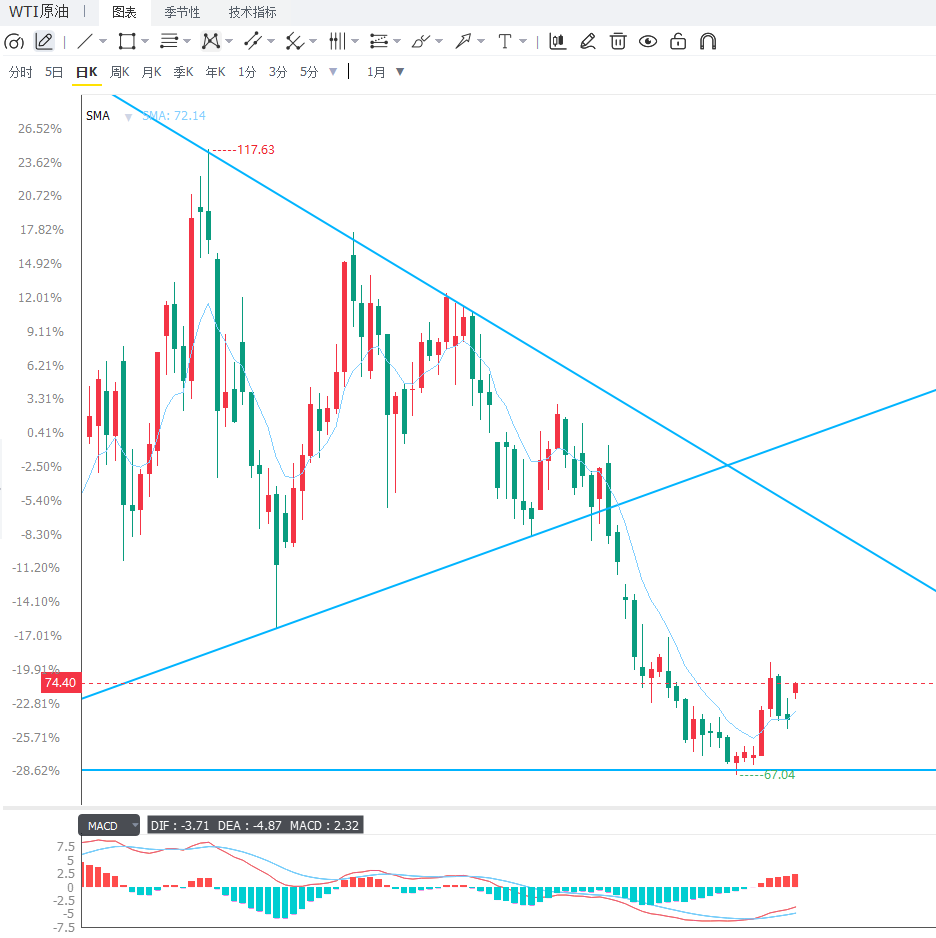
On Monday during Asian trading hours, international crude oil prices ended a two-day correction, with WTI crude oil prices rebounding to around $74.50 per barrel . As military tensions between the US and Iran escalated again, market risk appetite cooled significantly, and investors reassessed the potential risks to energy supplies in the Middle East, providing support for international oil prices.

U.S. Central Command continued its strikes against Iranian military targets Sunday night, focusing on weakening Iran's ability to attack merchant ships in the Strait of Hormuz. Meanwhile, market research indicates that the U.S. military has struck more than 300 Iranian targets over the past three days, including approximately 140 targets on Saturday alone, demonstrating the ongoing escalation of military tensions between the two sides.
Market focus remains on shipping safety in the Strait of Hormuz. The Strait of Hormuz handles approximately 20% of global seaborne crude oil transport ; any disruption to this route would directly impact the stability of the global energy supply chain and drive up international crude oil risk premiums. Currently, the United States and Iran maintain significant disagreements regarding whether normal navigation should continue in the strait, further increasing market uncertainty about future crude oil shipments.
In fact, international oil prices initially fell last week, mainly due to the interim peace agreement reached between the United States and Iran, which led to market expectations that crude oil exports from the Middle East might return to normal and the global supply shortage might be alleviated to some extent. However, the recent outbreak of military conflict quickly dispelled the previous optimism, and oil prices subsequently recovered some of their losses.
Meanwhile, diplomatic progress has also slowed significantly. Iran has stated that a new round of negotiations is unlikely until the United States fully fulfills its previous commitments regarding ensuring shipping safety and normalizing Iranian oil exports. This means that significant uncertainty remains in the Middle East in the short term, and the international energy market will continue to maintain a high risk premium.
Besides geopolitical factors, the market will also focus on US inflation data, API and EIA crude oil inventory reports, and speeches by Federal Reserve officials this week. If US economic data continues to be weak, it may strengthen market expectations for monetary policy adjustments, providing some support for oil prices from the demand side; while inventory changes and developments in the Middle East will remain the core factors affecting international oil price fluctuations.
From a technical perspective, WTI crude oil maintains a slightly bullish trend on the daily chart, with prices regaining ground near major moving averages, indicating a recovery in short-term bullish momentum. The MACD indicator remains near the zero line and shows signs of forming a golden cross again, suggesting gradually improving market momentum. If prices can effectively break through the $75.50 resistance level, they are expected to further challenge the $77.00 area. On the downside, key support levels to watch are $72.80 and $71.50 ; a break below these levels could lead to a retest of the $70 area.
From a 4-hour chart perspective, WTI crude oil has rebounded and returned above the short-term moving average system. The MACD histogram continues to expand, and the RSI has risen to the neutral-to-strong zone, indicating that short-term buying power is strengthening. However, due to the potential for significant volatility caused by geopolitical news, if oil prices cannot effectively break through the resistance level around $75.50, they may continue to consolidate at high levels in the short term; a successful breakout could open up further upside potential.
Editor's Summary : The renewed escalation of the US-Iran military conflict has rapidly heightened market concerns about the security of Middle Eastern energy supplies, pushing international oil prices away from previous downward pressure. The security of shipping through the Strait of Hormuz remains a key factor determining international oil price trends ; any news of shipping disruptions or escalating military action could further increase the risk premium for crude oil. Meanwhile, investors should closely monitor US inventory data, economic data, and changes in Federal Reserve policy expectations. Driven by geopolitical risks and global demand expectations, international oil prices are expected to remain highly volatile in the short term.
U.S. Central Command continued its strikes against Iranian military targets Sunday night, focusing on weakening Iran's ability to attack merchant ships in the Strait of Hormuz. Meanwhile, market research indicates that the U.S. military has struck more than 300 Iranian targets over the past three days, including approximately 140 targets on Saturday alone, demonstrating the ongoing escalation of military tensions between the two sides.
Market focus remains on shipping safety in the Strait of Hormuz. The Strait of Hormuz handles approximately 20% of global seaborne crude oil transport ; any disruption to this route would directly impact the stability of the global energy supply chain and drive up international crude oil risk premiums. Currently, the United States and Iran maintain significant disagreements regarding whether normal navigation should continue in the strait, further increasing market uncertainty about future crude oil shipments.
In fact, international oil prices initially fell last week, mainly due to the interim peace agreement reached between the United States and Iran, which led to market expectations that crude oil exports from the Middle East might return to normal and the global supply shortage might be alleviated to some extent. However, the recent outbreak of military conflict quickly dispelled the previous optimism, and oil prices subsequently recovered some of their losses.
Meanwhile, diplomatic progress has also slowed significantly. Iran has stated that a new round of negotiations is unlikely until the United States fully fulfills its previous commitments regarding ensuring shipping safety and normalizing Iranian oil exports. This means that significant uncertainty remains in the Middle East in the short term, and the international energy market will continue to maintain a high risk premium.
Besides geopolitical factors, the market will also focus on US inflation data, API and EIA crude oil inventory reports, and speeches by Federal Reserve officials this week. If US economic data continues to be weak, it may strengthen market expectations for monetary policy adjustments, providing some support for oil prices from the demand side; while inventory changes and developments in the Middle East will remain the core factors affecting international oil price fluctuations.
From a technical perspective, WTI crude oil maintains a slightly bullish trend on the daily chart, with prices regaining ground near major moving averages, indicating a recovery in short-term bullish momentum. The MACD indicator remains near the zero line and shows signs of forming a golden cross again, suggesting gradually improving market momentum. If prices can effectively break through the $75.50 resistance level, they are expected to further challenge the $77.00 area. On the downside, key support levels to watch are $72.80 and $71.50 ; a break below these levels could lead to a retest of the $70 area.
From a 4-hour chart perspective, WTI crude oil has rebounded and returned above the short-term moving average system. The MACD histogram continues to expand, and the RSI has risen to the neutral-to-strong zone, indicating that short-term buying power is strengthening. However, due to the potential for significant volatility caused by geopolitical news, if oil prices cannot effectively break through the resistance level around $75.50, they may continue to consolidate at high levels in the short term; a successful breakout could open up further upside potential.
Editor's Summary : The renewed escalation of the US-Iran military conflict has rapidly heightened market concerns about the security of Middle Eastern energy supplies, pushing international oil prices away from previous downward pressure. The security of shipping through the Strait of Hormuz remains a key factor determining international oil price trends ; any news of shipping disruptions or escalating military action could further increase the risk premium for crude oil. Meanwhile, investors should closely monitor US inventory data, economic data, and changes in Federal Reserve policy expectations. Driven by geopolitical risks and global demand expectations, international oil prices are expected to remain highly volatile in the short term.
- Risk Warning and Disclaimer
- The market involves risk, and trading may not be suitable for all investors. This article is for reference only and does not constitute personal investment advice, nor does it take into account certain users’ specific investment objectives, financial situation, or other needs. Any investment decisions made based on this information are at your own risk.