Crude Oil Trading Alert: Shipping Risks in the Strait of Hormuz Continue to Rise, Oil Prices Rebound Sharply
2026-07-14 09:34:10
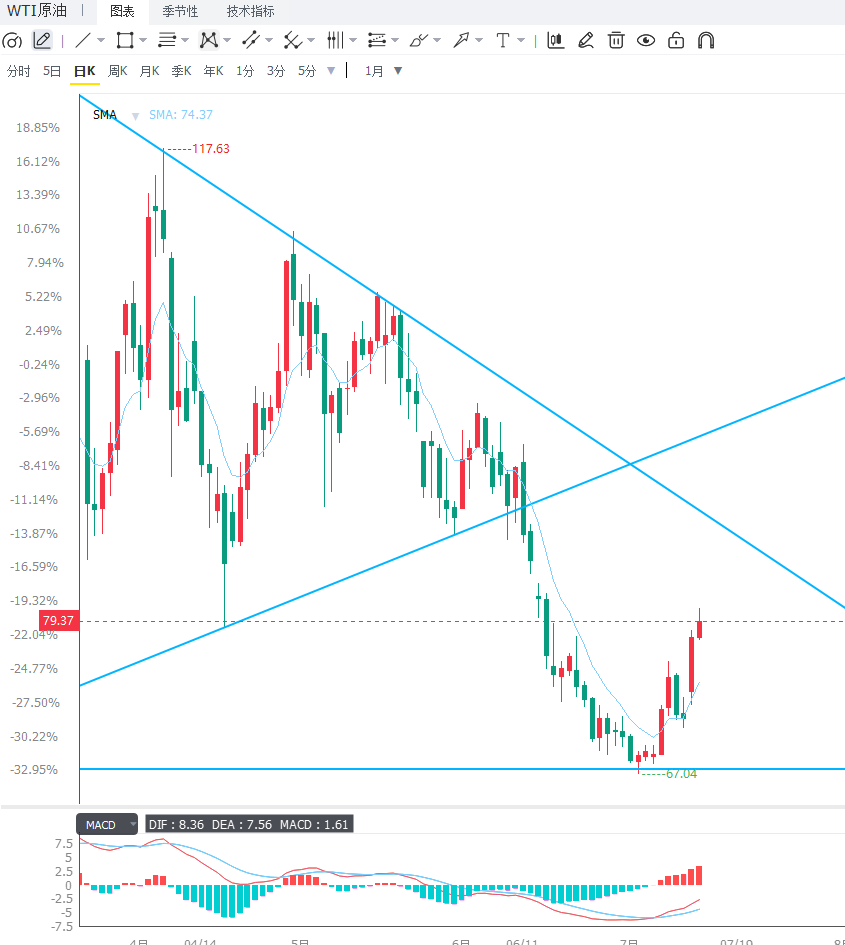
International crude oil prices continued their rebound on Tuesday, with WTI crude trading around $79.30 per barrel in Asian trading, marking the second consecutive day of gains. As geopolitical tensions in the Middle East deteriorated again, concerns about the stability of global energy supplies intensified, driving international oil prices higher due to risk aversion. 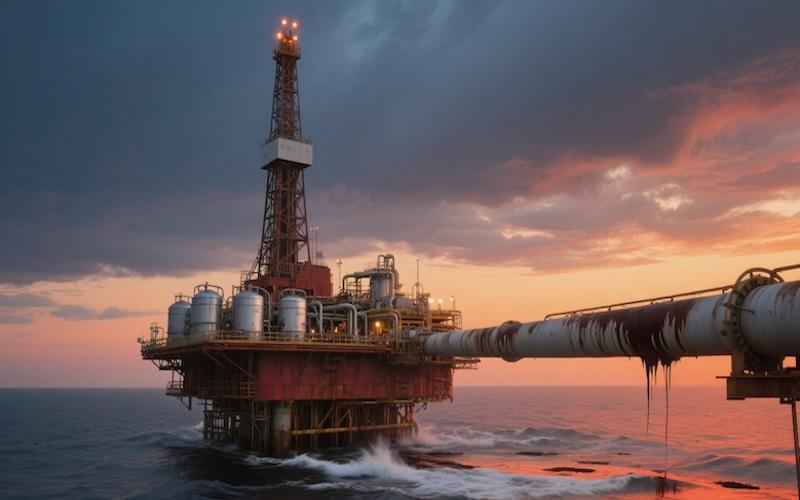 US President Trump announced the reinstatement of maritime blockade measures against Iranian vessels, focusing on restricting Iranian ships and their customers transiting the Strait of Hormuz. Simultaneously, the US announced a 20% compensatory fee on all other commercial freight transiting the Strait of Hormuz. Trump stated that the US has long borne the military costs of maintaining shipping security in the Strait of Hormuz and should receive corresponding economic compensation, specifically naming Saudi Arabia, the United Arab Emirates, Qatar, Bahrain, and Kuwait as regional countries that should share the responsibility. These measures come amid escalating military tensions between the US and Iran. The renewed military actions by both sides in the Gulf region have further exacerbated market concerns about the security of shipping through the Strait of Hormuz. The Strait of Hormuz handles approximately 20% of global seaborne crude oil transport ; any disruption to this transport could rapidly impact the international energy supply landscape, thus driving up market risk premiums. Meanwhile, Trump also indicated his support for a new sanctions bill targeting Russian energy exports. This bill aims to further strengthen restrictions on international buyers of Russian oil and gas. The market believes that if sanctions are further expanded, global crude oil supply may continue to be affected, and the balance of supply and demand in the international energy market will face new challenges. Escalating geopolitical risks are also reflected in transportation security. The United Arab Emirates Ministry of Defense confirmed on Tuesday that two of the country's oil tankers—the Mombasa and the Albayah—were attacked by Iranian cruise missiles in the southern Strait of Hormuz, near Oman's territorial waters. This incident once again highlights the shipping risks in the Gulf region, and market concerns about disruptions to crude oil transportation have rapidly intensified, also driving international oil prices to remain strong. From a market perspective, geopolitical risks have once again become the core factor influencing international oil price trends. Although some institutions believe that global crude oil demand growth still faces some pressure, current supply risks clearly outweigh demand factors, driving funds back into the energy market. In the future, the market will continue to focus on whether the situation in the Middle East will escalate further, whether shipping in the Strait of Hormuz will be continuously affected, and whether major oil-producing countries will take measures to stabilize supply. These factors will all be important variables determining the next stage of international oil price trends. From a technical perspective, WTI crude oil maintains a slightly bullish trend on the daily chart, with prices regaining their footing above the major moving averages, and the medium-to-long-term uptrend structure remains intact. The MACD indicator maintains a golden cross and continues to diverge upwards, indicating that bullish momentum continues to strengthen; the RSI indicator is running in the strong zone but has not yet entered the extreme overbought zone, suggesting that there is still room for further upward movement. If the bulls continue to exert their strength, oil prices are expected to further test the resistance levels near $80.50 and $82.00 ; the initial support level is at $78.30 , with further support around $76.80 . As long as the price holds above these areas, the medium-term bullish trend is likely to continue. Looking at the 4-hour chart, WTI crude oil maintains a clear short-term upward channel, with the price center of gravity continuing to rise. The MACD histogram continues to expand, indicating that short-term buying power is dominant, and the RSI remains above 60, reflecting a still bullish market sentiment. However, after continuous gains, oil prices also have some technical consolidation needs. If the price breaks through the $80.50 resistance zone, it may further challenge $82.00 . If a short-term pullback occurs, pay attention to the support levels around $78.80 and $78.30. Overall, the short-term trend is still biased towards a fluctuating upward movement.
  Editor's Summary: The escalating situation in the Middle East has once again become a major driver of the international crude oil market. Increased US maritime restrictions, heightened shipping risks in the Strait of Hormuz, and attacks on UAE oil tankers have collectively heightened concerns about global energy supply, pushing WTI crude oil prices higher. In the short term, geopolitical risk premiums are expected to continue to dominate oil price fluctuations. If the situation in the Gulf region deteriorates further, international oil prices may continue to rise; conversely, if the situation shows signs of easing, market risk premiums may decline. In addition to monitoring developments in the Middle East, investors should also closely observe policy changes in major oil-producing countries, global inventory data, and demand prospects, as these factors will collectively determine the future trend of the crude oil market.
US President Trump announced the reinstatement of maritime blockade measures against Iranian vessels, focusing on restricting Iranian ships and their customers transiting the Strait of Hormuz. Simultaneously, the US announced a 20% compensatory fee on all other commercial freight transiting the Strait of Hormuz. Trump stated that the US has long borne the military costs of maintaining shipping security in the Strait of Hormuz and should receive corresponding economic compensation, specifically naming Saudi Arabia, the United Arab Emirates, Qatar, Bahrain, and Kuwait as regional countries that should share the responsibility. These measures come amid escalating military tensions between the US and Iran. The renewed military actions by both sides in the Gulf region have further exacerbated market concerns about the security of shipping through the Strait of Hormuz. The Strait of Hormuz handles approximately 20% of global seaborne crude oil transport ; any disruption to this transport could rapidly impact the international energy supply landscape, thus driving up market risk premiums. Meanwhile, Trump also indicated his support for a new sanctions bill targeting Russian energy exports. This bill aims to further strengthen restrictions on international buyers of Russian oil and gas. The market believes that if sanctions are further expanded, global crude oil supply may continue to be affected, and the balance of supply and demand in the international energy market will face new challenges. Escalating geopolitical risks are also reflected in transportation security. The United Arab Emirates Ministry of Defense confirmed on Tuesday that two of the country's oil tankers—the Mombasa and the Albayah—were attacked by Iranian cruise missiles in the southern Strait of Hormuz, near Oman's territorial waters. This incident once again highlights the shipping risks in the Gulf region, and market concerns about disruptions to crude oil transportation have rapidly intensified, also driving international oil prices to remain strong. From a market perspective, geopolitical risks have once again become the core factor influencing international oil price trends. Although some institutions believe that global crude oil demand growth still faces some pressure, current supply risks clearly outweigh demand factors, driving funds back into the energy market. In the future, the market will continue to focus on whether the situation in the Middle East will escalate further, whether shipping in the Strait of Hormuz will be continuously affected, and whether major oil-producing countries will take measures to stabilize supply. These factors will all be important variables determining the next stage of international oil price trends. From a technical perspective, WTI crude oil maintains a slightly bullish trend on the daily chart, with prices regaining their footing above the major moving averages, and the medium-to-long-term uptrend structure remains intact. The MACD indicator maintains a golden cross and continues to diverge upwards, indicating that bullish momentum continues to strengthen; the RSI indicator is running in the strong zone but has not yet entered the extreme overbought zone, suggesting that there is still room for further upward movement. If the bulls continue to exert their strength, oil prices are expected to further test the resistance levels near $80.50 and $82.00 ; the initial support level is at $78.30 , with further support around $76.80 . As long as the price holds above these areas, the medium-term bullish trend is likely to continue. Looking at the 4-hour chart, WTI crude oil maintains a clear short-term upward channel, with the price center of gravity continuing to rise. The MACD histogram continues to expand, indicating that short-term buying power is dominant, and the RSI remains above 60, reflecting a still bullish market sentiment. However, after continuous gains, oil prices also have some technical consolidation needs. If the price breaks through the $80.50 resistance zone, it may further challenge $82.00 . If a short-term pullback occurs, pay attention to the support levels around $78.80 and $78.30. Overall, the short-term trend is still biased towards a fluctuating upward movement. Editor's Summary: The escalating situation in the Middle East has once again become a major driver of the international crude oil market. Increased US maritime restrictions, heightened shipping risks in the Strait of Hormuz, and attacks on UAE oil tankers have collectively heightened concerns about global energy supply, pushing WTI crude oil prices higher. In the short term, geopolitical risk premiums are expected to continue to dominate oil price fluctuations. If the situation in the Gulf region deteriorates further, international oil prices may continue to rise; conversely, if the situation shows signs of easing, market risk premiums may decline. In addition to monitoring developments in the Middle East, investors should also closely observe policy changes in major oil-producing countries, global inventory data, and demand prospects, as these factors will collectively determine the future trend of the crude oil market.
- Risk Warning and Disclaimer
- The market involves risk, and trading may not be suitable for all investors. This article is for reference only and does not constitute personal investment advice, nor does it take into account certain users’ specific investment objectives, financial situation, or other needs. Any investment decisions made based on this information are at your own risk.