WTI at 80, US Treasury bonds at 4.6%, gold at 4000: Behind these three figures, the market is betting on the same thing.
2026-07-15 19:40:12
On Wednesday (July 15), geopolitical tensions in the Middle East remained the central nerve of the market. Trump's military threats against Iran and developments in the Strait of Hormuz kept the fear premium for crude oil high, with WTI crude fluctuating wildly around $80. Gold prices held firm at the psychological level of $4,000, with safe-haven buying and upward pressure on interest rates clashing fiercely. US Treasury yields hovered at high levels amid inflation concerns, market sentiment was tense, awaiting new conflict signals and key data. Behind the seemingly chaotic market, the driving logic is remarkably clear: geopolitical fears, interest rate expectations, and physical supply and demand are in full swing. This article will strip away the noise, deeply integrating real-time news and key technical ranges to dissect the interconnectedness of crude oil, gold, US Treasuries, and the US dollar. We will deduce the turning points in sentiment and hidden risks layer by layer, from the potential supply disruption risk in the Strait of Hormuz, the critical point for gold price movement, to the chain reaction triggered by rising US Treasury yields. 
The tensions of the Hormuz and oil price fluctuations
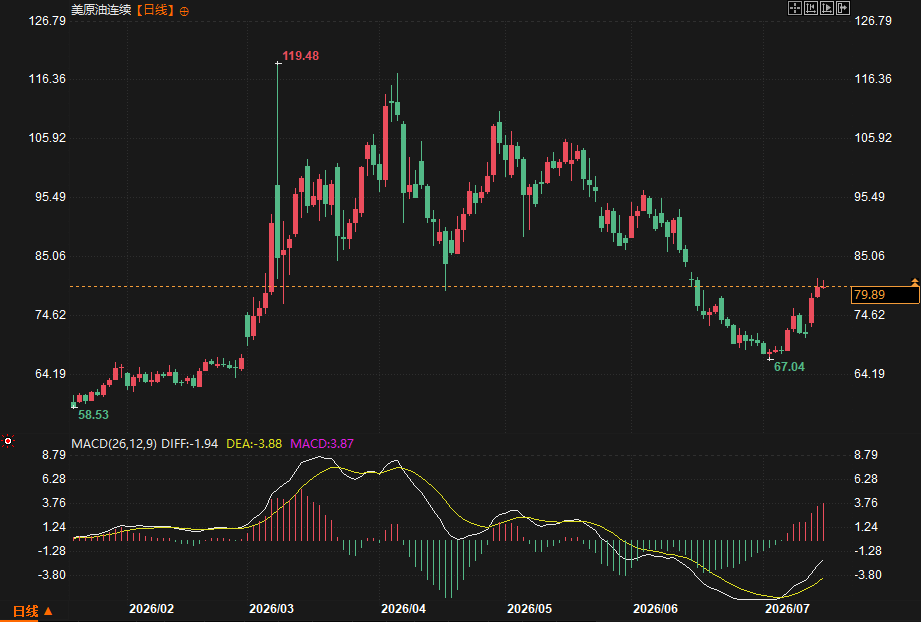
Trump's threat to strike Iranian infrastructure has made the Strait of Hormuz a nerve center for the global oil market. Although the actual probability of a supply disruption is low, approximately 20% of global oil shipments pass through this area, forcing the market to pay a hefty panic premium for any eventuality. In the past few hours, ship movements circulating on social media have triggered sharp jumps and falls in WTI crude oil prices. Technically, oil prices are caught in a tug-of-war between bulls and bears in the $78-80 range, with strong resistance at $83 and key support at $75. If geopolitical noise persists, high volatility will become the norm, and any sudden rumors of a blockade could instantly break through resistance. However, once diplomatic rumors subside, the premium could evaporate just as quickly. Closely monitoring ship tracking and inventory data in the Strait of Hormuz is far more reliable than chasing highs and lows.Gold: Caught Between Safe Haven and Interest Rates
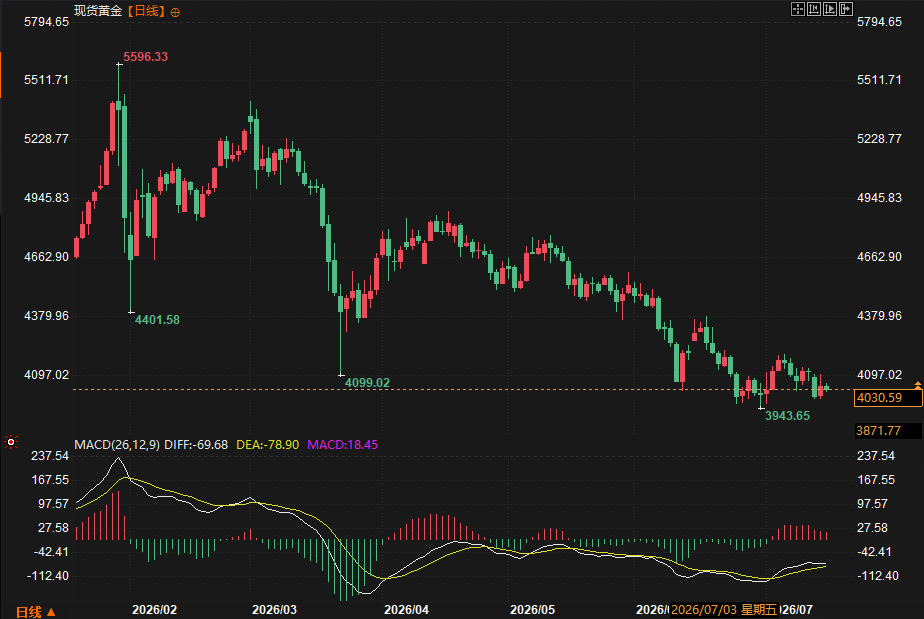
Gold prices are holding above the $4,000 mark, perfectly reflecting the tug-of-war between safe-haven demand and interest rates . Rising oil prices are pushing up inflation expectations, forcing US Treasury yields to remain high and significantly increasing the opportunity cost of holding gold; however, escalating threats from Iran are preventing safe-haven funds from leaving the market. Short-term support lies in the $3,980-$4,000 range, an area that has been tested multiple times; above, $4,050-$4,060 forms a strong resistance zone. If the conflict does not escalate substantially but inflation data exceeds expectations, gold prices risk testing the support level, potentially triggering a stampede among bulls . Conversely, if safe-haven demand suddenly intensifies, it could quickly break through the resistance.US Treasury yields: The specter of inflation looms large.
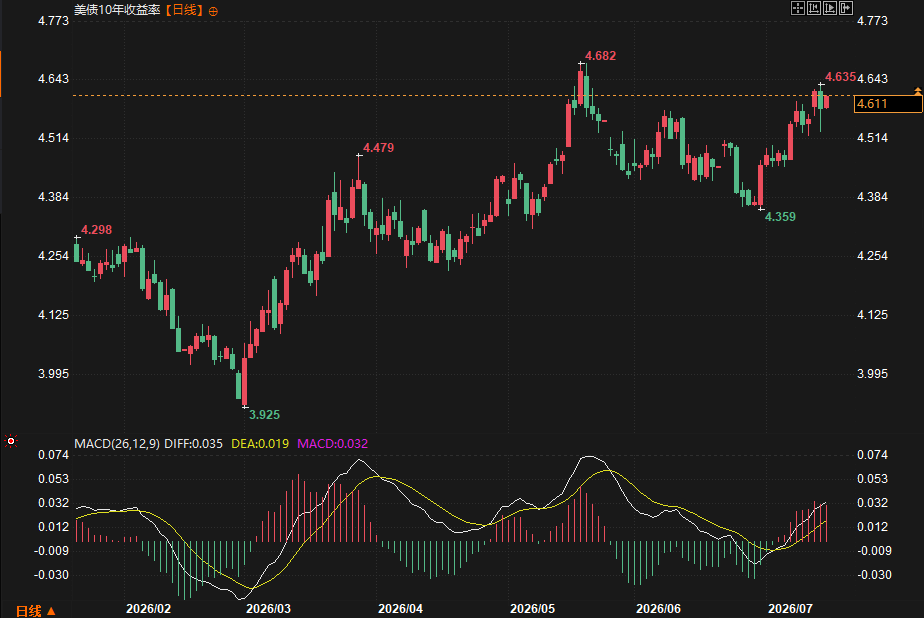
The 10-year US Treasury yield hovered around 4.6%, while the 30-year yield briefly touched a high of 5.1%, with the market stubbornly pricing in "higher interest rates for a longer period." Persistently high oil prices exacerbated inflation stickiness, coupled with concerns about a hawkish stance from the Federal Reserve, putting significant pressure on bonds. A decisive break above 4.7% in yields would accelerate the tightening of financial conditions, creating a negative feedback loop for equity assets. Short-term support is seen in the 4.50-4.55% area, which can be considered a critical line for a temporary easing of bearish sentiment. Traders are highly sensitive, and the upcoming CPI data could be the trigger for a surge in volatility.US Dollar: Safe Haven or Risk Target?
The US dollar is supported by strong data and interest rate advantages, but its role often becomes divided in turbulent times. Currently, the dollar is more closely linked to yields; if oil prices push up inflation expectations, it will be relatively strong in the short term; however, if the situation in the Middle East triggers extreme risk aversion, funds may flow into gold instead. Forex traders must be wary of the potential for a sudden reversal and damage from a sudden shift in the "safe haven" mode to "risk ."Trend Outlook
In the short term, geopolitical headlines remain the core variable, with oil prices likely to fluctuate widely between $75 and $83, highly susceptible to impulsive price movements. Gold prices are anchored at $4,000, and any shifts in interest rates or safe-haven demand will trigger sharp rises and falls. In the long term, if the Hormuz conflict escalates to supply disruptions, oil prices will rise significantly, exacerbating global stagflation concerns and providing gold with ultimate safe-haven support. If negotiations resume, the premium will recede sharply, and gold prices will face downward pressure from interest rate suppression. Regardless of the scenario, extremely high volatility and extreme sentiment will be the norm that traders must confront.Frequently Asked Questions
How long will the impact of Middle East tensions on oil prices last? In the short term, it depends on headline impulses, typically lasting several days to weeks. If there are no actual supply disruptions, the premium will diminish over time; if the situation unexpectedly eases, the pullback will be very rapid. Why is gold struggling to rise in a safe-haven environment? Because oil prices are pushing up inflation expectations, forcing US Treasury yields higher, increasing the opportunity cost of holding gold. This creates a standoff between safe-haven demand and interest rate pressures, causing gold prices to fluctuate within a range. Will US Treasury yields rise uncontrollably? If inflation data continues to exceed expectations and the Fed remains hawkish, yields may rise further, but concerns about an economic slowdown are acting as a buffer, currently mainly fluctuating at high levels, without any signs of spiraling out of control. Is the US dollar a safe-haven asset or a risk asset in geopolitical conflicts? Its role is not fixed. Under normal circumstances, the US dollar benefits from interest rate differentials and safe-haven appeal, but if global risk aversion becomes extreme, funds may abandon the dollar for gold, leading to a divergence in the dollar's trajectory. How should traders cope with the current high-volatility environment? Strictly control position size, focus on key support and resistance levels rather than blindly chasing headlines, and be wary of liquidity traps and sentiment reversals. In a geopolitical market, preserving your principal is more important than pursuing short-term gains.- Risk Warning and Disclaimer
- The market involves risk, and trading may not be suitable for all investors. This article is for reference only and does not constitute personal investment advice, nor does it take into account certain users’ specific investment objectives, financial situation, or other needs. Any investment decisions made based on this information are at your own risk.