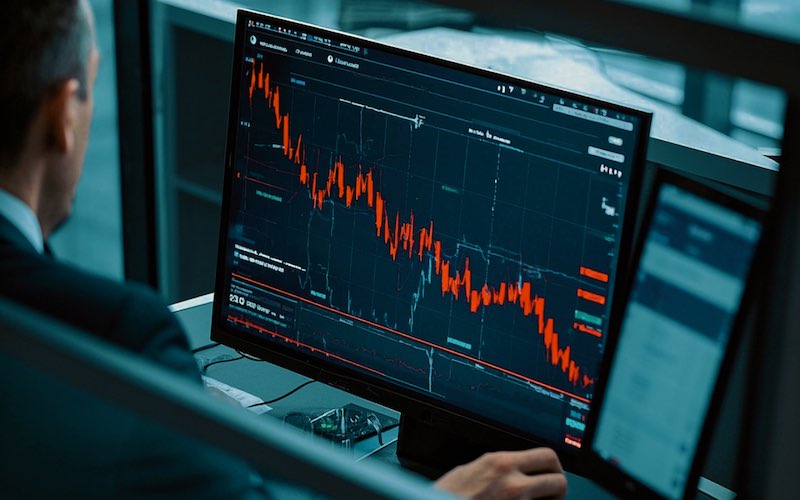
Crude oil market: Market sentiment remains high
2026-07-15 20:02:14
Risk aversion has once again dominated the international crude oil market, becoming the core driver of current oil price volatility. Global stock markets are under pressure and declining, while risk assets are generally correcting, further exacerbating uncertainty in the crude oil market and making crude oil, often referred to as "black gold," even more vulnerable and volatile.  US inflation data for June showed a significant cooling, pushing the US dollar index lower. Data showed that the year-on-year increase in the US Consumer Price Index (CPI) fell from 4.2% to 3.5% in June, while the core CPI also slightly decreased from 2.8% to 2.6%, clearly indicating a downward trend in inflation. As a result, market expectations for a July rate hike by the Federal Reserve cooled sharply, plummeting from 40% to 17%; simultaneously, the market's prediction of two rounds of monetary tightening by the Fed in 2026 also declined from 58% to 35%. Most market investors generally believe that the May CPI data has already locked in the peak of this inflation cycle, and the trend of declining inflation and easing deflation will continue. The Fed will not need to tighten monetary policy further through rate hikes, and market expectations for easing have further increased. Former Fed official Kevin Warsh expressed clear skepticism about the market's current easing expectations. He publicly stated at a congressional hearing that the Fed has long failed to fulfill its core policy mission. Over the past five years, the Federal Reserve has consistently failed to control domestic inflation to its established target range of 2%. The new Fed chairman is now adjusting policy thinking, striving to reverse this situation and restore the inflation control target. Warsh warned the market against judging the arrival of an inflation turning point based solely on a single month's inflation data, as the reference value of a single monthly report is limited. Meanwhile, the escalating geopolitical conflict in the Middle East and the significant increase in regional uncertainty mean that it is too early for the market to conclude that inflation is on a long-term downward trend. International Brent crude oil prices have risen in four of the past six trading days, completely recovering all losses since June with a phased rebound, completing a deep recovery. Industry investors pointed out that the current weakness in global stock markets and low market risk appetite have significantly reduced the resilience of the oil market. Compared to the early stages of the Middle East conflict, the current oil market is more sensitive to geopolitical risks and significantly more vulnerable. On the geopolitical risk front, the US has reinstated its blockade and control of the Strait of Hormuz, intensified new sanctions against Iran, and issued a strong statement regarding its intention to target Iran's energy infrastructure. These aggressive measures have significantly escalated regional tensions, greatly increasing the probability of Iranian military retaliation and energy countermeasures, and escalating risks to the crude oil supply chain. In addition to the Strait of Hormuz, the market is also highly wary of the navigation risks associated with another global oil transport chokepoint—the Bab el-Mandeb Strait. The Houthi rebels in Yemen, supported by Iran, remain active, raising concerns that they may completely block the Bab el-Mandeb Strait shipping route. If this crucial waterway is shut down, the Gulf countries' crude oil export channels will be severely congested, further widening the global crude oil supply gap and likely pushing Brent crude oil prices above $100 per barrel in the short term. The Houthi rebels in Yemen have even publicly issued aggressive warnings, suggesting that in extreme circumstances, international oil prices could even surge to as high as $200 per barrel. The current upward trend in the crude oil market is highly consistent with the initial stages of the Middle East conflict, driven primarily by market risk aversion. The escalating geopolitical conflict and rising risks of oil supply chain disruptions have completely offset various negative pressures in the market. Even with multiple negative factors such as weak global oil consumption driven by slowing Chinese demand, the gradual improvement of alternative international oil transportation routes, ample global oil reserves, and continued increases in US oil exports, the impact of these factors has been significantly weakened by extreme geopolitical risk aversion, failing to reverse the oil price rebound. Meanwhile, the latest inventory data released by the American Petroleum Institute (API) shows that US crude oil inventories have declined for 13 consecutive weeks, although the decline this week was smaller than previously expected. Currently, global investors are closely watching the upcoming official crude oil inventory data from the US Energy Information Administration (EIA), awaiting further guidance from authoritative data on the future direction of the oil market.
US inflation data for June showed a significant cooling, pushing the US dollar index lower. Data showed that the year-on-year increase in the US Consumer Price Index (CPI) fell from 4.2% to 3.5% in June, while the core CPI also slightly decreased from 2.8% to 2.6%, clearly indicating a downward trend in inflation. As a result, market expectations for a July rate hike by the Federal Reserve cooled sharply, plummeting from 40% to 17%; simultaneously, the market's prediction of two rounds of monetary tightening by the Fed in 2026 also declined from 58% to 35%. Most market investors generally believe that the May CPI data has already locked in the peak of this inflation cycle, and the trend of declining inflation and easing deflation will continue. The Fed will not need to tighten monetary policy further through rate hikes, and market expectations for easing have further increased. Former Fed official Kevin Warsh expressed clear skepticism about the market's current easing expectations. He publicly stated at a congressional hearing that the Fed has long failed to fulfill its core policy mission. Over the past five years, the Federal Reserve has consistently failed to control domestic inflation to its established target range of 2%. The new Fed chairman is now adjusting policy thinking, striving to reverse this situation and restore the inflation control target. Warsh warned the market against judging the arrival of an inflation turning point based solely on a single month's inflation data, as the reference value of a single monthly report is limited. Meanwhile, the escalating geopolitical conflict in the Middle East and the significant increase in regional uncertainty mean that it is too early for the market to conclude that inflation is on a long-term downward trend. International Brent crude oil prices have risen in four of the past six trading days, completely recovering all losses since June with a phased rebound, completing a deep recovery. Industry investors pointed out that the current weakness in global stock markets and low market risk appetite have significantly reduced the resilience of the oil market. Compared to the early stages of the Middle East conflict, the current oil market is more sensitive to geopolitical risks and significantly more vulnerable. On the geopolitical risk front, the US has reinstated its blockade and control of the Strait of Hormuz, intensified new sanctions against Iran, and issued a strong statement regarding its intention to target Iran's energy infrastructure. These aggressive measures have significantly escalated regional tensions, greatly increasing the probability of Iranian military retaliation and energy countermeasures, and escalating risks to the crude oil supply chain. In addition to the Strait of Hormuz, the market is also highly wary of the navigation risks associated with another global oil transport chokepoint—the Bab el-Mandeb Strait. The Houthi rebels in Yemen, supported by Iran, remain active, raising concerns that they may completely block the Bab el-Mandeb Strait shipping route. If this crucial waterway is shut down, the Gulf countries' crude oil export channels will be severely congested, further widening the global crude oil supply gap and likely pushing Brent crude oil prices above $100 per barrel in the short term. The Houthi rebels in Yemen have even publicly issued aggressive warnings, suggesting that in extreme circumstances, international oil prices could even surge to as high as $200 per barrel. The current upward trend in the crude oil market is highly consistent with the initial stages of the Middle East conflict, driven primarily by market risk aversion. The escalating geopolitical conflict and rising risks of oil supply chain disruptions have completely offset various negative pressures in the market. Even with multiple negative factors such as weak global oil consumption driven by slowing Chinese demand, the gradual improvement of alternative international oil transportation routes, ample global oil reserves, and continued increases in US oil exports, the impact of these factors has been significantly weakened by extreme geopolitical risk aversion, failing to reverse the oil price rebound. Meanwhile, the latest inventory data released by the American Petroleum Institute (API) shows that US crude oil inventories have declined for 13 consecutive weeks, although the decline this week was smaller than previously expected. Currently, global investors are closely watching the upcoming official crude oil inventory data from the US Energy Information Administration (EIA), awaiting further guidance from authoritative data on the future direction of the oil market.
- Risk Warning and Disclaimer
- The market involves risk, and trading may not be suitable for all investors. This article is for reference only and does not constitute personal investment advice, nor does it take into account certain users’ specific investment objectives, financial situation, or other needs. Any investment decisions made based on this information are at your own risk.