A Look Ahead to the Midterm Elections: An Analysis of Their Impact on Geopolitical Interest Rates
2026-07-24 18:13:01
With the US midterm elections approaching in November, the reshuffling of all seats in the House of Representatives and some seats in the Senate has become a focal point for global capital markets. There is widespread discussion about whether the change in congressional power will trigger dramatic policy shifts, disrupt interest rate trends, and alter overseas military deployments. However, considering the US political system framework and Wall Street analysts' assessments, this round of midterm elections is essentially short-term political noise and unlikely to reverse the overall US macroeconomic situation. Instead, it will exert implicit but crucial constraints on US Treasury yields and overseas military decisions through fiscal policy, public opinion, and congressional authority, becoming an important implicit variable influencing markets and the geopolitical landscape. 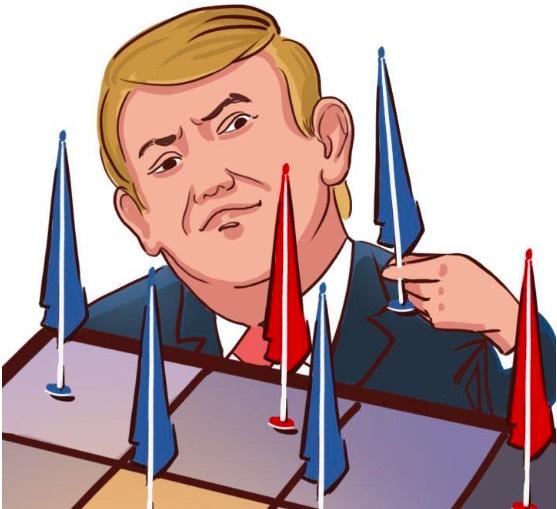
The institutional framework dictates that midterm elections are unlikely to overturn the overall macroeconomic policy landscape.
The core concern in the capital markets lies in whether changes in congressional party affiliation will lead to significant policy shifts and disrupt the pace of economic activity. However, from the perspective of the US constitutional system and governing logic, these concerns are largely exaggerated, and the midterm elections will not shake the core policy lines. First, the White House administration firmly holds the reins of core policy. Core issues such as tariff adjustments, geopolitical strategies, industry regulations, immigration policy, and foreign trade negotiations can all be implemented through presidential executive orders, relying on existing executive authorizations, without going through the complex and lengthy legislative voting process in Congress. This means that even if there are changes in congressional seats, the core economic and foreign policies that the market cares about most will not undergo disruptive adjustments. Second, the likely "separation of powers" between the executive and legislative branches that will emerge after the midterm elections will significantly raise the threshold for implementing radical policies. If the White House and Congress belong to different parties after the election, Congress will be in a state of legislative stagnation, and the passage of major bills such as large-scale fiscal stimulus, substantial tax cuts, and radical industry reforms will become drastically more difficult. As Morgan Stanley's public policy team analyzed, market uncertainty stemming from tariff disputes and geopolitical tensions will persist throughout the remainder of the president's term. Traders who rely solely on changes in congressional seats to predict market trends are essentially deviating from the core pricing anchor. The midterm elections only bring about a reshuffling of political personnel and cannot alter the underlying framework of macroeconomic policies.US Treasury yield pricing: Political noise becomes ineffective; anchoring to the core logic of monetary and fiscal policies.
Compared to the short-term fluctuations in equity markets due to election-related hot topics, the US Treasury market possesses a stronger self-correcting ability. The political disturbances brought about by the midterm elections have a minimal impact on US Treasury yields, and may even have a hedging effect through fiscal constraints. The true pricing core of the bond market remains monetary policy, fiscal supply, and geopolitical inflation risks. First, the Federal Reserve's monetary policy is the underlying core anchor of US Treasury interest rates. The core driving factors for US Treasury yields, especially short- and medium-term rates, are the Fed's interest rate hike and cut path and market inflation expectations, rather than changes in congressional party control. The Fed has independent decision-making attributes, adhering to the dual policy objectives of price stability and full employment. The congressional election results cannot interfere with its monetary policy pace, which fundamentally determines that the midterm elections are unlikely to dominate the trend of US Treasury yields. Second, the separation of government and administration creates a fiscal hedging effect, marginally suppressing US Treasury yields. If a political landscape of party-state separation emerges after the election, Congress will effectively constrain the White House's fiscal expansion impulses, making it difficult to implement new fiscal spending and large-scale tax cuts. One of the core triggers for significant fluctuations in US Treasury yields is the flood of bond issuance caused by the expansion of the fiscal deficit. The fiscal contraction expectations resulting from the legislative deadlock will reduce the supply of US Treasury bonds and lower credit premiums, exerting a significant downward pressure on US Treasury yields and creating a typical market characteristic of "political division benefiting the bond market." Geopolitical conflicts are the biggest black swan event in the bond market, taking far greater priority than election noise. Compared to changes in congressional seats, changes in geopolitical situations in the Middle East and elsewhere have a more direct and severe impact on US Treasury yields. Once geopolitical conflicts escalate and trigger a surge in international oil prices, it will rapidly push up US inflation expectations, forcing the Federal Reserve to maintain a high interest rate stance for an extended period, thereby forcibly raising medium- and long-term US Treasury yields. This means that geopolitical inflation risk, rather than the midterm elections, is the core uncertainty factor for US Treasury yield fluctuations.Election Cycle Drives Change: Midterm Elections Reshape the Pace of US Overseas Military Decision-Making
While the US president possesses a high degree of autonomy in military operations and can independently lead overseas military deployments, the midterm elections, as a periodic assessment of domestic public opinion and economic well-being, strongly pressure the US to adjust its overseas military strategy through the transmission chain of "oil prices—inflation—votes," coupled with the constraints of Congressional fiscal power. The strategy regarding Iran is the most representative example. On the one hand, oil prices and inflation constraints limit the space for aggressive military action. Currently, with high inflation and the cost of living in the US, voters' tolerance for overseas military involvement has significantly decreased. If the US adopts a hardline military approach against Iran, it could easily lead to prolonged disruptions to shipping in the Strait of Hormuz, soaring international oil prices, which in turn would drive up domestic gasoline prices, worsen inflation expectations, directly causing the ruling party to lose centrist voters and impacting its congressional election prospects. With the election window approaching, the White House cannot afford the risk of a domestic economic and electoral backlash caused by escalating military conflict. On the other hand, Congressional fiscal power constitutes a hard constraint on military action. If the midterm elections result in a change of majority in Congress, the new Congress could leverage the War Powers Act to directly cut off funding for long-term overseas military operations by holding hearings, freezing defense budgets, and restricting military appropriations. This would create a "physical power outage" constraint on military operations, significantly reducing the White House's military decision-making space. Against this backdrop, the US strategy toward Iran exhibits clear election cycle characteristics. While a high-risk, radical approach could create a tough political image and solidify the conservative base in the short term, it could easily trigger a second wave of oil price inflation, completely backfiring on the election. Therefore, such a radical approach is highly improbable. A rational, restrained, and pragmatic approach becomes the more probable path: the White House will use military deterrence as a bargaining chip, proactively pushing for a phased de-escalation of the situation before the election, achieving phased results through negotiations, stabilizing oil prices and inflation without incurring compromise disputes, and focusing voters' attention on the domestic economy to secure its electoral base. This also means that the midterm elections will lead to more short-term and pragmatic US overseas military decisions, significantly reducing the probability of large-scale conflict.Summary: Filter out political noise and focus on core trading and decision-making themes.
In summary, the core impact of the US midterm elections is concentrated on political personnel changes and cannot alter the fundamental macroeconomic and monetary policy landscape. It represents typical short-term market noise rather than a policy turning point. For the capital markets, the core risk to US Treasury yields is not the change of power in Congress, but rather the direction of the Federal Reserve's monetary policy and the geopolitical inflation risks in the Middle East. For geopolitical and military decision-making, the political costs, electoral pressure, and fiscal constraints brought about by the midterm elections will force the US to tone down its aggressive foreign policy, making military actions more restrained, pragmatic, and short-term in nature. Therefore, in this election cycle, the core approach to asset allocation and market analysis is to strip away the political headlines and focus on the three core themes: Federal Reserve policy, inflation trends, and geopolitical risks. Only in this way can one avoid noise interference and grasp the true market trends.- Risk Warning and Disclaimer
- The market involves risk, and trading may not be suitable for all investors. This article is for reference only and does not constitute personal investment advice, nor does it take into account certain users’ specific investment objectives, financial situation, or other needs. Any investment decisions made based on this information are at your own risk.