"Doomsday Cycle" and the Hedging Paradox: Deconstructing the Most Deadly Trading Pitfalls of Today
2026-07-24 20:15:03
On Friday (July 24), geopolitical tensions dominated market sentiment. The military standoff between the US and Iran escalated sharply, bringing the Strait of Hormuz to the brink of paralysis; the Houthi rebels simultaneously blocked the Bab el-Mandeb Strait, putting Saudi Arabia's oil exports in dire straits. Brent crude broke through the $100 mark, reigniting inflation fears and expectations of interest rate hikes, putting downward pressure on gold, strengthening the US dollar due to safe-haven demand, and causing the Japanese yen to plummet to a 40-year low. Cross-asset volatility surged, and any minor disturbance could trigger extreme market movements. 
Introduction
As the smoke of conflict spreads from the Strait of Hormuz to the Bab el-Mandeb Strait, the global energy supply chain is facing a double whammy unseen in many years. Oil prices breaking $100 is just the beginning; the chain reaction of inflation expectations, central bank policies, and capital flows has only just begun. Does the yen's plunge to a 40-year low foreshadow systemic risk? What hidden risks lurk in refined oil products and the North American power grid? This article dissects the deadly interplay of geopolitics, interest rates, and market sentiment to reveal the true risks lurking beneath extreme volatility.Core Analysis
Crude oil: Double blockade of the Straits fuels supply panic.
The US-Iran conflict has severely hampered traffic in the Strait of Hormuz, while the Houthi rebels have announced a blockade of Saudi vessels in the Bab el-Mandeb Strait. According to weekly reviews from major overseas institutions, Yanbu, Saudi Arabia's western export hub, has become a new target, effectively choking the country's oil exports from both sides. Approximately 20% of global oil passes through the Strait of Hormuz, and the Bab el-Mandeb Strait is similarly a crucial choke point. Under this double pressure, Brent crude oil futures for the near month have climbed above $100, the first time in recent times. Market sentiment has shifted from a "risk premium" to "supply disruption panic." Any further announcements of attacks could trigger a sharp, impulsive price surge. However, extreme sentiment also implies vulnerability: once a diplomatic breakthrough is signaled, the premium could collapse rapidly, creating a volatile two-way price trap.Gold: A safe-haven asset strangled by interest rate fears
The surge in oil prices rapidly pushed up inflation expectations, prompting the market to quickly price in another rate hike by the Federal Reserve. The probability of a July rate hike jumped to 34%, and rising real yields on US Treasury bonds significantly increased the opportunity cost of gold, which yields no interest. Gold prices consequently retreated from their highs to around $4030, maintaining a volatile trading pattern. However, geopolitical risks have not subsided, and safe-haven buying at lower levels has provided support, preventing a collapse in gold prices. Currently, the gold market is caught in a tug-of-war between "interest rate fear" and "ultimate safe-haven demand," activating volatility. If the conflict escalates and triggers a panic sell-off in the stock market, gold could reclaim its safe-haven status at any time; however, if inflation data further reinforces a hawkish stance, gold prices will face short-term downward pressure.Foreign Exchange: The strong dollar and the weakening yen serve as a warning.
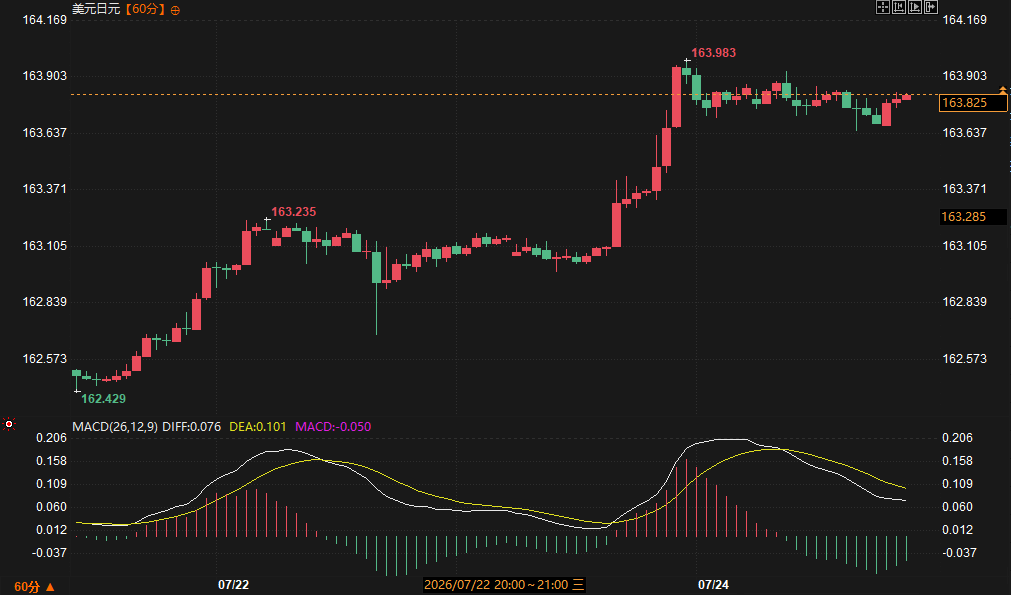
Safe-haven demand coupled with expectations of interest rate hikes pushed the US dollar index higher, putting pressure on non-US currencies such as the euro and pound sterling. The most extreme example was the Japanese yen: the dollar/yen exchange rate broke through 163, and the yen hit a 40-year low. Major overseas institutions analyzed that Japan is caught in a policy "doomsday cycle"—an overly loose fiscal stance, insufficient monetary tightening, and the close relationship between the two leading to market doubts about the central bank's independence. High oil prices further weakened the yen, as Japan's heavy reliance on energy imports and expectations of a widening trade deficit reinforced short-selling sentiment. Despite the increased risk of intervention by the Bank of Japan, every rebound in the yen may be seen as a selling opportunity until the credibility of its fundamental policies is restored. This trend itself serves as a warning of the risk of global policy misalignment.US Treasury bonds: A struggle between raging inflation and looming recession
Inflation fears triggered by crude oil prices are pushing up short-term US Treasury yields, with the 2-year yield leading the rise, reflecting market bets that the Federal Reserve will be forced to maintain high interest rates. However, if geopolitical conflicts continue to erode economic growth, long-term yields may be suppressed by safe-haven inflows, leading to a flattening of the yield curve. Meanwhile, the UK government bond market is relatively stable, with no significant volatility yet following the new prime minister's inauguration. However, major international institutions point out that if the prime minister fails to boost the ruling party's electoral prospects, the risk of a far-right party coming to power will increase dramatically, becoming a potential "gray rhino" for the UK bond market and even the global fixed-income market. US Treasury investors are closely watching the balance between inflation and real interest rates; any unexpected data or escalation of conflict could reshape expectations.Hidden risks across assets: Vulnerabilities in refined oil products and power grids
While most are focused on crude oil, the pressure on refined oil markets is even more pronounced. Disruptions to Middle Eastern crude oil deliveries and drone attacks on Russian refineries amid the Russia-Ukraine conflict are squeezing global refining capacity from both ends, causing potential fluctuations in gasoline, diesel, and jet fuel prices. On the other hand, the dense smoke from over 70 large wildfires in the United States is severely weakening solar power generation, while high temperatures are pushing up air conditioning loads, putting pressure on the power grid on both the supply and demand sides and potentially exacerbating energy inflation. These easily overlooked factors could easily transform into new macroeconomic trading themes, impacting central bank policy space and amplifying volatility in all inflation-sensitive assets.Trend Outlook
In the short term, crude oil will remain highly volatile, with any attack on tankers or infrastructure instantly igniting buying, while diplomatic easing could lead to a sharp drop. Gold will continue to oscillate between "interest rate fears" and "safe-haven premiums," with a breakout requiring a significant escalation of conflict or a stock market crash. The US dollar remains strong, the yen's weakness is unlikely to change, and the USD/JPY exchange rate is becoming increasingly insensitive to policy intervention. Short-term US Treasury yields tend to hold firm, while long-term yields face a choice between inflation and recession expectations. In the long term, if the Strait of Hormuz remains blocked for several weeks, the probability of global stagflation will increase significantly. This scenario would initially support the dollar due to high interest rates, but could ultimately erode the dollar's credibility, providing structural upward momentum for gold. The vulnerability of refined oil and electricity supplies could evolve into a sustained force influencing central bank policy. In an environment of high uncertainty, flexibility is more important than betting on direction.Frequently Asked Questions
Why did gold fall despite escalating geopolitical conflicts? Soaring oil prices pushed up inflation expectations, prompting the market to immediately price in a forced interest rate hike by the Federal Reserve. Rising real interest rates weakened gold's appeal as a zero-interest asset. However, safe-haven demand provided support at lower levels, preventing a collapse in gold prices, which instead entered a period of sharp fluctuation. Will oil prices remain above $100? This depends on the actual extent of the supply disruption in the Strait of Hormuz. If the blockade threat materializes into a sustained supply disruption, oil prices may seek a higher equilibrium zone; however, a diplomatic breakthrough or ceasefire signal could quickly dissipate the panic premium, posing a risk of a rapid decline. What is the fundamental reason for the yen's sharp depreciation? Japan is facing a policy dilemma: fiscal policy is too loose, monetary policy tightening is less than expected, and the central bank's independence is being questioned by the market. High oil prices widened the trade deficit, becoming an additional factor weighing on the yen. The market is forcing policymakers to make credible changes. What will happen to US Treasury yields next? Inflation fears will support short-term yields, while long-term yields will be suppressed by concerns about a potential economic recession, potentially flattening the yield curve. If the conflict escalates and leads to a stock market crash, the decline in long-term yields will accelerate. What are the most hidden risks in the current market? The tight supply of refined oil products and the impact of North American wildfires on the power grid may be underestimated. These will further increase energy costs, amplify inflationary pressures, and test the policy resolve of central banks—potentially "hidden bombs" that could explode at any time.- Risk Warning and Disclaimer
- The market involves risk, and trading may not be suitable for all investors. This article is for reference only and does not constitute personal investment advice, nor does it take into account certain users’ specific investment objectives, financial situation, or other needs. Any investment decisions made based on this information are at your own risk.