Gas prices of over $100 are a "payment" for stagflation; copper retreats while gold advances: the biggest risk right now is mistaking relocation for actual demand.
2026-07-24 21:05:01
On Friday (July 24), the global copper market tested its direction amid divergence. LME copper rose slightly, supported by tightening available inventories in non-US regions, but a technical death cross signal and macroeconomic headwinds limited the upside potential. Escalating tensions in the Middle East pushed oil prices back above $100, fueling stagflation concerns. Meanwhile, US copper inventories reached a record high, and regional price discrepancies caused by tariff rhetoric continued to deepen. With these mixed factors, copper prices are testing key technical levels, and market sentiment is leaning towards caution amid a wait-and-see approach.  This week, traders faced a complex situation: rising LME cash premiums suggested tight near-term supply; however, copper inventories on COMEX continued to hit record highs, with trade flows artificially distorted by tariff expectations. Oil prices breaking $100 further brought the risks of reflation and recession into focus. This article will help readers clarify the core contradictions and potential risks facing copper from three perspectives: inventory divergence, technical signals, and macroeconomic ripples.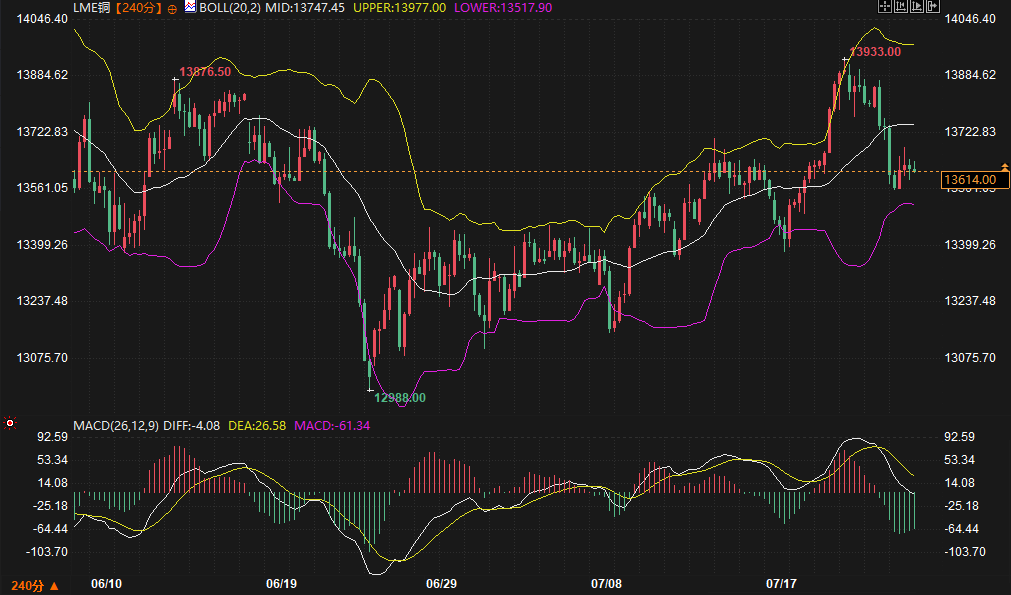
This week, traders faced a complex situation: rising LME cash premiums suggested tight near-term supply; however, copper inventories on COMEX continued to hit record highs, with trade flows artificially distorted by tariff expectations. Oil prices breaking $100 further brought the risks of reflation and recession into focus. This article will help readers clarify the core contradictions and potential risks facing copper from three perspectives: inventory divergence, technical signals, and macroeconomic ripples.Oil Price Storm: Stagflation Narrative Makes a Comeback
The sudden escalation of the Middle East conflict has pushed global oil prices above the $100 mark. This has not only increased energy costs for industrial production but also ignited concerns about stagflation at the macro level—growth prospects are clouded, while price pressures remain difficult to alleviate. The US Treasury market saw a short-term decline in yields due to safe-haven buying, but the term premium for inflation is rising, putting upward pressure on long-term yields. For the copper market, high oil prices both increase cost support and suppress consumption expectations, creating a two-way tug-of-war between bulls and bears. Meanwhile, safe-haven sentiment and a potentially hawkish interest rate stance have temporarily supported the US dollar, putting downward pressure on copper prices from a pricing perspective.Inventory Situation: A Tale of Two Extremes – Non-US Stockpiles vs. US Surplus
While LME copper inventories saw a slight replenishment, they remain at multi-month lows, and aluminum spot premiums hit a new high since June, reinforcing the impression of tight supply of metals in non-US markets. However, this tension masks a distortion in trade flows. COMEX copper inventories climbed to a record high, almost entirely driven by tariff rhetoric—traders rushed to move large quantities of metal to the US before potential import barriers took effect, creating an artificial "inventory dam." Major overseas brokers pointed out that the re-registration of cancelled warrants in some warehouses may be due to traders taking profits or adjusting positions amid curve shifts. This reminds the market that the tight signals from the LME may not stem from a genuine surge in demand, and a change in tariff expectations could trigger sharp volatility as price spreads correct.Technical warning for LME copper: Death cross is releasing bearish momentum.
On the 4-hour chart, LME copper has clearly fallen below the Bollinger Band's middle line. The MACD fast line has crossed below the slow line, forming a death cross, and the green bars are continuing to expand, confirming that the bears are in control in the short term. The price is testing support near the lower Bollinger Band. If this level is breached, there is concern that further downside potential may emerge. Conversely, if the price can recover the middle Bollinger Band with significant volume, a period of consolidation and correction may begin. At this critical juncture, technical selling pressure and support from the spot premium are fiercely battling. The price's reaction to this key level will define the short-term trend.Chain reaction: Reallocation of US Treasury bonds, US dollar, and gold
Stagflation risks and geopolitical uncertainties are jointly driving cross-asset volatility. If US Treasury real yields are suppressed, gold will clearly benefit, attracting safe-haven inflows, while copper's relative attractiveness in a stagflationary environment will be weakened. In the foreign exchange market, commodity currencies face the dual drag of copper price corrections and cooling risk sentiment, while the US dollar maintains its resilience, further suppressing metals from the pricing side. Traders should be aware that if oil price and tariff rhetoric continues to escalate, it could trigger a rebalancing of portfolios from industrial metals to gold and bonds.Trend Outlook
In the short term, dominated by a death cross signal and pessimistic macroeconomic sentiment, LME copper is likely to continue its downward trend, testing the effectiveness of the lower support level. However, the spot premium and low non-US inventories will limit the downside potential, with the price action likely to be characterized by a downward trend within a range. In the long term, the core issues lie in the effectiveness of tariff pronouncements and the evolution of the Middle East situation. If the actual tariffs are less stringent than expected, the massive release of US inventories could create new selling pressure; conversely, if geopolitical tensions ease and oil prices fall, improved demand expectations would help stabilize copper prices. The copper market is currently at a critical juncture of regional divergence and macroeconomic hedging, and volatility is expected to remain high.Frequently Asked Questions
Why is LME copper technically bearish despite tight LME inventories? The tightness is largely due to inventory shifts driven by tariff expectations, rather than genuine demand. Technical indicators reflect short-term market sentiment; the death cross and break below the middle Bollinger Band suggest speculative short positions are gaining the upper hand. These two logics coexist. What does the record-high COMEX copper inventory in the US mean? It means a large amount of copper has been preemptively moved to the US due to tariff rhetoric, creating a supply dam. If tariff expectations change, this inventory could be released, impacting regional and even global copper prices, posing a potential risk to the market. How does oil prices exceeding $100 affect copper? Rising oil prices increase copper mining and smelting costs and suppress copper demand by dampening global economic growth prospects. Simultaneously, it fuels the stagflation narrative, potentially indirectly pressuring copper prices through a strong dollar and bond yields, making the impact complex. How does tariff rhetoric transmit to the copper market? It directly distorts trade flows, causing tight inventories in non-US markets, an oversupply in the US market, and widening the COMEX-LME price spread. Uncertainty itself also dampens corporate capital expenditures and purchasing intentions, disrupting the copper market from both a sentiment and physical perspective. In the current environment, which is more of a safe-haven asset: gold or copper? Gold benefits from geopolitical instability and potential declines in real interest rates, highlighting its safe-haven status. Copper, as an industrial metal, is more sensitive to slowing growth, and its safe-haven function is far inferior to gold in a stagflationary environment; the two may thus experience a seesaw price movement.- Risk Warning and Disclaimer
- The market involves risk, and trading may not be suitable for all investors. This article is for reference only and does not constitute personal investment advice, nor does it take into account certain users’ specific investment objectives, financial situation, or other needs. Any investment decisions made based on this information are at your own risk.