Mid-Year Outlook: Goldman Sachs' Latest Interpretation of Interest Rates and Inflation
2026-07-24 21:00:02
The appointment of the new Federal Reserve Chairman has ushered in a new era of monetary policy. Inflation has exhibited volatile and resilient trends, exceeding expectations. Coupled with escalating geopolitical conflicts in the Middle East and increased energy price volatility, global market divergences regarding the trajectory of US inflation, the pace of monetary policy, and the economic growth outlook have widened. Based on Goldman Sachs' mid-year assessment, the US economy is not currently overheating. High inflation is attributed to a one-off external shock, the labor market has shown unexpected resilience, and the overall economy is maintaining moderate growth. The Fed is expected to maintain a wait-and-see approach to monetary policy this year, with the window for interest rate cuts likely to be postponed until 2027. 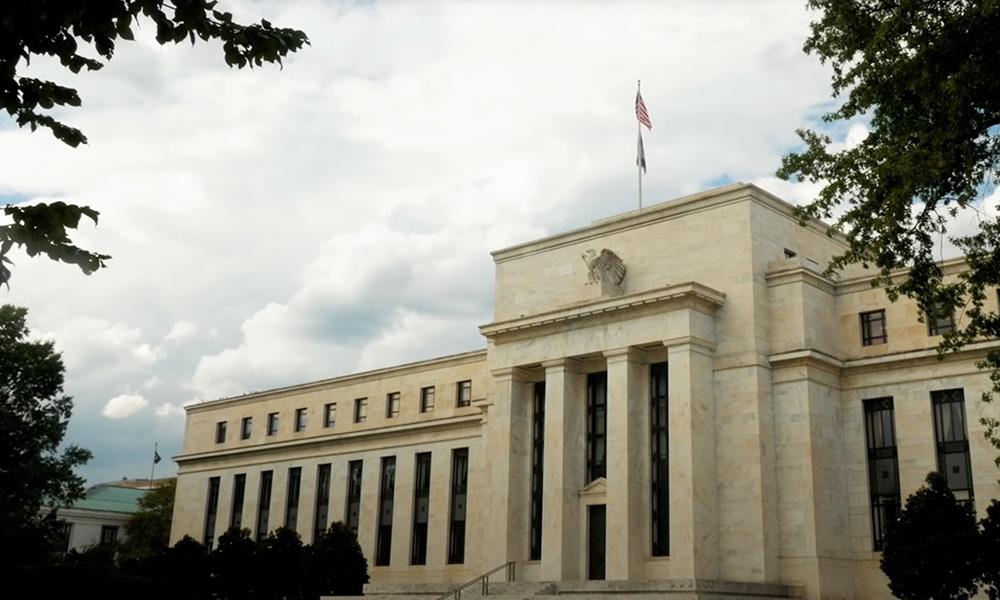
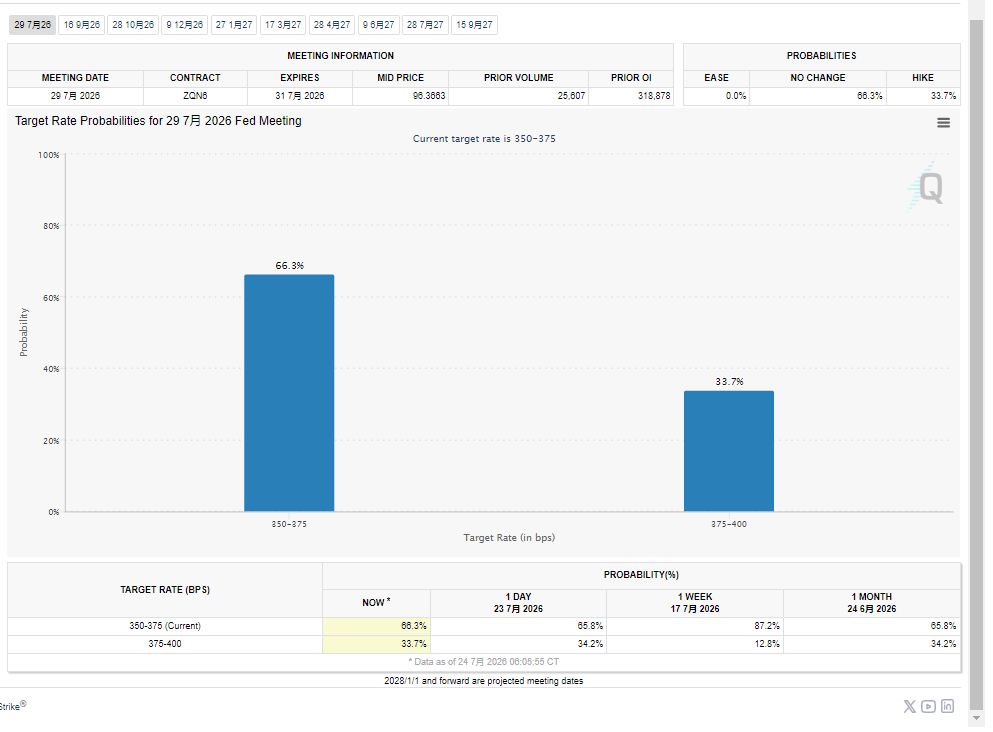 (FedWatch interest rate futures, source: CME Group)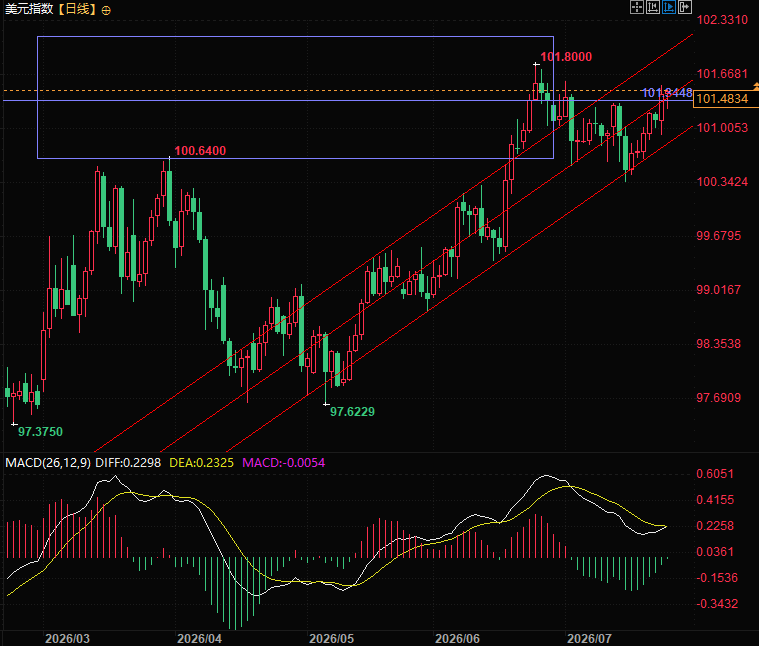
The US economy is exhibiting both unexpected resilience and structural divergence.
Looking back at the US economic performance in the first half of 2026, the overall trend deviated significantly from the market's initial forecast, exhibiting structural characteristics of "a stronger-than-expected employment recovery, weaker-than-expected inflation, and moderate yet resilient growth." At the beginning of 2026, the market was generally concerned about a continued weakening labor market, sluggish job growth, and increased downward pressure on the economy. However, the market trend reversed. Despite the negative impact of geopolitical conflicts and soaring international oil prices, the US job market saw a significant recovery for four consecutive months, completely dispelling previous concerns about a job recession. Combined with the current decline in immigration, the US only needs 50,000 to 60,000 new jobs per month to maintain a stable unemployment rate. Recent employment data has consistently exceeded the equilibrium threshold, making the resilience of the labor market a core pillar supporting the economic fundamentals. In contrast to the strong employment, inflation has been volatile. The market's core assessment at the beginning of the year was that the price disturbances caused by previous tariff policies would gradually subside, year-on-year inflation data would steadily decline, and overall inflation would converge towards the 2% policy target. However, two new variables in the first half of the year disrupted the downward trend in inflation: geopolitical conflicts in the Middle East pushed up energy prices, coupled with rising demand from the artificial intelligence industry, and statistical calculation errors further amplified the price increases of related categories, ultimately leading to a sustained sideways fluctuation in inflation, with the central level remaining close to 3% for a long period, and failing to fall back to the Fed's target range. In terms of economic growth, the US maintained a moderate expansion overall, with full-year GDP growth expected to remain stable at around 2%, slightly lower than the potential growth rate but with sufficient overall resilience. From the perspective of growth structure, the wealth effect brought by the stock market rise continued to support household consumption, contributing 0.3 to 0.4 percentage points of positive growth to the economy; corporate fixed asset investment remained strong, offsetting the drag from the weakening real estate market and slowing government spending. However, there is clear downward pressure on growth in the second half of the year. Weak growth in real household income, a low savings rate, the complete exhaustion of previous tax rebate benefits, and high oil prices suppressing consumer spending suggest that the growth rate of household consumption is likely to decline in stages, and the overall pace of economic growth will slow slightly.The core logic of inflation: external shocks dominate the trend, while the risk of endogenous overheating is limited.
The current high inflation in the United States is not caused by endogenous economic overheating, but rather by the superposition of multiple one-off external shocks. This is the core structural characteristic of this round of inflation, directly determining the Federal Reserve's policy margin for error. The latest June CPI data is weak and shows a temporary cooling, but this data is clearly accidental and cannot represent a trend reversal point in inflation. The subsequent decline in inflation will be gradual and moderate. Looking at the three core disruptive variables, inflationary pressures are easing marginally. First, the price transmission effect of tariff policies has largely cleared, and its impact on monthly inflation data is almost negligible. Second, the peak of the oil price shock caused by Middle East geopolitical conflicts has passed. Although oil prices are still fluctuating, they have fallen significantly from the highs of April and May. The strongest pulling effect of energy prices on inflation was concentrated in the second quarter, and the sequential transmission strength will continue to weaken in the third and fourth quarters. Third, the statistical inflation bias caused by artificial intelligence demand has not completely subsided, but the sequential increase has slowed significantly compared to the first half of the year, and the price increase disturbance continues to weaken. After removing external disturbances, the fundamentals of US inflation are approaching the policy target. After removing three major confounding factors—tariffs, geopolitical and energy factors, and statistical bias—core inflation has consistently hovered close to 2%, fully demonstrating that the current stickiness of inflation stems from exogenous variables rather than economic supply-demand imbalances. Against this backdrop, escalating geopolitical conflicts in the Middle East remain the biggest upside risk to inflation. If oil prices surge again, it will reignite upward pressure on inflation, directly disrupting the Federal Reserve's policy pace.The New Era of the Federal Reserve: Policy Patience Tightens, and Room for Error Continues to Shrink
Since the new Federal Reserve Chairman took office, the Fed's policy framework and communication logic have undergone a phased adjustment, exhibiting a new characteristic of "hawkish stance, prudent action, and patient tightening." Although inflation is gradually cooling marginally, the Fed's tolerance for high inflation has significantly decreased. The core policy approach has shifted from "downplaying exogenous shocks and focusing on endogenous fundamentals" to "limited tolerance and proactive response," to avoid prolonged high inflation solidifying market expectations and creating a self-reinforcing inflation cycle. Based on the current economic fundamentals, the Fed's monetary policy will maintain unchanged interest rates for the rest of the year, with no room for rate hikes or cuts. The weak inflation data in June is sufficient to support keeping rates unchanged at the July meeting, and core PCE inflation is likely to remain stable with minor fluctuations for the remainder of the year, without triggering policy adjustments. From a policy perspective, there is currently no need for an interest rate cut. The economy has not shown signs of overheating or recession, and the slow decline in inflation is suitable for a wait-and-see approach. Meanwhile, the probability of an interest rate hike this month has recently risen to 35%. The actual probability of an interest rate hike predicted by institutions is far lower than the probability implied by the current market price. The market's bets on interest rate hikes are currently too aggressive and are biased towards mispricing. (FedWatch interest rate futures, source: CME Group)In addition to its benchmark interest rate policy, the Federal Reserve is simultaneously advancing two major medium- and long-term policies.
First, the balance sheet framework is being optimized. The Federal Reserve has no intention of returning to a traditional monetary policy framework, and the room for large-scale balance sheet reduction is limited, with only minor contraction possible through regulatory adjustments. Meanwhile, the structure of asset holdings has become a core discussion point, with the market forming two sets of logics: "matching the Treasury's bond issuance structure" and "increasing holdings of short-term Treasury bonds to stabilize profits and avoid political interference." Regardless of the final plan, the Treasury will simultaneously adapt its bond issuance strategy, resulting in limited substantive impact on market interest rates. Second, the policy communication mechanism is being reformed. The Federal Reserve is gradually weakening mandatory forward guidance and is exploring the elimination of the median release of economic forecast summaries to avoid market over-interpretation of policy paths and amplify market volatility, while maintaining policy transparency and preserving room for flexible policy adjustments.Core Market Risks and Future Trend Forecast
In the current macroeconomic landscape, the core contradiction in the market is not the Federal Reserve's policy fine-tuning, but rather the inflationary uncertainty brought about by geopolitical conflicts. This is also the core driver of future asset price volatility. If the situation in the Middle East remains stable and oil prices do not experience a systemic rise, inflation will continue to decline moderately. The Federal Reserve will maintain a wait-and-see attitude throughout the year, initiating a rate-cutting cycle in 2027 after external shocks have completely subsided and inflation has steadily returned to the 2% target. Overall market volatility will be relatively controllable. Conversely, if geopolitical conflicts escalate again and oil prices rebound sharply, it will re-increase inflation stickiness, forcing the Federal Reserve to tighten its policy marginally, suppressing US stocks, disrupting US Treasury yields, and triggering volatility in global financial markets. In addition, the risk of expectation gaps brought about by the reform of the Federal Reserve's policy communication is also worth noting. With weakened forward guidance, the market lacks a clear policy anchor and is prone to over-interpreting individual policy actions, amplifying market volatility in stages.Summarize:
The core essence of the US macroeconomic landscape in mid-2026 is that geopolitical shocks are disrupting inflation, the inherent resilience of the economy is providing a safety net, and the Federal Reserve is entering a new cautious policy cycle. A stronger-than-expected recovery in employment, coupled with support from both consumption and investment, has ensured a moderate growth base of around 2%. High inflation is entirely due to a one-off external shock, with a clear trend of internal cooling. The Federal Reserve has abandoned its previous loose and inclusive policy approach, narrowing its margin for error, but there is no sufficient reason to adjust interest rates this year, locking in the window for rate cuts in 2027. Overall, geopolitical tensions are the biggest short-term market variable, while the pace of the Federal Reserve's policy, the slope of inflation decline, and the resilience of economic growth will jointly determine the core theme of global asset pricing in the second half of the year. Technically, the US dollar index has strongly broken through the middle line of its upward channel and the middle line of its trading range, suggesting that geopolitical concerns remain unresolved and interest rates will remain high for a longer period.
- Risk Warning and Disclaimer
- The market involves risk, and trading may not be suitable for all investors. This article is for reference only and does not constitute personal investment advice, nor does it take into account certain users’ specific investment objectives, financial situation, or other needs. Any investment decisions made based on this information are at your own risk.