Weekly Forex Review: The probability of a Fed rate hike tripled in one week; the market is now only focused on oil prices and interest rate differentials.
2026-07-25 10:51:01
The main theme of the foreign exchange market this week (July 20-25) was clear: a stronger US dollar, pressure on non-US currencies, and the yen continuing to struggle near 40-year lows. The US dollar index rose 0.64% for the week, closing near 101.45. High oil prices reshaped inflation expectations, which in turn strengthened bets on interest rate hikes, providing support for the dollar. The euro and pound both weakened, and the ECB's ambiguous statement of holding rates steady but retaining the option of a September rate hike failed to reverse the euro's decline. The most notable pair was the US dollar against the Japanese yen—the pair touched 163.98, its highest level since November 1986, with a weekly gain of 0.89%. Verbal intervention by Japanese officials and statements from the US Treasury failed to shake its upward momentum. 
 Economic Data and Events Summary The US dollar's support this week mainly came from oil prices. A new round of attacks in the Iranian conflict pushed Brent crude to $102 per barrel, reigniting inflation concerns. Market pricing in a rate hike at next week's Federal Reserve meeting surged from 12.8% a week ago to 35.8%, despite a brief easing of expectations following June inflation data. Escalating geopolitical tensions quickly reversed this optimism. The perception that the US economy is more resilient to energy price shocks compared to Europe and Japan further solidified the dollar's relative advantage. Analyst and Institutional Views Summary A report by JP Morgan's chief US economist, Michael Feroli, cited by a prominent foreign media outlet, indicates that he expects the Fed to keep interest rates unchanged next week, but at least two members will vote hawkishly against it, as some members are losing patience with persistently high inflation. This assessment suggests that even if rates remain unchanged, the signals from the meeting may lean towards a hawkish stance, providing additional support for the dollar.
 Economic Data and Events Summary This week, the policy game surrounding the yen intensified significantly. Japanese Finance Minister Satsuki Katayama reiterated on Friday that the government was prepared to take action in the foreign exchange market, but the market showed signs of fatigue with such verbal statements. The US Treasury also unusually joined the pressure on Thursday, urging the Bank of Japan to raise interest rates and warning that excessive exchange rate volatility was undesirable. However, data from well-known foreign media outlets showed that the market had completely ruled out the possibility of the Bank of Japan raising interest rates at its policy meeting next week. Verbal intervention without monetary policy support continues to have diminished effectiveness. Analyst and Institutional Views Summary Thierry Wizman, Global FX and Interest Rate Strategist at Macquarie, offered a straightforward explanation: the yen is a low-yield currency, and rising oil prices are creating a trade terms shock for it. In this environment, if speculators want to target a currency, the yen is the most natural target. He believes this is the fundamental logic behind the strong performance of the dollar against the yen since the outbreak of the Iran war and rising oil prices. Wizman's comments highlight the key point—without a more aggressive interest rate hike path from the Bank of Japan, intervention alone is unlikely to reverse the trend.
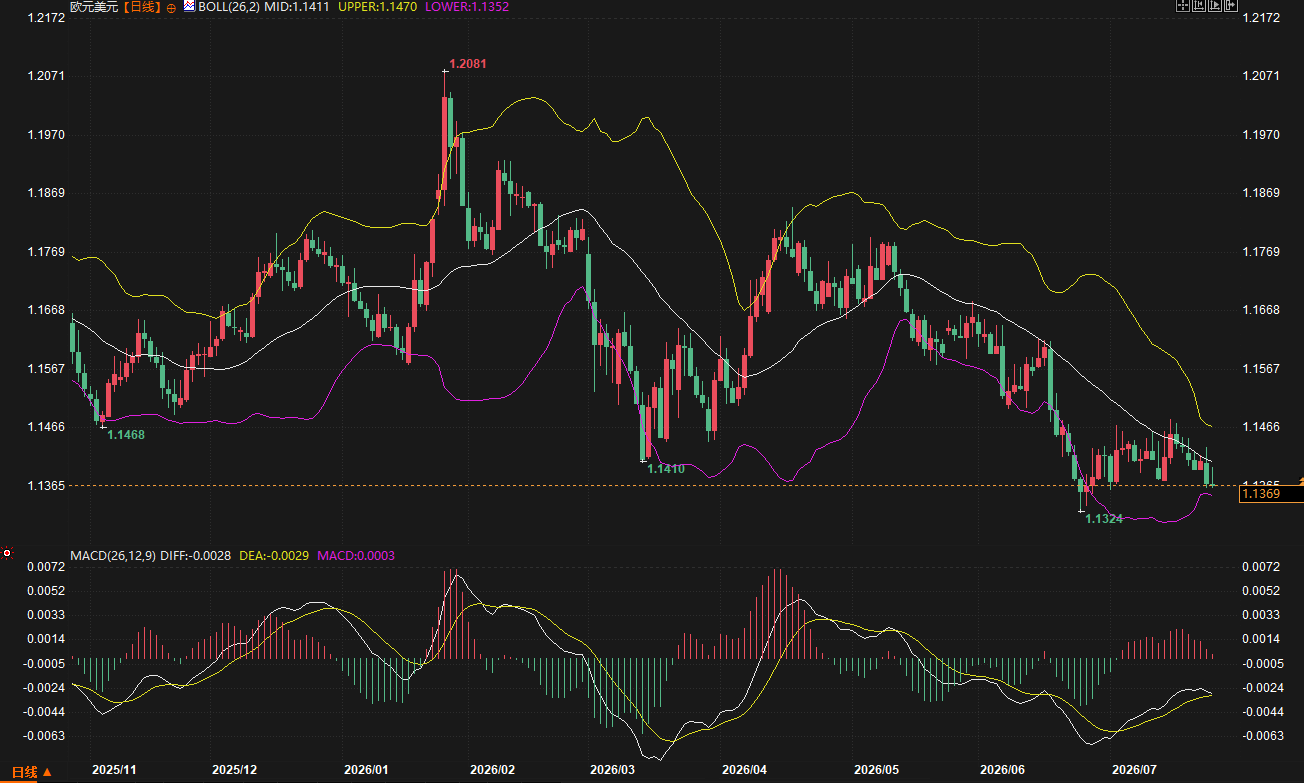 Economic Data and Events Summary: The European Central Bank (ECB) kept interest rates unchanged this week, while retaining the possibility of a rate hike in September. ECB Chief Economist Lane stated that the central bank still considers the current inflation shock to be moderate, requiring some policy action but not aggressive measures, and expects inflation to return to the 2% target within about a year. This relatively dovish statement failed to provide effective support for the euro. Data from well-known foreign media outlets shows that traders currently believe there is a 70.8% probability of an ECB rate hike in September, but this expectation has not translated into buying of the euro. Analyst Views : The euro faces a dual dilemma: on the one hand, energy price shocks are more damaging to the European economy than to the US; on the other hand, the ECB's rate hike pace is considered lagging and insufficient. These two factors combined place the euro in a relatively passive position during a period of dollar strength.
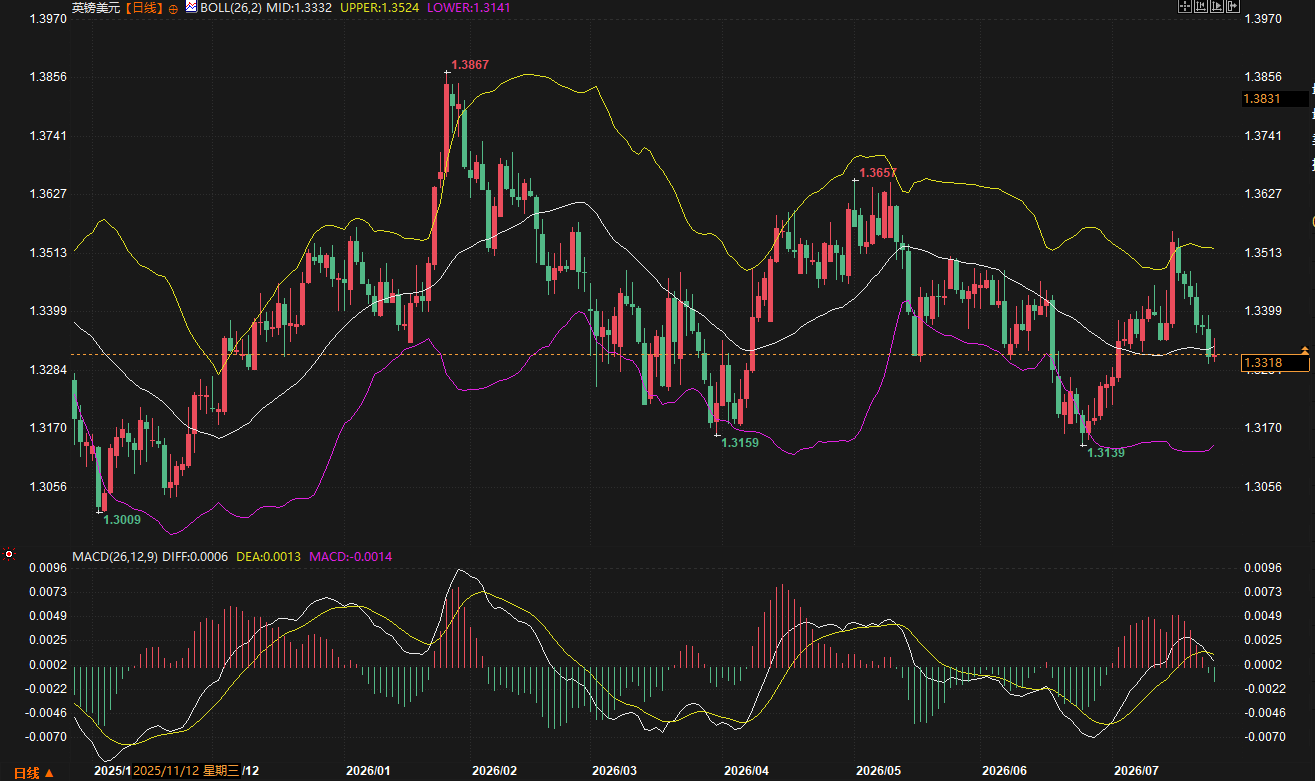 Brief Analysis of the Trend: The pound's weakness this week is related to the uncertainty surrounding the UK's economic outlook, as well as being dragged down by the overall strength of the US dollar. Compared with other non-US dollar currencies, the pound lacks independent bullish catalysts and bears the brunt of the dollar's rebound.
 This week's foreign exchange market sent a clear signal: as long as oil prices remain high and interest rate hike expectations persist, the strong foundation of the US dollar will be difficult to shake. The Japanese yen stands in opposition to the overall macroeconomic logic—low interest rates coupled with soaring energy import costs have led to speculative funds continuously increasing their short positions. Verbal interventions by Japanese officials and statements from the US Treasury are currently like pebbles thrown into a river; the ripples subside and the current continues. The market's attention will now focus on the interest rate decisions of the Federal Reserve and the Bank of Japan next week. The former may further solidify the dollar with hawkish rhetoric, while if the latter remains on hold, the upward momentum of the dollar against the yen may continue. The direction of the euro and the pound will largely depend on whether their respective central banks' policy stances can keep pace with changes in inflation expectations.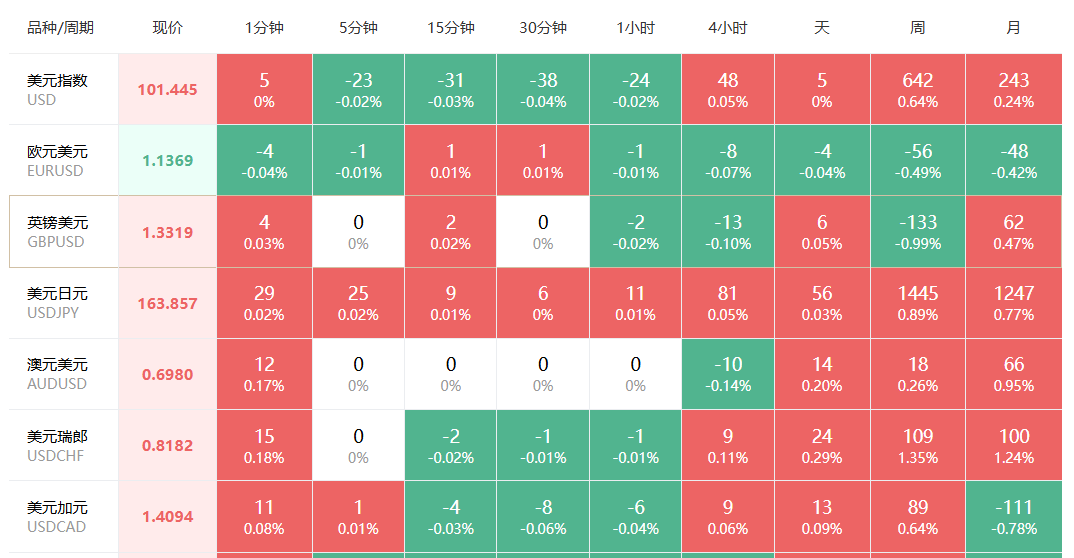
US Dollar Index
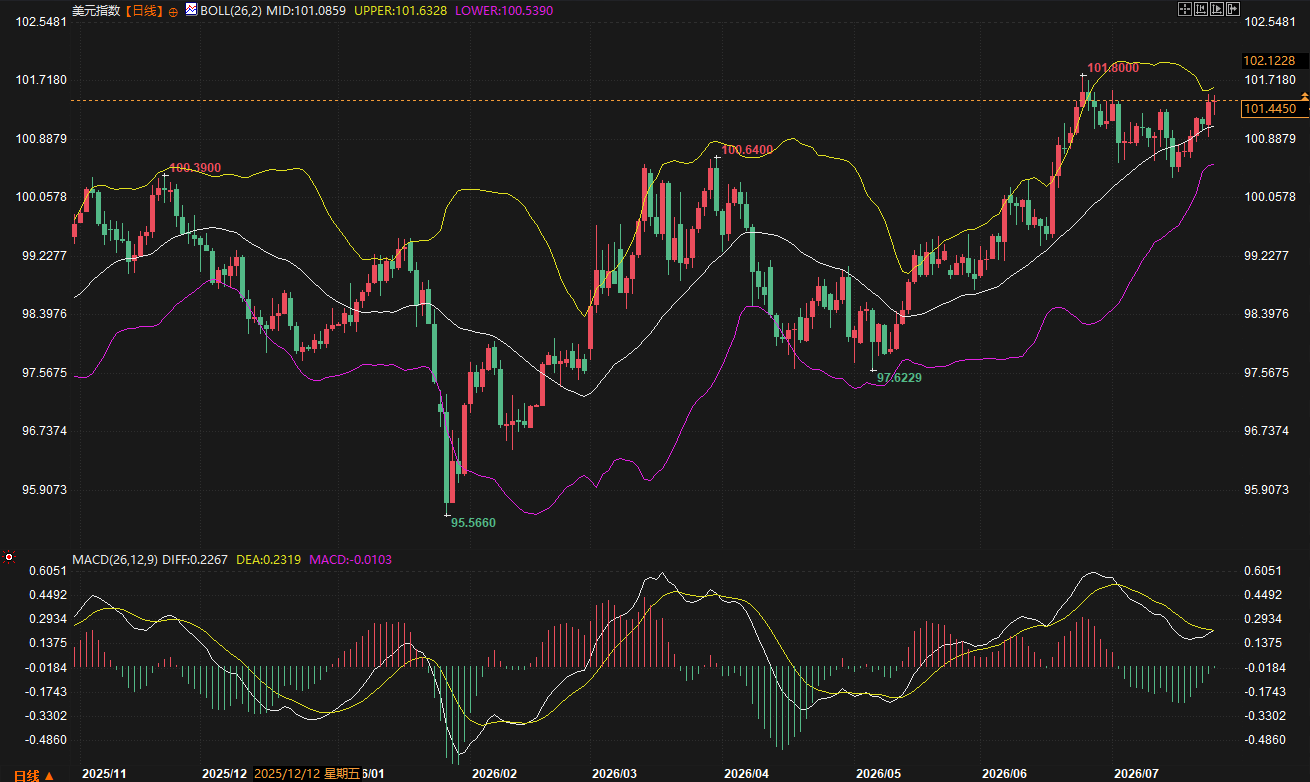
This Week's Market Review: The US dollar index rebounded from its recent low of 95.566 and is currently trading at 101.445, between the Bollinger Band's middle band at 101.09 and the upper band at 101.63. The MACD indicator's DIFF and DEA lines are converging above the zero line, with the green histogram at only -0.0103, close to the zero line, indicating a lack of clear directional signals in the short term and maintaining an overall slightly bullish consolidation pattern. The weekly chart recorded its largest gain in five weeks. Economic Data and Events Summary The US dollar's support this week mainly came from oil prices. A new round of attacks in the Iranian conflict pushed Brent crude to $102 per barrel, reigniting inflation concerns. Market pricing in a rate hike at next week's Federal Reserve meeting surged from 12.8% a week ago to 35.8%, despite a brief easing of expectations following June inflation data. Escalating geopolitical tensions quickly reversed this optimism. The perception that the US economy is more resilient to energy price shocks compared to Europe and Japan further solidified the dollar's relative advantage. Analyst and Institutional Views Summary A report by JP Morgan's chief US economist, Michael Feroli, cited by a prominent foreign media outlet, indicates that he expects the Fed to keep interest rates unchanged next week, but at least two members will vote hawkishly against it, as some members are losing patience with persistently high inflation. This assessment suggests that even if rates remain unchanged, the signals from the meeting may lean towards a hawkish stance, providing additional support for the dollar.US Dollar to Japanese Yen
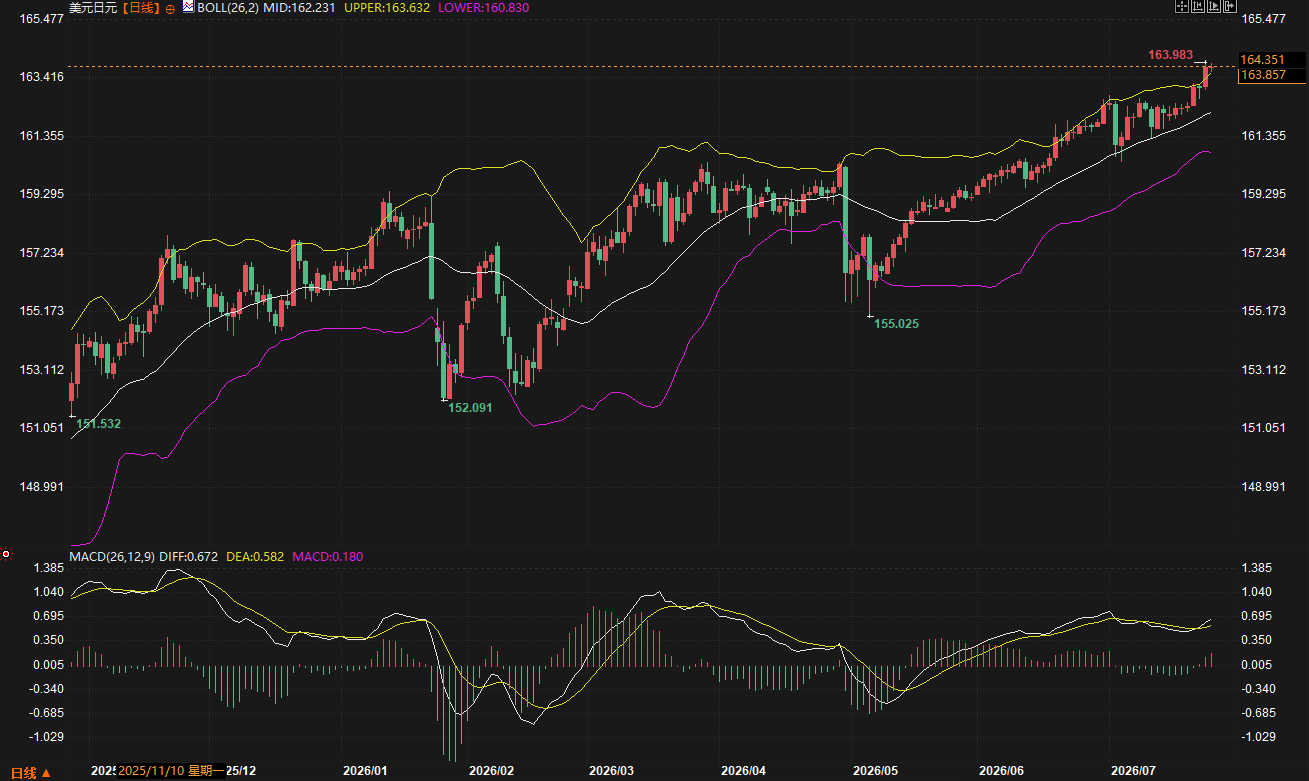
This Week's Market Review: The USD/JPY pair has been steadily rising from a low of 151.532, currently trading at 163.857, having broken through the upper Bollinger Band at 163.632, reaching a new high for the period. The MACD golden cross continues, with the DIFF line above the DEA line; although the red histogram is weak, the bullish trend remains intact. The weekly gain was 0.89%, with the pair briefly touching 163.98 on Thursday, its strongest level since November 1986. Despite repeated verbal interventions by Japanese authorities, the yen is still poised to record its largest weekly decline since mid-May. Economic Data and Events Summary This week, the policy game surrounding the yen intensified significantly. Japanese Finance Minister Satsuki Katayama reiterated on Friday that the government was prepared to take action in the foreign exchange market, but the market showed signs of fatigue with such verbal statements. The US Treasury also unusually joined the pressure on Thursday, urging the Bank of Japan to raise interest rates and warning that excessive exchange rate volatility was undesirable. However, data from well-known foreign media outlets showed that the market had completely ruled out the possibility of the Bank of Japan raising interest rates at its policy meeting next week. Verbal intervention without monetary policy support continues to have diminished effectiveness. Analyst and Institutional Views Summary Thierry Wizman, Global FX and Interest Rate Strategist at Macquarie, offered a straightforward explanation: the yen is a low-yield currency, and rising oil prices are creating a trade terms shock for it. In this environment, if speculators want to target a currency, the yen is the most natural target. He believes this is the fundamental logic behind the strong performance of the dollar against the yen since the outbreak of the Iran war and rising oil prices. Wizman's comments highlight the key point—without a more aggressive interest rate hike path from the Bank of Japan, intervention alone is unlikely to reverse the trend.Euro against the US dollar
This Week's Market Review: The euro has continued its decline against the US dollar from a high of 1.2081, currently trading at 1.1369, having fallen to around 1.1352, near the lower Bollinger Band, indicating significant weakness. The MACD's DIFF and DEA lines are both converging below the zero line, with the red bars almost nonexistent, indicating extremely weak momentum. The weekly decline was 0.49%, bringing the cumulative weekly drop to nearly 0.6%. Economic Data and Events Summary: The European Central Bank (ECB) kept interest rates unchanged this week, while retaining the possibility of a rate hike in September. ECB Chief Economist Lane stated that the central bank still considers the current inflation shock to be moderate, requiring some policy action but not aggressive measures, and expects inflation to return to the 2% target within about a year. This relatively dovish statement failed to provide effective support for the euro. Data from well-known foreign media outlets shows that traders currently believe there is a 70.8% probability of an ECB rate hike in September, but this expectation has not translated into buying of the euro. Analyst Views : The euro faces a dual dilemma: on the one hand, energy price shocks are more damaging to the European economy than to the US; on the other hand, the ECB's rate hike pace is considered lagging and insufficient. These two factors combined place the euro in a relatively passive position during a period of dollar strength.GBP to USD
This Week's Market Review: The British pound fell from a high of 1.3867 against the US dollar, currently trading at 1.3318, near the Bollinger Band middle line at 1.3332, indicating a neutral to slightly bearish bias. The MACD DIFF is below the DEA, and the green bars are weak, suggesting short-term bearish dominance but limited momentum. The pound fell 0.99% for the week, making it the worst-performing non-US dollar currency pair. Brief Analysis of the Trend: The pound's weakness this week is related to the uncertainty surrounding the UK's economic outlook, as well as being dragged down by the overall strength of the US dollar. Compared with other non-US dollar currencies, the pound lacks independent bullish catalysts and bears the brunt of the dollar's rebound.US Dollar against Swiss Franc and US Dollar against Canadian Dollar
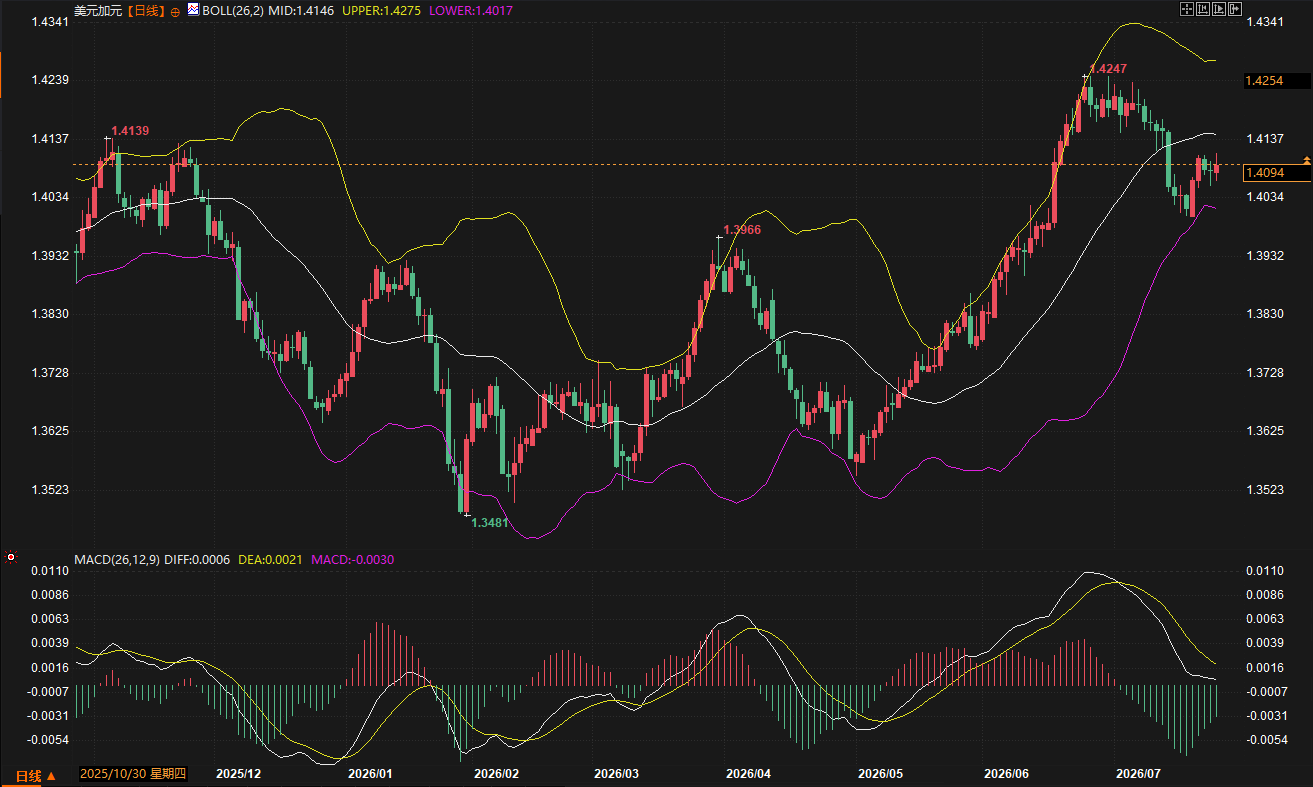
The US dollar rose 1.35% against the Swiss franc this week, the largest gain among major currency pairs. The Swiss franc's safe-haven appeal was suppressed by the US dollar's interest rate advantage amid high oil prices. The US dollar rose 0.64% against the Canadian dollar this week, closing at 1.4094, near the middle Bollinger Band. The Canadian dollar received some support from rising oil prices, but the strength of the US dollar still dominates. The Australian dollar was essentially flat against the US dollar for the week, the only non-US dollar currency to hold its ground. This week's foreign exchange market sent a clear signal: as long as oil prices remain high and interest rate hike expectations persist, the strong foundation of the US dollar will be difficult to shake. The Japanese yen stands in opposition to the overall macroeconomic logic—low interest rates coupled with soaring energy import costs have led to speculative funds continuously increasing their short positions. Verbal interventions by Japanese officials and statements from the US Treasury are currently like pebbles thrown into a river; the ripples subside and the current continues. The market's attention will now focus on the interest rate decisions of the Federal Reserve and the Bank of Japan next week. The former may further solidify the dollar with hawkish rhetoric, while if the latter remains on hold, the upward momentum of the dollar against the yen may continue. The direction of the euro and the pound will largely depend on whether their respective central banks' policy stances can keep pace with changes in inflation expectations. Frequently Asked Questions
Why is the yen continuing to fall despite repeated verbal interventions by Japanese officials? The logic suggests that the effectiveness of verbal intervention depends on whether the market believes there is corresponding action. Currently, the market has completely ruled out the possibility of a rate hike by the Bank of Japan next week. Intervention statements lacking monetary policy coordination seem more like managing the rate of depreciation than reversing its direction. Macquarie strategists' framework is clear: rising oil prices create a trade terms shock for the yen, and the combination of a low-yield currency and soaring energy import costs makes the yen a natural target for speculative funds. The marginal effectiveness of verbal intervention diminishes until the Bank of Japan takes concrete action. What is the core driver of this round of dollar strengthening? Two threads work together. The first is oil prices—the situation in Iran pushes up energy prices, leading to rising inflation expectations, and the market is again betting on a possible Fed rate hike, tilting the interest rate advantage expectation towards the dollar. The second is relative advantage—compared to Europe and Japan, the US economy is considered more resilient to energy shocks, and funds tend to remain in dollar assets amid uncertainty. These two logics support each other, forming a self-reinforcing short-term closed loop. The ECB has a 70% probability of raising rates in September, so why is the euro still falling? The problem lies in the pace and intensity. While the market has priced in the probability of a rate hike, its ultimate expectations for the ECB's overall rate hike path are not aggressive. ECB Chief Economist Lane's remarks this week were relatively dovish, stating that the inflation shock was moderate and did not require aggressive measures, leaving the euro without unexpected support on the interest rate side. Meanwhile, the energy price shock has actually damaged the European economy more severely than in the US, and concerns about growth have offset the positive impact of expected rate hikes. The USD/JPY pair hit a new high since 1986; how will it evolve next? Looking at the positioning structure, speculative funds' long positions in USD/JPY are highly crowded. If the Bank of Japan continues to hold rates steady next week, the short-term upward momentum may continue. However, the higher it goes, the greater the risk of policy intervention and profit-taking pressure. The key variable is whether the Bank of Japan will give a hint of a rate hike in its rhetoric—even a slight adjustment to inflation expectations or policy wording could trigger a sharp round of short covering. Conversely, if the meeting statement offers nothing new, the credibility of verbal intervention will continue to erode. What is the most important risk event in the foreign exchange market next week? The interest rate decisions of the Federal Reserve and the Bank of Japan are the two major events next week, with the Fed's decision preceding the Bank of Japan's. Even if the Fed keeps interest rates unchanged, hawkish rhetoric in its dot plot or press conference could further boost the dollar. The Bank of Japan's decision will directly determine whether the yen can get a breather—a rate hike would trigger a sell-off of long positions in USD/JPY, while not raising rates could accelerate the testing of higher price levels. The combination of these two events suggests that the foreign exchange market may experience significant volatility next week.- Risk Warning and Disclaimer
- The market involves risk, and trading may not be suitable for all investors. This article is for reference only and does not constitute personal investment advice, nor does it take into account certain users’ specific investment objectives, financial situation, or other needs. Any investment decisions made based on this information are at your own risk.