Easing tensions in the Middle East pushed oil prices down, while gold rebounded slightly, maintaining a range-bound trading pattern.
2026-07-27 11:10:02
International gold prices continued their rebound on Monday, with spot gold (XAU/USD) rising for the second consecutive trading day, hovering around $4,100 per ounce during Asian trading hours. The main factors driving the price increase were a sharp drop in oil prices easing market concerns about renewed inflation, and investors readjusting their expectations for the future interest rate path of major central banks worldwide.  Previously, due to the continued tensions in the Middle East, market concerns about potential disruptions to energy supplies drove oil prices up rapidly and increased global inflationary pressures. If energy prices remain high for an extended period, it could force major central banks to maintain tight monetary policies, thereby increasing the opportunity cost of holding gold, a non-interest-bearing asset. However, with signs of a temporary easing of tensions, oil prices have rebounded significantly, reducing market concerns about inflation risks. The decline in oil prices has weakened expectations of continued interest rate increases, providing support for a short-term rebound in gold . Market risk sentiment improved after the US suspended its two-week military operations. The US stated that while forces remain on alert, it hopes to leave room for potential negotiations. Meanwhile, Iran also suspended further actions against US allies, temporarily alleviating market concerns about a further escalation of the conflict. However, the gold market has not completely eliminated safe-haven demand. Due to the continued uncertainty in the Middle East, investors remain focused on subsequent diplomatic developments. If tensions escalate again, energy supply risks could again drive up inflation expectations and enhance gold's attractiveness as a safe-haven asset. Geopolitical risks remain a key supporting factor for maintaining high gold prices. This week, the market will see a series of economic events, which could be important catalysts influencing the direction of precious metals. Investors will focus on the policy meetings of the Federal Reserve, the Bank of England, and the Bank of Japan, while US economic growth data, core PCE inflation data, and inflation indicators from Europe and Australia will also be released. Among these, the Federal Reserve's policy signals are of particular interest. Since gold prices are highly sensitive to the dollar's performance and interest rate expectations, if the Fed releases a dovish signal, the market may further reduce the attractiveness of dollar assets, thereby driving up gold prices; however, if the policy statement indicates that inflation risks remain high and reinforces expectations of maintaining high interest rates for an extended period, gold may face some pressure. US economic data will also influence market judgment. Strong US GDP growth may reduce market concerns about an economic slowdown and support the dollar; while core PCE inflation data will directly affect the Fed's assessment of the scope for future policy adjustments. This week's economic data and central bank policy signals will be the core drivers of short-term gold price trends . From a global investment perspective, gold is currently in an environment of multiple intertwined factors. On the one hand, geopolitical risks, central bank gold purchases, and safe-haven inflows provide support for gold prices; on the other hand, changes in the strength of the dollar and real interest rate levels still limit further upside potential for gold. Therefore, investors need to pay attention to changes in macroeconomic policies, rather than relying solely on single risk events to drive prices. From a daily chart perspective, spot gold rebounded after finding support near $4,000, currently hovering around $4,100, indicating a recovery in short-term bullish momentum. The daily chart structure shows gold maintaining a high-level consolidation with a slightly bullish bias. Resistance is seen in the $4,150-$4,200 area; a break above this area could open up further upside potential. Support levels are at $4,050 and the psychological level of $4,000. A break below $4,000 could trigger a deeper correction. The current daily trend leans towards a rebound, but the dollar's performance and interest rate expectations still need to be monitored. Looking at the 4-hour chart, after a continuous rebound, short-term buying pressure has strengthened, and the price has stabilized above $4,100. The MACD indicator shows a gradual recovery in upward momentum, and the RSI indicator remains in the bullish zone, indicating improved short-term market sentiment. However, as the price approaches the previous resistance area, some profit-taking may increase. If gold breaks through the $4120-$4150 range, it may continue to test $4200 in the short term; if the rise is blocked, it may retrace to the $4060-$4080 area to find support. Currently, the 4-hour chart shows that the bulls are in control, but the market will remain cautious ahead of important economic data releases.
 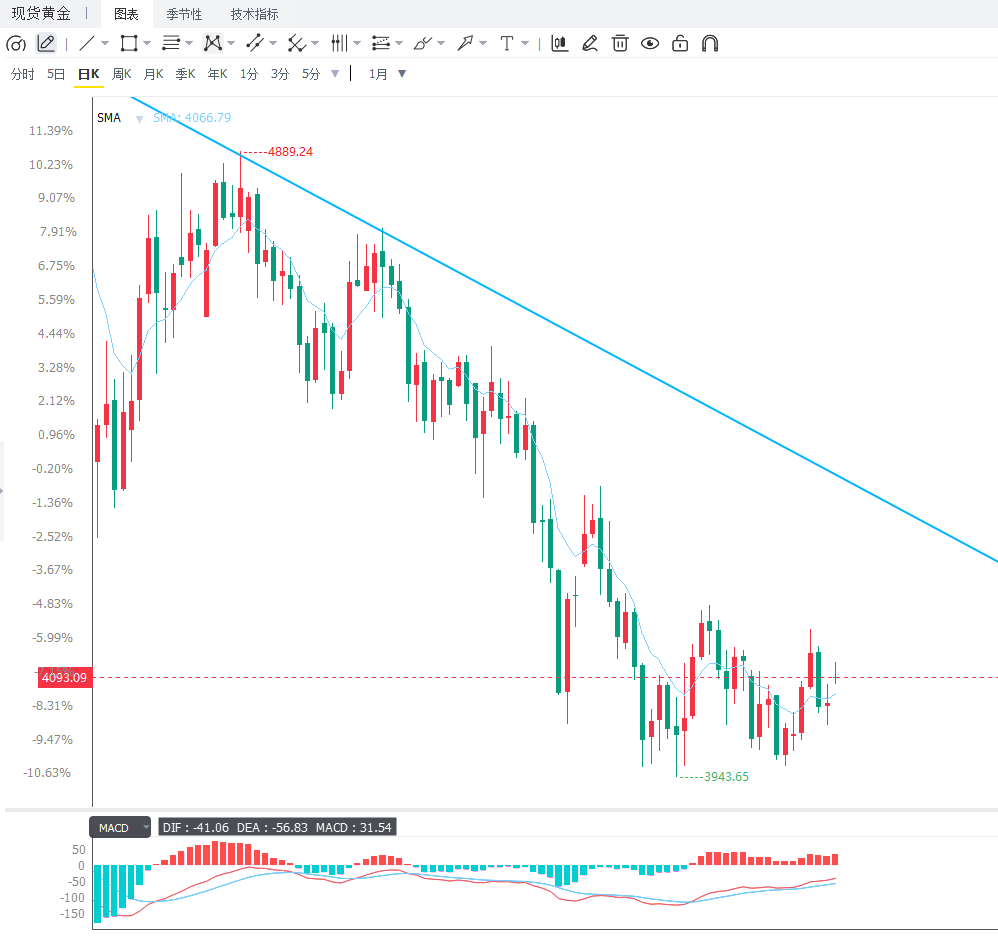 Editor's Summary: Gold's recent rise has been primarily supported by falling oil prices, easing inflationary pressures, and safe-haven demand. The temporary de-escalation of the conflict between the US and Iran has reduced market risk premiums, but geopolitical factors could still influence the precious metals market at any time. This week's global central bank meetings and key economic data will be crucial factors influencing gold's next move. If the Federal Reserve's policy leans towards a dovish stance, a weaker dollar could further drive gold prices higher; conversely, if inflation data reinforces high interest rate expectations, gold may face downward pressure. Overall, gold remains in a phase dominated by macroeconomic factors, and investors should pay close attention to interest rate expectations, the dollar's performance, and changes in global risk events.
Previously, due to the continued tensions in the Middle East, market concerns about potential disruptions to energy supplies drove oil prices up rapidly and increased global inflationary pressures. If energy prices remain high for an extended period, it could force major central banks to maintain tight monetary policies, thereby increasing the opportunity cost of holding gold, a non-interest-bearing asset. However, with signs of a temporary easing of tensions, oil prices have rebounded significantly, reducing market concerns about inflation risks. The decline in oil prices has weakened expectations of continued interest rate increases, providing support for a short-term rebound in gold . Market risk sentiment improved after the US suspended its two-week military operations. The US stated that while forces remain on alert, it hopes to leave room for potential negotiations. Meanwhile, Iran also suspended further actions against US allies, temporarily alleviating market concerns about a further escalation of the conflict. However, the gold market has not completely eliminated safe-haven demand. Due to the continued uncertainty in the Middle East, investors remain focused on subsequent diplomatic developments. If tensions escalate again, energy supply risks could again drive up inflation expectations and enhance gold's attractiveness as a safe-haven asset. Geopolitical risks remain a key supporting factor for maintaining high gold prices. This week, the market will see a series of economic events, which could be important catalysts influencing the direction of precious metals. Investors will focus on the policy meetings of the Federal Reserve, the Bank of England, and the Bank of Japan, while US economic growth data, core PCE inflation data, and inflation indicators from Europe and Australia will also be released. Among these, the Federal Reserve's policy signals are of particular interest. Since gold prices are highly sensitive to the dollar's performance and interest rate expectations, if the Fed releases a dovish signal, the market may further reduce the attractiveness of dollar assets, thereby driving up gold prices; however, if the policy statement indicates that inflation risks remain high and reinforces expectations of maintaining high interest rates for an extended period, gold may face some pressure. US economic data will also influence market judgment. Strong US GDP growth may reduce market concerns about an economic slowdown and support the dollar; while core PCE inflation data will directly affect the Fed's assessment of the scope for future policy adjustments. This week's economic data and central bank policy signals will be the core drivers of short-term gold price trends . From a global investment perspective, gold is currently in an environment of multiple intertwined factors. On the one hand, geopolitical risks, central bank gold purchases, and safe-haven inflows provide support for gold prices; on the other hand, changes in the strength of the dollar and real interest rate levels still limit further upside potential for gold. Therefore, investors need to pay attention to changes in macroeconomic policies, rather than relying solely on single risk events to drive prices. From a daily chart perspective, spot gold rebounded after finding support near $4,000, currently hovering around $4,100, indicating a recovery in short-term bullish momentum. The daily chart structure shows gold maintaining a high-level consolidation with a slightly bullish bias. Resistance is seen in the $4,150-$4,200 area; a break above this area could open up further upside potential. Support levels are at $4,050 and the psychological level of $4,000. A break below $4,000 could trigger a deeper correction. The current daily trend leans towards a rebound, but the dollar's performance and interest rate expectations still need to be monitored. Looking at the 4-hour chart, after a continuous rebound, short-term buying pressure has strengthened, and the price has stabilized above $4,100. The MACD indicator shows a gradual recovery in upward momentum, and the RSI indicator remains in the bullish zone, indicating improved short-term market sentiment. However, as the price approaches the previous resistance area, some profit-taking may increase. If gold breaks through the $4120-$4150 range, it may continue to test $4200 in the short term; if the rise is blocked, it may retrace to the $4060-$4080 area to find support. Currently, the 4-hour chart shows that the bulls are in control, but the market will remain cautious ahead of important economic data releases. Editor's Summary: Gold's recent rise has been primarily supported by falling oil prices, easing inflationary pressures, and safe-haven demand. The temporary de-escalation of the conflict between the US and Iran has reduced market risk premiums, but geopolitical factors could still influence the precious metals market at any time. This week's global central bank meetings and key economic data will be crucial factors influencing gold's next move. If the Federal Reserve's policy leans towards a dovish stance, a weaker dollar could further drive gold prices higher; conversely, if inflation data reinforces high interest rate expectations, gold may face downward pressure. Overall, gold remains in a phase dominated by macroeconomic factors, and investors should pay close attention to interest rate expectations, the dollar's performance, and changes in global risk events.
- Risk Warning and Disclaimer
- The market involves risk, and trading may not be suitable for all investors. This article is for reference only and does not constitute personal investment advice, nor does it take into account certain users’ specific investment objectives, financial situation, or other needs. Any investment decisions made based on this information are at your own risk.