As risk aversion eases, the USD/JPY pair continues to fluctuate at high levels.
2026-07-27 11:29:04
The USD/JPY pair continued its pullback in Asian trading on Monday, hovering around 163.60. Improved market risk sentiment reduced demand for the dollar as a safe haven, while lower oil prices reduced Japan's energy import costs, providing short-term support for the yen. As Japan is highly dependent on energy supplies from the Middle East, fluctuations in international oil prices have always been a significant factor influencing the yen's performance. When oil prices rise due to supply concerns, Japan's import costs increase, potentially widening trade deficit pressures and weakening the yen's attractiveness. Conversely, the recent decline in oil prices due to market expectations of easing tensions has reduced external pressures on the Japanese economy.  The recent suspension of further US military action and Iran's halt to retaliatory actions have cooled the previously escalating safe-haven trading. Improved market risk appetite has put pressure on the US dollar index, with funds flowing back into safe-haven assets such as the Japanese yen , becoming a significant factor in the short-term decline of USD/JPY. However, investors have not completely dispelled their concerns about energy supply risks, as the situation in the Middle East remains volatile, and the Houthi rebels in Yemen's claim of attacking Saudi energy facilities near the Red Sea has raised continued market concerns about the security of oil transportation. Market sources indicate that the US suspension of further action is based on concerns about the depletion of air defense interception resources and the costs of subsequent operations. It has been reported that senior US military official Dan Kane warned that continued US actions could increase pressure on key military resources. While this factor has reduced short-term market tensions, investors are still closely watching whether future developments will again impact the energy supply chain. Meanwhile, domestic economic policies in Japan have also become an important variable influencing the yen's exchange rate. According to Japanese media reports, Prime Minister Sanae Takaichi's approval rating fell to its lowest level since taking office in July, mainly due to the continued rise in the cost of living. The market believes that the Takashimura municipal government's previously expansionary economic policies have driven up bond yields and put long-term pressure on the yen, with the USD/JPY pair rising to multi-year highs. Domestic inflationary pressures and uncertainty surrounding fiscal policy direction in Japan may limit the yen's continued appreciation . Regarding monetary policy, the market widely expects the Federal Reserve to maintain interest rates at this week's meeting, and may subsequently restart its rate hike cycle in September. However, some investors are still betting that the Fed may release more hawkish signals, and even not ruling out the possibility of unexpected policy changes during the meeting. Meanwhile, the Bank of Japan is also expected to maintain its current interest rate level at this week's meeting, but the market continues to focus on whether it will further tighten monetary policy. Currently, the core contradiction for USD/JPY remains focused on changes in the USD/JPY interest rate differential and the flow of safe-haven funds. On the one hand, US economic data and inflation trends will determine the Fed's policy path; on the other hand, the speed of the Bank of Japan's policy normalization and changes in energy prices will affect the yen's medium-term performance. If expectations of Fed rate cuts strengthen in the future, while the Bank of Japan continues to signal rate hikes, a narrowing USD/JPY interest rate differential could push the USD/JPY pair further down. However, if Middle East risks escalate again, the dollar's safe-haven appeal may regain dominance. From a daily chart perspective, USD/JPY has recently shown signs of consolidation in the high-level area. While the price remains above 160, the overall trend remains bullish, but short-term momentum has weakened. Currently, the exchange rate is influenced by declining risk aversion and a weaker dollar, repeatedly testing lower support levels. On the daily chart, if the price breaks below the support around 163.00, it may further seek support in the 161.80-162.00 area; resistance is seen in the 164.50-165.00 area. A break above this area could potentially resume the previous upward trend. Overall, the daily trend remains bullish, but the upward momentum is undergoing correction. Observing the 4-hour chart, USD/JPY has entered a short-term consolidation phase. After breaking below the recent high consolidation range, bullish momentum has weakened. The MACD indicator shows signs of short-term momentum contraction, and the RSI indicator has fallen back to near neutral territory, indicating a temporary cooling of buying power. If the exchange rate can regain a foothold above 164.00, it may attempt a short-term rebound to test the 164.50 area; if it falls below 163.00, the pullback may extend and move towards the 162.00 area. Currently, the 4-hour chart suggests a range-bound movement, with the market awaiting further directional guidance from the Federal Reserve meeting and the Bank of Japan's policy signals.
 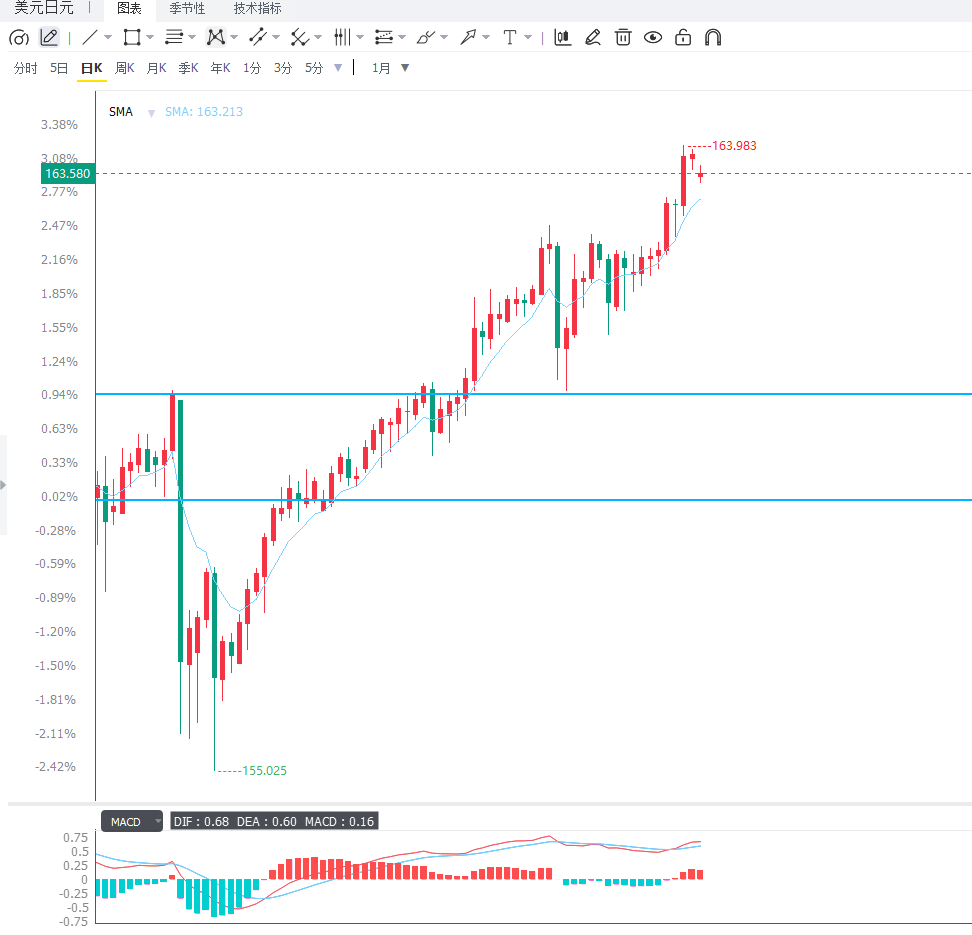 Editor's Summary: The USD/JPY pair has recently been influenced by multiple factors, with its short-term decline primarily stemming from easing Middle East risks, lower oil prices, and reduced demand for the US dollar as a safe haven. However, whether the yen can sustain its rebound depends on the Bank of Japan's policy direction, the Federal Reserve's interest rate path, and changes in the global energy market. If the divergence between US and Japanese monetary policies narrows in the future, USD/JPY may continue to face pressure; however, if geopolitical risks reignite safe-haven demand, the US dollar may still find support. Investors should pay close attention to the Federal Reserve's meeting statement, the Bank of Japan's policy signals, and oil price movements, as these factors will determine the next direction of the USD/JPY pair.
The recent suspension of further US military action and Iran's halt to retaliatory actions have cooled the previously escalating safe-haven trading. Improved market risk appetite has put pressure on the US dollar index, with funds flowing back into safe-haven assets such as the Japanese yen , becoming a significant factor in the short-term decline of USD/JPY. However, investors have not completely dispelled their concerns about energy supply risks, as the situation in the Middle East remains volatile, and the Houthi rebels in Yemen's claim of attacking Saudi energy facilities near the Red Sea has raised continued market concerns about the security of oil transportation. Market sources indicate that the US suspension of further action is based on concerns about the depletion of air defense interception resources and the costs of subsequent operations. It has been reported that senior US military official Dan Kane warned that continued US actions could increase pressure on key military resources. While this factor has reduced short-term market tensions, investors are still closely watching whether future developments will again impact the energy supply chain. Meanwhile, domestic economic policies in Japan have also become an important variable influencing the yen's exchange rate. According to Japanese media reports, Prime Minister Sanae Takaichi's approval rating fell to its lowest level since taking office in July, mainly due to the continued rise in the cost of living. The market believes that the Takashimura municipal government's previously expansionary economic policies have driven up bond yields and put long-term pressure on the yen, with the USD/JPY pair rising to multi-year highs. Domestic inflationary pressures and uncertainty surrounding fiscal policy direction in Japan may limit the yen's continued appreciation . Regarding monetary policy, the market widely expects the Federal Reserve to maintain interest rates at this week's meeting, and may subsequently restart its rate hike cycle in September. However, some investors are still betting that the Fed may release more hawkish signals, and even not ruling out the possibility of unexpected policy changes during the meeting. Meanwhile, the Bank of Japan is also expected to maintain its current interest rate level at this week's meeting, but the market continues to focus on whether it will further tighten monetary policy. Currently, the core contradiction for USD/JPY remains focused on changes in the USD/JPY interest rate differential and the flow of safe-haven funds. On the one hand, US economic data and inflation trends will determine the Fed's policy path; on the other hand, the speed of the Bank of Japan's policy normalization and changes in energy prices will affect the yen's medium-term performance. If expectations of Fed rate cuts strengthen in the future, while the Bank of Japan continues to signal rate hikes, a narrowing USD/JPY interest rate differential could push the USD/JPY pair further down. However, if Middle East risks escalate again, the dollar's safe-haven appeal may regain dominance. From a daily chart perspective, USD/JPY has recently shown signs of consolidation in the high-level area. While the price remains above 160, the overall trend remains bullish, but short-term momentum has weakened. Currently, the exchange rate is influenced by declining risk aversion and a weaker dollar, repeatedly testing lower support levels. On the daily chart, if the price breaks below the support around 163.00, it may further seek support in the 161.80-162.00 area; resistance is seen in the 164.50-165.00 area. A break above this area could potentially resume the previous upward trend. Overall, the daily trend remains bullish, but the upward momentum is undergoing correction. Observing the 4-hour chart, USD/JPY has entered a short-term consolidation phase. After breaking below the recent high consolidation range, bullish momentum has weakened. The MACD indicator shows signs of short-term momentum contraction, and the RSI indicator has fallen back to near neutral territory, indicating a temporary cooling of buying power. If the exchange rate can regain a foothold above 164.00, it may attempt a short-term rebound to test the 164.50 area; if it falls below 163.00, the pullback may extend and move towards the 162.00 area. Currently, the 4-hour chart suggests a range-bound movement, with the market awaiting further directional guidance from the Federal Reserve meeting and the Bank of Japan's policy signals. Editor's Summary: The USD/JPY pair has recently been influenced by multiple factors, with its short-term decline primarily stemming from easing Middle East risks, lower oil prices, and reduced demand for the US dollar as a safe haven. However, whether the yen can sustain its rebound depends on the Bank of Japan's policy direction, the Federal Reserve's interest rate path, and changes in the global energy market. If the divergence between US and Japanese monetary policies narrows in the future, USD/JPY may continue to face pressure; however, if geopolitical risks reignite safe-haven demand, the US dollar may still find support. Investors should pay close attention to the Federal Reserve's meeting statement, the Bank of Japan's policy signals, and oil price movements, as these factors will determine the next direction of the USD/JPY pair.
- Risk Warning and Disclaimer
- The market involves risk, and trading may not be suitable for all investors. This article is for reference only and does not constitute personal investment advice, nor does it take into account certain users’ specific investment objectives, financial situation, or other needs. Any investment decisions made based on this information are at your own risk.