A weaker US dollar index supported a slight rebound in the pound against the dollar, but caution is advised against a potential pullback.
2026-07-27 14:39:04
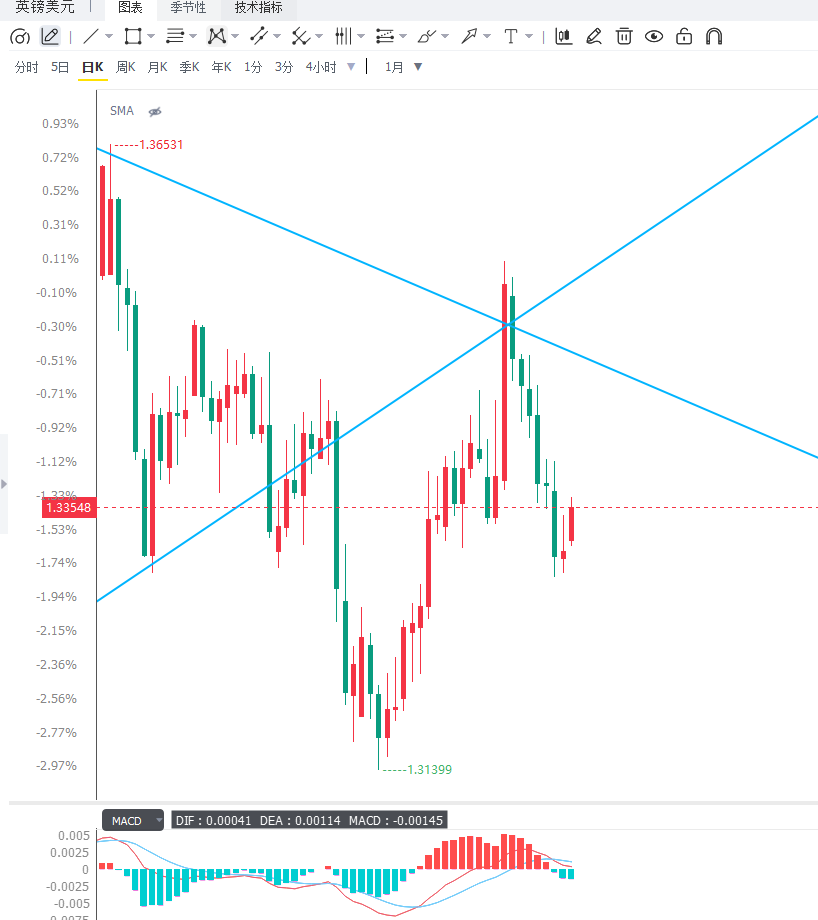
The British pound extended its gains against the US dollar on Monday, following a modest rebound from a three-week low on Friday. The pair continued to find buying support at the start of the new week, breaking through the central 1.3350 area during Asian trading hours. The main driver of the GBP/USD rise was the overall weakening of the US dollar, with markets reducing their allocation to safe-haven assets due to signs of easing tensions in the Middle East.  The US dollar index (DXY) has recently retreated from its monthly highs, primarily driven by improved market risk sentiment. The US's suspension of military operations after a 13-day hiatus, coupled with Iran's halt to further actions against US allies, prompted investors to reassess the risk of escalation. The US's desire to leave room for potential negotiations partially removed the previously accumulated geopolitical risk premium. As risk aversion subsided, the dollar's appeal as a traditional safe-haven asset diminished. The decline in the dollar index was the main driver of the short-term rebound in GBP/USD . Meanwhile, the sharp drop in oil prices reduced market concerns about energy costs pushing up inflation and weakened investor expectations for further tightening by the Federal Reserve. Previously, the market worried that rising oil prices could reignite US inflationary pressures and prompt the Fed to maintain high interest rates for an extended period. However, with the rapid decline in oil prices, the market began to adjust interest rate expectations, further pressuring the dollar. Easing inflation risks reduced expectations of a dollar interest rate advantage, providing room for a short-term rebound in the pound . However, the extent of the oil price decline was limited by energy supply risks. Restrictions on shipping through the Strait of Hormuz and the Bab el-Mandeb Strait remain a concern, with investors worried that disruptions to key energy routes could reignite oil price increases. Therefore, dollar short sellers have not fully expanded their positions, but are waiting for more policy signals. Currently, market focus is gradually shifting to the Federal Reserve's monetary policy meeting. The Fed will announce its interest rate decision after a two-day meeting, and investors will pay close attention to the policy statement and officials' assessment of the future interest rate path. Since the dollar's performance is highly dependent on interest rate expectations, whether the Fed releases a hawkish or dovish signal will directly affect the short-term trend of GBP/USD. If the Fed emphasizes inflation risks and maintains a relatively high interest rate environment, the dollar may regain support, limiting the pound's upside potential. Conversely, if the policy statement leans towards waiting for more economic data, the market may further reduce dollar demand, creating conditions for GBP/USD to continue its rebound. The pound's own performance is also affected by UK economic data and Bank of England policy expectations. If future UK inflationary pressures decline as expected, the Bank of England's policy space may change, thus affecting the pound's performance. Therefore, investors need to pay attention not only to dollar factors but also to changes in the UK's economic fundamentals. From a daily chart perspective, GBP/USD has recently rebounded from a three-week low and is currently back above the 1.3300 area, indicating a recovery in short-term bullish momentum. The daily chart shows the exchange rate is testing the upper edge of the previous consolidation range. Resistance is seen in the 1.3350-1.3400 area; a break above this level could lead to a further challenge of the 1.3450 area. Support is seen at 1.3250 and 1.3200. The current daily trend leans towards a corrective rebound, but the overall direction still needs confirmation from the Federal Reserve's policy signals. Looking at the 4-hour chart, GBP/USD has strengthened in the short term, with the price rebounding and breaking out of the recent consolidation range. The MACD indicator is gradually moving upwards, indicating strengthening short-term upward momentum; the RSI indicator has risen back into the bullish zone, improving market buying sentiment. However, as the price approaches the resistance near 1.3400, short-term profit-taking may occur. A decisive break above 1.3400 could open up further upside potential; if it encounters resistance and falls back, support should be monitored in the 1.3280-1.3300 area. The current 4-hour structure is bullish, but the market will remain cautious ahead of the Federal Reserve meeting.
  The recent rise in GBP/USD has been primarily driven by a weaker dollar and decreased safe-haven demand. A temporary easing of tensions in the Middle East has reduced market risk premiums, while falling oil prices have lessened inflation concerns, putting short-term pressure on the dollar. However, whether the pound can continue its upward trend depends on the Federal Reserve's policy signals, dollar interest rate expectations, and changes in global risk sentiment. If the Fed releases a dovish signal, GBP/USD may continue to test higher levels; if the policy stance is hawkish, a dollar rebound may limit the pound's gains. Going forward, the market will focus on the Fed meeting, energy market developments, and global risk events.
The US dollar index (DXY) has recently retreated from its monthly highs, primarily driven by improved market risk sentiment. The US's suspension of military operations after a 13-day hiatus, coupled with Iran's halt to further actions against US allies, prompted investors to reassess the risk of escalation. The US's desire to leave room for potential negotiations partially removed the previously accumulated geopolitical risk premium. As risk aversion subsided, the dollar's appeal as a traditional safe-haven asset diminished. The decline in the dollar index was the main driver of the short-term rebound in GBP/USD . Meanwhile, the sharp drop in oil prices reduced market concerns about energy costs pushing up inflation and weakened investor expectations for further tightening by the Federal Reserve. Previously, the market worried that rising oil prices could reignite US inflationary pressures and prompt the Fed to maintain high interest rates for an extended period. However, with the rapid decline in oil prices, the market began to adjust interest rate expectations, further pressuring the dollar. Easing inflation risks reduced expectations of a dollar interest rate advantage, providing room for a short-term rebound in the pound . However, the extent of the oil price decline was limited by energy supply risks. Restrictions on shipping through the Strait of Hormuz and the Bab el-Mandeb Strait remain a concern, with investors worried that disruptions to key energy routes could reignite oil price increases. Therefore, dollar short sellers have not fully expanded their positions, but are waiting for more policy signals. Currently, market focus is gradually shifting to the Federal Reserve's monetary policy meeting. The Fed will announce its interest rate decision after a two-day meeting, and investors will pay close attention to the policy statement and officials' assessment of the future interest rate path. Since the dollar's performance is highly dependent on interest rate expectations, whether the Fed releases a hawkish or dovish signal will directly affect the short-term trend of GBP/USD. If the Fed emphasizes inflation risks and maintains a relatively high interest rate environment, the dollar may regain support, limiting the pound's upside potential. Conversely, if the policy statement leans towards waiting for more economic data, the market may further reduce dollar demand, creating conditions for GBP/USD to continue its rebound. The pound's own performance is also affected by UK economic data and Bank of England policy expectations. If future UK inflationary pressures decline as expected, the Bank of England's policy space may change, thus affecting the pound's performance. Therefore, investors need to pay attention not only to dollar factors but also to changes in the UK's economic fundamentals. From a daily chart perspective, GBP/USD has recently rebounded from a three-week low and is currently back above the 1.3300 area, indicating a recovery in short-term bullish momentum. The daily chart shows the exchange rate is testing the upper edge of the previous consolidation range. Resistance is seen in the 1.3350-1.3400 area; a break above this level could lead to a further challenge of the 1.3450 area. Support is seen at 1.3250 and 1.3200. The current daily trend leans towards a corrective rebound, but the overall direction still needs confirmation from the Federal Reserve's policy signals. Looking at the 4-hour chart, GBP/USD has strengthened in the short term, with the price rebounding and breaking out of the recent consolidation range. The MACD indicator is gradually moving upwards, indicating strengthening short-term upward momentum; the RSI indicator has risen back into the bullish zone, improving market buying sentiment. However, as the price approaches the resistance near 1.3400, short-term profit-taking may occur. A decisive break above 1.3400 could open up further upside potential; if it encounters resistance and falls back, support should be monitored in the 1.3280-1.3300 area. The current 4-hour structure is bullish, but the market will remain cautious ahead of the Federal Reserve meeting. The recent rise in GBP/USD has been primarily driven by a weaker dollar and decreased safe-haven demand. A temporary easing of tensions in the Middle East has reduced market risk premiums, while falling oil prices have lessened inflation concerns, putting short-term pressure on the dollar. However, whether the pound can continue its upward trend depends on the Federal Reserve's policy signals, dollar interest rate expectations, and changes in global risk sentiment. If the Fed releases a dovish signal, GBP/USD may continue to test higher levels; if the policy stance is hawkish, a dollar rebound may limit the pound's gains. Going forward, the market will focus on the Fed meeting, energy market developments, and global risk events.
- Risk Warning and Disclaimer
- The market involves risk, and trading may not be suitable for all investors. This article is for reference only and does not constitute personal investment advice, nor does it take into account certain users’ specific investment objectives, financial situation, or other needs. Any investment decisions made based on this information are at your own risk.