Crude Oil Reshapes the Forex Market Landscape: A Look Ahead to the Central Bank Super Week and Major Currency Forecasts
2026-07-27 17:29:02
This week, the US, UK, and Japan will announce their interest rate decisions, while central bank leaders from several countries will also deliver speeches. The continued rise in oil prices boosted the US dollar last week, widening the growth advantage of the US relative to energy-importing economies like Japan and the Eurozone. Energy-related currencies were among the few to outperform the dollar, with the Norwegian krone, Brazilian real, Colombian peso, and Mexican peso benefiting from improved terms of trade. The South Korean won performed strongly, driven by easing capital outflow pressures from portfolio rebalancing. If the Federal Reserve releases hawkish signals this week but chooses to maintain interest rates, coupled with a robust US economic growth and gradually cooling inflation environment, the dollar is expected to continue to be supported in the short term. 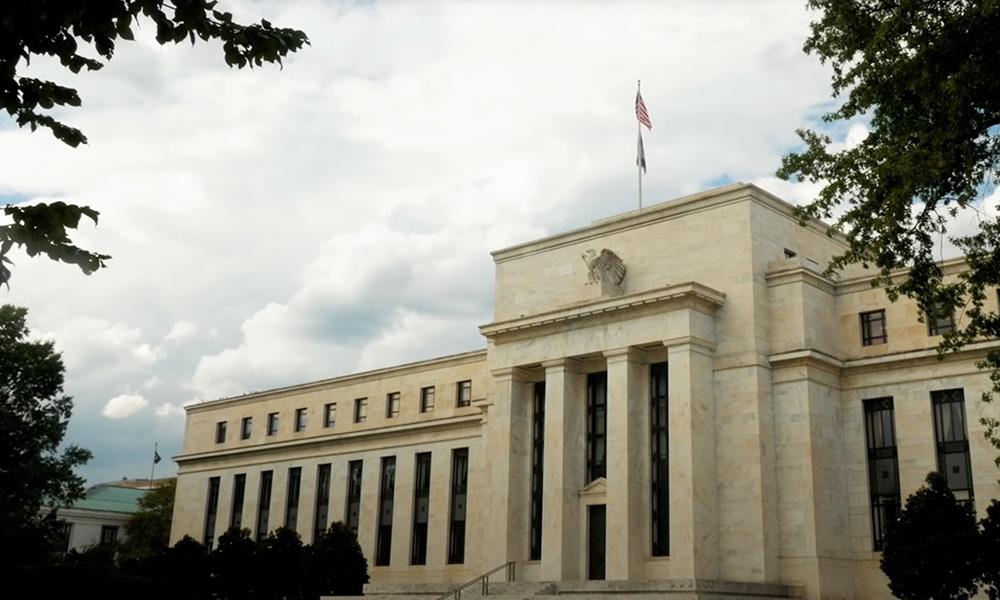
Federal Reserve: Interest rates remain stable, the economy is resilient, and inflation is gradually cooling.
The Federal Open Market Committee (FOMC) will announce its interest rate decision at 2:00 AM on Thursday. The market expects the FOMC to maintain the federal funds rate at 3.50%-3.75% for the fifth consecutive time. Interest rate futures pricing indicates a 33% probability of a 25 basis point rate hike this week, with the market pricing in a cumulative tightening of nearly 50 basis points this year. Besides the rate decision itself, the market is focusing on the internal voting differences within the committee and officials' statements regarding whether inflation risks can be sustained. At the June meeting, all members unanimously agreed to hold rates steady. The baseline scenario vote was 10 to maintain the current rate and 2 to raise it. Cleveland Fed President Beth Hammark and Dallas Fed President Lori Logan will propose a 25 basis point increase. There is a risk of a hawkish tail; if Fed Governor Lisa Cook also supports a rate hike, the vote will become 9-3. All three officials have recently emphasized that upside risks to inflation are dominant, with Logan even publicly calling for a moderate increase in the policy rate. The preliminary estimate of US Q2 GDP was released on Thursday. The market expected annualized real GDP growth of 2.1%, unchanged from Q1, with household consumption and investment in AI-related companies providing core support. The growth rate was slightly higher than the potential 2% growth rate. Leading models showed significant divergence in forecasts: the Atlanta Fed's GDPNow model predicted 1.7%, the New York Fed's Nowcast model saw 2.8%, and S&P PMI data pointed to growth of only around 1.2%. The US June PCE price index was released on Thursday. Dragged down by declining gasoline prices, the overall PCE month-on-month growth was expected to fall to -0.1%, compared to +0.4% previously; the year-on-year growth fell to 3.7%, compared to 4.1% in May. Core PCE was expected to rise 0.2% month-on-month (previous value 0.3%), and fall to 3.3% year-on-year, compared to 3.4% in May. The FOMC projected overall PCE inflation of 3.6% and core PCE inflation of 3.3% in its 2026 SEP (Secondary Economic Policy). The rebound in gasoline prices suggests a potential resurgence of inflation, but considering the average annual labor productivity growth of 2.1%, the current wage growth rate aligns with the Federal Reserve's 2% inflation target. The Employment Cost Index (ECI), a key wage indicator tracked by the Fed, showed a 3.4% year-on-year increase in wages in the first quarter. However, excluding productivity contributions, real wage growth was only 1.3%. Second-quarter ECI wage data will be released next Friday (August 7th).The Bank of England is expected to pause interest rate hikes, with the path of quantitative tightening becoming a focal point.
The Bank of England will announce its interest rate decision and Monetary Policy Report on Thursday. The market widely expects the Bank of England to maintain its policy rate at 3.75% for the fifth consecutive time. Easing inflationary pressures in the UK provide the central bank with a degree of leeway for a wait-and-see approach. Slowing wage growth suggests continued cooling in the services sector, and the Bank of England's DMP survey in July also showed a decline in inflation expectations. The vote is likely to remain 7-2, with a majority of members supporting maintaining the current rate, meaning that restarting rate hikes will require meeting stringent conditions. At the June 18th meeting, the Monetary Policy Committee voted 7-2 to pause rate hikes and 2-2 to raise rates by 25 basis points. Megan Green and Hugh Peele supported rate hikes, while Catherine Mann favored tightening but ultimately chose to postpone, mainly considering that financial conditions had already tightened significantly. The Monetary Policy Report will update the latest economic forecasts and review the effects of the QT program over the past year. The Monetary Policy Committee will vote on the subsequent balance sheet reduction plan at its meeting on September 17th. The current plan is to reduce the balance sheet by a total of £70 billion from October 2025 to September 2026, of which £21 billion will be actively sold, and the remainder will be covered by maturing bonds. The holdings of the asset purchase facility (APF) will shrink from a peak of £895 billion in 2022 to approximately £488 billion. The Bank of England is highly likely to slow down the pace of its APF balance sheet reduction, primarily due to a significant decrease in the amount of government bonds maturing next year: only £31 billion will mature between October 2026 and September 2027, compared to £49 billion in the previous period. Even with a slower pace of balance sheet reduction, it will still be difficult to offset the upward pressure on UK bond yields caused by fiscal uncertainty. Prime Minister Andy Burnham favors expanding fiscal spending and increasing bond issuance, but the details of a complete fiscal plan may not be finalized until the October budget. The downside risk for the pound has not been eliminated, largely because the market is overly optimistic about the Bank of England's interest rate hike expectations. The swap curve estimates a cumulative rate hike of 75 basis points over the next 12 months, bringing the interest rate to 4.50%. At that time, the policy rate will break through the central bank's estimated neutral interest rate range of 2.00%-4.00%, while the UK economy is currently operating at a level significantly below its potential output.The Bank of Japan is expected to keep interest rates unchanged.
The Bank of Japan (BOJ) released its interest rate decision and outlook report on Friday. The 25bp rate hike in June, which was fully priced in by the market, has materialized. The current mainstream expectation is to maintain the policy rate at 1.00%, with inflation remaining below the 2% policy target. The interest rate swap curve pricing suggests a 25bp rate hike by the end of the year, resulting in a cumulative tightening of 60bp over the next 12 months, pushing the rate up to 1.50%-1.75%. The adjusted rate remains in the middle of the BOJ's neutral range of 1.10%-2.50%, indicating that the Japanese economy is currently operating above its potential level. Stronger international oil prices drove a significant rise in the USD/JPY exchange rate last week, nearing a 40-year high. Excluding the external shock of oil prices, Japan's internal macroeconomic fundamentals would have been favorable for a stronger yen.Eurozone economic and inflation data are undergoing a concentrated verification.
Eurozone Q2 GDP was released on Thursday, with an expected quarter-on-quarter growth of 0.2%, compared to 0% in Q1. Support was provided by a rebound in PMI and ZEW business climate indices, with Germany's July IFO business climate index, released on Monday, showing a slight improvement. The ECB forecasts an average annual real GDP growth of 0.8% for the Eurozone in 2026, with significant downside risks; a renewed disruption to the energy supply chain would suppress real income, consumption, and investment. The Eurozone's preliminary July CPI was released on Friday, with overall CPI expected at 2.9% year-on-year, compared to 2.8% in June; core CPI remained unchanged at 2.4% year-on-year, unchanged for two consecutive months. The ECB's baseline forecast for 2026 is overall inflation of 3.0% and core inflation of 2.5%, with greater upside risks to overall inflation. In summary, the stabilization of the Eurozone economy coupled with inflation remaining above target will support the ECB restarting interest rate hikes in September, but this expectation is unlikely to drive a sustained strengthening of the euro. The swap market has already priced in a 90% probability of a 25bp rate hike on September 10th.With inflation continuing to exceed targets, the Reserve Bank of Australia still retains the option to raise interest rates.
Australia's June monthly CPI and second-quarter quarterly CPI will be released on Wednesday. The overall CPI year-on-year forecast remains unchanged at 4.0%, marking the second consecutive month of growth. The cut-off mean CPI is expected to be 3.7% year-on-year, compared to 3.6% in May. While the monthly CPI is a high-frequency indicator of Australian inflation, the Reserve Bank of Australia (RBA) places greater emphasis on the core inflation indicator within the quarterly CPI. The cut-off mean inflation for the second quarter is expected to rise to a two-year high of 3.7%, compared to 3.5% in the first quarter, leading the market to continue betting on further RBA rate hikes. RBA Governor Michelle Bullock and Assistant Governor Sarah Hunt will deliver public speeches on Tuesday and Thursday, respectively, potentially providing policy clues before the August 11th policy meeting. RBA cash rate futures pricing indicates a 30% probability of a 25bp rate hike in August, with the market fully pricing in a year-end rate increase to 4.60%. The Reserve Bank of Australia (RBA) is highly likely to extend its pause in interest rate hikes, which will continue to put downward pressure on the Australian dollar. Firstly, the RBA predicts that real GDP growth will be lower than potential levels over the next two years. Secondly, the current cash rate of 4.35% is already close to the upper limit of the nominal neutral interest rate range calculated by various models.- Risk Warning and Disclaimer
- The market involves risk, and trading may not be suitable for all investors. This article is for reference only and does not constitute personal investment advice, nor does it take into account certain users’ specific investment objectives, financial situation, or other needs. Any investment decisions made based on this information are at your own risk.