Gold remained range-bound ahead of the Federal Reserve's interest rate decision, awaiting a directional move.
2026-07-28 10:03:04
International gold prices retreated during Asian trading on Tuesday, with spot gold (XAU/USD) falling to around $4,050 per ounce, after rising the previous day. The market has recently been readjusting its risk asset allocation in response to developments in the Middle East. As tensions show signs of easing, investors are reducing demand for safe-haven assets, putting short-term pressure on gold.  The recent gold price correction was primarily driven by improved market risk appetite. The US stated it is actively communicating with Iran, hoping to ease regional tensions through diplomatic channels. This news pushed international oil prices significantly lower, alleviating market concerns about further energy price increases and a resurgence of global inflation. The decline in oil prices reduced inflation risk expectations and weakened gold's short-term appeal as an inflation hedge. However, the market remains cautious about the development of the situation. The US also indicated it reserves the possibility of further action if negotiations fail. Following the US's suspension of related actions, Iran also reduced its responses to US targets, but no formal long-term agreement has been reached. Therefore, the current gold market still carries a certain geopolitical risk premium, and investors have not completely exited safe-haven trading. From a macroeconomic perspective, the Federal Reserve policy meeting is the focus of market attention this week. The market generally expects the Fed to maintain current interest rates and continue to monitor inflation and economic growth. While some investors believe that persistent price pressures may prompt further tightening, overall market expectations suggest that any potential rate hikes are more likely to be postponed until September. For gold, interest rate expectations remain a crucial factor determining its medium- to long-term trend. As a non-yielding asset, gold is typically affected by changes in real interest rates. When the market expects interest rates to remain high for an extended period, the opportunity cost of holding gold increases, and prices are easily suppressed. Conversely, if there are signs of a shift in monetary policy, gold may regain inflows. Recent US economic data has also become an important basis for the market to judge the Fed's path. If the job market cools further while inflation continues to decline, the market may re-strengthen expectations of policy easing, thus providing support for gold. Conversely, if inflationary pressures persist above the target level, the Fed may maintain a more cautious policy stance, limiting further upside potential for gold. Currently, the gold market is in a phase of multiple intertwined factors. On the one hand, the easing of tensions in the Middle East has reduced safe-haven buying; on the other hand, expectations of a potential policy shift and global economic uncertainty still provide bottom support for gold. The current trend of gold is not simply determined by safe-haven sentiment, but rather by seeking a new balance among geopolitical risks, the dollar's performance, real interest rates, and expectations of Fed policy. From a daily chart perspective, after a rapid rise, gold has entered a high-level consolidation phase, with prices currently falling back to around $4050, and short-term upward momentum has weakened. However, the overall trend remains bullish, with the market focused on support around the $4,000 level. If this area holds, gold may retest the resistance zone above $4,100. Initial resistance is seen around $4,100, with a potential challenge to recent highs after a further break. Key support lies around $4,000; a break below this level could lead to a further correction towards the $3,950 area. Technically, short-term indicators for gold show signs of cooling, but no clear trend reversal signal has yet formed. On the 4-hour chart, gold prices have recently been consolidating, with short-term bullish and bearish forces rebalancing. Currently, the price is hovering around $4,050. A retest of the $4,060-$4,080 area could trigger a return of short-term buying and an attempt to break through the $4,100 resistance level. If the rebound is weak, a further pullback to the $4,000 support level should be anticipated. Technical indicators suggest that short-term upward momentum has weakened, but the market remains highly focused on the outcome of the Federal Reserve meeting and changes in the geopolitical situation could be key catalysts for the next breakout.
 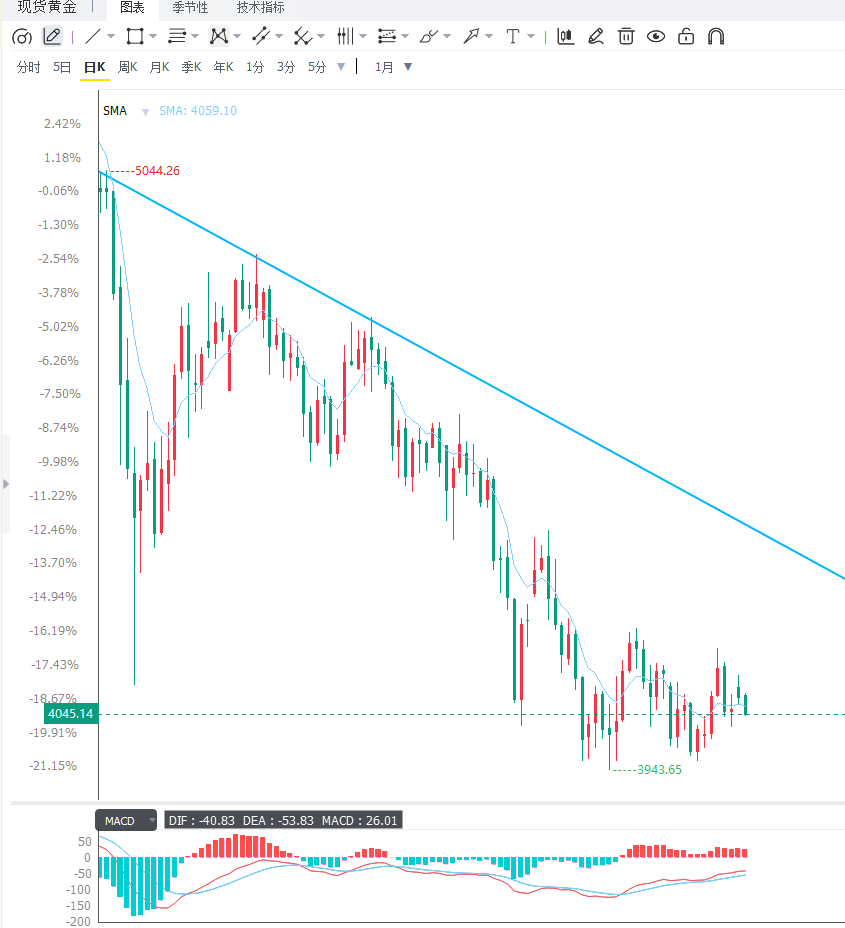 Editor's Summary: The current pullback in gold prices reflects more of a short-term price-in of reduced Middle East risks than a change in long-term trends. With falling oil prices and easing inflationary pressures, demand for gold as a safe haven has been suppressed, but the Fed's policy path and global economic uncertainty continue to support gold prices. Future gold price movements will largely depend on three factors: whether geopolitical tensions further ease, whether the Fed signals a policy shift, and the direction of changes in the US dollar and real interest rates. If risk sentiment continues to improve, gold may face a period of adjustment; however, if policy expectations shift towards easing or regional risks escalate again, gold still has the potential to challenge higher levels.
The recent gold price correction was primarily driven by improved market risk appetite. The US stated it is actively communicating with Iran, hoping to ease regional tensions through diplomatic channels. This news pushed international oil prices significantly lower, alleviating market concerns about further energy price increases and a resurgence of global inflation. The decline in oil prices reduced inflation risk expectations and weakened gold's short-term appeal as an inflation hedge. However, the market remains cautious about the development of the situation. The US also indicated it reserves the possibility of further action if negotiations fail. Following the US's suspension of related actions, Iran also reduced its responses to US targets, but no formal long-term agreement has been reached. Therefore, the current gold market still carries a certain geopolitical risk premium, and investors have not completely exited safe-haven trading. From a macroeconomic perspective, the Federal Reserve policy meeting is the focus of market attention this week. The market generally expects the Fed to maintain current interest rates and continue to monitor inflation and economic growth. While some investors believe that persistent price pressures may prompt further tightening, overall market expectations suggest that any potential rate hikes are more likely to be postponed until September. For gold, interest rate expectations remain a crucial factor determining its medium- to long-term trend. As a non-yielding asset, gold is typically affected by changes in real interest rates. When the market expects interest rates to remain high for an extended period, the opportunity cost of holding gold increases, and prices are easily suppressed. Conversely, if there are signs of a shift in monetary policy, gold may regain inflows. Recent US economic data has also become an important basis for the market to judge the Fed's path. If the job market cools further while inflation continues to decline, the market may re-strengthen expectations of policy easing, thus providing support for gold. Conversely, if inflationary pressures persist above the target level, the Fed may maintain a more cautious policy stance, limiting further upside potential for gold. Currently, the gold market is in a phase of multiple intertwined factors. On the one hand, the easing of tensions in the Middle East has reduced safe-haven buying; on the other hand, expectations of a potential policy shift and global economic uncertainty still provide bottom support for gold. The current trend of gold is not simply determined by safe-haven sentiment, but rather by seeking a new balance among geopolitical risks, the dollar's performance, real interest rates, and expectations of Fed policy. From a daily chart perspective, after a rapid rise, gold has entered a high-level consolidation phase, with prices currently falling back to around $4050, and short-term upward momentum has weakened. However, the overall trend remains bullish, with the market focused on support around the $4,000 level. If this area holds, gold may retest the resistance zone above $4,100. Initial resistance is seen around $4,100, with a potential challenge to recent highs after a further break. Key support lies around $4,000; a break below this level could lead to a further correction towards the $3,950 area. Technically, short-term indicators for gold show signs of cooling, but no clear trend reversal signal has yet formed. On the 4-hour chart, gold prices have recently been consolidating, with short-term bullish and bearish forces rebalancing. Currently, the price is hovering around $4,050. A retest of the $4,060-$4,080 area could trigger a return of short-term buying and an attempt to break through the $4,100 resistance level. If the rebound is weak, a further pullback to the $4,000 support level should be anticipated. Technical indicators suggest that short-term upward momentum has weakened, but the market remains highly focused on the outcome of the Federal Reserve meeting and changes in the geopolitical situation could be key catalysts for the next breakout. Editor's Summary: The current pullback in gold prices reflects more of a short-term price-in of reduced Middle East risks than a change in long-term trends. With falling oil prices and easing inflationary pressures, demand for gold as a safe haven has been suppressed, but the Fed's policy path and global economic uncertainty continue to support gold prices. Future gold price movements will largely depend on three factors: whether geopolitical tensions further ease, whether the Fed signals a policy shift, and the direction of changes in the US dollar and real interest rates. If risk sentiment continues to improve, gold may face a period of adjustment; however, if policy expectations shift towards easing or regional risks escalate again, gold still has the potential to challenge higher levels.
- Risk Warning and Disclaimer
- The market involves risk, and trading may not be suitable for all investors. This article is for reference only and does not constitute personal investment advice, nor does it take into account certain users’ specific investment objectives, financial situation, or other needs. Any investment decisions made based on this information are at your own risk.