Australian inflation unexpectedly plummeted, cooling expectations for a Reserve Bank of Australia rate hike, and the Australian dollar briefly hit a more than two-week low.
2026-07-29 11:44:50
On Wednesday (July 29) during Asian trading hours, the Australian dollar fell as much as 0.53% to 0.6936 against the US dollar, a new low since July 14, and is currently trading around 0.6950. The immediate trigger for the weakening Australian dollar was the unexpectedly slowdown in June inflation data released by the Australian Bureau of Statistics. The latest data from the Australian Bureau of Statistics showed that the overall inflation rate fell to 3.8% in June from 4%, the lowest level since the outbreak of the US-Iran conflict in February. The Reserve Bank of Australia's preferred inflation gauge—cut-off mean inflation—held steady at 3.6%, lower than the previously predicted 3.8%. This unexpected slowdown was mainly due to lower transportation costs in June—the head of price statistics at the Bureau of Statistics stated that the situation in the Middle East stabilized somewhat in June, and lower global oil prices pushed fuel prices down by 10.9% that month. At the same time, the federal government's fuel tax relief measures remained in effect, reducing fuel costs by approximately 32 cents per liter that month. 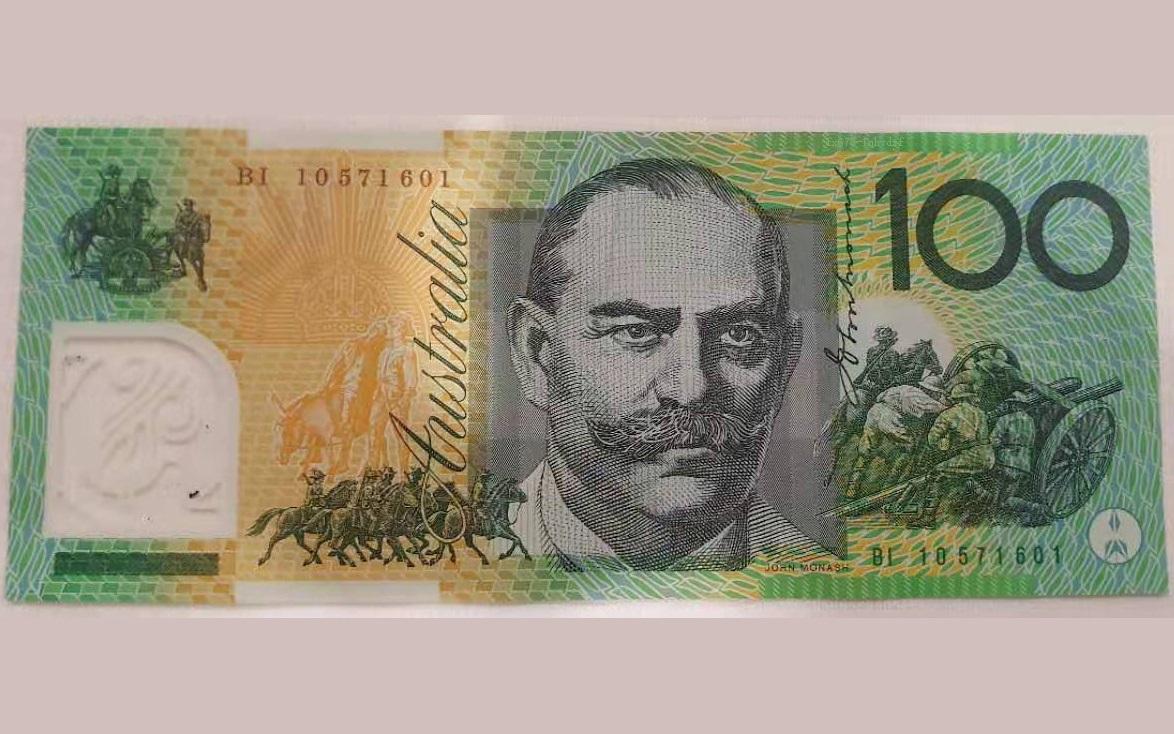
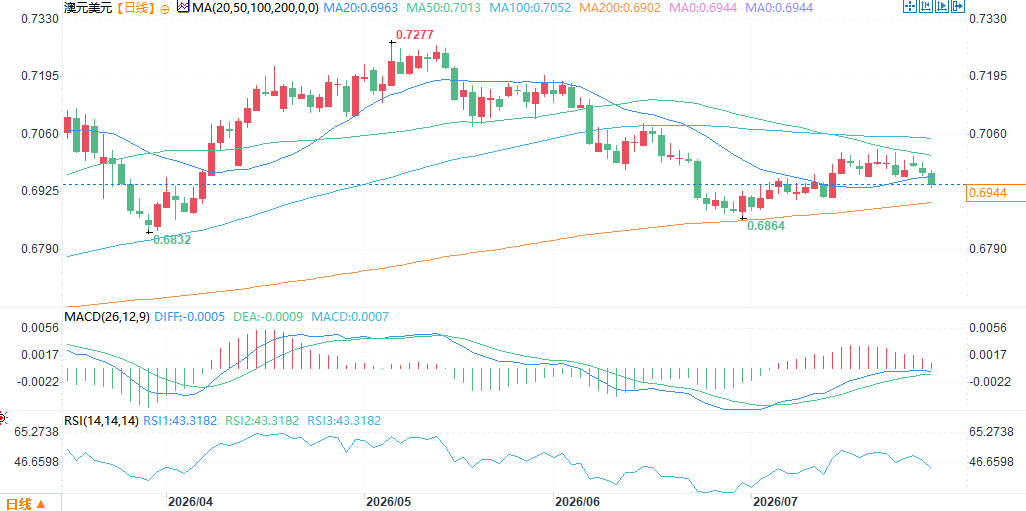 (Australian dollar against US dollar daily chart, source: EasyForex) At 11:40 Beijing time on July 29, the Australian dollar was trading at 0.6947/48 against the US dollar.
The decline in fuel prices was the main driver, but the consumption tax exemption is about to end.
The decline in fuel prices has been a major driver of the current slowdown in inflation. A temporary easing of tensions in the Middle East in June led to lower global oil prices, which, combined with the federal government's fuel tax relief, lowered transportation costs. However, this positive factor is waning – the fuel tax relief was reduced from 32 Australian cents to 16 Australian cents per liter in July and will be completely removed from this week. This means that inflation data in the coming months may face renewed upward pressure. The Treasurer stated that inflation data is encouraging, but the Treasury has warned that "the next phase of the conflict could pose greater challenges to the global economy, as the oil market is now more vulnerable."Housing costs remain the biggest contributor to inflation, with new home prices hitting a near three-year high.
Despite a general decline in inflation, housing costs remained the largest contributor to inflation in June's monthly data, rising 6.8% year-on-year. The National Bureau of Statistics noted that the annual inflation rate for new residential housing had reached a near three-year high of 5.8%, as builders passed on higher material and labor costs to homebuyers. This structural pressure indicates that even with a short-term respite from falling energy prices, upward pressure on housing and construction costs continues to accumulate.Reserve Bank of Australia faces policy choices
The chief economist for Australia at Oxford Economics noted that the Reserve Bank of Australia (RBA) will focus more on the breadth of inflation than on overall data. "Core inflation is not only resisting upward pressure, but it continues to slow on a quarterly basis." This supports the institution's assessment that the RBA will keep interest rates unchanged next month. The RBA will meet on August 10-11 to decide whether to raise interest rates from 4.35% or keep them unchanged. Governor Bullock said on Tuesday that higher interest rates are slowing the economy as expected. She pointed out that inflation exceeding the target over the past four years is a warning sign for the RBA board: "The longer inflation deviates from the target, the deeper the board's concerns become. In our May forecast, we expected inflation to not return to below 3% until the end of 2027, which will be a prolonged period above the target."The decline in inflation provides room for the Reserve Bank of Australia to hold rates steady, but structural pressures remain.
June inflation data unexpectedly fell back to pre-war levels, providing the Reserve Bank of Australia (RBA) with data to support keeping interest rates unchanged at its August meeting. The decline in fuel prices was the main driver, but the end of the GST cut and persistently high housing costs mean the inflation outlook still faces upside risks. Oxford Economics believes core inflation is slowing, supporting the RBA's decision to hold rates steady; however, the RBA's own forecasts indicate that inflation will not return to the target range until the end of 2027. For the market, this data reduces the urgency of an August rate hike, but does not completely eliminate it—the RBA still needs to see broader price pressures subside before confirming the end of the tightening cycle. (Australian dollar against US dollar daily chart, source: EasyForex) At 11:40 Beijing time on July 29, the Australian dollar was trading at 0.6947/48 against the US dollar.
- Risk Warning and Disclaimer
- The market involves risk, and trading may not be suitable for all investors. This article is for reference only and does not constitute personal investment advice, nor does it take into account certain users’ specific investment objectives, financial situation, or other needs. Any investment decisions made based on this information are at your own risk.