The pound fell slightly against the dollar, awaiting policy guidance from the Bank of England.
2026-07-30 10:54:49
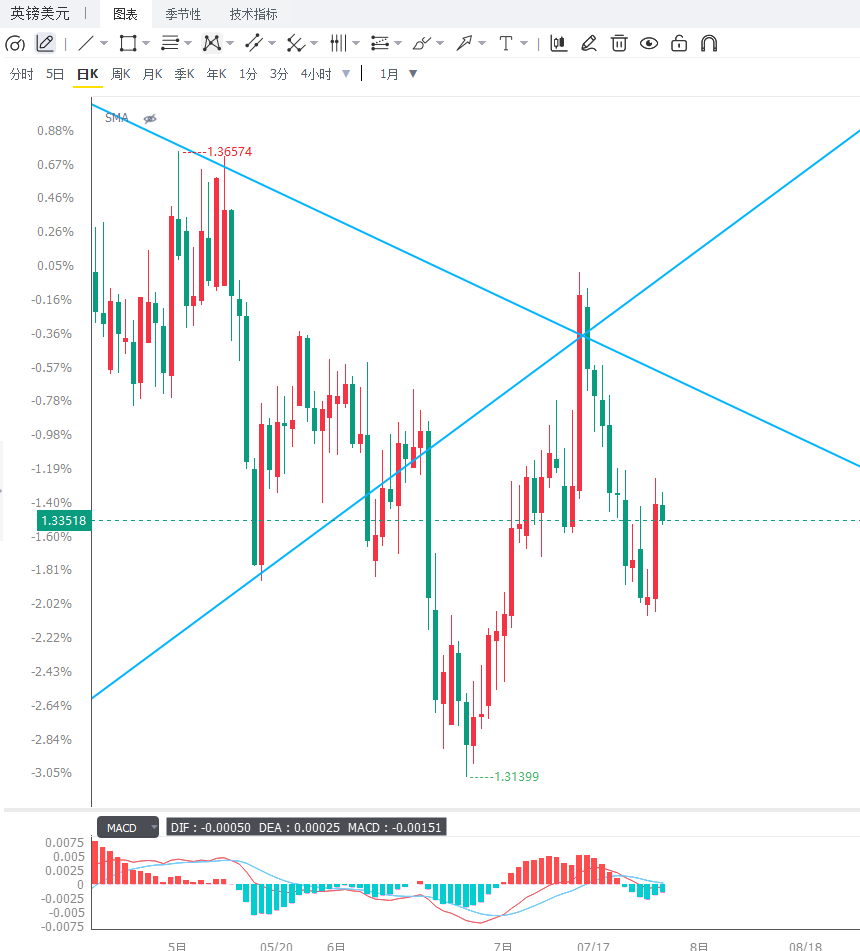
The British pound fell against the US dollar (GBP/USD) in Asian trading on Thursday, retreating to around 1.3350, a drop of more than 0.10% on the day. This followed a rise in the pair to a weekly high on Wednesday as market sentiment improved, but renewed buying support for the US dollar temporarily halted the pound's rebound.  The recent strengthening of the US dollar was primarily influenced by the Federal Reserve's July policy meeting. The Fed maintained interest rates unchanged, as widely expected, but policy decisions were not entirely unanimous, with significant disagreements within the committee. The meeting ultimately passed a resolution with 9 votes in favor of keeping rates unchanged and 3 votes in favor of a 25-basis-point rate hike, reflecting considerable internal debate within the Fed regarding future inflation trends and the path of interest rates. Although the Fed did not signal further tightening, the market remains focused on the possibility of future interest rate adjustments. Recent fluctuations in energy prices and changes in global supply risks have led the market to reassess inflationary pressures. Some investors still believe that the Fed may raise rates at least once more before the end of the year, an expectation that has limited the dollar's previous pullback. Furthermore, changes in the global risk environment have also boosted demand for the dollar as a safe haven. Increased market attention to developments in the Middle East has led investors to worry about potential disruptions to energy supplies, resulting in a reallocation of funds to safe-haven assets such as the dollar. This increased risk aversion has led to a return of dollar buying, putting short-term pressure on GBP/USD. However, the British pound still has some support, as the market awaits the latest policy decision from the Bank of England (BoE). The UK's inflation trajectory, economic growth pressures, and wage changes will be crucial factors for the Bank of England's future monetary policy decisions. A hawkish signal from the Bank of England could provide a short-term boost to the pound. Meanwhile, investors will also be watching subsequent US economic data, including the preliminary second-quarter GDP and the Personal Consumption Expenditures (PCE) price index. GDP data will reflect the resilience of US economic growth, while PCE, a key inflation indicator monitored by the Federal Reserve, could influence market expectations regarding future interest rate paths. If US economic data remains strong while inflationary pressures persist, the market may further increase expectations that the Federal Reserve will maintain high interest rates or even tighten policy again, thus driving up the dollar. Conversely, if economic data shows clear signs of slowing, the market may re-bet on a future policy shift, potentially putting downward pressure on the dollar. Currently, GBP/USD is in a phase of policy expectation rebalancing. The pound needs new directional guidance from the Bank of England, while the dollar is influenced by policy divergences within the Federal Reserve, inflation expectations, and safe-haven flows. In the short term, market volatility may increase significantly. From a daily chart perspective, GBP/USD rebounded from near four-week lows and briefly touched weekly highs, but upward momentum has weakened, with the price retreating to around 1.3350. The overall structure remains in a consolidation phase. The first resistance level to watch is 1.3400; a break above this level could lead to further testing of the 1.3450-1.3500 area. On the downside, 1.3300 is a key short-term support level; a break below this level could lead to a retest of the 1.3250 support level. Current market momentum is suppressed by a rebounding US dollar, and the future direction will depend on the Bank of England's policy and US economic data. From a 4-hour chart perspective, GBP/USD has shown a short-term pattern of rising and then falling back, with buying power weakening after the previous rebound. Technical indicators suggest that short-term upward momentum is cooling, but the price is still hovering near a key support area. If the exchange rate can hold above 1.3300 and break through the resistance near 1.3370, the short-term rebound structure may continue; however, a break below 1.3300 could trigger a further pullback, with a target of the 1.3250 area. Future trading opportunities will primarily revolve around the Bank of England's policy decision, US GDP and PCE data, and changes in risk aversion.
  The current GBP/USD exchange rate movement is influenced by a combination of factors, including policy divergences within the Federal Reserve, expectations surrounding the Bank of England, and global risk sentiment. While the Fed maintained its interest rate, internal voices supporting a rate hike have provided some support for the US dollar. Meanwhile, the Bank of England's policy direction will be a key factor determining the pound's short-term performance. The market focus will now be on the differences in economic data between the US and Europe, and the policy paths of the two central banks. If UK economic data improves and the Bank of England maintains a relatively tight stance, the pound still has room to rebound; however, if the US economy continues to perform strongly, and safe-haven demand drives the dollar higher, GBP/USD may continue to face pressure. Overall, the pound/dollar pair remains in a short-term consolidation phase. Investors should pay close attention to the breakout of the 1.3300 support level and the 1.3400 resistance level, and be wary of rapid fluctuations caused by macroeconomic events.
The recent strengthening of the US dollar was primarily influenced by the Federal Reserve's July policy meeting. The Fed maintained interest rates unchanged, as widely expected, but policy decisions were not entirely unanimous, with significant disagreements within the committee. The meeting ultimately passed a resolution with 9 votes in favor of keeping rates unchanged and 3 votes in favor of a 25-basis-point rate hike, reflecting considerable internal debate within the Fed regarding future inflation trends and the path of interest rates. Although the Fed did not signal further tightening, the market remains focused on the possibility of future interest rate adjustments. Recent fluctuations in energy prices and changes in global supply risks have led the market to reassess inflationary pressures. Some investors still believe that the Fed may raise rates at least once more before the end of the year, an expectation that has limited the dollar's previous pullback. Furthermore, changes in the global risk environment have also boosted demand for the dollar as a safe haven. Increased market attention to developments in the Middle East has led investors to worry about potential disruptions to energy supplies, resulting in a reallocation of funds to safe-haven assets such as the dollar. This increased risk aversion has led to a return of dollar buying, putting short-term pressure on GBP/USD. However, the British pound still has some support, as the market awaits the latest policy decision from the Bank of England (BoE). The UK's inflation trajectory, economic growth pressures, and wage changes will be crucial factors for the Bank of England's future monetary policy decisions. A hawkish signal from the Bank of England could provide a short-term boost to the pound. Meanwhile, investors will also be watching subsequent US economic data, including the preliminary second-quarter GDP and the Personal Consumption Expenditures (PCE) price index. GDP data will reflect the resilience of US economic growth, while PCE, a key inflation indicator monitored by the Federal Reserve, could influence market expectations regarding future interest rate paths. If US economic data remains strong while inflationary pressures persist, the market may further increase expectations that the Federal Reserve will maintain high interest rates or even tighten policy again, thus driving up the dollar. Conversely, if economic data shows clear signs of slowing, the market may re-bet on a future policy shift, potentially putting downward pressure on the dollar. Currently, GBP/USD is in a phase of policy expectation rebalancing. The pound needs new directional guidance from the Bank of England, while the dollar is influenced by policy divergences within the Federal Reserve, inflation expectations, and safe-haven flows. In the short term, market volatility may increase significantly. From a daily chart perspective, GBP/USD rebounded from near four-week lows and briefly touched weekly highs, but upward momentum has weakened, with the price retreating to around 1.3350. The overall structure remains in a consolidation phase. The first resistance level to watch is 1.3400; a break above this level could lead to further testing of the 1.3450-1.3500 area. On the downside, 1.3300 is a key short-term support level; a break below this level could lead to a retest of the 1.3250 support level. Current market momentum is suppressed by a rebounding US dollar, and the future direction will depend on the Bank of England's policy and US economic data. From a 4-hour chart perspective, GBP/USD has shown a short-term pattern of rising and then falling back, with buying power weakening after the previous rebound. Technical indicators suggest that short-term upward momentum is cooling, but the price is still hovering near a key support area. If the exchange rate can hold above 1.3300 and break through the resistance near 1.3370, the short-term rebound structure may continue; however, a break below 1.3300 could trigger a further pullback, with a target of the 1.3250 area. Future trading opportunities will primarily revolve around the Bank of England's policy decision, US GDP and PCE data, and changes in risk aversion. The current GBP/USD exchange rate movement is influenced by a combination of factors, including policy divergences within the Federal Reserve, expectations surrounding the Bank of England, and global risk sentiment. While the Fed maintained its interest rate, internal voices supporting a rate hike have provided some support for the US dollar. Meanwhile, the Bank of England's policy direction will be a key factor determining the pound's short-term performance. The market focus will now be on the differences in economic data between the US and Europe, and the policy paths of the two central banks. If UK economic data improves and the Bank of England maintains a relatively tight stance, the pound still has room to rebound; however, if the US economy continues to perform strongly, and safe-haven demand drives the dollar higher, GBP/USD may continue to face pressure. Overall, the pound/dollar pair remains in a short-term consolidation phase. Investors should pay close attention to the breakout of the 1.3300 support level and the 1.3400 resistance level, and be wary of rapid fluctuations caused by macroeconomic events.
- Risk Warning and Disclaimer
- The market involves risk, and trading may not be suitable for all investors. This article is for reference only and does not constitute personal investment advice, nor does it take into account certain users’ specific investment objectives, financial situation, or other needs. Any investment decisions made based on this information are at your own risk.