Gold price pullback from highs has not weakened long-term demand; global gold demand remained flat in the second quarter.
2026-07-30 15:46:51
As gold prices gradually declined after hitting a record high in early 2026, market investment enthusiasm cooled somewhat, but global gold demand remained resilient overall. The World Gold Council's Q2 2026 "Global Gold Demand Trends" report shows that total global gold demand reached 1,269 tons in Q2, remaining stable year-on-year, indicating that even under high gold prices, gold consumption and investment demand still have strong resilience.  Looking at the first half of the year, gold market demand continued to grow. The report shows that global gold demand reached 2,522 tons in the first half of 2026, a year-on-year increase of 2%, corresponding to a value of approximately US$380 billion. Although the decline in gold prices weakened some investors' willingness to chase higher prices, gold's important role in asset allocation, official reserves, and safe-haven investment remains unchanged. Regarding investment demand, the price adjustment led to some funds flowing out of the gold market. Data shows that global investment demand for gold ETFs, gold bars, and gold coins fell to 262 tons in the second quarter, with gold ETFs experiencing a net outflow of 45 tons, becoming the main reason for the decline in investment demand. Previously, the continuous rise in gold prices attracted a large influx of funds, but as prices corrected from their highs, some investors chose to realize profits or reduce their positions. However, from a longer-term perspective, gold investment demand remains relatively resilient. Data shows that although ETFs experienced outflows in the second quarter, gold ETFs still saw a net inflow of 18 tons in the first half of 2026, indicating that institutional investors continue to focus on the long-term value of gold. In terms of physical investment, demand for gold bars and coins remained relatively stable. Demand in this sector declined by approximately 3% year-on-year in the second quarter, but due to a relatively strong performance in the first quarter, global demand for gold bars and coins still increased by 21% year-on-year in the first half of the year. This indicates that while some investors reduced short-term chasing of rising prices during periods of high gold prices, they still used physical gold for long-term asset allocation. Meanwhile, off-exchange gold investment became one of the market highlights. The report shows that driven by demand in Asia, off-exchange gold investment reached 327 tons in the second quarter, pushing off-exchange gold demand in the first half of the year to 571 tons. The continued allocation of gold by Asian market investors reflects the long-term demand foundation for gold in wealth storage and risk management. In addition to investment demand, global central bank gold purchases remain an important supporting force for the gold market. The report shows that global central banks and other official institutions added a net 289 tons of gold reserves in the second quarter of 2026, a year-on-year increase of 62%. The renewed increase in gold reserves by central banks in several countries demonstrates the continued rise in the importance of gold as an international reserve asset. The World Gold Council's "2026 Global Central Bank Gold Reserves Survey" further shows that 45% of the surveyed central banks expect to continue increasing their gold reserves in the coming year. This trend indicates that, against the backdrop of global economic uncertainty, inflation risks, and financial market volatility, gold remains a key asset for central banks to diversify risk. From a market impact perspective, gold prices are affected in the short term by the high-interest-rate environment, the dollar's performance, and changes in investment capital flows, but the long-term demand structure remains relatively stable. Continued central bank gold purchases, physical demand in Asia, and investor demand for safe-haven assets provide fundamental support for gold prices. The future gold market will continue to focus on changes in global monetary policy. If major central banks gradually shift towards easing, lower real interest rates could increase gold's attractiveness; however, if inflationary pressures persist, leading to persistently high interest rates, it could limit gold's short-term upside potential. From a daily chart perspective, spot gold entered a correction phase after a significant rise at the beginning of the year, reaching historical highs. Currently, the market is consolidating at high levels. Gold prices have found some support around $4000, with resistance expected in the $4100-$4125 area. A break above this area could lead to a retest of the previous highs. Looking at the downside, the $4,000 psychological level and the $3,950 area are important support levels. A break below these levels could lead to a further pullback to around $3,900. The overall trend remains supported by long-term demand, but short-term momentum depends on changes in the US dollar and interest rates. From a 4-hour chart perspective, gold prices have recently seen a volatile rebound, with short-term buying recovering somewhat, but the upward movement is still suppressed by hawkish signals from the Federal Reserve. Technical indicators suggest that prices are attempting to build a rebound structure. If the resistance around $4,100 is broken, further upward movement is possible in the short term; if the rebound fails and falls below $4,050, a retest of the $4,000 support level is possible. Future short-term price movements will be closely watched in terms of the US dollar index, US Treasury yields, and changes in market risk aversion.
 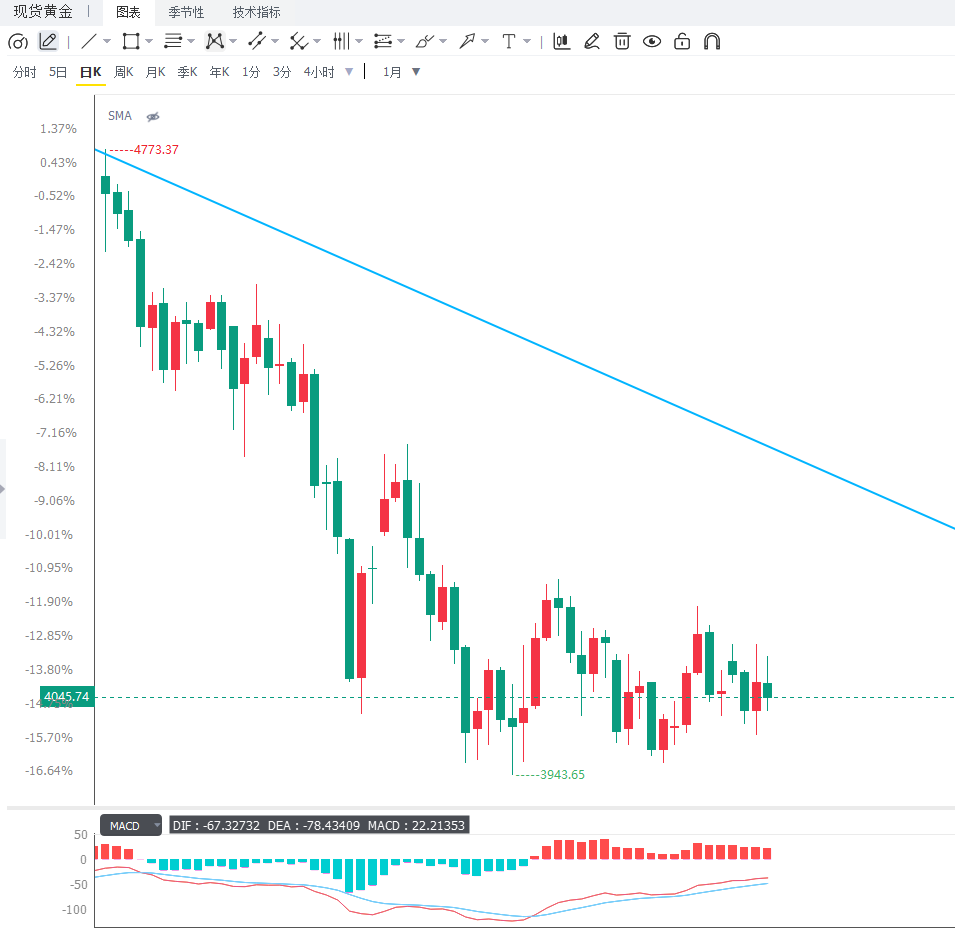 The editor summarizes the second quarter of 2026 as characterized by "price adjustments and stable demand." Although the decline in gold prices from historical highs led to ETF outflows and a decrease in investment enthusiasm, global gold demand remained stable, with central bank purchases and demand from the Asian market continuing to provide support. From a long-term perspective, the continued increase in gold reserves by global central banks reflects the increasing strategic value of gold in the international reserve system. In the short term, gold price movements will still be affected by Federal Reserve policies, US Treasury yields, and changes in the US dollar, but solid demand limits the downside potential for gold. The gold market may continue to exhibit a high-level consolidation pattern in the future. If the global monetary policy environment gradually improves, coupled with continued central bank gold purchases, gold still has medium- to long-term upward potential; however, investors still need to pay attention to the periodic pressure brought by the high-interest-rate environment and the strong US dollar.
Looking at the first half of the year, gold market demand continued to grow. The report shows that global gold demand reached 2,522 tons in the first half of 2026, a year-on-year increase of 2%, corresponding to a value of approximately US$380 billion. Although the decline in gold prices weakened some investors' willingness to chase higher prices, gold's important role in asset allocation, official reserves, and safe-haven investment remains unchanged. Regarding investment demand, the price adjustment led to some funds flowing out of the gold market. Data shows that global investment demand for gold ETFs, gold bars, and gold coins fell to 262 tons in the second quarter, with gold ETFs experiencing a net outflow of 45 tons, becoming the main reason for the decline in investment demand. Previously, the continuous rise in gold prices attracted a large influx of funds, but as prices corrected from their highs, some investors chose to realize profits or reduce their positions. However, from a longer-term perspective, gold investment demand remains relatively resilient. Data shows that although ETFs experienced outflows in the second quarter, gold ETFs still saw a net inflow of 18 tons in the first half of 2026, indicating that institutional investors continue to focus on the long-term value of gold. In terms of physical investment, demand for gold bars and coins remained relatively stable. Demand in this sector declined by approximately 3% year-on-year in the second quarter, but due to a relatively strong performance in the first quarter, global demand for gold bars and coins still increased by 21% year-on-year in the first half of the year. This indicates that while some investors reduced short-term chasing of rising prices during periods of high gold prices, they still used physical gold for long-term asset allocation. Meanwhile, off-exchange gold investment became one of the market highlights. The report shows that driven by demand in Asia, off-exchange gold investment reached 327 tons in the second quarter, pushing off-exchange gold demand in the first half of the year to 571 tons. The continued allocation of gold by Asian market investors reflects the long-term demand foundation for gold in wealth storage and risk management. In addition to investment demand, global central bank gold purchases remain an important supporting force for the gold market. The report shows that global central banks and other official institutions added a net 289 tons of gold reserves in the second quarter of 2026, a year-on-year increase of 62%. The renewed increase in gold reserves by central banks in several countries demonstrates the continued rise in the importance of gold as an international reserve asset. The World Gold Council's "2026 Global Central Bank Gold Reserves Survey" further shows that 45% of the surveyed central banks expect to continue increasing their gold reserves in the coming year. This trend indicates that, against the backdrop of global economic uncertainty, inflation risks, and financial market volatility, gold remains a key asset for central banks to diversify risk. From a market impact perspective, gold prices are affected in the short term by the high-interest-rate environment, the dollar's performance, and changes in investment capital flows, but the long-term demand structure remains relatively stable. Continued central bank gold purchases, physical demand in Asia, and investor demand for safe-haven assets provide fundamental support for gold prices. The future gold market will continue to focus on changes in global monetary policy. If major central banks gradually shift towards easing, lower real interest rates could increase gold's attractiveness; however, if inflationary pressures persist, leading to persistently high interest rates, it could limit gold's short-term upside potential. From a daily chart perspective, spot gold entered a correction phase after a significant rise at the beginning of the year, reaching historical highs. Currently, the market is consolidating at high levels. Gold prices have found some support around $4000, with resistance expected in the $4100-$4125 area. A break above this area could lead to a retest of the previous highs. Looking at the downside, the $4,000 psychological level and the $3,950 area are important support levels. A break below these levels could lead to a further pullback to around $3,900. The overall trend remains supported by long-term demand, but short-term momentum depends on changes in the US dollar and interest rates. From a 4-hour chart perspective, gold prices have recently seen a volatile rebound, with short-term buying recovering somewhat, but the upward movement is still suppressed by hawkish signals from the Federal Reserve. Technical indicators suggest that prices are attempting to build a rebound structure. If the resistance around $4,100 is broken, further upward movement is possible in the short term; if the rebound fails and falls below $4,050, a retest of the $4,000 support level is possible. Future short-term price movements will be closely watched in terms of the US dollar index, US Treasury yields, and changes in market risk aversion. The editor summarizes the second quarter of 2026 as characterized by "price adjustments and stable demand." Although the decline in gold prices from historical highs led to ETF outflows and a decrease in investment enthusiasm, global gold demand remained stable, with central bank purchases and demand from the Asian market continuing to provide support. From a long-term perspective, the continued increase in gold reserves by global central banks reflects the increasing strategic value of gold in the international reserve system. In the short term, gold price movements will still be affected by Federal Reserve policies, US Treasury yields, and changes in the US dollar, but solid demand limits the downside potential for gold. The gold market may continue to exhibit a high-level consolidation pattern in the future. If the global monetary policy environment gradually improves, coupled with continued central bank gold purchases, gold still has medium- to long-term upward potential; however, investors still need to pay attention to the periodic pressure brought by the high-interest-rate environment and the strong US dollar.
- Risk Warning and Disclaimer
- The market involves risk, and trading may not be suitable for all investors. This article is for reference only and does not constitute personal investment advice, nor does it take into account certain users’ specific investment objectives, financial situation, or other needs. Any investment decisions made based on this information are at your own risk.