Saudi Arabia's oil export routes are completely blocked, leading to a dramatic change in the global oil supply landscape.
2026-08-03 13:58:51
As a core OPEC oil-producing country, Saudi Arabia's crude oil export channels are facing a historic two-way blockade, with traditional shipping routes and alternative routes under pressure, and available export routes continuously shrinking. Multiple shocks, including Iran's blockade of the Strait of Hormuz, Houthi rebels' disruption of Red Sea shipping routes, and attacks on Egyptian ports, have pushed Saudi Arabia's crude oil export system to its limits, significantly reducing the stability of global oil supply and providing fundamental support for the continued strength of international oil prices.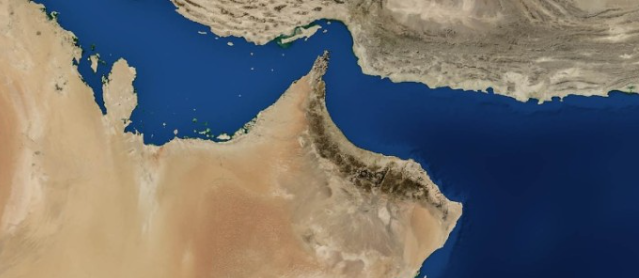 However, this substitution effect was short-lived. As geopolitical risks in the Red Sea escalated, Saudi Arabia's western export capacity continued to decline. Data released by Wood Mackenzie showed that in June, daily crude oil loadings at Yanbu Port fell to 2.39 million barrels, a 41% decrease from the March peak, and a staggering 66% drop compared to Saudi Arabia's total daily exports of 7.96 million barrels in January. During this period, a brief ceasefire agreement was reached between Iran and the US, and shipping in the Strait of Hormuz slightly resumed, but the agreement quickly expired, missile attacks resumed, and the channel was closed again. On July 29, only five oil tankers entered and three left the Strait of Hormuz, a very small fraction of normal traffic levels.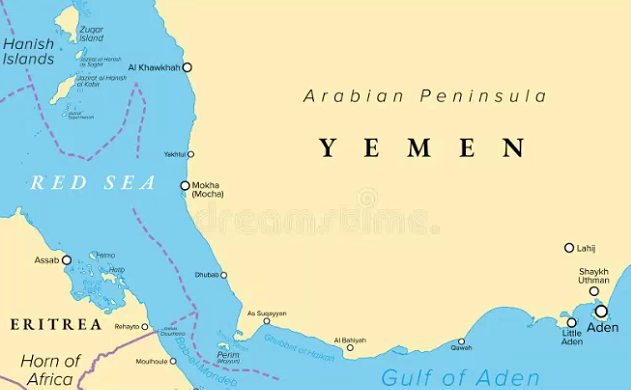
With traditional shipping routes paralyzed, Saudi Arabia urgently activated alternative export routes in the west.
In early March of this year, Iran blocked the Strait of Hormuz, a crucial global oil chokepoint, nearly paralyzing crude oil shipping in the Gulf region. To ensure stable exports, Saudi Arabia quickly activated its contingency plan, diverting all its onshore light crude oil production capacity in the eastern Persian Gulf to the port of Yanbu on its west coast via a trans-Arabian Peninsula pipeline carrying an average of 7 million barrels per day. Data from the maritime intelligence agency Windward shows that this route adjustment was highly effective, with Yanbu's daily crude oil exports rapidly climbing to 2.47 million barrels, a 330% increase compared to before the conflict. The peak in April even exceeded 4 million barrels, effectively offsetting the export gap caused by the strait's closure. However, this substitution effect was short-lived. As geopolitical risks in the Red Sea escalated, Saudi Arabia's western export capacity continued to decline. Data released by Wood Mackenzie showed that in June, daily crude oil loadings at Yanbu Port fell to 2.39 million barrels, a 41% decrease from the March peak, and a staggering 66% drop compared to Saudi Arabia's total daily exports of 7.96 million barrels in January. During this period, a brief ceasefire agreement was reached between Iran and the US, and shipping in the Strait of Hormuz slightly resumed, but the agreement quickly expired, missile attacks resumed, and the channel was closed again. On July 29, only five oil tankers entered and three left the Strait of Hormuz, a very small fraction of normal traffic levels.With multiple shipping routes blocked, Saudi Arabia is left with only a single export channel.
Escalating risks along the Red Sea route have become a core factor suppressing Saudi exports. Following the Houthi rebels' blockade of Saudi shipping, the southern Red Sea route has become completely ineffective. To evade attacks, Saudi oil tankers, after departing from Yanbu port, have abandoned southbound routes and instead sail north, further lengthening transport cycles and reducing capacity. Adding to the woes, Saudi Arabia's latest alternative route, the Egyptian route, has also encountered security risks. Two LNG carriers at the Egyptian port of Damieta were attacked by drones, completely shattering expectations of security for the alternative route. Thus, Saudi Arabia now has only one stable export channel: the shipping system connecting the Suez Canal and the Sumed pipeline to the Mediterranean. The Sumed pipeline has a daily transport capacity of 2.5 million barrels, and much of its capacity has already been pre-booked by other countries, making it unable to fully accommodate Saudi Arabia's original export volume. According to data from Wenward, Saudi Arabia can currently only transfer half of its crude oil production capacity to this channel for export. Many very large crude carriers are using a silent navigation mode to transfer crude oil from Yanbu Port to Ain Sokhna Port in Egypt, and then transport it to Sidi Kirill Port in the Mediterranean via the Sumed Pipeline, before transferring it to Asian markets. This has resulted in a significant decrease in transportation efficiency.Saudi Arabia's crude oil exports continue to shrink as shipping capacity reaches its limit.
Energy analysis firm Kpler indicates that, theoretically, Saudi Arabia can rely on the Suez Canal for northward oil transport in the long term, but in practice, there are insurmountable capacity bottlenecks. The combined capacity of the Sumed pipeline and the Suez Canal is limited and cannot match Saudi Arabia's original large-scale export demand. Furthermore, the entire route is fraught with geopolitical risks, further restricting capacity. Given the unlikely lifting of the Houthi blockade in the short term, Saudi Arabia's overall crude oil exports are likely to continue to shrink, further widening the global crude oil supply gap. While shipping through the Strait of Hormuz has shown a slight recovery, the pace is extremely limited. ING analysts state that the number of tankers transiting the strait remains in the single digits, only 65% of pre-conflict capacity. US Energy Secretary Chris Wright stated that the current daily outbound crude oil shipments from the Persian Gulf are approximately 13 million barrels, remaining at a low level. Overall , this geopolitical crisis has had both positive and negative impacts on Saudi Arabia. Supported by a 47% surge in Brent crude oil prices this year, Saudi Arabia's fiscal deficit narrowed significantly, with first-quarter oil revenues rising 28% year-on-year, offsetting some of the losses from declining production. However, the country's oil production declined by as much as 25% year-on-year in the second quarter, significantly dragging down overall economic growth. In the long run, Saudi Arabia's weaknesses—highly concentrated oil export routes and weak geopolitical resilience—have been fully exposed. Even if it stabilizes its finances in the short term by relying on high oil prices, it will be difficult to completely resolve the structural predicament of restricted shipping and hindered production capacity exports, and the global energy market will remain in a tight supply situation for a long time.- Risk Warning and Disclaimer
- The market involves risk, and trading may not be suitable for all investors. This article is for reference only and does not constitute personal investment advice, nor does it take into account certain users’ specific investment objectives, financial situation, or other needs. Any investment decisions made based on this information are at your own risk.