August 4th Financial Breakfast: Gold holds steady above $4050, rumors of US-Iran talks denied, US oil poised to break through the $80 mark.
2026-08-04 06:58:51
On Tuesday (August 4, Beijing time) in early Asian trading, spot gold held steady around $4,050 per ounce, influenced by uncertainty surrounding the Middle East war, concerns about rising inflation, and the market's anticipation of this week's US employment data to gauge the direction of the Federal Reserve's policy. US crude oil traded below $80 per barrel after prices plummeted more than 7% on Monday following Trump's halt to attacks on Iran and the resumption of negotiations in the Strait of Hormuz. However, Iran emphasized that it had not negotiated with the US and would not allow the US to open non-Iranian shipping lanes in the Strait of Hormuz, adding further uncertainty to the Middle East situation. 
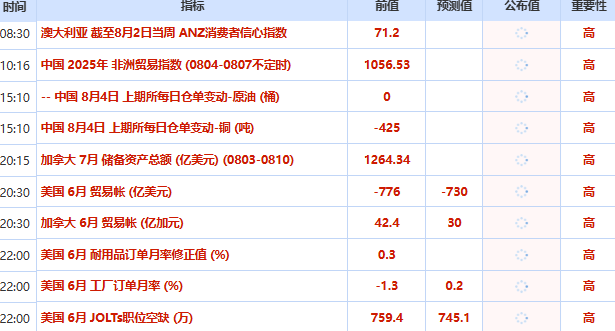
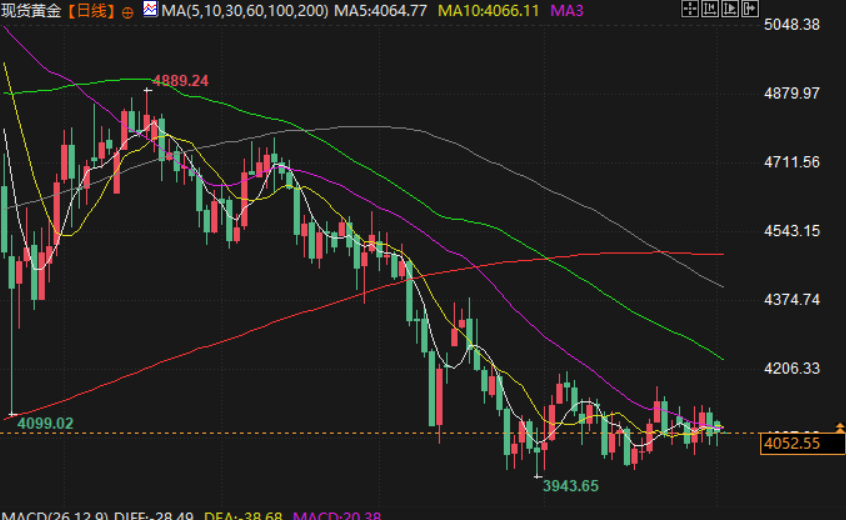 Analysts point out that gold has been fluctuating between $4,000 and $4,200 for over a month, supported by market expectations that inflation may return, especially with July data potentially reversing some of the losses from June. Meanwhile, three Federal Reserve officials advocated for interest rate hikes at their policy meeting last week, and New York Fed President Williams also stated that they are prepared to raise rates if inflationary pressures do not ease. Iran denied on Monday that it had held any negotiations with the US or planned a meeting, contradicting Trump's statements. This week, the market will closely watch labor market indicators such as the ADP employment report and non-farm payroll data. In addition, the Bank of Korea announced it will purchase gold from domestic producers to diversify its supply and increase reserves. Regarding other precious metals, spot silver held steady around $58 per ounce, platinum fell 1.6% to $1,615.25, and palladium fell 1.7% to $1,252.62.
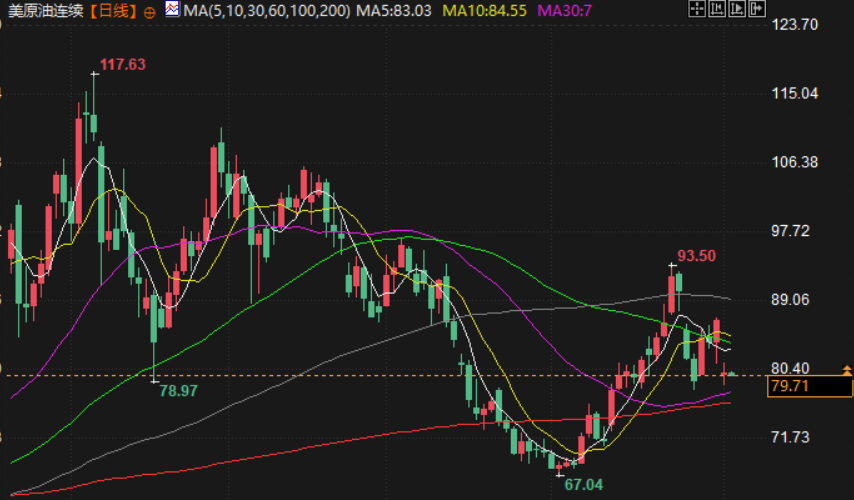 Trump subsequently stated that negotiations were "ongoing" and threatened "decapitation" if Tehran did not agree to the agreement. However, the market still anticipated improvements on the supply side, coupled with the OPEC+ alliance's approval on Sunday to increase production quotas by approximately 188,000 barrels per day starting in September, further pressuring oil prices. In addition, shipping tracking data showed that six Saudi supertankers were diverted to southern Africa due to threats from the Houthi rebels in Yemen, but other Saudi tankers continued to pass through the Bab el-Mandeb Strait. Meanwhile, vessel traffic in the Strait of Hormuz slowed, and US gasoline and diesel futures both fell by about 5%. Analysts believe this sell-off was yet another overreaction to Trump's remarks.
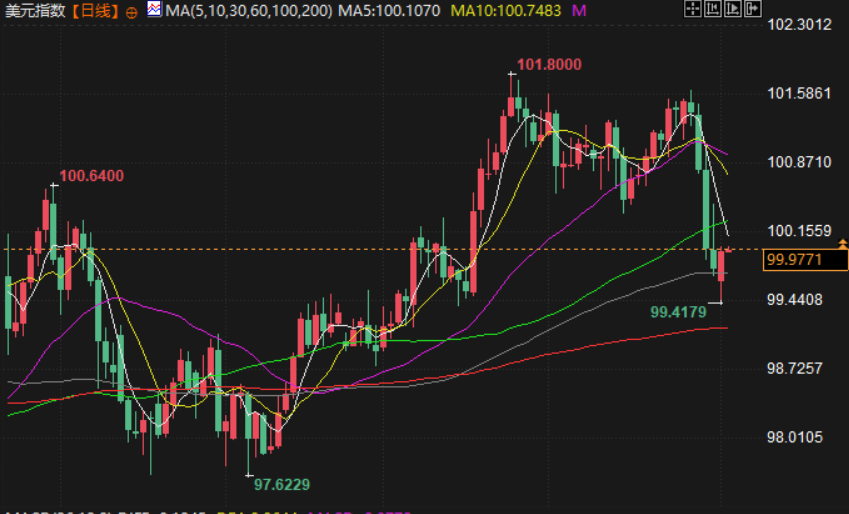 The yen surged to near three-month highs against the dollar and euro on Monday, with the dollar trading at 157.14 against the yen, down 0.31%, and the euro hitting a high of 179.435 against the yen, its highest level since mid-November 2025. This surge was largely attributed to the continued impact of coordinated interventions by Japan and the United States last week to support the yen. Japan's Ministry of Finance confirmed on Monday that it had coordinated yen-buying interventions and stated it would not hesitate to take further action. Meanwhile, data showed that Japan may have spent as much as $36.58 billion in the most recent intervention, bringing the total expenditure on the two interventions this year to over $100 billion. Markets are closely watching the possibility of further intervention. Analysts pointed out that the involvement of the US Treasury has changed the traditional view that interventions have limited effectiveness, but also warned that the Bank of Japan might push up bond yields by selling government bonds to raise funds.
Key Focus Today
stock market
U.S. stocks opened strong on Monday, with the Dow Jones Industrial Average closing at a record high, driven primarily by signs of easing tensions between the U.S. and Iran, lower oil prices and Treasury yields, and a flurry of corporate earnings and economic data releases. The Dow Jones Industrial Average rose 1.32% to close at 53,178.41, the S&P 500 gained 1.48% to 7,600.50, and the Nasdaq Composite climbed 2.13% to 25,913.90. U.S. President Trump said on Sunday he would hold talks with Iran on reopening the Strait of Hormuz, despite Iran's denials. Oil prices fell, further pushing down U.S. Treasury yields, while market participants continued to assess the long-term impact of the Iranian situation on the likelihood of a Federal Reserve interest rate hike. In terms of sectors, the communication services sector performed best, driven by gains in Meta Platforms and Alphabet shares, rising 4.3%, while the energy sector fell 1.2%, becoming the worst-performing sector. Earnings reports were strong this quarter; as of last Friday, 304 S&P 500 companies had reported earnings, with a profit growth rate of 29.3%, of which 85.2% exceeded expectations. At the individual stock level, Amazon shares rose 4.6%, pushing its market capitalization above $3 trillion for the first time; SpaceX rose 5.6%; Bristol-Myers Squibb rose slightly by 0.2% due to reports that it was in preliminary merger talks with AstraZeneca, a deal that, if completed, would create a pharmaceutical giant with a market capitalization of nearly $400 billion; while Marriott International's shares plummeted 7% due to lower-than-expected third-quarter profit forecasts. New York Fed President Williams expressed optimism that inflationary pressures would gradually ease, but the market remained concerned about the policy direction of Fed Chairman Warsh's suggestion to reduce the number of interest rate decision meetings. According to CME FedWatch data, the market expects a 64.5% probability of a Fed rate hike of at least 25 basis points in September. This week, investors will be watching several labor market data releases, especially Friday's government jobs report.Gold Market
Gold prices held steady around $4,050 an ounce on Monday, mainly influenced by uncertainty surrounding the Middle East war, concerns about rising inflation, and the market's anticipation of this week's US jobs data to gauge the direction of the Federal Reserve's policy. Analysts point out that gold has been fluctuating between $4,000 and $4,200 for over a month, supported by market expectations that inflation may return, especially with July data potentially reversing some of the losses from June. Meanwhile, three Federal Reserve officials advocated for interest rate hikes at their policy meeting last week, and New York Fed President Williams also stated that they are prepared to raise rates if inflationary pressures do not ease. Iran denied on Monday that it had held any negotiations with the US or planned a meeting, contradicting Trump's statements. This week, the market will closely watch labor market indicators such as the ADP employment report and non-farm payroll data. In addition, the Bank of Korea announced it will purchase gold from domestic producers to diversify its supply and increase reserves. Regarding other precious metals, spot silver held steady around $58 per ounce, platinum fell 1.6% to $1,615.25, and palladium fell 1.7% to $1,252.62.oil market
Oil prices plunged more than 7% on Monday, with Brent crude falling 7.38% to a three-week low, settling at $83.53 a barrel, while WTI crude fell 7.77% to $80.06 a barrel. This was mainly due to US President Trump's decision to postpone further attacks on Iran and his statement that he hoped to quickly reach an agreement that could increase oil supplies in the Gulf. However, the Iranian Foreign Ministry immediately refuted this, stating that there were currently no negotiations or plans to hold meetings with the United States, contradicting Trump's statement. Trump subsequently stated that negotiations were "ongoing" and threatened "decapitation" if Tehran did not agree to the agreement. However, the market still anticipated improvements on the supply side, coupled with the OPEC+ alliance's approval on Sunday to increase production quotas by approximately 188,000 barrels per day starting in September, further pressuring oil prices. In addition, shipping tracking data showed that six Saudi supertankers were diverted to southern Africa due to threats from the Houthi rebels in Yemen, but other Saudi tankers continued to pass through the Bab el-Mandeb Strait. Meanwhile, vessel traffic in the Strait of Hormuz slowed, and US gasoline and diesel futures both fell by about 5%. Analysts believe this sell-off was yet another overreaction to Trump's remarks.Foreign exchange market
The dollar index rose slightly by 0.17% to 99.96 on Monday, ending a four-day losing streak. Easing geopolitical tensions reduced safe-haven demand, putting pressure on the dollar but supporting the euro and yen. In addition, the New York Fed was reported to have sold euros on behalf of the U.S. Treasury through banks in exchange for yen to avoid signaling a broad-based weakening of the dollar. The yen surged to near three-month highs against the dollar and euro on Monday, with the dollar trading at 157.14 against the yen, down 0.31%, and the euro hitting a high of 179.435 against the yen, its highest level since mid-November 2025. This surge was largely attributed to the continued impact of coordinated interventions by Japan and the United States last week to support the yen. Japan's Ministry of Finance confirmed on Monday that it had coordinated yen-buying interventions and stated it would not hesitate to take further action. Meanwhile, data showed that Japan may have spent as much as $36.58 billion in the most recent intervention, bringing the total expenditure on the two interventions this year to over $100 billion. Markets are closely watching the possibility of further intervention. Analysts pointed out that the involvement of the US Treasury has changed the traditional view that interventions have limited effectiveness, but also warned that the Bank of Japan might push up bond yields by selling government bonds to raise funds.International News
Trump Calls Talks with Iran a “Last Chance,” Announces Reopening of Strait of Hormuz Today US President Donald Trump announced in the Oval Office on Monday that US-Iran talks are underway, with topics including the reopening of the Strait of Hormuz and Iran’s nuclear program. He stated that this is Iran’s “last chance to sign a good document,” and revealed that Saudi Arabia, the UAE, Qatar, and other countries also support the talks. Trump said he decided to give Tehran one last chance before taking new military action. “I want to give Iran one last chance before completely destroying it,” he said. “They called and asked me not to attack and said they would make a deal. That’s a fact, everyone knows that.” He also said that the original military strike plan was difficult to execute, but he was proud to give diplomacy a chance. Regarding the Strait of Hormuz, Trump said, “We are talking about fully opening the Strait of Hormuz today.” He expected the talks to move quickly, saying, “This is not a very complicated issue.” Following the Strait issue, discussions will also cover Iran’s nuclear capabilities. However, the US and Iran still have differences regarding the nature of the contact. Iranian Foreign Ministry spokesman Bagheei stated unequivocally, "To avoid any misunderstanding, it is necessary to clarify the content and the negotiating partners of the current talks. We are not currently negotiating with the United States." Iran emphasized that the talks with Oman only concerned security and navigation solutions in the Strait of Hormuz. Trump insisted that diplomacy was progressing smoothly and denied that the negotiations were at an impasse. He stated, "This time they didn't deny it, but for some reason, the Iranians are clearly negotiating, but they won't admit it." The core of the current diplomatic game remains the reopening of the Strait of Hormuz and the nuclear issue, with Gulf states actively seeking solutions to avoid further escalation of regional tensions. The probability of the Federal Reserve raising interest rates by 25 basis points in September is approximately 67.2%, and the probability of a 50 basis point rate hike this year is approximately 41.8%. According to CME's "FedWatch," the probability of the Fed maintaining interest rates unchanged by September is 32.8%, and the probability of a cumulative 25 basis point rate hike is 67.2%. The probability of the Fed maintaining interest rates unchanged by October is 23.3%, and the probability of at least a 25 basis point rate hike is 76.7%. The probability of the Federal Reserve maintaining interest rates unchanged through December is 14.2%, the probability of a cumulative rate hike of 25 basis points is 44%, and the probability of a rate hike of at least 50 basis points is 41.8%. The White House will convene AI companies on Tuesday to review an AI regulatory framework . Sources familiar with the matter revealed that the Trump administration has invited representatives from major technology companies such as OpenAI, Google, and Anthropic to the White House on Tuesday to review the final version of an AI regulatory framework. This framework will establish a voluntary mechanism requiring AI labs to submit relevant models to the government before releasing them to partners and the public. An executive order issued in early June required the framework to be finalized by August 1st; this meeting is scheduled to be held a few days after that deadline. Another source said the meeting is hosted by the Office of the National Cyber Director, a branch of the executive branch. The invitation states that the meeting will discuss the next steps for advancing the framework and also discuss an undisclosed related activity. Two sources indicated that the attendees are mid-level employees from these companies, not senior executives, and the new framework will not be officially released to the public at this meeting. It is unclear whether the White House will collect feedback from companies at the meeting or release the final draft of the framework to the public. A White House official said Monday that the voluntary framework had been completed on schedule and the government was consulting with industry stakeholders on follow-up arrangements, but did not specify whether the framework had officially taken effect. Japan may have injected as much as $36.58 billion to support the yen last Friday, escalating its intervention. Money market data released by the Bank of Japan on Monday suggested that Japanese authorities may have used approximately $36.58 billion in foreign exchange market intervention last Friday to support the yen, which is mired in historic lows. This is one of the larger interventions in a series of recent currency stabilization actions. The central bank's forecast for the following day's money market conditions showed a net outflow of 11.4 trillion yen, far exceeding the brokers' forecast range of 5.66 trillion to 6.70 trillion yen. Such a large deviation is usually seen as a clear signal of official intervention. The market had previously been wary of the intervention risks, and this data further confirms the Japanese authorities' firm stance against the continued pressure on the yen. Although the scale of this single intervention is considerable, the market's focus remains on the subsequent exchange rate trend and whether the government can continue to follow up. The tug-of-war between yen bears and official intervention continues, and the short-term exchange rate trend will depend on the pace of the Bank of Japan's liquidity injections and whether the external macroeconomic environment is supportive. Iran emphasizes no talks with the US Today (August 3), Iranian Foreign Ministry spokesman Bagaei stated at a regular press conference that there are currently no talks between Iran and the US. Iran's current talks are with Oman, and the topic involves the Strait of Hormuz. Bagaei also pointed out that the situation in the Strait of Hormuz will not change significantly given the US's continued violations of the memorandum of understanding. (CCTV International News) Senior Iranian official: US will not be allowed to open non-Iranian shipping lanes in the Strait of Hormuz On August 3 local time, Mohsen Rezaei, military advisor to Iran's Supreme Leader, stated in a media interview that Iran will never allow the US to open any non-Iranian shipping lanes in the Strait of Hormuz. Even if the US deploys warships on illegal shipping lanes in the Strait of Hormuz, Iran will target them. Rezaei also stated that Iran had previously prepared to attack three locations in Ukraine, but canceled the attacks due to Ukraine's apology. (CCTV News) Trump: Negotiations with Iran Underway, to Proceed in Two Phases On August 3, local time, US President Trump stated at the White House, in response to reporters' questions, that negotiations with Iran are currently underway. Trump stated that the first phase of the negotiations with Iran is the opening of the Strait of Hormuz, and the second phase is denuclearization. Trump stated that the US is firm on this issue, and Iran cannot possess nuclear weapons. Furthermore, Trump revealed progress in the negotiations regarding the opening of the Strait of Hormuz. Trump stated that the Strait of Hormuz may reopen no later than tomorrow. Iran believes Trump prefers negotiations to escalation . The Iranian leadership judges that Trump intends to gain leverage through military threats rather than launching a large-scale war. Tehran believes it can withstand external pressure by relying on regional proxies and continuously exerting pressure on global shipping until the US turns to diplomatic channels. Despite Trump's repeated warnings of military action, Iran has reached the above judgment, while emphasizing that there are currently no plans for direct negotiations with the US. Iran's Revolutionary Guard claims comprehensive intelligence control On August 3, Mohammad Karami, commander of the ground forces of Iran's Islamic Revolutionary Guard Corps, inspected combat readiness in Iran's northwestern operational zone and stated, "The Revolutionary Guard possesses comprehensive intelligence control and combat readiness in all operational zones across the country, and is ready to respond resolutely to any threat at any time."Domestic News
Shanghai Futures Exchange (SHFE) Issues Notice Regarding the Launch of Arbitrage Orders To meet market needs and improve market efficiency, the Shanghai Futures Exchange (SHFE) will launch arbitrage orders starting August 24, 2026 (i.e., the evening continuous trading session of August 21, 2026). Initially, arbitrage orders will apply to copper, gold, rebar, and natural rubber futures contracts. Further arrangements for expanding to other contracts and introducing cross-contract arbitrage combinations will be announced separately by the Exchange. Arbitrage orders only support futures contracts, with a minimum order size of 1 lot and a maximum order size of 500 lots. (SHFE) Hong Kong Stock Exchange Officially Launches 5-Year RMB Treasury Bond Futures The Hong Kong Stock Exchange (HKEX) officially launched 5-year RMB Treasury bond futures today (August 3). As the only Treasury bond futures contract product in the offshore market, this product aims to meet the growing interest rate risk management and trading needs of overseas investors. The launch of 5-year Treasury bond futures is an important step in promoting Hong Kong as an offshore RMB hub and risk management center. (CCTV News) Chinese Scientist Wins William Nordberg Medal for the First Time On August 3rd, local time, at the 46th International Committee on Space Research (COSPAR) Scientific Congress held in Florence, Italy, Wang Jinsong, a researcher at the China Meteorological Administration, was awarded the William Nordberg Medal. The William Nordberg Medal recognizes the laureate's outstanding achievements and contributions in the field of space science applications. Since the medal's inception in 1988, Wang Jinsong is the first Chinese scientist to receive this honor, and simultaneously received the naming rights to an asteroid. This award demonstrates that China's research achievements in space science and its applications have gained high recognition from the international academic community. (CCTV News) Orders for Domestic Water Sports Equipment Surge, Surfboards See Global Order Frenzy The consumer boom in water sports has also spread from the consumer experience to the upstream manufacturing sector. In a motorized surfboard production workshop, workers are rushing to complete orders to be delivered; their order backlog is currently extended to two weeks in advance. It is understood that China is the world's largest exporter of sporting goods, accounting for more than 40% of global exports. With the rising popularity of outdoor water sports such as surfing, sales of accessories like surf hats and waterproof bags have surged, leading to stock shortages for many products on online stores, prompting factories to expedited restocking. In the first half of the year, China's total exports of sporting goods and equipment reached 67.53 billion yuan. As global outdoor sports scenarios become increasingly diversified, exports of water sports equipment such as paddleboards reached 4.77 billion yuan. (CCTV)- Risk Warning and Disclaimer
- The market involves risk, and trading may not be suitable for all investors. This article is for reference only and does not constitute personal investment advice, nor does it take into account certain users’ specific investment objectives, financial situation, or other needs. Any investment decisions made based on this information are at your own risk.