Easing geopolitical tensions coupled with a dovish Federal Reserve stance create an upward window for gold.
2026-08-04 21:52:53
Previously, a spokesperson for the Qatari Ministry of Foreign Affairs stated that Qatar is currently striving to find a solution to the US-Iran conflict through diplomatic channels. Other reports indicate that Qatar has drafted a text for a possible US-Iran agreement, and the draft is circulating among the parties. This suggests that diplomatic efforts are ongoing, and all parties are trying to find a common ground for de-escalating the conflict. Following this, Al Arabiya TV announced arrangements for the full reopening of the Strait of Hormuz, which will be announced within hours or tomorrow. After the news broke, the market reacted quickly. Previously, the market had been pessimistic about the prospects for a diplomatic solution, with oil prices initially surging by 3%. Bessenter's public statement directly reversed the upward trend in oil prices, while gold prices rose to around 4083. On Tuesday, Eastern Time, WTI crude oil fell sharply by more than 4.8% and is currently trading around 76.45. Geopolitical risk premiums are rapidly being detached from oil prices. A Goldman Sachs research report points out that WTI crude oil is likely to remain in the $75-80 range until geopolitical conflicts escalate or an agreement is finalized. Once cross-strait shipping resumes, supply-side risks for crude oil will be further mitigated, and the downside potential for oil prices will be further opened up. 
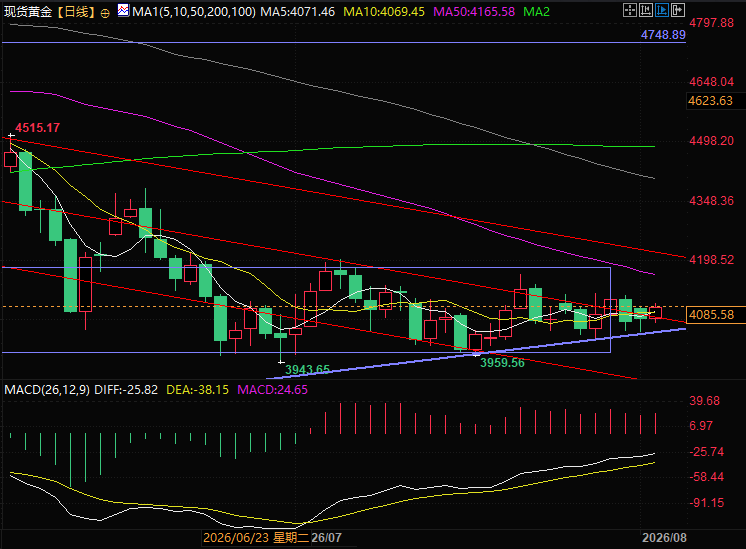 (Spot gold daily chart, source: FX678)
 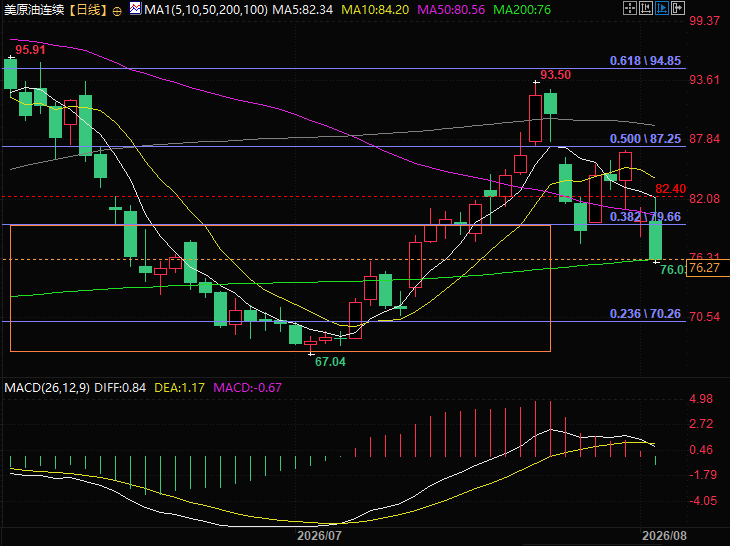 (WTI crude oil futures contract daily chart, source: EasyTrade) At 21:46 Beijing time, spot gold is currently trading at $4083 per ounce, and WTI crude oil futures contract is currently trading at $76.18 per barrel.
Middle East geopolitical situation: Expectations of easing conflict continue to rise.
Recent diplomatic signals between the US and Iran have been contradictory, but substantial progress has been made in diplomatic mediation. Trump defined this round of diplomatic contact as the "final window" to end the five-month conflict, and US Treasury Secretary Bessenter publicly stated that an agreement to reopen the Strait of Hormuz is expected to be finalized within the next two days, guaranteeing complete freedom of navigation. Qatar, along with Oman and Pakistan, is acting as mediators, facilitating the exchange of draft agreements between the two sides. Although Iranian officials continue to deny the existence of direct negotiations between the US and Iran, and the Iranian president has stated that he has no intention of further escalating the conflict, the market has begun trading on expectations of a de-escalation. Subsequently, news emerged that Qatar had drafted a text for a possible US-Iran agreement, and Al Arabiya TV announced arrangements for the full reopening of the Strait of Hormuz, which would be announced within hours or tomorrow.Fed Policy Signals: Neutral to Dovish, Reshaping Interest Rate Pricing
As geopolitical tensions ease, recent remarks by Federal Reserve officials have further reshaped market interest rate pricing. Philadelphia Fed President Paulson released a neutral-to-dovish stance, explicitly stating that supply shocks from energy should be ignored, current monetary policy is already at a moderately restrictive level, and she remains completely open to the future path of interest rates. She stated frankly that the current environment is too uncertain to provide clear forward guidance, and oil price fluctuations should not be used as a basis for tightening monetary policy; only persistently high inflation would necessitate more restrictive policies. This statement directly weakened the market's previous mainstream trading logic that "an oil price rebound would force the Fed to raise interest rates."The reason for the pressure on the US dollar: Two core drivers weakening simultaneously.
Falling oil prices have dampened inflation expectations, and coupled with the Federal Reserve officials' tolerance for supply shocks, the pricing basis for a September rate hike has weakened. The upward momentum of US Treasury real yields is limited, putting downward pressure on the US dollar index. Previously, the two pillars supporting the dollar were Middle East geopolitical safe-haven buying and oil price-driven expectations of rate hikes. Now, both drivers have weakened, reducing the upward logic of the dollar index. The upward logic for gold is shifting: interest rate valuation repair is replacing the geopolitical safe-haven market logic. In the past, Middle East conflicts pushed up oil prices, traders priced in a rebound in inflation and Fed rate hikes, and a stronger dollar suppressed gold. Now, geopolitical easing is suppressing oil prices, lower oil prices are easing inflationary pressures, and Fed officials are not advocating tightening policy for supply disruptions. Real interest rates have peaked and are falling, which is a substantial positive for gold, a non-interest-bearing asset. It is important to distinguish that the driving force behind this round of gold price increases is not traditional geopolitical safe-haven buying, but rather valuation repair driven by declining interest rate expectations.Summary and Gold and Oil Price Charts
Significant differences remain in the public statements from the US and Iran, with Iran continuing to deny direct negotiations. The risk of a breakdown in negotiations persists, though it hasn't been completely eliminated. However, this is undoubtedly a turning point in the recent US-Iran conflict. From Trump's continued optimistic statements to Bessant's repeated emphasis that a US-Iran agreement could be finalized within two days, these are all new signs of marginal improvement. Meanwhile, Paulson has also maintained a dovish stance, maintaining a policy bottom line. While stating that the Fed would still take action if inflation rebounds, the focus remains on the fact that supply-side price increases do not require the Fed to use interest rates to control them. The US non-farm payroll report to be released on Friday will be a key short-term catalyst. In summary, with progress in US-Iran diplomacy and the Fed's neutral-to-dovish signals, the US dollar index and crude oil are bearish, while gold has an upward basis. However, caution is still needed regarding geopolitical repercussions and the risk of a reversal due to better-than-expected US employment and inflation data. (Spot gold daily chart, source: FX678) (WTI crude oil futures contract daily chart, source: EasyTrade) At 21:46 Beijing time, spot gold is currently trading at $4083 per ounce, and WTI crude oil futures contract is currently trading at $76.18 per barrel.
- Risk Warning and Disclaimer
- The market involves risk, and trading may not be suitable for all investors. This article is for reference only and does not constitute personal investment advice, nor does it take into account certain users’ specific investment objectives, financial situation, or other needs. Any investment decisions made based on this information are at your own risk.