The "interim agreement" that Iran is gaining more control has brought oil prices down, but have the risks really disappeared?
2026-08-05 11:00:53
On Wednesday (August 5) during Asian trading hours, US crude oil futures fluctuated lower, once hitting a three-week low of $74.24 per barrel, a drop of about 2%. New breakthroughs in geopolitical developments are further pushing oil prices lower. According to Axios, the US, Iran, and Oman are close to reaching a provisional agreement to reopen the Strait of Hormuz, with a formal announcement scheduled for Wednesday. US President Trump suspended planned military strikes to allow room for diplomatic maneuvering. This 60-day provisional arrangement would grant Iran greater control over the strait than before the war, with no tolls initially levied. If the agreement is confirmed, it will mark the most substantial breakthrough in weeks of diplomatic deadlock, after the market had already priced in significant geopolitical risk premiums this week. 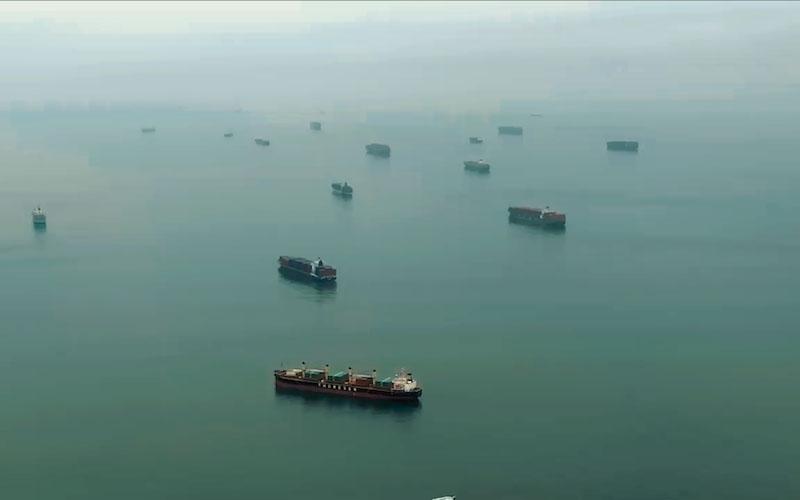
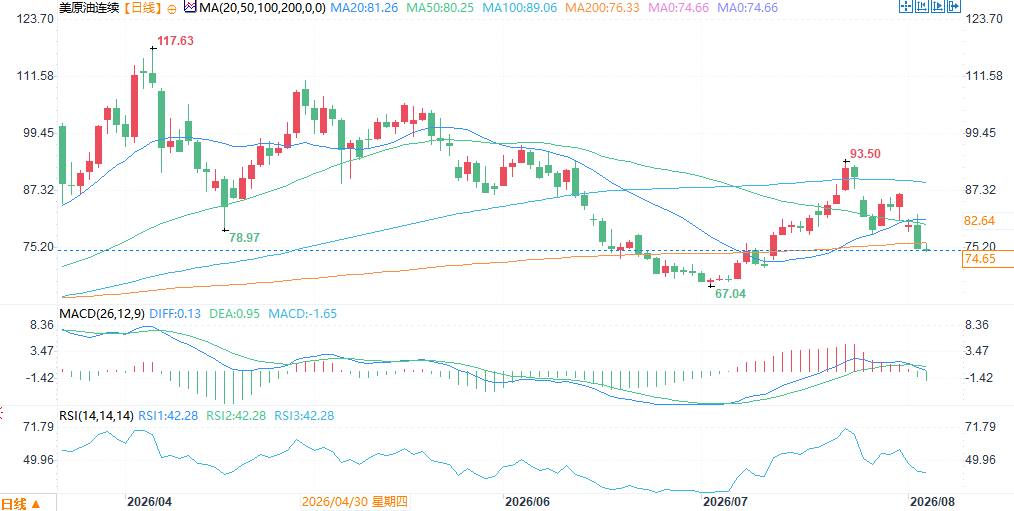 (US crude oil futures daily chart, source: FX678) At 10:58 Beijing time on August 5, US crude oil futures were trading at $74.65 per barrel.
Agreement Framework: 60-Day Provisional Arrangement, Giving Iran Greater Control
According to Axios, citing sources familiar with the matter, the agreement aims to restore the US-Iran ceasefire and pave the way for restarting nuclear negotiations. Despite the breakdown of the previous round of talks three weeks ago and a renewed escalation of tensions, Trump suspended military strike plans, allowing the diplomatic process to continue. This mediation was supported by Oman, Qatar, Pakistan, and Saudi Arabia, and the Iranian leadership formally approved the terms of the agreement on Tuesday. The core arrangements of the agreement are as follows: Regarding the shipping lanes, all vessels entering the Persian Gulf must pass through the northern lane in Iranian waters, while all vessels heading to the Arabian Sea will pass through the southern lane in Omani waters, coordinated by Iran. Regarding control, the 60-day arrangement will temporarily grant Iran greater control over the straits than before the war. This is the most controversial clause in the agreement—markets need to weigh the relationship between this Iran-favorable arrangement and the stability the agreement aims to achieve; a unilateral structure may not be as sustainable as a more balanced framework. Regarding costs, no passage or transit fees will be levied on shipping during the initial 60 days, eliminating a point of contention previously reported on a voluntary cost mechanism for strait maintenance.Mine clearance and follow-up arrangements: 30-day timeline
The agreement also includes a mine-clearing component: both sides pledged to clear naval mines from the median channel of the strait within 30 days. Once cleared, the channel will be open to two-way traffic as part of a permanent arrangement still subject to further negotiations between Oman and Iran. This phased approach aims to quickly restore some shipping traffic through a temporary channel system while simultaneously building a more sustainable, mutually agreed-upon framework over a longer period.Market Impact: Geopolitical Risk Premium Faces Accelerated Clearing
If the agreement is confirmed, it will be the most substantial progress since the easing of tensions between the US and Iran. This week, the oil market has seen a significant decline in pricing geopolitical risk premiums, and the market widely anticipates such a breakthrough. A formal confirmation will be interpreted as validation of this repricing. However, the durability of the agreement remains a key variable. The agreement grants Iran greater control over the Strait of Hormuz than before the war, a clause that could become a source of future friction. The 30-day mine-clearing timetable provides the market with a concrete near-term milestone, and any delays or disputes at the implementation level could quickly push up oil price volatility again. Furthermore, the reopening of the Strait of Hormuz does not mean the risk of supply disruptions has been completely eliminated. Iran's actual intention to control the Strait remains unchanged, and the significant depletion of US missile stockpiles has already substantially limited Washington's military options. If the interim agreement fails to be converted into a permanent arrangement upon its expiration, geopolitical risks could return to the market in a more dramatic manner.Summarize
The US, Iran, and Oman are reportedly close to reaching a provisional agreement on the Strait of Hormuz, with the target to be announced on Wednesday. A 60-day arrangement would grant Iran greater control over the strait, with toll-free passage initially, and both sides committing to clear mines along the median line within 30 days. If confirmed, the agreement would accelerate the clearing of geopolitical risk premiums in oil prices, putting further downward pressure on prices. However, the terms granting Iran greater control, the implementation risks of the mine-clearing timetable, and whether the provisional agreement can be converted into a permanent arrangement remain key variables that the market needs to continuously monitor. A temporary easing of geopolitical risks does not signify their end; while pricing may ease, the market must remain vigilant about tail risks. (US crude oil futures daily chart, source: FX678) At 10:58 Beijing time on August 5, US crude oil futures were trading at $74.65 per barrel.
- Risk Warning and Disclaimer
- The market involves risk, and trading may not be suitable for all investors. This article is for reference only and does not constitute personal investment advice, nor does it take into account certain users’ specific investment objectives, financial situation, or other needs. Any investment decisions made based on this information are at your own risk.