The continued sharp depreciation of the yen raises key questions about the joint US-Japan intervention.
2026-08-05 13:50:54
The yen has repeatedly hit multi-decade lows, with imported inflation raising the cost of living for Japanese citizens. Japan has intervened in the market on multiple occasions with significant scale, including a rare joint intervention by the US and Japan to support the yen. The yen's depreciation is not only an economic problem for Japan but also affects the US Treasury market and the global foreign exchange landscape. Many questions surround the yen's weakness and currency intervention; the following Q&A outlines the core logic.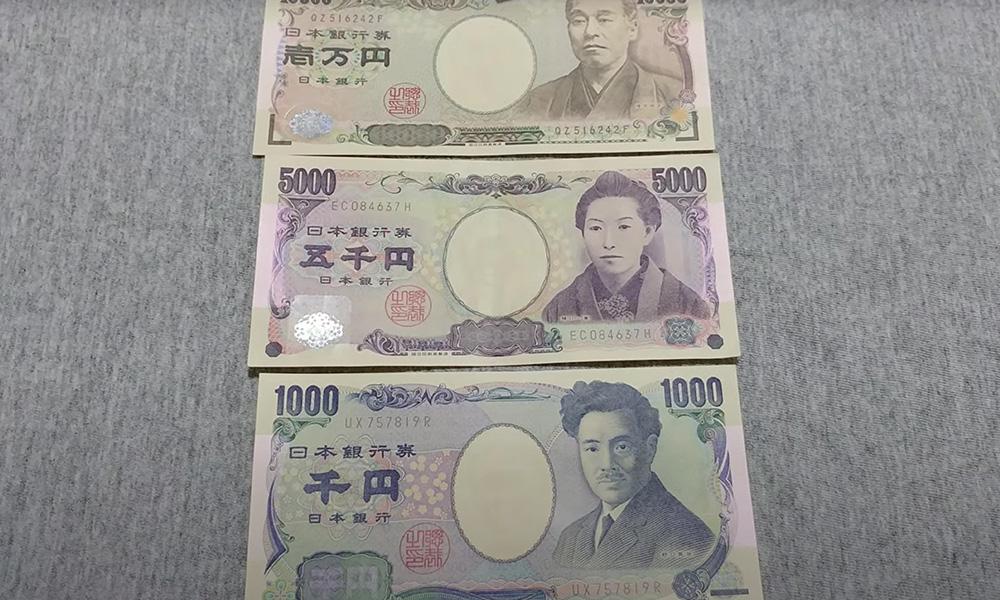
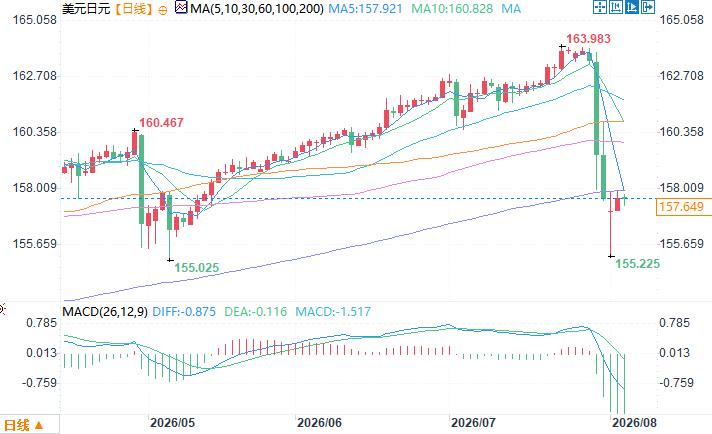 USD/JPY daily chart source: FX678. At 13:29 Beijing time on August 5, the USD/JPY exchange rate was 157.61/62.
Q1: Why is the yen continuing to weaken?
Multiple factors are weighing on the yen, the most crucial being the interest rate differential between Japan and the US. Low Japanese interest rates coupled with high US rates are prompting investors to borrow yen to invest in higher-yield overseas assets, leading to continuous capital outflows. Even with the Bank of Japan raising interest rates, they remain relatively low compared to overseas markets. Furthermore, Japan's government debt-to-GDP ratio exceeds 200%, and this high debt and fiscal deficit are weakening market confidence in Japanese assets. Adding to this, the US-Iran conflict is pushing up international oil prices, requiring Japan, heavily reliant on energy imports, to consume more US dollars for energy purchases. The conflict is also fueling global inflation, causing the market to revise its expectations for a Federal Reserve rate cut to a rate hike, further increasing the attractiveness of dollar-denominated assets and putting downward pressure on the yen's exchange rate.Q2: What are the potential risks of a weakening yen?
While the depreciation of the yen benefits export-oriented businesses and boosts inbound tourism, its drawbacks are more pronounced. Japan is highly dependent on imported energy and raw materials; currency depreciation increases import costs, exacerbates domestic inflation, squeezes the profits of domestically-oriented businesses, and has even directly impacted Japanese politics due to rising living costs. Now, with market concerns that inflation may solidify, businesses are passing on costs to consumers at a significantly faster pace than in the past, leading to continued increases in pressure on people's livelihoods.Q3: Why has the depreciation of the yen become a concern for the United States?
US President Trump has repeatedly criticized the weak yen for giving it an unfair trade advantage, and has even threatened to impose additional tariffs. However, the US's willingness to participate in joint intervention also stems from practical concerns. Japan is the largest foreign holder of US Treasury bonds; if Japan were to sell off US Treasury bonds to prop up the yen, it would depress US Treasury bond prices and raise US financing costs, further exacerbating the already pressured US fiscal burden.Q4: What measures does the Japanese government use to support the yen?
Intervention is mainly divided into two categories: direct intervention and verbal intervention. Direct intervention involves the Ministry of Finance issuing instructions, and the Bank of Japan selling US dollars and buying Japanese yen in the foreign exchange market through commercial banks, thus depleting foreign exchange reserves and pushing up the domestic currency. Historically, the unofficial intervention line in Japan was around 160 yen to the US dollar. Verbal intervention, on the other hand, involves senior finance officials issuing warning signals, with wording escalating to "taking bold action," often indicating that intervention is imminent, thereby deterring speculative foreign exchange funds.Q5: How exactly does Japan implement foreign exchange intervention operations?
Whether to intervene is decided by Japan's Ministry of Finance. The Bank of Japan entrusts commercial banks to execute the transactions, buying yen and selling dollars to achieve appreciation. The dollars used for intervention mainly come from Japan's foreign exchange reserves, including cash and its holdings of US Treasury bonds. In past interventions, Japan has sold US Treasury bonds to raise funds. Japan will not immediately announce intervention actions but will release the scale of intervention funds at the end of each month, relying on information uncertainty to deter speculators. International rules allow for intervention during disorderly and drastic exchange rate fluctuations, but do not support the long-term artificial setting of exchange rates.Q6: What are the actual effects of foreign exchange intervention?
Intervention often leads to a sharp short-term rise, with the yen rebounding significantly within minutes to hours. However, intervention can only buy time; unilateral intervention is unlikely to reverse the fundamentally driven trend. In April of this year, Japan's unilateral intervention caused the yen to briefly appreciate before hitting new lows again. The joint US-Japan intervention at the end of July had a strong short-term effect, but its long-term success will depend on whether the economic fundamentals can improve. Foreign exchange reserves are designed to address sudden crises and are not suitable for indefinitely propping up the exchange rate.Q7: Can Japan continue to rely on intervention to maintain the yen's exchange rate?
Japan's foreign exchange reserves reached $1.09 trillion at the end of June, indicating ample financial reserves and the ability to access dollars through the Federal Reserve by pledging US Treasury bonds. This provides Japan with the hardware capability for sustained intervention. However, continuous intervention carries real costs: it could cause significant exchange rate volatility, disrupt corporate pricing, cross-border payments, and hedging operations, while also posing diplomatic and public opinion risks. Therefore, intervention should only be a contingency measure and cannot be used indefinitely or repeatedly.Q8: Besides market intervention, does Japan have any other ways to boost the yen?
Theoretically, tightening monetary policy and narrowing interest rate differentials could boost the yen, but in reality, despite a significant contraction in interest rate differentials, the yen has continued to depreciate. Other avenues include encouraging the repatriation of overseas capital by businesses and increasing domestic industrial investment; encouraging pension funds and residents to allocate more to domestic financial assets; and implementing fiscal reforms to reduce government debt and improve fiscal credit. Japanese Prime Minister Sanae Takaichi and Finance Minister Satsuki Katayama have already introduced related policy plans. Most of these measures are medium- to long-term solutions and are unlikely to quickly reverse the exchange rate trend in the short term. In short , foreign exchange intervention is an emergency tool that can alleviate the pace of the yen's sharp decline but cannot address the underlying contradictions causing its depreciation. Whether the yen can stabilize ultimately depends on substantial adjustments to Japan's fiscal and monetary policies, as well as changes in the interest rate differential between the US and Japan. Whether the US and Japan will intervene jointly again will remain a key risk point monitored by the global foreign exchange market. USD/JPY daily chart source: FX678. At 13:29 Beijing time on August 5, the USD/JPY exchange rate was 157.61/62.- Risk Warning and Disclaimer
- The market involves risk, and trading may not be suitable for all investors. This article is for reference only and does not constitute personal investment advice, nor does it take into account certain users’ specific investment objectives, financial situation, or other needs. Any investment decisions made based on this information are at your own risk.