On the eve of the non-farm payrolls report, the Federal Reserve suddenly issued hawkish remarks! Why did gold and crude oil launch a joint counterattack?
2026-08-06 20:12:54
On Thursday (August 6), the fog over the Strait of Hormuz remained, and the Federal Reserve issued hawkish statements again. Spot gold held steady above $4255, while silver came under pressure; both WTI and Brent crude oil prices were torn between supply risks and geopolitical news, with Brent returning above the $80 mark. The US dollar index rebounded slightly due to officials' comments on interest rate hikes, and US Treasury yields rose in tandem. The market was on edge on the eve of the non-farm payrolls report, with a battle between bulls and bears poised to erupt. 
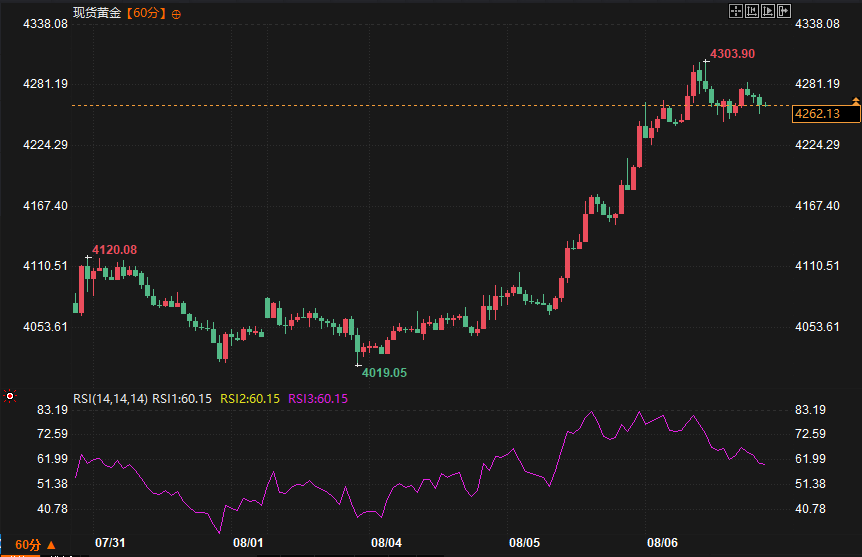 Tonight, gold is no longer simply a function of interest rates. It stands at the crossroads of the Hormuz panic and the Fed's expected tightening. As long as tensions in the Middle East remain high, gold prices have the potential to resist a pullback, but if employment data is stronger than expected, a period of selling may be unavoidable.
Introduction
Whether you're betting on gold's safe-haven appeal or gambling on oil supply panic, today's market revolves around three key words: the Hormuz negotiations, the Fed's hawkish probing, and the prelude to the non-farm payrolls report. Rumors about a shipping corridor between Iran and Oman sent oil prices on a rollercoaster ride, while a Fed official's statement that "positive data would support a September rate hike" instantly ignited the enthusiasm of dollar bulls and US Treasury bears. In the hours leading up to the release of the employment data, every asset class is on edge—is gold too complacent? Will the oil stalemate be broken? This article dissects the bullish and bearish clues, translating complex public information into the sentiment, risks, and possible paths you care about most.The Fed's "hawkish probe": How far can the knee-jerk reaction of the dollar and US Treasuries go?
Federal Reserve Chairman Warsh explicitly stated that he is prepared to support a September rate hike if upcoming inflation data is strong. This statement immediately reversed the dollar's downward trend, with the 10-year Treasury yield climbing to around 4.649%, and the 2-year yield rising in tandem. While gold, directly sensitive to interest rates, did not fall sharply, silver was the first to decline. Unexpectedly weak European retail sales data further gave the dollar a comparative advantage. However, this is merely a knee-jerk reaction, not a trend confirmation. The market clearly remembers the previous series of weak non-farm payroll data, making rate hike expectations easily overturned by one or two data reversals. If Friday's employment data again falls short of expectations, hawkish rhetoric will instantly become meaningless, and the rebound in the dollar and Treasury yields is likely to be quickly reversed. Currently, both the currency and bond markets are playing a gamble based on "expectation discrepancies."The Hormuz stalemate: Is it a "real progress" or a "false dawn"?
Reports of Iran and Oman nearing an agreement on a shipping corridor in the Straits of Hormuz continue to circulate, with the proposal including controlling vessels entering the Gulf without charging tolls. If implemented, this would substantially alleviate supply anxieties. However, oil prices have not collapsed; Brent crude has actually risen 1.57%. The reason is that traders are paying the price for history with real money – the volatile situation in the Hormuz is the norm, and the so-called "agreement" could be torn apart at any time by a Houthi missile. Reports of explosions in the past few hours are enough to keep any rational investor on edge. Shipping rates remain high, and volatility premiums in the options market are high, indicating that smart money is paying insurance premiums for a "failure of the agreement." The short-term direction of crude oil depends entirely on the truth or falsehood of the negotiations at the negotiating table.Gold's "Two Sides": Safe-Haven Aura Clashes with Interest Rate Pressures
Spot gold is hovering above $4,255, seemingly calm on the surface, but undercurrents are swirling beneath. On one hand, the rebound in US Treasury yields should have diminished gold's appeal; on the other hand, geopolitical uncertainty and cautious sentiment regarding non-farm payroll data continue to attract safe-haven buying. Silver's decline is significantly greater than gold's, indicating that its industrial attributes are dragging down its performance, which ironically confirms that gold buying is driven more by safe-haven motives than inflation trading. Tonight, gold is no longer simply a function of interest rates. It stands at the crossroads of the Hormuz panic and the Fed's expected tightening. As long as tensions in the Middle East remain high, gold prices have the potential to resist a pullback, but if employment data is stronger than expected, a period of selling may be unavoidable.The "Two-Sided Supply Risk" of Crude Oil: Attacks on Russian Refineries and Saudi Arabia's Clever Price Adjustments
Ukrainian drones attacked two more large Russian oil refineries overnight, bringing the total number of refineries hit since August to approximately six, with repairs failing to keep pace with the frequency of attacks. This directly threatens Russia's refined oil export capacity, signaling a tightening of medium- to long-term crude oil supply and providing support for the intraday oil price rebound. Meanwhile, Saudi Aramco announced its September official selling prices, significantly increasing prices for US markets while sharply decreasing prices for Europe, reflecting regional demand divergence and expectations of tighter supply to the US. The combination of these two news items prevented oil prices from falling sharply despite expectations of geopolitical easing. The market is suggesting that the supply-side story carries far more weight than rumors of a short-term agreement.Trend Outlook
In the short term, Friday's non-farm payrolls report is the absolute eye of the storm. If the data is significantly weaker than expected, the narrative of interest rate hikes will quickly cool down, the dollar and US Treasury yields will fall, gold is expected to break upwards, and crude oil may digest the geopolitical premium slightly but will still be supported by supply risks. If the employment data is stronger than expected, we need to be wary of a sharp drop in gold and a surge in US Treasury yields, while the reaction of oil prices will be more complex, with the logic of improved demand possibly offsetting the pressure of easing geopolitical tensions. Looking at the long term, the irreplaceable role of natural gas in the US power system suggests that the energy transition will be a long and painful process, and the demand for fossil fuels is unlikely to disappear precipitously. If the Strait of Hormuz truly resumes navigation, the central oil price will shift downwards, but the continued damage to Russian refineries will provide a hard floor for crack spreads and the supply side. Gold is still in a structural bull market under the cycle of central bank gold purchases and long-term interest rate cuts, but any resurgence of interest rate hike expectations will be a bumpy road it must endure.Frequently Asked Questions
Gold is already at a high level; is it still a good time to buy? Currently, gold is around $4255, seemingly supported by both interest rate cut expectations and safe-haven demand. However, caution is warranted as US Treasury yields have begun to rebound, and comments from Fed officials have turned marginally hawkish. If Friday's non-farm payrolls are strong, gold prices may experience a sharp pullback. Traders should closely monitor key support levels rather than blindly chasing the market; setting risk boundaries is far more important than betting on direction. Why did oil prices rise despite news of a possible easing of tensions in the Hormuz agreement? Because the market is simultaneously pricing in other supply risks. Ukraine's frequent attacks on Russian refineries are a substantial threat that is difficult to disprove, and Saudi Arabia's increase in prices for US goods also suggests a tight spot market. The Hormuz agreement has been volatile; while investors have the urge to "sell the fact," they are more afraid of a price surge if the agreement collapses, hence the counterintuitive resilience of oil prices. Can the US dollar index begin a sustained rebound? The recent rebound is more driven by hawkish comments from individual officials and the backdrop of European data, and has not yet constituted a trend reversal. The US dollar needs consecutive catalysts such as a significantly stronger-than-expected non-farm payrolls report and unexpectedly high inflation to accumulate upward momentum. At the same time, the trust discount brought about by geopolitical instability and US election rhetoric could fluctuate at any time, and betting on a unilateral rebound at this stage requires extreme caution.- Risk Warning and Disclaimer
- The market involves risk, and trading may not be suitable for all investors. This article is for reference only and does not constitute personal investment advice, nor does it take into account certain users’ specific investment objectives, financial situation, or other needs. Any investment decisions made based on this information are at your own risk.