August 7th Financial Breakfast: The Strait of Hormuz "ban" controversy resurfaces, oil prices surge while gold prices face downward pressure, and market dynamics intensify on non-farm payroll night.
2026-08-07 07:02:53
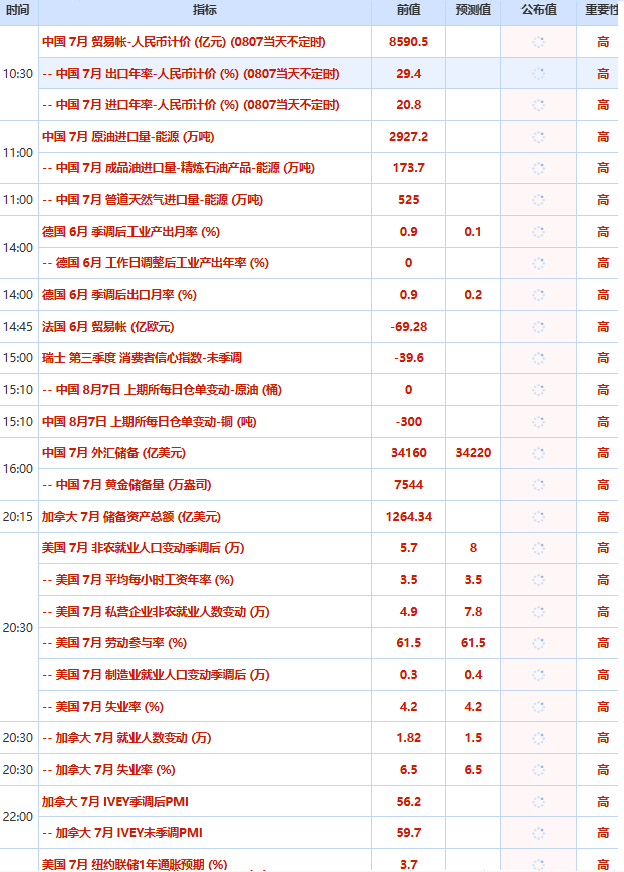
On Friday (August 7, Beijing time) in early Asian trading, spot gold was trading around $4242 per ounce. Renewed tensions in the Middle East fueled inflation concerns and heightened market expectations of a Federal Reserve rate hike, putting downward pressure on gold prices, which had fallen below the $4050 level on Wednesday. US crude oil rose, trading around $78.11 per barrel. Oil prices rose more than 4% on Wednesday. Trump stated that a Strait of Hormuz agreement had not yet been reached and that negotiations were underway. Iran's proposed ban on enemy passage through the Strait of Hormuz has raised concerns about renewed tensions in the Middle East. Trading today will focus on the non-farm payroll data. 
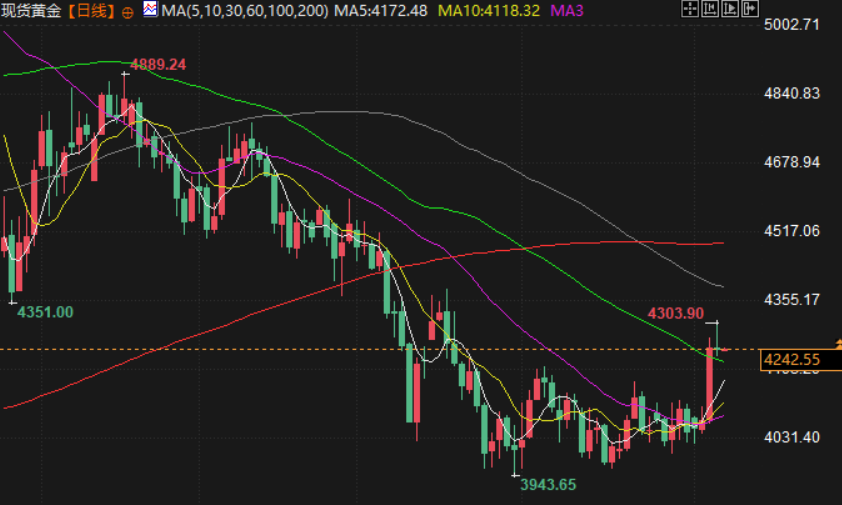 Analysts point out that rising energy prices will prompt central banks to maintain a stance of "higher and longer interest rates," and the US non-farm payroll data to be released on Friday will be key to influencing the Fed's policy statement. Currently, the CME FedWatch tool shows traders expect a 57% probability of a rate hike in September and an 84% probability of a rate hike in December. In other precious metals, spot silver fell 0.83% to $61.50, platinum fell 0.7% to $1723.20, while palladium rose 0.6% to $1371.00.
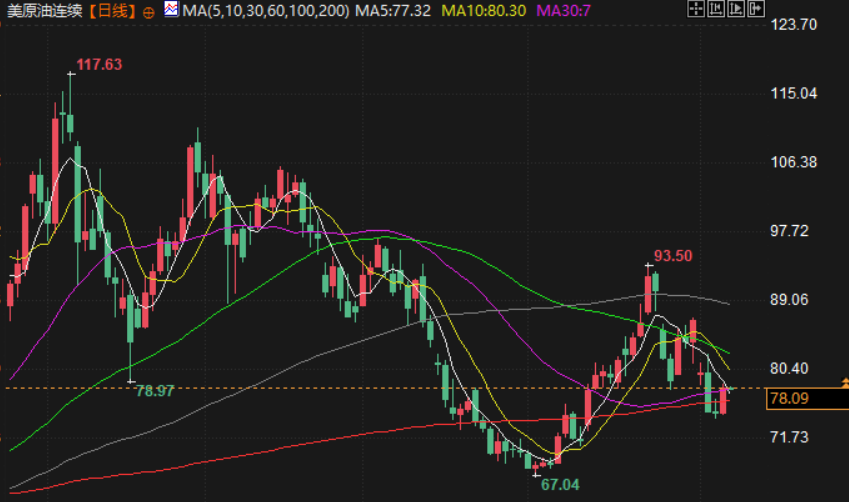 Meanwhile, the Houthi rebels in Yemen claimed responsibility for missile and drone attacks on "Saudi troops" inside Saudi Arabia, causing numerous casualties. On Wednesday, they also claimed missile attacks on two Saudi oil tankers near the Red Sea port of Yanbu and in the Gulf of Aden, further exacerbating supply tensions. However, Saudi Arabia has not yet confirmed these incidents. In addition, Saudi Arabia has slightly lowered its official selling price for "Arab Light" crude oil for the Asian market in September. Analysts point out that market focus remains on the progress of the US-Iran agreement; the longer the negotiations drag on, the more likely oil prices will receive support.
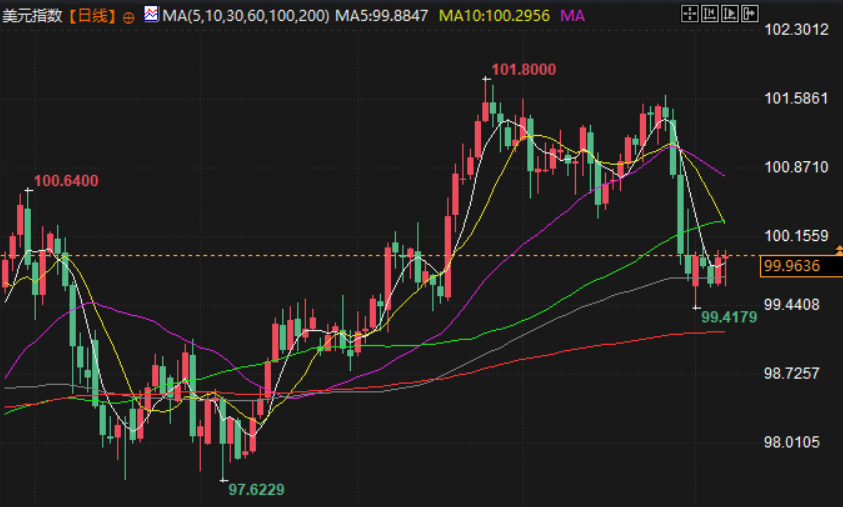 The Federal Reserve's policy direction may hinge on Friday's non-farm payroll data. Surveys predict July's job growth of 80,000 (previous figure 57,000), with the unemployment rate expected to remain at 4.2%. Fed Chairman Warsh has left room for a September rate hike, while Governor Cook is open to addressing inflation through higher short-term interest rates. San Francisco Fed President Daly fully supports last week's decision to keep rates unchanged, stating that more data is needed. The dollar rose for the third consecutive trading day on Thursday, gaining 0.43% to close at 158.40. This recovered some of the losses from the yen's earlier decline to a 13-week low of 155.20, supported by joint intervention from the Japanese and US Treasury departments. Investors are seeking safe havens as they await details of a proposed agreement on the Iran conflict and Friday's US July non-farm payroll report.
Key Focus Today
stock market
U.S. stocks closed lower on Thursday, with the Dow Jones Industrial Average down 0.85%, the S&P 500 down 0.18%, and the Nasdaq down 0.06%, taking a breather after a strong week that saw record highs. Investors digested the latest corporate earnings reports while focusing on geopolitical developments in the Middle East. Earlier, Iranian parliamentary committees' review of a preliminary bill to ban ships from the Strait of Hormuz, among others, boosted oil prices, but the market showed signs of "headline fatigue," and earlier in the week, signs of progress on a peace agreement had briefly pushed oil prices down and eased inflation concerns. In terms of earnings, AppLovin plunged 19.7% due to lower-than-expected quarterly revenue, and Datadog plummeted 19% after expecting slower revenue growth in the third quarter, dragging down software stocks. Western Digital fell 13%, Sandisk dropped 6.8%, while SpaceX bucked the trend, rising 6.1% amid concerns about the expiration of early investor lock-up periods. On the economic data front, initial jobless claims rose slightly last week, and the market is awaiting Friday's July non-farm payroll report to determine the Fed's future interest rate path. So far, 84.8% of the S&P 500 companies that have released their earnings have exceeded analysts' expectations, far above the historical average.Gold Market
Gold prices turned lower on Thursday, with spot gold falling 0.15% to settle at $4,240.55 an ounce. Despite hitting its highest level since June 18 earlier in the session and posting its biggest one-day gain since February (over 4%) on Wednesday, prices were pressured by news that Iranian semi-official media reported a parliamentary committee was reviewing a preliminary bill to ban ships from the United States, Israel, and other “hostile” countries from passing through the Strait of Hormuz. This news boosted oil prices by over 4%, reignited inflation concerns, and heightened market expectations for a Federal Reserve rate hike, thus putting downward pressure on gold prices. Analysts point out that rising energy prices will prompt central banks to maintain a stance of "higher and longer interest rates," and the US non-farm payroll data to be released on Friday will be key to influencing the Fed's policy statement. Currently, the CME FedWatch tool shows traders expect a 57% probability of a rate hike in September and an 84% probability of a rate hike in December. In other precious metals, spot silver fell 0.83% to $61.50, platinum fell 0.7% to $1723.20, while palladium rose 0.6% to $1371.00.oil market
Oil prices rose sharply on Thursday, with Brent crude up 5.18% to settle at $83.51 a barrel and WTI crude up 4.2% to settle at $78.23 a barrel. The gains were primarily driven by news that an Iranian parliamentary committee was reviewing a preliminary bill that would ban ships from the United States, Israel, and other “hostile” countries from passing through the Strait of Hormuz and impose fines of up to 20% of the value of their cargo, raising concerns about disruptions to Middle Eastern oil transport routes. Meanwhile, the Houthi rebels in Yemen claimed responsibility for missile and drone attacks on "Saudi troops" inside Saudi Arabia, causing numerous casualties. On Wednesday, they also claimed missile attacks on two Saudi oil tankers near the Red Sea port of Yanbu and in the Gulf of Aden, further exacerbating supply tensions. However, Saudi Arabia has not yet confirmed these incidents. In addition, Saudi Arabia has slightly lowered its official selling price for "Arab Light" crude oil for the Asian market in September. Analysts point out that market focus remains on the progress of the US-Iran agreement; the longer the negotiations drag on, the more likely oil prices will receive support.Foreign exchange market
The dollar index rose 0.26% on Thursday to close at 99.94, still hovering near a six-week low hit on Monday. Markets were focused on tensions in the Gulf, after reports that an agreement proposed by Iran and Oman to help end the US-Iran conflict could allow Tehran to control shipping in the Strait of Hormuz. However, the US did not immediately comment. Scotiabank noted that speculators' total net long positions in the dollar were near record highs and vulnerable to adverse factors. The Federal Reserve's policy direction may hinge on Friday's non-farm payroll data. Surveys predict July's job growth of 80,000 (previous figure 57,000), with the unemployment rate expected to remain at 4.2%. Fed Chairman Warsh has left room for a September rate hike, while Governor Cook is open to addressing inflation through higher short-term interest rates. San Francisco Fed President Daly fully supports last week's decision to keep rates unchanged, stating that more data is needed. The dollar rose for the third consecutive trading day on Thursday, gaining 0.43% to close at 158.40. This recovered some of the losses from the yen's earlier decline to a 13-week low of 155.20, supported by joint intervention from the Japanese and US Treasury departments. Investors are seeking safe havens as they await details of a proposed agreement on the Iran conflict and Friday's US July non-farm payroll report.International News
Trump Says Strait of Hormuz Agreement Not Yet Reached, US in Negotiations On August 6, local time, US President Trump stated that an agreement on reopening the Strait of Hormuz "cannot be said to be formally reached," but the strait is currently "open to some extent," and the US is involved in related negotiations, with overall progress being good. Trump stated that the US Navy is currently carrying out a blockade operation against Iran and controlling the relevant waters, but security risks such as mines may still affect the passage of commercial vessels. He said he is involved in the negotiations and believes the situation is developing in a positive direction. (CCTV News) Iran Plans to Ban Hostile Parties from Passing Through the Strait of Hormuz, Imposes Heavy Penalties on Violators According to Iran's Fars News Agency on August 6, Iranian Parliament Presidium member Salimi released preliminary details of Iran's proposed strategic management plan for the Strait of Hormuz, which includes prohibiting hostile parties from passing through the strait, with violators facing fines of up to 20% of the value of their goods. The plan stipulates that ships from the United States, Israel, and other countries will be prohibited from passing through the Strait of Hormuz; military and civilian goods related to Israel will be prohibited from passing through the area; and ships or goods involved in operations against the "Resistance Front" will also be prohibited from passage. The plan also stipulates that countries and individuals causing damage to Iran will not be able to obtain permission to pass through the Strait of Hormuz and the Persian Gulf until compensation for losses is completed. According to the plan, those who violate the relevant regulations will be subject to penalties such as fines of up to 20% of the value of the goods. The Iranian government will cooperate with the armed forces to undertake responsibilities such as navigation guidance, ship passage supervision, and maintaining security in the Persian Gulf. Salimi said that this preliminary text is being reviewed by the Parliament's National Security and Foreign Policy Committee, and Parliament has invited relevant experts to provide opinions and suggestions to further improve the plan. (Xinhua) Industry Sources: Iran-Oman Proposed Straits Agreement Faces Double Obstacles of US Sanctions and Insurance Four industry sources said that a proposed agreement between Iran and Oman would give Tehran control over ships entering the Gulf via the Strait of Hormuz, but due to US sanctions and restrictive insurance clauses on any payments, the agreement is difficult to implement. Any toll collection would raise significant compliance issues, as the US has imposed sanctions on the Persian Gulf Straits Authority, which operates the waterway. The US Treasury Department also prohibits US personnel from accepting services from the Iranian government related to "ensuring safe passage." Industry sources indicate that any payments could result in asset freezes. Another complicating factor is a clause introduced by Lloyd's Markets in late July for use by war risk insurers. Under this clause, insurance coverage would be terminated if a vessel pays transit fees, tolls, or other charges for passing through the Strait of Hormuz. An insurance industry source stated that shipping companies are in a dilemma because Lloyd's Markets' clause prohibits insurers from providing coverage to shipowners who pay tolls, while Iran wants to collect tolls. Trump Announces Tariffs on Polysilicon and its Derivatives On August 6th local time, US President Trump signed an executive order, pursuant to Section 232 of the Trade Expansion Act of 1962, imposing minimum import prices and additional tariffs on imported polysilicon and its derivatives to support the US domestic polysilicon, semiconductor, and solar energy supply chains. The announcement stipulates the following minimum import prices: $21 per kilogram for polysilicon; $100 per kilogram for polysilicon ingots and wafers; $0.22 per watt for solar cells; and $0.38 per watt for solar modules. Simultaneously, the United States will impose a 15% ad valorem tariff on polysilicon ingots and related derivative products listed in the announcement's annex. These measures will take effect at 12:01 AM Eastern Time on December 4, 2026. The announcement also authorizes the Department of Commerce to establish a "Return to the United States" incentive program. Companies that commit to building, renovating, or expanding polysilicon, silicon ingot, wafer, or solar cell production facilities in the United States and commencing operations before January 20, 2029, can apply for exemption from Section 232 tariffs on certain imported equipment and related products. (CCTV) The probability of the Federal Reserve raising interest rates by 25 basis points in September is 55%, and the probability of at least one rate hike this year is 84.3%. According to CME's "FedWatch," the probability of the Federal Reserve maintaining interest rates unchanged by September is 45%, and the probability of a cumulative rate hike of 25 basis points is 55%. The probability of the Federal Reserve keeping interest rates unchanged by October is 31%, the probability of a cumulative 25 basis point rate hike is 51.9%, and the probability of a cumulative 50 basis point rate hike is 17.1%. The probability of the Federal Reserve keeping interest rates unchanged by December is 15.7%, the probability of a cumulative 25 basis point rate hike is 41.9%, and the probability of at least a 50 basis point rate hike is 42.4%. Trump Admits Some Ammunition Supply Shortages On the afternoon of August 6th local time, US President Trump, answering reporters' questions about the US military's ammunition supply at the White House, stated: "We always need more (ammunition). The supply of some types of ammunition in the United States is 'almost unlimited,' but there are some types that are a little tight." He did not specify which types of ammunition. (CCTV International News) Trump Signs Executive Orders on Birthright Citizenship to Crack Down on "Birth Tourism" On August 6th local time , US President Trump signed two executive orders at the White House, focusing on cracking down on commercial "birth tourism" and further restricting the scope of automatic citizenship for some children born in the United States. Trump stated that the government will launch a larger-scale and stronger enforcement campaign against the "birth tourism" industry, which involves hotels and other organizations organizing trips to the U.S. to give birth. Trump claimed that the birthright citizenship system has long been abused, and that "birth tourism" has developed into a business. He asserted that "hundreds of thousands" of people may obtain U.S. citizenship for their children through this method each year, citing examples of families bringing dozens of children to participate in such arrangements. Trump also stated that the Supreme Court's previous ruling on his policy restricting birthright citizenship was "unfair," and therefore the government is pushing forward with new restrictions. He believes the latest executive order is constitutional and stated that the government will end the practice of using commercialized "birth tourism" to obtain U.S. citizenship. This is Trump's second attempt to tighten birthright citizenship, and he is expected to face further constitutional challenges. On June 30th of this year, the U.S. Supreme Court rejected Trump's previous executive order that would have broader restrictions on birthright citizenship for children of non-citizens. (CCTV News)Domestic News
China's Warehousing Index Remains in Expansion in July, Demonstrating Strong Industry Resilience The China Federation of Logistics and Purchasing released its July China Warehousing Index today (July 7th). The index has remained in the expansionary range above 50% for two consecutive months. Overall, the warehousing industry has maintained expansion despite seasonal climate and extreme weather disturbances, demonstrating strong industry resilience. The July China Warehousing Index was 50.3%, up 0.1 percentage points from the previous month, remaining in the expansionary range for two consecutive months. (CCTV News) China's First Negative List for Cross-Border Data Exports Launched in Beijing The Beijing Internet Information Office announced on July 6th that the Beijing branch of Nonghyup Bank of Korea has become the first banking institution in China to achieve compliant cross-border data export through a negative list. "Relying on the dedicated service mechanism of the Beijing Data Cross-border Service Center's Business Center District Service Station, the station proactively connects with enterprises to understand their needs, preemptively analyzes enterprise data export scenarios, and accurately addresses compliance bottlenecks and difficulties in data export," said a relevant official from the Beijing Municipal Cyberspace Administration. "We provide integrated professional support for key aspects such as the assessment of the applicability of the negative list and the hierarchical management of export risks, and follow up on all aspects of enterprise application and implementation throughout the entire process." (Xinhua News Agency)- Risk Warning and Disclaimer
- The market involves risk, and trading may not be suitable for all investors. This article is for reference only and does not constitute personal investment advice, nor does it take into account certain users’ specific investment objectives, financial situation, or other needs. Any investment decisions made based on this information are at your own risk.