Strategist: Gold prices broke through $4,200 due to a collapse in market confidence; silver may see even greater gains.
2026-08-07 11:28:54
Gold prices have stabilized above $4,200 per ounce. The market generally attributes this price movement to inflation expectations and adjustments in global monetary policy. However, one market strategist points out that the deeper logic behind this rally is that investors are beginning to doubt the ability of policymakers to maintain the stability of the global economy. Gold prices had been consolidating around $4,000 for the previous two months, accumulating sufficient upward momentum. This, coupled with continued central bank gold purchases, rising global debt, and the catalyst of joint US-Japan foreign exchange intervention, propelled gold prices to a strong breakout. In the view of institutions, in addition to gold, silver also presents a potential investment opportunity. If inflationary pressures spread again, silver's upside potential may exceed that of gold.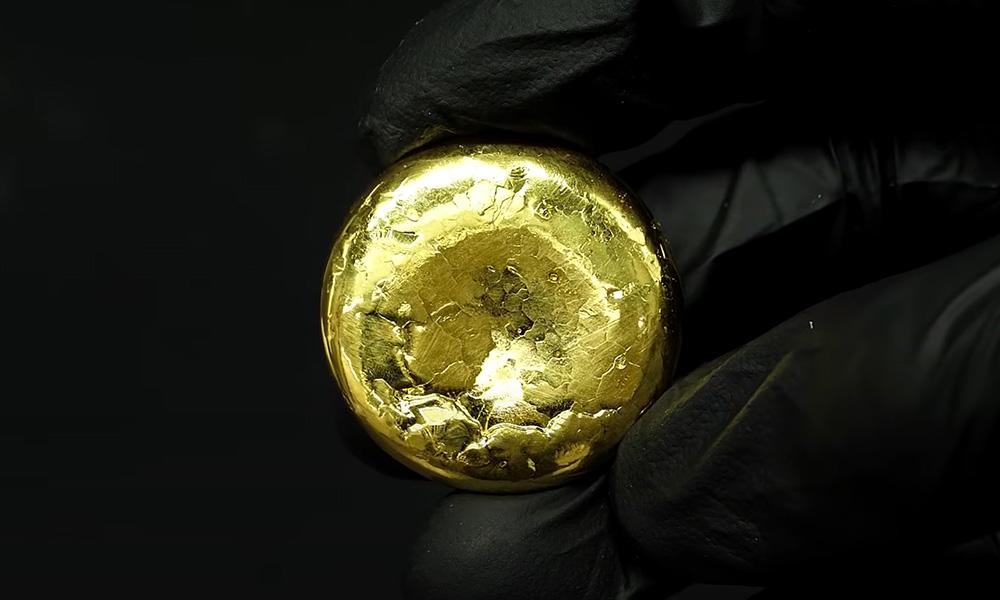 On Thursday (August 6), spot gold prices briefly broke through the intraday high of $4,300 per ounce before retreating somewhat. Spot gold then fluctuated around $4,250 per ounce, forming a new technical support level. She explained that after gold prices held above the June lows in mid-July, she began gradually building her gold position. The Federal Reserve's decision to keep interest rates unchanged led to a weaker dollar, further reinforcing her bullish outlook. However, what truly ignited this breakout was Japan's currency intervention. Schneider stated that the news of the US buying yen to support the exchange rate became a key catalyst for the rise in gold prices. The impact of this intervention was not limited to a weaker dollar; it also raised concerns about the stability of the global financial system. Frequent government interventions in the market have led investors to question the policymakers' ability to manage the market. When market confidence in public institutions wanes, funds naturally flow to safe-haven assets like gold. She stated, "Once market confidence shifts, the level of interest rates becomes irrelevant. As long as confidence is lacking, investors will buy gold; history has always been this way."
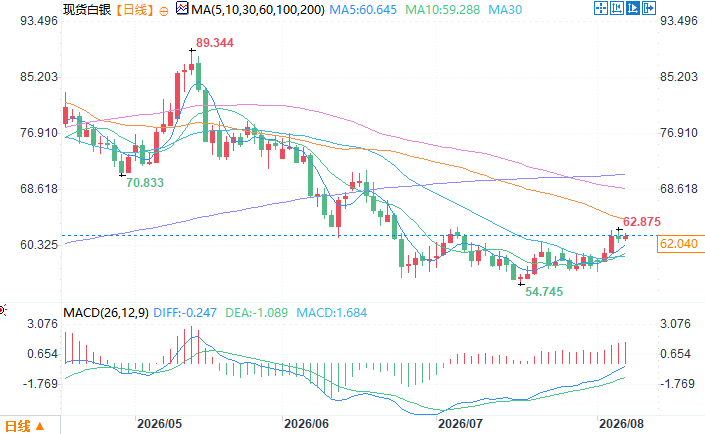 Spot silver daily chart source: FX678. At 11:00 AM Beijing time on August 7th, spot silver was trading at $62.16 per ounce.
Multiple factors combined, and foreign exchange intervention became the trigger for gold price movements.
MarketGauge's chief market strategist, Michele Schneider, stated that gold prices have firmly established themselves above the 50-day moving average, and she maintains her long-term bullish outlook on gold. Schneider noted that while the 4% single-day surge in gold was impressive, it was not unexpected, as the fundamentals of gold have not fundamentally changed. Continued gold purchases by major Asian countries, South Korea's increased gold reserves, and the rising global debt levels collectively provide underlying support for gold prices. On Thursday (August 6), spot gold prices briefly broke through the intraday high of $4,300 per ounce before retreating somewhat. Spot gold then fluctuated around $4,250 per ounce, forming a new technical support level. She explained that after gold prices held above the June lows in mid-July, she began gradually building her gold position. The Federal Reserve's decision to keep interest rates unchanged led to a weaker dollar, further reinforcing her bullish outlook. However, what truly ignited this breakout was Japan's currency intervention. Schneider stated that the news of the US buying yen to support the exchange rate became a key catalyst for the rise in gold prices. The impact of this intervention was not limited to a weaker dollar; it also raised concerns about the stability of the global financial system. Frequent government interventions in the market have led investors to question the policymakers' ability to manage the market. When market confidence in public institutions wanes, funds naturally flow to safe-haven assets like gold. She stated, "Once market confidence shifts, the level of interest rates becomes irrelevant. As long as confidence is lacking, investors will buy gold; history has always been this way." Silver presents potential opportunities as market sentiment outpaces traditional indicators.
While bullish on gold, Schneider believes that silver's investment value will become more prominent if inflationary pressures spread further. She observes inflation signals using the "three elements of inflation"—the gold-silver ratio, the US dollar, and sugar prices. She states that if the gold-silver ratio falls below 69 and silver outperforms gold, it indicates a return to an inflationary environment, at which point it would be a good time to invest in silver. Technically, silver still faces resistance and has not yet broken above the 50-day moving average. If September silver futures break through $64 per ounce, they will complete a bullish bottoming pattern and are expected to rise rapidly to $75, or even $80. She reminds investors not to rely excessively on traditional models such as interest rates and real yields, as precious metal prices are largely driven by market psychology. Increased global market volatility, rising policy uncertainty, and doubts about economic growth prospects are all altering market sentiment. News-driven volatility reflects investor confusion, making gold a recognized allocation choice in a volatile environment. In summary , this round of gold price increases has transcended simple monetary policy frameworks, with changes in market confidence playing a dominant role. Silver, as an inflation-elastic commodity, is worth continued monitoring by investors. The future direction of confidence in the financial market will continue to influence the medium- to long-term price trend of precious metals. Spot silver daily chart source: FX678. At 11:00 AM Beijing time on August 7th, spot silver was trading at $62.16 per ounce.
- Risk Warning and Disclaimer
- The market involves risk, and trading may not be suitable for all investors. This article is for reference only and does not constitute personal investment advice, nor does it take into account certain users’ specific investment objectives, financial situation, or other needs. Any investment decisions made based on this information are at your own risk.