July non-farm payrolls plunged by 23,000! Gold prices surged by $60, and expectations for a September Fed rate hike collapsed instantly.
2026-08-07 20:46:56
On Friday (August 7th) at 8:30 PM Beijing time, the U.S. Department of Labor released the July non-farm payroll data. The data showed that seasonally adjusted non-farm payrolls decreased by 23,000 in July, far below the market expectation of an increase of 80,000. Meanwhile, the combined downward revisions of May and June data amounted to 103,000. The unemployment rate fell slightly to 4.1%, the lowest level since June 2025, and the annualized growth rate of average hourly wages was 3.2%, lower than the expected 3.5%.  Prior to the data release, the market generally expected employment to continue its moderate expansion, and Federal Reserve officials had previously focused more on inflation risks, with some members hinting that they might consider raising interest rates if prices did not improve. The US dollar index fluctuated around 99.9, while spot gold had already risen by about $20, reaching the 4310 level, reflecting some funds' cautious betting on the data.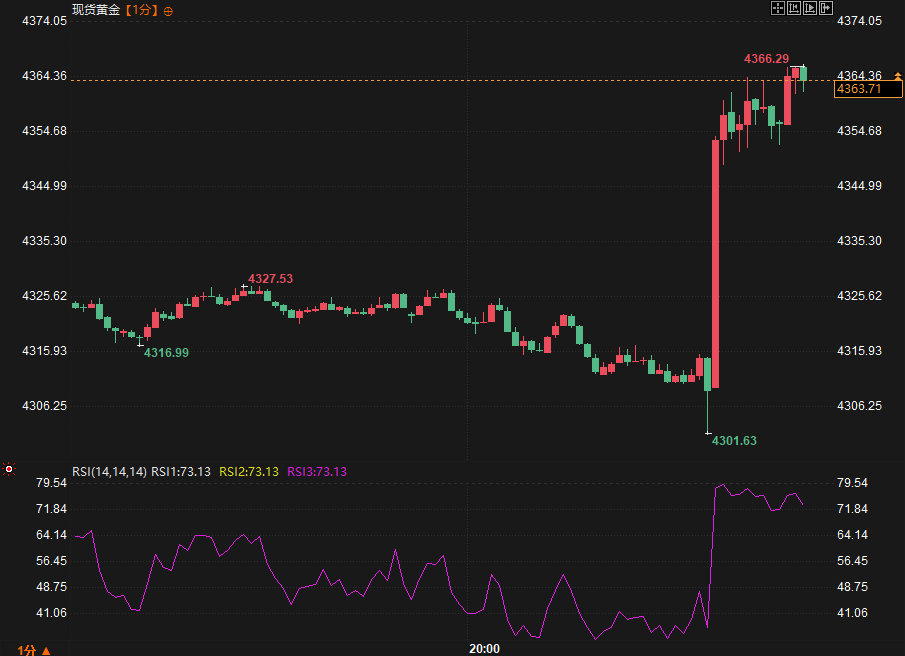
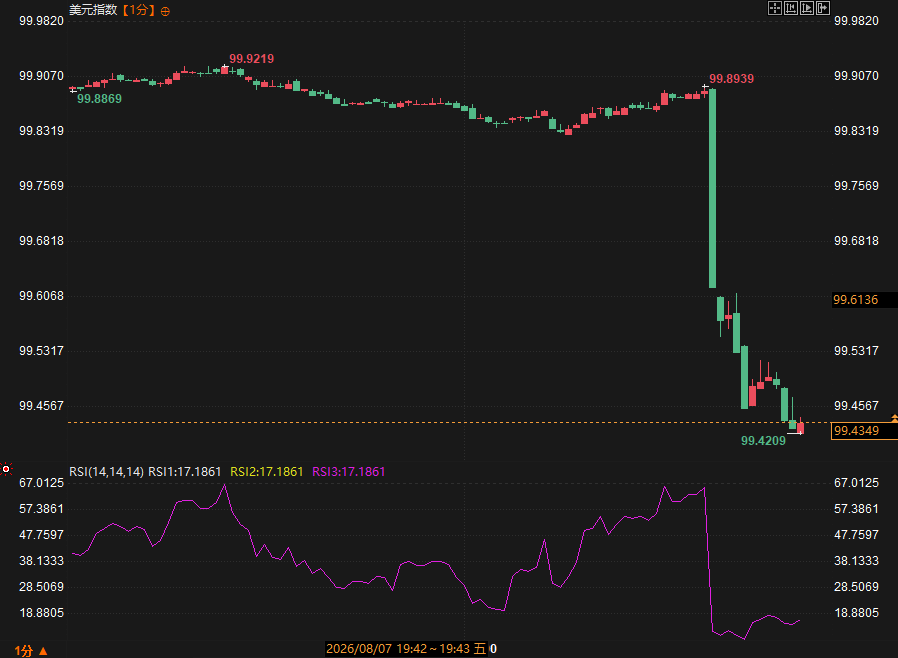
Prior to the data release, the market generally expected employment to continue its moderate expansion, and Federal Reserve officials had previously focused more on inflation risks, with some members hinting that they might consider raising interest rates if prices did not improve. The US dollar index fluctuated around 99.9, while spot gold had already risen by about $20, reaching the 4310 level, reflecting some funds' cautious betting on the data. Deep interconnect analysis
From a fundamental perspective, the unexpected negative turn in employment figures, coupled with a significant downward revision of the previous figure, directly undermined the impression of a robust labor market. Although the unemployment rate fell to 4.1%, and both the number of job seekers and the number of unemployed decreased, bringing the unemployment rate to a two-year low, the overall contraction in employment and the slowdown in wage growth created a combined shock. US interest rate futures indicate that the market quickly lowered its expectations for a September rate hike by the Federal Reserve, anticipating only a 28 basis point increase by the end of the year, lower than the 32 basis point expectation before the data release. In terms of technical and real-time market movements, the US dollar index fell by about 30 points shortly after the data release, reaching a low of 99.61. Spot gold rose rapidly from around 4310 before the release, briefly dipping to a low of 4301 before surging to a high above 4364, with intraday gains expanding to nearly 2.8%. The euro rebounded rapidly against the dollar from around 1.1526, rising about 38 points to 1.1564, while the dollar fell below the 157 level against the yen, extending its losses to around 1%. US Treasury prices rose in tandem, and the yield on German two-year bonds reversed its earlier gains. Prior to the data release, institutional views largely focused on stable employment supporting inflation, with prominent institutions and Fed officials emphasizing that improved labor market conditions might leave room for policy maneuver. Retail investors, however, remained cautious, with some data expectations nearing consensus. After the release, institutional perspectives quickly shifted to the unexpectedly weak employment data and its impact on the interest rate hike path. Fed mouthpiece Nick Timiraos pointed out that the unemployment rate had fallen to its lowest level in two years, but overall negative employment growth and downward revisions became the focus. Retail investor sentiment clearly shifted towards a rebound in risk appetite, with discussions centered on the immediate reaction of gold's rapid breakout of key levels and the weakening dollar. Expectations were biased towards the combination of significantly lower-than-expected employment figures and lower-than-expected wages. Historical comparisons show that while employment had stabilized from the volatility expected at the end of 2025 in previous months, this current negative growth coupled with significant downward revisions contrasts with the moderate expansion in the spring. In the latest quotes, gold has broken out of its previous consolidation range and is testing higher, while the dollar index has broken below short-term support. Both long-term and short-term logics remain aligned, driven by downward revisions in interest rate expectations.Trend Outlook
The unexpected contraction and downward revision of employment data, coupled with slowing wage growth, have reduced the urgency for short-term policy tightening, and the market has already repriced the interest rate path. After breaking through, gold is likely to test the 4370-4382 range. The dollar index's movement below 99.6 will continue to be driven by interest rate expectations, and the rebound momentum of non-US currencies such as the euro may continue to be observed. Further attention should be paid to inflation data and official statements for further confirmation of the market's direction. The current trend mainly reflects the immediate pricing adjustment caused by the unexpected employment data.Frequently Asked Questions
Q: Why did the unemployment rate fall despite a 23,000 decrease in non-farm payrolls in July? The unemployment rate is based on the independent household survey. A simultaneous decrease in both the number of job seekers and the number of people counted as unemployed led to a drop in the unemployment rate to 4.1%. Employment figures are from the business survey; the two have different sample sizes and statistical methods, which can cause short-term discrepancies. Q: What does the downward revision of the previous figure by 103,000 mean for the market? The May figure was revised down from 129,000 to 63,000, and the June figure from 57,000 to 20,000, indicating that the spring employment expansion was weaker than the initial figure. This strengthened the downward pressure on interest rate expectations, pushing US Treasuries and gold higher. Q: What are the main differences between institutional and retail investor views before and after the data release? Before the release, institutions emphasized employment stability and inflation risks, while retail investors tended to follow the consensus expectation. After the release, institutions focused on unexpected employment events and adjustments to the interest rate hike path, while retail investors discussed the immediate market changes, such as the rapid rise in gold and the fall in the dollar. Q: What is the logic behind gold's rise from 4301 to above 4364? Negative employment growth and a significant downward revision have reduced expectations of interest rate hikes. Coupled with prior gains before the data release, risk appetite and the repricing of the interest rate path have jointly propelled gold prices to break through and test higher levels. Q: What might happen to the US dollar index after it falls below 99.6? Interest rate futures indicate a cooling of year-end rate hike expectations, putting short-term pressure on the US dollar index. Subsequent movements will depend on whether inflation data and policy statements can further confirm or correct current pricing. The rebound momentum of non-US currencies will also be closely monitored.- Risk Warning and Disclaimer
- The market involves risk, and trading may not be suitable for all investors. This article is for reference only and does not constitute personal investment advice, nor does it take into account certain users’ specific investment objectives, financial situation, or other needs. Any investment decisions made based on this information are at your own risk.