Crude oil trading alert: Easing geopolitical tensions are putting downward pressure on oil prices, which are now returning to range-bound trading in the short term, awaiting a directional move.
2026-08-10 09:34:56
International crude oil prices fluctuated slightly during Asian trading hours on Monday, with WTI crude failing to maintain its upward momentum after a previous single-day gain of over 4%. Currently trading around $79, market analysts believe the decline reflects more short-term profit-taking than a significant easing of supply risks, as considerable uncertainty remains regarding the reopening of the Strait of Hormuz, and the energy market remains cautious about the resumption of crude oil transportation.  Recent market focus has been on shipping issues in the Strait of Hormuz. Iran has stated that negotiations with Oman to establish a secure shipping route are nearing an agreement, but emphasized that even if an agreement is reached, it will not mean an immediate and full restoration of normal navigation in the strait. As the Strait of Hormuz plays a crucial role in global energy transport, any prolonged restrictions could impact international crude oil supply expectations and perpetuate risk premiums. Meanwhile, the regional security situation remains unstable. The Houthi rebels in Yemen previously claimed responsibility for an attack on Saudi Arabia's Jizan oil refinery, and an oil tanker operated by Abu Dhabi National Oil Company was also attacked near the Strait of Hormuz. Market concerns suggest that if such incidents continue to escalate, they could further impact crude oil transport insurance costs and shipping company operations, thus supporting oil price floor. Iran currently refuses to engage in direct negotiations with the United States, citing problems with the implementation of the previously reached temporary ceasefire agreement. Iran continues to demand demands including lifting the maritime blockade, easing sanctions, and compensation for war losses, while the United States has signaled that it will continue to monitor the progress of negotiations. Market analysts believe that although diplomatic channels remain open, the likelihood of completely eliminating supply risks in the short term is low. Besides energy supply factors, regional developments continue to influence market sentiment. Israel remains reserved about the US-proposed Gaza peace plan, and disagreements persist among relevant parties regarding its details. Given Iran's connections with regional powers, the market believes the Middle East situation may continue to impact international oil prices through risk premiums. The energy market is currently trading two conflicting expectations: on the one hand, investors anticipate a breakthrough in diplomatic negotiations, leading to supply recovery and reduced oil price pressure; on the other hand, the global crude oil supply and demand fundamentals remain tight, limiting further downside for oil prices. TD Securities analysts point out that while the energy market anticipates a potential agreement, high-frequency data still indicates that the global crude oil supply and demand balance has shifted back to a significant shortage, while refined product supply remains tight. The coexistence of tightening supply and expectations of geopolitical easing has kept WTI and Brent crude oil prices in a high-level consolidation pattern. From a global market perspective, upward pressure on oil prices may affect inflation expectations through energy costs. If crude oil supply risks persist, the market may reassess the future policy paths of major central banks, especially given that rising energy prices could delay the decline in inflation. Meanwhile, the dollar's performance, changes in US crude oil inventories, and global economic growth expectations will also be important factors influencing oil price direction. Currently, the market is focusing on US Energy Information Administration (EIA) inventory data, the recovery of global crude oil transportation, and the progress of negotiations related to the Strait of Hormuz. If shipping restrictions are gradually lifted, the crude oil risk premium may decline; however, if regional security events escalate, WTI may retest higher levels. From a daily chart perspective, after a rapid rise that broke through short-term resistance, WTI crude oil prices are currently consolidating at higher levels. The current price is hovering around $79, and the overall trend remains supported by supply risks. On the daily chart, if oil prices can stably hold above the $80-$80.50 area, they may further challenge the $83 mark; if the upward attempt fails, they may retrace to the support area around $74.00. In the medium term, the 60-day moving average remains an important reference for judging market strength; if prices continue to trade above this area, the bullish momentum still has room to continue. From a 4-hour chart perspective, WTI crude oil has seen a short-term correction after its initial rise. Technical indicators suggest that short-term momentum has cooled somewhat, but a clear trend reversal signal has not yet formed. The $76-$76.50 area is currently a key support level. If the price holds this area, the market may attempt to rebound towards $80 or even $80.50; however, a break below this area could lead to a further short-term pullback to around $72. In the coming trading days, the direction of oil prices will primarily depend on the progress of shipping in the Strait of Hormuz and the market's repricing of changes in supply risks.
 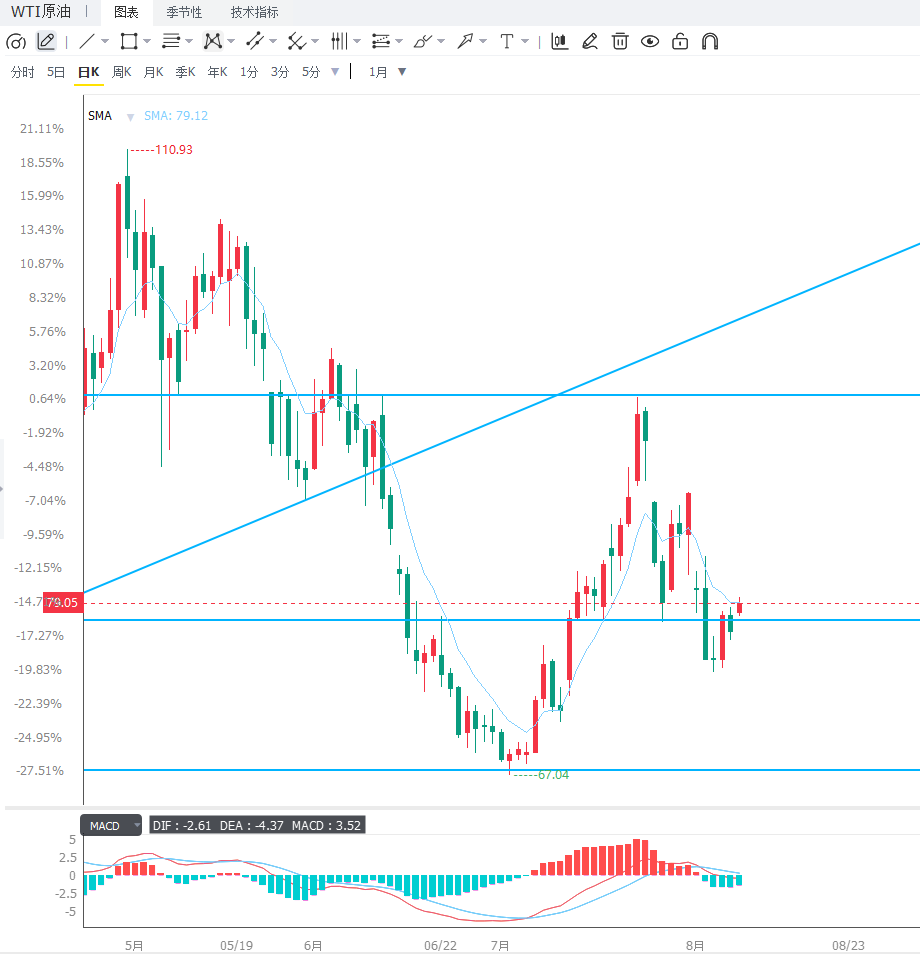 The editor summarizes that WTI crude oil is currently in a tug-of-war between "supply risk support" and "geopolitical easing expectations suppression." The possibility of the Strait of Hormuz reopening limits further rapid price increases, but tight global crude oil inventories and regional security risks continue to provide support to the market. In the short term, oil prices may maintain a volatile but upward-biased pattern, requiring close monitoring of shipping recovery, inventory data, and risk changes in major oil-producing regions. If supply pressures ease, oil prices may return to fundamental trading; however, if risk events escalate, the crude oil market still has the potential for another rapid rise.
Recent market focus has been on shipping issues in the Strait of Hormuz. Iran has stated that negotiations with Oman to establish a secure shipping route are nearing an agreement, but emphasized that even if an agreement is reached, it will not mean an immediate and full restoration of normal navigation in the strait. As the Strait of Hormuz plays a crucial role in global energy transport, any prolonged restrictions could impact international crude oil supply expectations and perpetuate risk premiums. Meanwhile, the regional security situation remains unstable. The Houthi rebels in Yemen previously claimed responsibility for an attack on Saudi Arabia's Jizan oil refinery, and an oil tanker operated by Abu Dhabi National Oil Company was also attacked near the Strait of Hormuz. Market concerns suggest that if such incidents continue to escalate, they could further impact crude oil transport insurance costs and shipping company operations, thus supporting oil price floor. Iran currently refuses to engage in direct negotiations with the United States, citing problems with the implementation of the previously reached temporary ceasefire agreement. Iran continues to demand demands including lifting the maritime blockade, easing sanctions, and compensation for war losses, while the United States has signaled that it will continue to monitor the progress of negotiations. Market analysts believe that although diplomatic channels remain open, the likelihood of completely eliminating supply risks in the short term is low. Besides energy supply factors, regional developments continue to influence market sentiment. Israel remains reserved about the US-proposed Gaza peace plan, and disagreements persist among relevant parties regarding its details. Given Iran's connections with regional powers, the market believes the Middle East situation may continue to impact international oil prices through risk premiums. The energy market is currently trading two conflicting expectations: on the one hand, investors anticipate a breakthrough in diplomatic negotiations, leading to supply recovery and reduced oil price pressure; on the other hand, the global crude oil supply and demand fundamentals remain tight, limiting further downside for oil prices. TD Securities analysts point out that while the energy market anticipates a potential agreement, high-frequency data still indicates that the global crude oil supply and demand balance has shifted back to a significant shortage, while refined product supply remains tight. The coexistence of tightening supply and expectations of geopolitical easing has kept WTI and Brent crude oil prices in a high-level consolidation pattern. From a global market perspective, upward pressure on oil prices may affect inflation expectations through energy costs. If crude oil supply risks persist, the market may reassess the future policy paths of major central banks, especially given that rising energy prices could delay the decline in inflation. Meanwhile, the dollar's performance, changes in US crude oil inventories, and global economic growth expectations will also be important factors influencing oil price direction. Currently, the market is focusing on US Energy Information Administration (EIA) inventory data, the recovery of global crude oil transportation, and the progress of negotiations related to the Strait of Hormuz. If shipping restrictions are gradually lifted, the crude oil risk premium may decline; however, if regional security events escalate, WTI may retest higher levels. From a daily chart perspective, after a rapid rise that broke through short-term resistance, WTI crude oil prices are currently consolidating at higher levels. The current price is hovering around $79, and the overall trend remains supported by supply risks. On the daily chart, if oil prices can stably hold above the $80-$80.50 area, they may further challenge the $83 mark; if the upward attempt fails, they may retrace to the support area around $74.00. In the medium term, the 60-day moving average remains an important reference for judging market strength; if prices continue to trade above this area, the bullish momentum still has room to continue. From a 4-hour chart perspective, WTI crude oil has seen a short-term correction after its initial rise. Technical indicators suggest that short-term momentum has cooled somewhat, but a clear trend reversal signal has not yet formed. The $76-$76.50 area is currently a key support level. If the price holds this area, the market may attempt to rebound towards $80 or even $80.50; however, a break below this area could lead to a further short-term pullback to around $72. In the coming trading days, the direction of oil prices will primarily depend on the progress of shipping in the Strait of Hormuz and the market's repricing of changes in supply risks. The editor summarizes that WTI crude oil is currently in a tug-of-war between "supply risk support" and "geopolitical easing expectations suppression." The possibility of the Strait of Hormuz reopening limits further rapid price increases, but tight global crude oil inventories and regional security risks continue to provide support to the market. In the short term, oil prices may maintain a volatile but upward-biased pattern, requiring close monitoring of shipping recovery, inventory data, and risk changes in major oil-producing regions. If supply pressures ease, oil prices may return to fundamental trading; however, if risk events escalate, the crude oil market still has the potential for another rapid rise.
- Risk Warning and Disclaimer
- The market involves risk, and trading may not be suitable for all investors. This article is for reference only and does not constitute personal investment advice, nor does it take into account certain users’ specific investment objectives, financial situation, or other needs. Any investment decisions made based on this information are at your own risk.