A slowdown in US employment data weakened expectations of interest rate hikes, causing the pound to remain volatile against the dollar.
2026-08-10 10:42:55
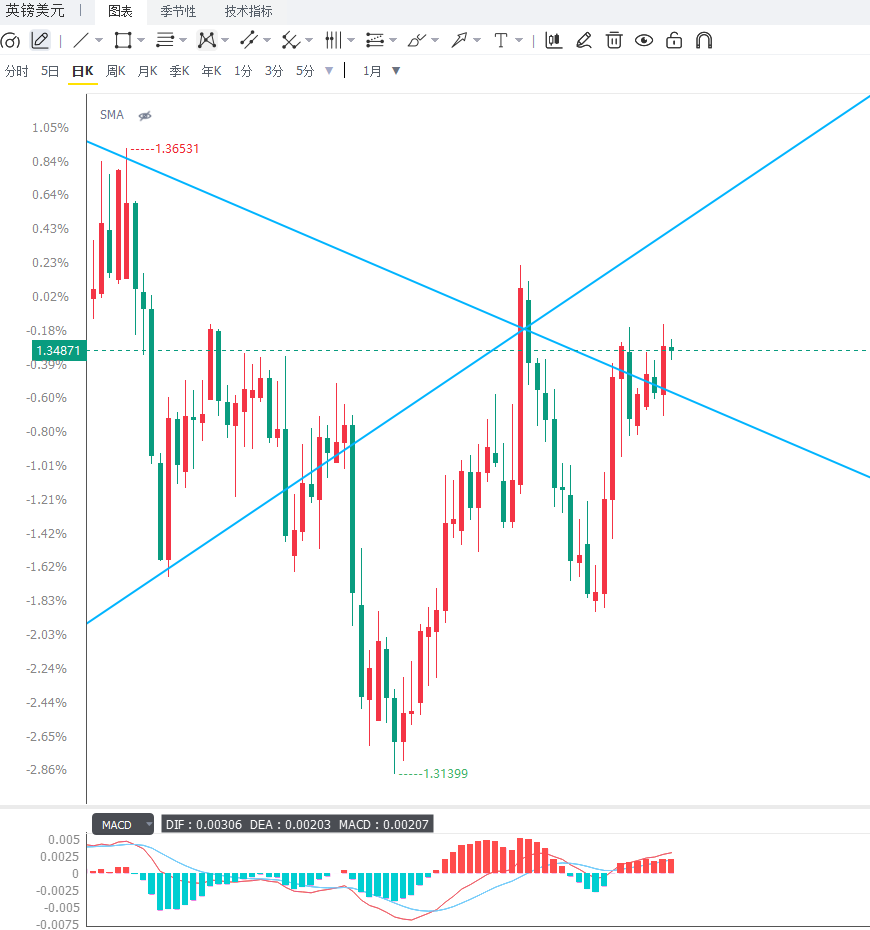
The British pound saw a slight pullback against the US dollar in Asian trading on Monday, gradually moving away from the three-week high reached last Friday, above the psychological level of 1.3500. Although the dollar has recently rebounded from its post-nonfarm payroll data lows, declining expectations of a Fed rate hike have limited further upside for the dollar, keeping GBP/USD relatively strong.  US employment data has become a significant turning point in the foreign exchange market recently. US non-farm payrolls fell by 23,000 in July, significantly lower than market expectations, while June's job growth was revised down from 57,000 to 20,000. Signs of a cooling US labor market have significantly reduced market expectations for further tightening by the Federal Reserve in the short term. Following the employment report, investors quickly adjusted their interest rate expectations. Currently, the market believes the probability of a Fed rate hike in September has fallen to less than 45%, significantly lower than the approximately 67% level a week ago. However, due to the possibility of rising energy prices potentially reigniting inflationary pressures, the market still anticipates at least one 25-basis-point rate hike by the Fed before the end of the year. The US dollar has recently received some support, mainly from changes in global risk sentiment. Uncertainty remains regarding the reopening of the Strait of Hormuz, and the market continues to monitor the progress of related negotiations. Although diplomatic channels have released conciliatory signals, shipping safety issues have not been fully resolved, keeping energy supply risks alive. Rising oil prices may increase market inflation expectations and limit a rapid decline in the US dollar. Investors are currently awaiting the latest US inflation data to further assess the Fed's future policy path. If inflation data continues to decline, the market may further lower its expectations for interest rate hikes, putting pressure on the dollar and potentially pushing the pound sterling against the dollar to continue its upward trend. However, if rising energy prices lead to renewed inflationary pressures, the likelihood of the Federal Reserve maintaining a tightening stance increases, potentially providing new support for the dollar. In the UK, the market will focus on the upcoming preliminary figures for the UK's second-quarter GDP. This data will be a crucial indicator of the UK economy's resilience and may influence expectations for the Bank of England's future policies. Stronger-than-expected economic performance could support the pound; weak growth could weaken the recent upward momentum. Currently, the fundamentals for the pound sterling against the dollar remain mixed. On one hand, weak US employment reduces the dollar's interest rate advantage, providing room for the pound to rise; on the other hand, geopolitical risks, energy prices, and US inflation trends may still limit further gains for GBP/USD. In the short term, the market is more inclined to wait for new economic data to confirm direction rather than follow a one-sided trend. From a daily chart perspective, GBP/USD previously rebounded from around 1.3200, and the upward trend remains intact, with the price holding above the major moving average system. The current resistance level to watch is the 1.3500-1.3520 area. A decisive break above this level could lead to a further test of the 1.3600 area. Support lies at the 1.3400 and 1.3300 areas. On the daily chart, the bulls still hold a slight advantage, but the risk of consolidation at higher levels is increasing. Looking at the 4-hour chart, the GBP/USD pair has entered a consolidation phase after its recent rise. Short-term technical indicators suggest that upward momentum has slowed, but no clear reversal signal has yet formed. If the price holds above 1.3400, the market may retest the 1.3500 resistance level; a break below this level could lead to a further pullback to around 1.3300 to find support. Future price movements will largely depend on US CPI data, UK GDP performance, and changes in the US dollar index.
  Editor's Summary: The British pound is currently in a phase influenced by both changing expectations of US policy and global risk factors. Weakness in the US job market is weakening the dollar's upward momentum, providing support for the pound, but energy price risks and safe-haven demand continue to limit further dollar weakness. In the short term, GBP/USD may maintain a high-level consolidation pattern, with the market awaiting new directional guidance from US inflation data and UK GDP data. If US inflation continues to decline, the pound still has room for further upside; however, if energy prices drive a rebound in inflation, a renewed strengthening of the dollar could put pressure on the pound.
US employment data has become a significant turning point in the foreign exchange market recently. US non-farm payrolls fell by 23,000 in July, significantly lower than market expectations, while June's job growth was revised down from 57,000 to 20,000. Signs of a cooling US labor market have significantly reduced market expectations for further tightening by the Federal Reserve in the short term. Following the employment report, investors quickly adjusted their interest rate expectations. Currently, the market believes the probability of a Fed rate hike in September has fallen to less than 45%, significantly lower than the approximately 67% level a week ago. However, due to the possibility of rising energy prices potentially reigniting inflationary pressures, the market still anticipates at least one 25-basis-point rate hike by the Fed before the end of the year. The US dollar has recently received some support, mainly from changes in global risk sentiment. Uncertainty remains regarding the reopening of the Strait of Hormuz, and the market continues to monitor the progress of related negotiations. Although diplomatic channels have released conciliatory signals, shipping safety issues have not been fully resolved, keeping energy supply risks alive. Rising oil prices may increase market inflation expectations and limit a rapid decline in the US dollar. Investors are currently awaiting the latest US inflation data to further assess the Fed's future policy path. If inflation data continues to decline, the market may further lower its expectations for interest rate hikes, putting pressure on the dollar and potentially pushing the pound sterling against the dollar to continue its upward trend. However, if rising energy prices lead to renewed inflationary pressures, the likelihood of the Federal Reserve maintaining a tightening stance increases, potentially providing new support for the dollar. In the UK, the market will focus on the upcoming preliminary figures for the UK's second-quarter GDP. This data will be a crucial indicator of the UK economy's resilience and may influence expectations for the Bank of England's future policies. Stronger-than-expected economic performance could support the pound; weak growth could weaken the recent upward momentum. Currently, the fundamentals for the pound sterling against the dollar remain mixed. On one hand, weak US employment reduces the dollar's interest rate advantage, providing room for the pound to rise; on the other hand, geopolitical risks, energy prices, and US inflation trends may still limit further gains for GBP/USD. In the short term, the market is more inclined to wait for new economic data to confirm direction rather than follow a one-sided trend. From a daily chart perspective, GBP/USD previously rebounded from around 1.3200, and the upward trend remains intact, with the price holding above the major moving average system. The current resistance level to watch is the 1.3500-1.3520 area. A decisive break above this level could lead to a further test of the 1.3600 area. Support lies at the 1.3400 and 1.3300 areas. On the daily chart, the bulls still hold a slight advantage, but the risk of consolidation at higher levels is increasing. Looking at the 4-hour chart, the GBP/USD pair has entered a consolidation phase after its recent rise. Short-term technical indicators suggest that upward momentum has slowed, but no clear reversal signal has yet formed. If the price holds above 1.3400, the market may retest the 1.3500 resistance level; a break below this level could lead to a further pullback to around 1.3300 to find support. Future price movements will largely depend on US CPI data, UK GDP performance, and changes in the US dollar index. Editor's Summary: The British pound is currently in a phase influenced by both changing expectations of US policy and global risk factors. Weakness in the US job market is weakening the dollar's upward momentum, providing support for the pound, but energy price risks and safe-haven demand continue to limit further dollar weakness. In the short term, GBP/USD may maintain a high-level consolidation pattern, with the market awaiting new directional guidance from US inflation data and UK GDP data. If US inflation continues to decline, the pound still has room for further upside; however, if energy prices drive a rebound in inflation, a renewed strengthening of the dollar could put pressure on the pound.
- Risk Warning and Disclaimer
- The market involves risk, and trading may not be suitable for all investors. This article is for reference only and does not constitute personal investment advice, nor does it take into account certain users’ specific investment objectives, financial situation, or other needs. Any investment decisions made based on this information are at your own risk.