The controversy surrounding Cook's dismissal has reignited questions about the Federal Reserve's independence.
2026-08-11 21:32:54
With the Trump administration restarting the impeachment process against Federal Reserve Governor Lisa Cook, coupled with the new chairman Kevin Warsh's frequent communications with the White House and ambiguous policy statements, global market confidence in the Federal Reserve's independence from political interference has plummeted. The US Treasury market is significantly pricing in a "political risk premium." In the long run, the White House's dual influence over the Federal Reserve's personnel appointments and monetary policy is fundamentally undermining the institutional foundation for the central bank to combat inflation and maintain the dollar's credibility. 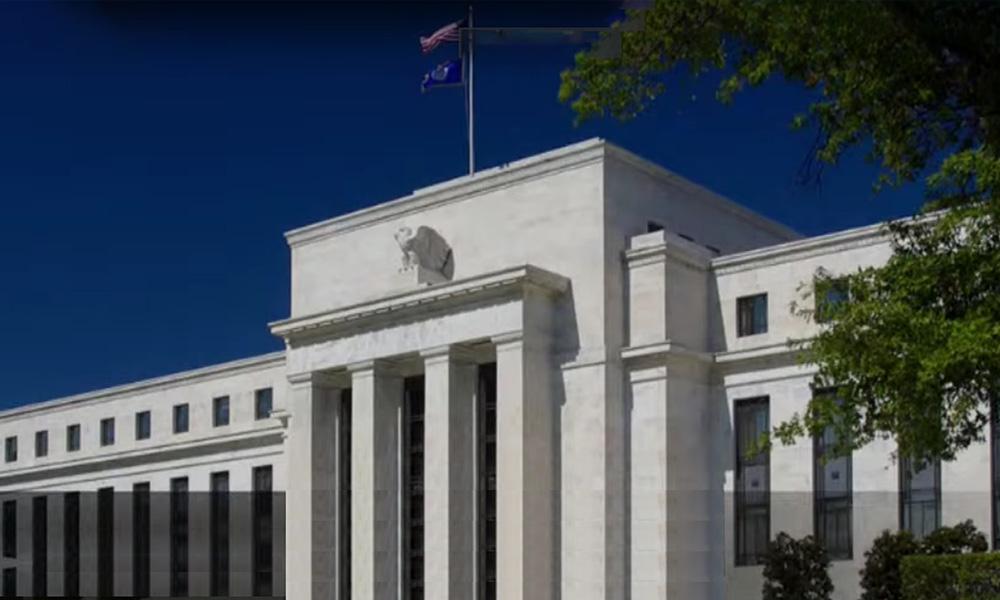
Personnel pressure becomes the norm: Using "old cases" to pressure Cook in an attempt to remove obstacles to interest rate cuts.
The Trump administration recently formally notified Federal Reserve Governor Lisa Cook that it has restarted the process of removing her from office, citing "false statements" in her pre-appointment mortgage applications. The White House stated in its official documents that even if the actions did not constitute a criminal offense, the "gross negligence" exposed was sufficient to question her ability to perform financial oversight duties, and even claimed that the actions posed a potential legal risk. However, the entire accusation originated from Trump's close confidant, former Federal Housing Finance Agency (FHFA) director Bill Pulte. The accusation alleges that Cook simultaneously declared two properties as her primary residence to obtain low-interest loans. Cook's side explicitly responded that this was merely a clerical error, and that the loan documents clearly indicated the second property as a vacation home, a fact fully known to the lending institution. Cook's lawyers argued that this accusation is a "rehashing" of previously dismissed lawsuits, lacking any factual basis, and Cook herself has stated she will fully defend herself in the case. This is not the first time Trump has attempted to remove Cook; the first round of recall attempts earlier this year was dismissed by the U.S. Supreme Court for procedural irregularities. The court ruled that if the president wants to remove a Federal Reserve governor, he must complete a full notification and defense process; moreover, the Federal Reserve Act explicitly states that governors can only be removed from office for "misconduct or gross misconduct" during their term of office, and civil disputes before their appointment do not meet the statutory conditions for removal. The market generally sees through the White House's true intentions: Trump has long been obsessed with the short-term economic stimulus effect of low interest rates, and forcing Cook out of office is intended to free up governorships so that he can install "dovish" officials who are completely subservient to the White House. This operation continues his consistent logic of interfering with the central bank—he has previously publicly pressured former Chairman Powell to cut interest rates on multiple occasions, and even threatened to launch a criminal investigation based on the Fed's renovation budget, attempting to force him to resign early. The core value of central bank independence lies in the fact that politicians naturally tend to favor low interest rates to boost short-term election performance, while the Federal Reserve must rely on counter-cyclical adjustments to suppress inflation. Extensive academic research and historical experience have proven that the absence of administrative intervention by the central bank is the core guarantee of long-term stable inflation and the credibility of the US dollar; that is, intervention will inevitably lead to... The White House's frequent use of administrative and personnel measures to suppress the central bank is eroding the foundation of this century-old system.Walsh is caught in a "verbal hawk" dilemma: frequent private communications exacerbate the market trust crisis.
Kevin Warsh, the newly appointed Federal Reserve Chairman personally nominated by Trump, initially tried to shed the label of "White House puppet," frequently projecting a hawkish image regarding inflation and declaring that the Fed would restart interest rate hikes at any time if inflation remained sticky. However, judging from his statements and market reactions after the July FOMC meeting, his hawkish stance remained merely verbal, with significant concessions and ambiguity in practice. After keeping interest rates unchanged at the July meeting, Warsh failed to clearly explain the underlying logic of the decision at the press conference. Faced with reporters' questions about inflation countermeasures, his attitude was ambiguous: he not only emphasized that interest rate hikes were only an alternative rather than a core tool, but even suggested that rising long-term Treasury yields had already replaced the Fed in fulfilling some of its tightening functions, and even released vague signals of reassessing the 2% inflation target. This statement directly triggered a sharp divergence among traders, and the market began to strongly suspect that Warsh was deliberately avoiding necessary interest rate hikes out of fear of a direct confrontation with Trump, who advocated for interest rate cuts. Market data clearly reflects this pessimistic expectation: after Warsh's press conference, the 30-year Treasury yield continued to climb and remained high. BNP Paribas' chief US economist bluntly stated that the unusual movement in long-term yields reflects a fundamental distrust of the "Federal Reserve under Warsh's leadership." A former PIMCO chief economist commented that Warsh's previously high-profile anti-inflationary persona contrasted sharply with his ambiguity at crucial junctures, significantly limiting his subsequent policy maneuvering. Even more unsettling for the market is the unusually high frequency of private interactions between Warsh and the White House. White House National Economic Council Director Hassett publicly confirmed that Trump and Warsh frequently speak on macroeconomic issues; Trump himself also acknowledged recent conversations, but in the Fed's century-long operational practice, routine private communication between the chairman and the president is highly controversial. Coupled with Trump's past history of blatant interference in monetary policy, the market is unable to dispel its suspicions that the Fed has become a political appendage. Currently, US inflation has significantly exceeded the 2% target for five consecutive years, a situation compounded by multiple supply-side shocks, including Trump's tax cuts, persistent trade barriers, and geopolitical conflicts in the Middle East pushing up energy prices. Although the market expects the July CPI to cool slightly due to a temporary easing of tensions in the Middle East, disruptions in oil supply could trigger another inflation rebound at any time, making it imperative for the Federal Reserve to maintain its tightening stance. Currently, there is no shortage of hawkish forces within the Fed—three voting members voted against maintaining interest rates last month, with only Chairman Warsh's stance wavering. CPI/PPI data have become the focus of short-term speculation, with the US Treasury market explicitly pricing in an "independent risk premium." The entire market is highly focused on the July CPI data released on Wednesday and the PPI data on Thursday. Institutions unanimously expect the core CPI to rise by 0.2% month-on-month in July. Only if the reading is lower than or in line with expectations will it mean that inflation is continuing to decline towards the 2% target; if inflation data exceeds expectations again, the market will force the Fed to raise interest rates.For Walsh, these two inflation reports will be an excellent litmus test:
If inflation data continues to exceed expectations, Warsh will face a dilemma: either fulfill his hawkish promise to raise interest rates, leading to a direct conflict with Trump's advocacy of low interest rates; or remain on hold, allowing inflation to become increasingly sticky and completely eroding the Fed's credibility in combating inflation. The latter would lead to further increases in US Treasury yields, coupled with political risk premiums, significantly raising long-term financing costs for the entire society. If inflation data shows a moderate decline, Warsh could temporarily gain a breather, postponing a full explanation of his policy stance until the Jackson Hole global central bank conference at the end of August. However, this easing will only be temporary, and the trust rift caused by administrative intervention will be extremely difficult to repair in the short term. Analysts point out that Warsh himself advocates downplaying the Fed's forward guidance, believing that reducing predictions about the policy path will allow the market to more objectively reflect the real needs of the real economy. However, this communication model has a fatal flaw: in an environment of strong pressure from the White House and high market vigilance against political intervention, the ambiguity of policy communication will only be interpreted as political compromise, further amplifying market suspicion. The Federal Reserve's abandonment of clear policy communication will deprive the market of an anchor for judging the Fed's true stance, further exacerbating the market volatility triggered by concerns about its independence. In the medium to long term, financial markets have already begun to price in the explicit risks of the Fed's lack of independence. As long as Trump continues to push forward with the process of removing Cook from office, and Warsh continues to maintain frequent private communications with the White House, US Treasury yields will continue to carry a "political risk premium." If the September FOMC meeting chooses to hold rates steady despite rising inflation, the market's trust in the Fed will face another collapse. Furthermore, the September meeting is followed by the US midterm elections, and according to the Fed's historical practice of avoiding its first rate hike before the election, missing the September tightening window could postpone the rate hike cycle until December, by which time inflationary pressures may have already accumulated irreversibly.Conclusion: With political interference becoming the norm, the crisis of confidence in central banks may be protracted.
The Federal Reserve is currently caught in a double trap, beset by internal and external difficulties: Externally, Trump continues to use his personnel appointment and dismissal powers to pressure the Board of Governors, attempting to create a decision-making team that conforms to the White House's demands for interest rate cuts; Internally, Chairman Warsh's high-sounding rhetoric on combating inflation, coupled with his ambiguous practical approach and frequent interactions with the White House, fails to dispel market doubts about his "political compromises." Central bank independence is the foundation of the dollar's credibility as the global reserve currency and the last line of defense for US price stability. Trump's retroactive dismissal of Cook sets a bad precedent for presidents to interfere in Fed personnel appointments based on pre-election flaws, which could easily be followed by subsequent administrations; while Warsh's contradictory statements and frequent calls to the White House are constantly undermining the market's traditional perception of the Fed as "data-dependent and apolitical." Looking ahead, investors need to closely monitor two main themes: Fundamental themes: geopolitical developments and CPI/PPI inflation data, which determine the macroeconomic logic behind the Fed's interest rate hikes; Political themes: the progress of the legal proceedings in Cook's dismissal case and the frequency of Warsh's interactions with the White House. These two major political variables will continue to influence the long-term central pricing of US Treasury bonds, gold, and US stocks. The asset repricing wave triggered by the crisis of the Federal Reserve's independence is far from over.- Risk Warning and Disclaimer
- The market involves risk, and trading may not be suitable for all investors. This article is for reference only and does not constitute personal investment advice, nor does it take into account certain users’ specific investment objectives, financial situation, or other needs. Any investment decisions made based on this information are at your own risk.