Frenzied betting before the data release, followed by a collective sell-off: How will the market digest this CPI data?
2026-08-12 20:42:58
On Wednesday (August 12) at 8:30 PM Beijing time, the U.S. Department of Labor released the July Consumer Price Index (CPI). Data showed that the CPI rose 0.1% month-over-month and 3.4% year-over-year; the core CPI rose 0.2% month-over-month and 2.5% year-over-year, both in complete agreement with market consensus. The unadjusted index was 333.918, slightly below expectations. The energy sub-index fell 1.5% month-over-month, gasoline fell 2.9%, food and housing both rose slightly by 0.1%, and landlord-equivalent rent rose 0.3%. Real wages remained unchanged month-over-month.  Prior to the data release, the market was highly sensitive to the inflation path. The US dollar index, US Treasury yields, and risk assets all showed some degree of pre-pricing. Spot gold had risen by about $10 before the data release, while the USD/JPY pair hovered at relatively high levels. Immediately after the release, stock index futures gave back some of their gains, US Treasury yields briefly fell before rebounding, and both the US dollar index and USD/JPY pair exhibited short-term fluctuations, initially falling before rising.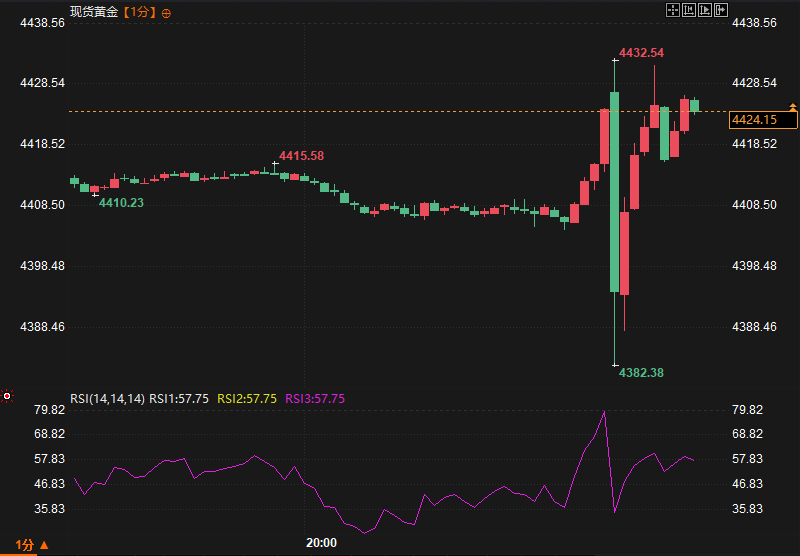
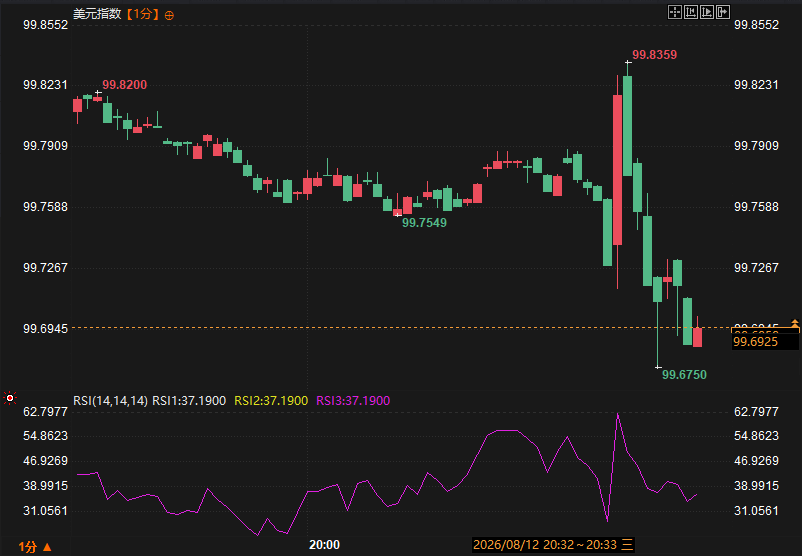
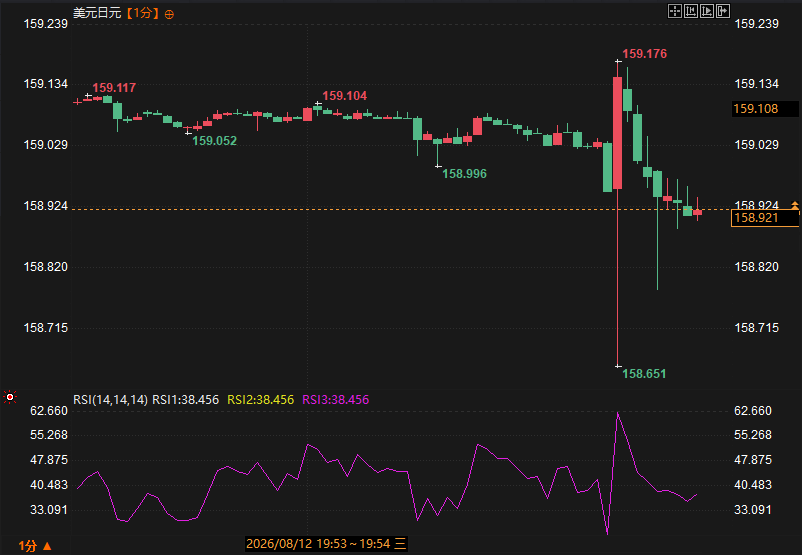
Prior to the data release, the market was highly sensitive to the inflation path. The US dollar index, US Treasury yields, and risk assets all showed some degree of pre-pricing. Spot gold had risen by about $10 before the data release, while the USD/JPY pair hovered at relatively high levels. Immediately after the release, stock index futures gave back some of their gains, US Treasury yields briefly fell before rebounding, and both the US dollar index and USD/JPY pair exhibited short-term fluctuations, initially falling before rising. Deep interconnect analysis
This CPI result was a typical "in line with expectations" scenario, offering neither a clear signal of cooling nor additional evidence of rising inflation. Year-on-year core inflation fell to 2.5% from 2.6% in June, maintaining a moderate pace of 0.2% month-on-month. The decline in energy prices buffered the overall index, but housing and rent-related items remained sticky. Compared to historical trends, June's CPI recorded its first month-on-month decline in six years at 0.4%, reinforcing the market's interpretation of a temporary slowdown in inflation. This data shows a controlled rebound, thus maintaining consistency between short-term and long-term logic: in the short term, it alleviated the sharp pricing of significant data deviations, while in the medium term, it perpetuated the reality that inflation remains above the Fed's target level. The yield curve for 2-year and 10-year US Treasury bonds briefly flattened after the data release before steepening again, with the 10-year yield ultimately falling by about 2.2 basis points to 4.661%, while the 2-year yield remained essentially unchanged at 4.216%. This reaction indicates that the market's adjustment to the policy path was limited. The immediate performance of foreign exchange and precious metals further confirms the rebalancing after expectations were met. The US dollar index initially fell before rising, fluctuating by about 10 points, reaching a high of 99.83; the USD/JPY pair also initially fell before rising, with a range of about 50 points, reaching a low of 158.65. Spot gold fell by about $30 from a high of $4421 to around $4391 after the data release, narrowing its intraday gains. COMEX gold futures futures also adjusted accordingly. These movements indicate that pre-data rush positions were quickly closed after the results were released, rather than forming a one-sided trend. Regarding the market's previously high concern about whether the Japanese authorities intervened, the market provided a clear answer. The USD/JPY pair only fell to a low of 158.65, with a fluctuation range far smaller than the hundreds of points of sharp drops often seen in historical intervention cases, and trading volume did not increase abnormally. Combined with the fact that the data itself met expectations and the fact that the dollar did not show a significant one-sided weakening, it can be judged that official intervention did not occur during this release window. The previous sharp rise in the yen in the context of thin liquidity was more of a technical reaction of algorithmic and stop-loss orders. Opinions were clearly divided before and after the data release. Prior to the release, some institutional accounts emphasized that "the data is highly likely to meet expectations, and the Fed will remain on the sidelines," while retail investors focused more on the potential for an unexpected soft landing and the risk of yen intervention, with a cautious sentiment. After the release, institutional views quickly shifted to "the result has eliminated uncertainty, and the market has entered a normal digestion phase," while retail investors focused on whether the decline in gold and the rebound in the dollar had been fully reflected, and the expected discrepancy was quickly corrected.Trend Outlook
Extrapolating from the market's logic, the expected inflation readings reduced the probability of sharp short-term fluctuations, but did not change the market's reliance on subsequent data. The Federal Reserve will still receive the August CPI and employment reports before its September meeting; therefore, the current recovery in yields and the dollar reflects more of a position rebalancing than a directional reversal. Gold's pullback after its initial surge indicates a contraction in the safe-haven premium, and in the absence of confirmation from intervention, the short-term volatility of USD/JPY remains dominated by the USD/JPY interest rate differential. The overall market will continue to reprice itself around subsequent macroeconomic data, and the market rhythm is more likely to exhibit alternating characteristics of range-bound trading and event-driven movements.Frequently Asked Questions
Q: The CPI data was entirely in line with expectations, so why did gold still see a significant pullback? The market had already pushed gold prices up by about $10 before the data release, a typical example of preemptive buying. After the data was released, safe-haven demand and expectations of further easing did not strengthen further, leading to some positions being quickly liquidated. The $30 drop is a normal adjustment after the expectation was realized. Q: The USD/JPY pair touched a low of 158.65. Was there any sign of intervention by the Japanese authorities? The fluctuation was only about 50 points, and it quickly recovered, which is significantly different from the sharp drops and abnormal trading volume often seen in historical interventions. Considering the data was in line with expectations and the dollar did not weaken unilaterally, the probability of intervention during this window is extremely low. Q: What does the initial drop followed by a rise in US Treasury yields indicate? The market briefly priced in "no additional tightening pressure" immediately after the data release, then quickly returned to the baseline scenario of "inflation remaining sticky and the policy path unchanged," reflected in yields giving back some of their losses and a steepening of the yield curve. Q: Does the pullback in stock index futures indicate a shift in risk appetite? It's more of a technical rebalancing after the data release. While some of the gains were reversed, the overall figure remains positive, indicating that the market has not interpreted the result as a negative shock. Q: What are the key points the market is watching closely going forward? The August CPI and employment data will directly influence the pricing framework for the September policy meeting. The current readings, which are in line with expectations, have reduced short-term volatility, but the medium-term path still depends on whether subsequent data can maintain a moderate trend.- Risk Warning and Disclaimer
- The market involves risk, and trading may not be suitable for all investors. This article is for reference only and does not constitute personal investment advice, nor does it take into account certain users’ specific investment objectives, financial situation, or other needs. Any investment decisions made based on this information are at your own risk.