The momentum of slowing US inflation is strengthening, but the bond market is not buying it.
2026-08-13 21:58:56
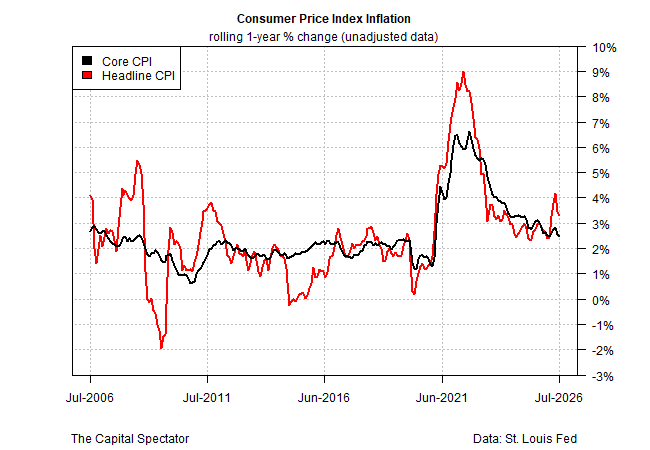
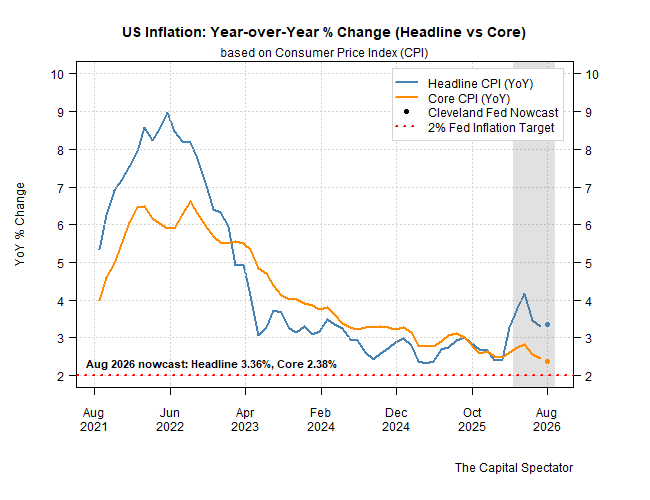
Consumer inflation eased somewhat in July, providing further data support for the Federal Reserve to remain patient in its decision on whether to raise interest rates. While the bond market remains skeptical, yesterday's Consumer Price Index (CPI) readings, along with other alternative CPI benchmarks, suggest that price pressures, if not significantly eased, are at least stabilizing. Looking ahead to the next data update, both immediate CPI forecasts for August point to continued slowing inflation this month.  The main risk factor remains Iran, but if the conflict remains relatively calm, the foundation for a softening price trend appears to have been laid. I. Standard CPI: Year-on-Year Growth Rates Both Decline Let's first look at the rolling one-year standard CPI data. Both overall CPI and core CPI declined in July, indicating that the war-driven inflation surge has peaked. Notably, core CPI continued to slow, with year-on-year growth falling to 2.5%, in line with the pre-war trend in January, and approaching the Fed's 2% target level.
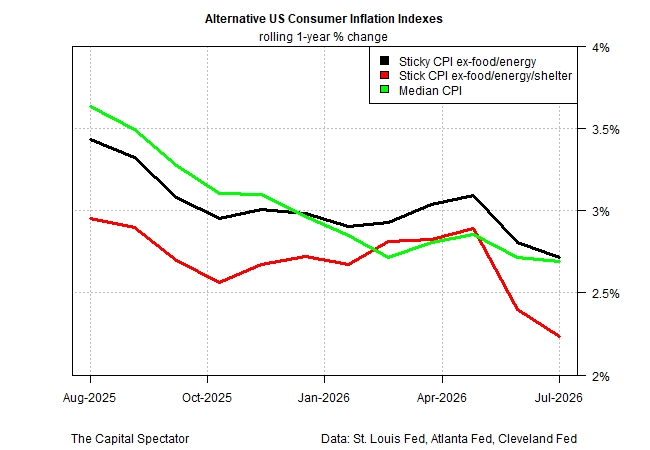
  II. Alternative CPI Indicators: Consistent Signals After Noise Filtering Three alternative CPI indicators released by the Cleveland Fed and the Atlanta Fed are designed to minimize noise and highlight inflation signals. These indicators also show that inflation continued to slow through July.
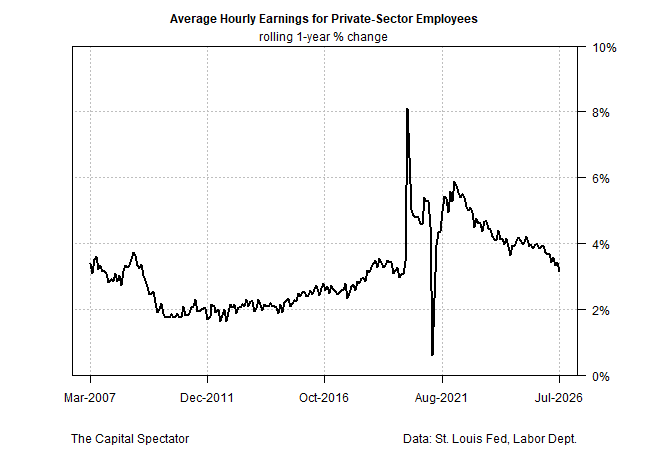
  III. Wage Growth: Easing Inflationary Pressures in the Labor Market The one-year wage trend also points to a slowdown in inflation. Combined with recent weak growth in private sector non-farm payrolls, this data suggests that the labor market's influence on short-term inflation is diminishing.
  IV. August Real-Time Forecast: Disinflation to Continue The Cleveland Fed's real-time CPI forecast model indicates that the slowdown in inflation will continue in the next data update.
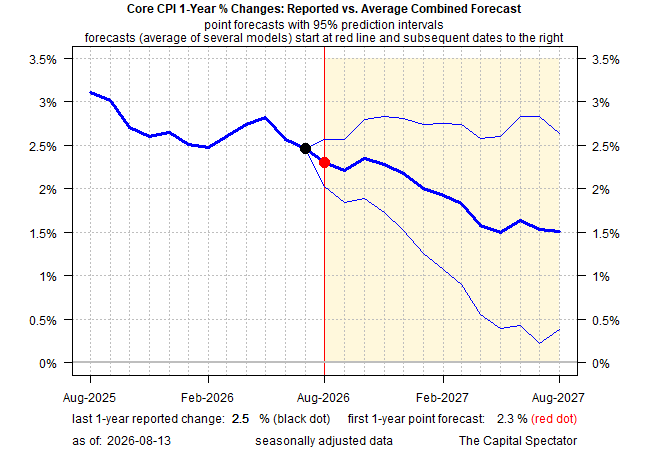
  Capital Spectator's core CPI real-time forecasting model also indicates that inflation will continue to slow in the near term. In recent months, the model has been generally accurate in terms of directional bias. The August outlook, consistent with the Cleveland Fed's real-time forecast, further reinforces the expectation that inflationary pressures will continue to ease.
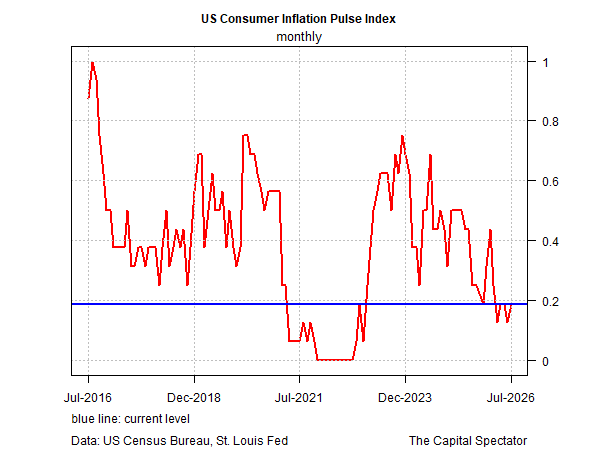
  V. Inflation Pulse Index: Overall Bias Moderifying Another proprietary model run by Capital Spectator also points to a softening of inflationary pressures after the initial surge in the current inflationary environment. The Inflation Pulse Index summarizes the 12-month percentage changes of all 32 components of the CPI and scores each component against a benchmark. The overall score—the Inflation Pulse Index—reflects the overall inflation bias, ranging from 0 (strong deflation/disinflation bias) to 1.0 (strong inflation bias).
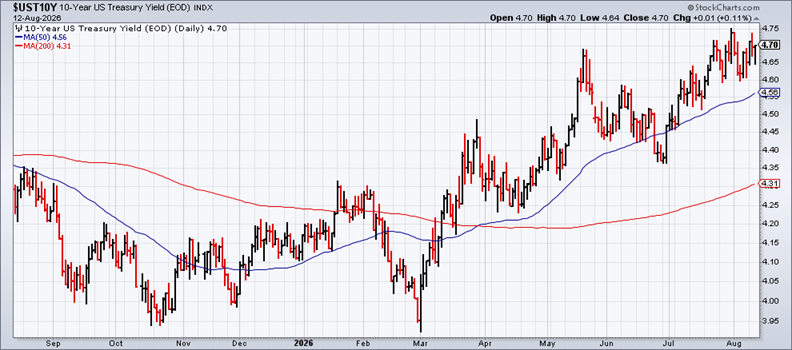
  VI. Risk Warning: Middle East Conflict and Bond Market Skepticism Several factors warrant attention that could derail this slowing inflation "party." Besides the uncertainty surrounding the Middle East conflict, the bond market remains skeptical that inflation risks are easing. For example, the yield on the 10-year US Treasury note rose to 4.70% yesterday, trading near its highest level since early 2025.
  VII. Conclusion: The Tug-of-War Between the Fed and the Bond Market Will Continue The prospect of a Fed rate hike will remain uncertain until the bond market is convinced that the worst of the war-related inflation threat has passed and that slower inflation is the path of least resistance. Although yesterday's CPI data looked encouraging (even if only marginally improved), the Fed does not operate in a vacuum and will continue to engage in a tug-of-war with bond yields when formulating monetary policy.
The main risk factor remains Iran, but if the conflict remains relatively calm, the foundation for a softening price trend appears to have been laid. I. Standard CPI: Year-on-Year Growth Rates Both Decline Let's first look at the rolling one-year standard CPI data. Both overall CPI and core CPI declined in July, indicating that the war-driven inflation surge has peaked. Notably, core CPI continued to slow, with year-on-year growth falling to 2.5%, in line with the pre-war trend in January, and approaching the Fed's 2% target level. II. Alternative CPI Indicators: Consistent Signals After Noise Filtering Three alternative CPI indicators released by the Cleveland Fed and the Atlanta Fed are designed to minimize noise and highlight inflation signals. These indicators also show that inflation continued to slow through July. III. Wage Growth: Easing Inflationary Pressures in the Labor Market The one-year wage trend also points to a slowdown in inflation. Combined with recent weak growth in private sector non-farm payrolls, this data suggests that the labor market's influence on short-term inflation is diminishing. IV. August Real-Time Forecast: Disinflation to Continue The Cleveland Fed's real-time CPI forecast model indicates that the slowdown in inflation will continue in the next data update. Capital Spectator's core CPI real-time forecasting model also indicates that inflation will continue to slow in the near term. In recent months, the model has been generally accurate in terms of directional bias. The August outlook, consistent with the Cleveland Fed's real-time forecast, further reinforces the expectation that inflationary pressures will continue to ease. V. Inflation Pulse Index: Overall Bias Moderifying Another proprietary model run by Capital Spectator also points to a softening of inflationary pressures after the initial surge in the current inflationary environment. The Inflation Pulse Index summarizes the 12-month percentage changes of all 32 components of the CPI and scores each component against a benchmark. The overall score—the Inflation Pulse Index—reflects the overall inflation bias, ranging from 0 (strong deflation/disinflation bias) to 1.0 (strong inflation bias). VI. Risk Warning: Middle East Conflict and Bond Market Skepticism Several factors warrant attention that could derail this slowing inflation "party." Besides the uncertainty surrounding the Middle East conflict, the bond market remains skeptical that inflation risks are easing. For example, the yield on the 10-year US Treasury note rose to 4.70% yesterday, trading near its highest level since early 2025. VII. Conclusion: The Tug-of-War Between the Fed and the Bond Market Will Continue The prospect of a Fed rate hike will remain uncertain until the bond market is convinced that the worst of the war-related inflation threat has passed and that slower inflation is the path of least resistance. Although yesterday's CPI data looked encouraging (even if only marginally improved), the Fed does not operate in a vacuum and will continue to engage in a tug-of-war with bond yields when formulating monetary policy.- Risk Warning and Disclaimer
- The market involves risk, and trading may not be suitable for all investors. This article is for reference only and does not constitute personal investment advice, nor does it take into account certain users’ specific investment objectives, financial situation, or other needs. Any investment decisions made based on this information are at your own risk.