Both the US dollar and crude oil are waiting: the former is waiting for data, and the latter is waiting for an upgrade. Will tonight's retail data break the deadlock?
2026-08-14 14:18:56
On Friday (August 14) during the Asian session, the US dollar index fell after lower-than-expected PPI data, currently trading around 99.80. The probability of the Federal Reserve keeping interest rates unchanged in September has risen from about 45% a week ago to nearly 70%. However, the dollar's decline has not widened further—most of the policy repricing was already completed when the July non-farm payroll and CPI data were released; the PPI merely reinforced existing conclusions rather than introducing new variables. Meanwhile, Brent crude oil stalled near the psychological level of $90. The "stalemate" between the US and Iran is no longer new information, while the bearish signal of US crude oil inventories recording the largest weekly increase since February (9.1 million barrels) is re-entering the market's view without further escalation of geopolitical risks. The dollar and crude oil are at a crossroads: the former needs new data catalysts to start the next round of declines, while the latter needs a substantial upgrade to break through current resistance—both are awaiting the next decisive signal. 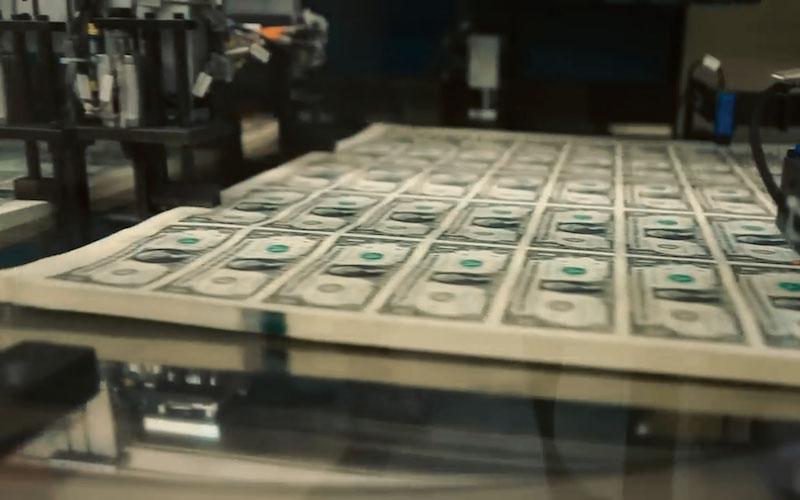
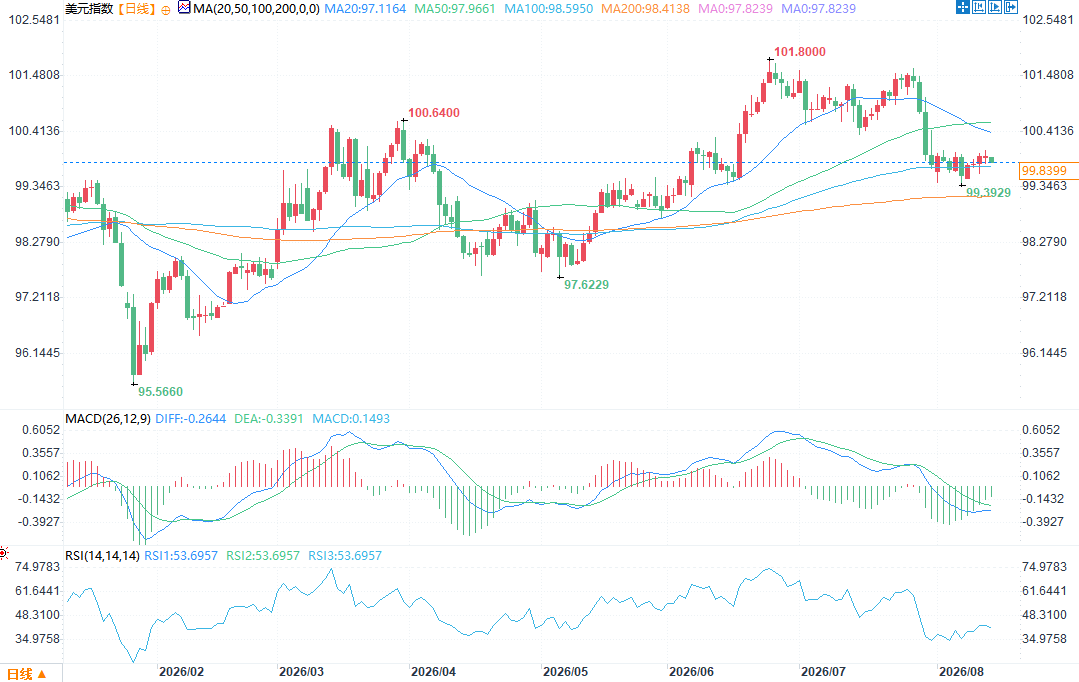 (US Dollar Index Daily Chart, Source: FX678) At 14:17 Beijing time on August 14, the US Dollar Index was at 99.84.
PPI strengthens the Fed's rationale for "holding rates steady," but the dollar lacks new momentum for decline.
The US July PPI, released on Thursday, fell to 0.0% month-on-month from -0.1%, below the expected 0.2%; the year-on-year rate slowed sharply to 4.7% from 5.5%, below the expected 4.9%. Following Wednesday's CPI data showing core inflation falling from 2.6% to 2.5% (returning to pre-Iranian levels), the July price data generally indicates that the inflationary effects of the first oil shock have largely dissipated. Federal funds rate futures show that the market's implied probability of keeping interest rates unchanged in September has risen from about 45% a week ago to nearly 70%, a substantial shift in expectations. However, the dollar's reaction was surprisingly restrained—the dollar was the second weakest G10 currency on Thursday (only stronger than the New Zealand dollar), but the sell-off did not develop into a broad directional move. This is partly because most of the Fed's repricing process was completed before Thursday. The unexpected contraction in July's non-farm payrolls data initiated this process, the CPI eliminated evidence of a resurgence in core inflation, while the PPI merely reinforced conclusions already reached by the market. Therefore, for the US dollar to start the next round of decline, it needs a new data catalyst—August employment and inflation data will be key verifications before the FOMC meeting on September 15-16.Brent crude oil prices stalled at $90, and negative factors related to inventory levels began to emerge.
Brent crude is currently stalling near the psychological level of $90. This is because the geopolitical news flow no longer provides new justification for the expansion of the risk premium. While US-Iran negotiations remain deadlocked, the deadlock itself is no longer new information. Pakistan's defense minister earlier this week hinted that the parties might be "close to some arrangement," offering a mild conciliatory signal, but without any breakthrough in either direction. Current oil prices seem to reflect the existing standoff rather than expectations of an impending escalation. Continued belligerent rhetoric or renewed confirmation of the stalled negotiations may no longer be enough to propel Brent decisively above $90—a new, substantial escalation is needed to further expand the geopolitical premium. Meanwhile, the fundamental picture for crude oil is becoming less favorable. US crude oil inventories recorded a 9.1 million barrel increase this week, the largest weekly increase since February. This bearish signal, previously masked by Middle East risks, will become relevant now that the geopolitical backdrop has stopped deteriorating. This means that "no new news" does not necessarily mean Brent will stabilize near $90. If the US-Iran standoff remains static and the risk premium stops expanding, the bearish inventory background may begin to pull prices back to $87-88, or even deeper into the $85-86 range. The asymmetric situation for crude oil: maintaining a break above $90 may require further developments; without such developments, the 9.1 million barrel inventory increase (the largest weekly increase since February) leaves room for fundamentals to drive Brent prices down.Summarize
In summary, the US dollar and crude oil are approaching similar junctures from opposite directions. The market has received sufficiently mild July inflation data, making a September hold-at-home order increasingly the consensus, but further dollar declines require a new catalyst—August employment and inflation data will be the next key confirmation. The crude oil market has received enough geopolitical tension to push Brent closer to $90, but further gains increasingly require a genuine escalation beyond the current stalemate. Both are waiting: the dollar awaits August data to confirm whether the deteriorating labor market and declining inflation are sustainable; Brent awaits whether the US-Iran standoff has truly worsened or is merely unresolved. Until then, the dollar may fluctuate weakly within its current range, while Brent faces a tug-of-war between bearish inventory data and geopolitical premiums. (US Dollar Index Daily Chart, Source: FX678) At 14:17 Beijing time on August 14, the US Dollar Index was at 99.84.
- Risk Warning and Disclaimer
- The market involves risk, and trading may not be suitable for all investors. This article is for reference only and does not constitute personal investment advice, nor does it take into account certain users’ specific investment objectives, financial situation, or other needs. Any investment decisions made based on this information are at your own risk.