Completely Wrong Expectations: Retail Sales Down 0.6%, Market Sentiments Plunge Between Institutions and Retail Investors
2026-08-14 20:44:57
On Friday (August 14th) at 8:30 PM Beijing time, the US July retail sales data was officially released. The data showed that retail sales fell 0.6% month-on-month, far below the market consensus of +0.1% , marking the largest decline since May of last year. Excluding automobiles, sales fell 0.3% month-on-month (expected +0.2% ), while core retail sales (excluding automobiles, gasoline, building materials, and food services) fell 0.4% (expected +0.3% ). Gasoline sales fell 0.9% month-on-month, and automobile and parts sales fell 1.8% , with multiple sub-categories showing weakness.  Prior to the data release, the market was pricing in a moderate increase, with some traders still anticipating some resilience in consumption. The market reacted swiftly immediately after the release: US Treasury yields continued their decline, with the 10-year Treasury yield last quoted at 4.629% ; spot gold, which had already risen by about $15 before the data release, rose another $12 quickly afterward to around $4381, a daily increase of approximately 0.70%. Overall, the weaker-than-expected retail sales data reinforced market pricing in a slowdown in consumption momentum, leading to immediate adjustments in risk appetite and interest rate expectations.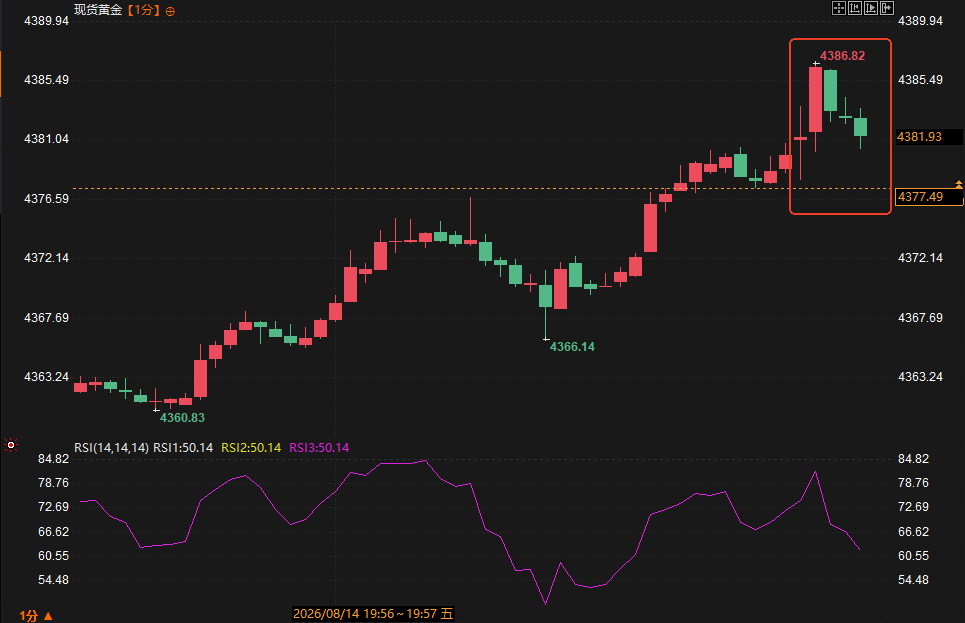
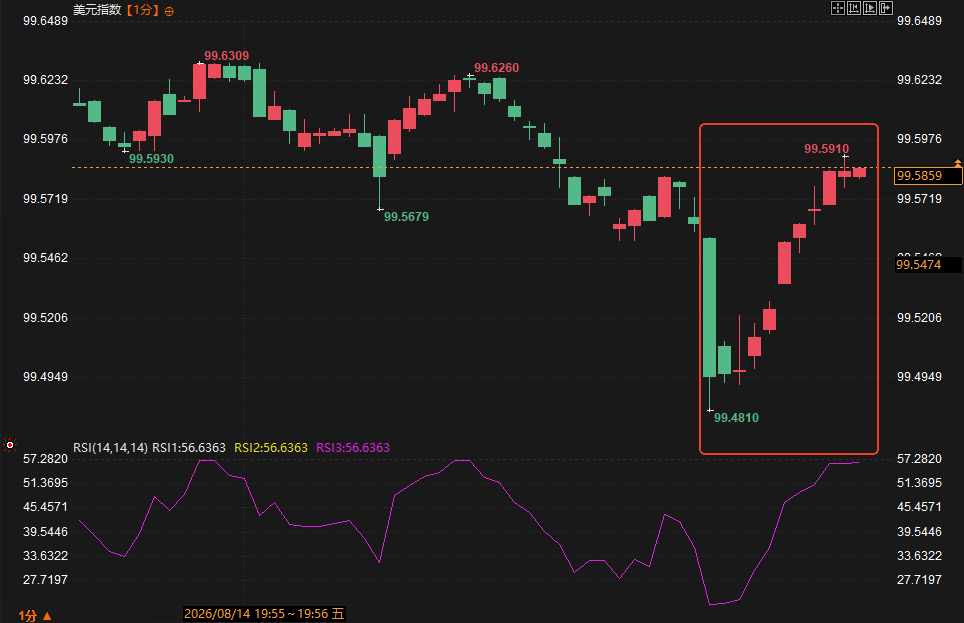
Prior to the data release, the market was pricing in a moderate increase, with some traders still anticipating some resilience in consumption. The market reacted swiftly immediately after the release: US Treasury yields continued their decline, with the 10-year Treasury yield last quoted at 4.629% ; spot gold, which had already risen by about $15 before the data release, rose another $12 quickly afterward to around $4381, a daily increase of approximately 0.70%. Overall, the weaker-than-expected retail sales data reinforced market pricing in a slowdown in consumption momentum, leading to immediate adjustments in risk appetite and interest rate expectations. Deep interconnect analysis
From a fundamental perspective, the decline in July retail sales was supported by multiple short-term factors. Previously strong consumption benefited from the large-scale tax rebate effect, which largely subsided in July. Simultaneously, the earlier-than-expected Amazon Prime Day event in June led to some promotional demand being brought forward, creating a "reversal" effect. Lower gasoline prices suppressed gas station sales, and declining unit sales by automakers also dragged down the overall data. The unexpected decline in core retail sales is highly correlated with consumption expenditure in GDP, so the market interprets it as a signal of a temporary slowdown in short-term consumption momentum. Compared to historical trends, retail sales in previous months had performed steadily, driven by tax rebates and promotions, and the revised June data still showed some resilience. The latest figures show that both overall and core figures were significantly weaker than expected, leading to a divergence between short-term and long-term perspectives: in the short term, the market quickly digested the weak data, with declining interest rates and rising gold prices occurring simultaneously; from a medium-term perspective, the wealth effect from the rising stock market is still seen by some institutions as an important backdrop supporting consumption, and most analysts consider a complete "failure" in consumption to be unlikely. A clear discrepancy emerged between the perspectives of established institutions and retail investors before and after the data release. Before the data release, market consensus leaned towards moderate positive growth, with some institutions emphasizing the normalization following the end of tax rebates, but their estimates of the magnitude of the decline were relatively restrained. After the release, institutions pointed out the unexpected decline in retail sales, but noted that consumer spending might still be supported by the wealth effect from the stock market rally. Analysts such as PNC Financial believed that households were more sensitive to rising gasoline prices, and the consumption environment in the second half of the year would be relatively less relaxed. However, they also pointed out that higher-income and older households were increasingly realizing their wealth gains, making a significant drop in consumption difficult to imagine. At the retail level, immediate discussions focused more on the "weaker-than-expected" data itself, with sentiment reacting more directly to declining interest rates and rising gold prices. Some views quickly linked weak retail sales to expectations of more relaxed interest rates, while institutions emphasized the "temporary" nature of the data and the buffering effect of the wealth effect. Overall, institutions focused more on structural explanations and medium-term resilience, while retail investors were more sensitive to immediate market shocks. From a technical and market perspective, weak data provided immediate support for interest rate-sensitive assets, with Treasury yields continuing their decline and gold rising rapidly due to changes in real interest rate expectations. The impact on related assets can be summarized as follows: a downward trend in interest rates is bullish for gold and also provides some support for the discount logic of overvalued growth assets; however, the consumption data itself puts short-term pressure on consumption-related sectors.Trend Outlook
Extrapolating from the market's logic, this retail sales data reinforces the market's pricing in a temporary slowdown in consumption momentum. The correlation between short-term interest rate declines and gold price strength may continue until subsequent data provides new directional guidance. If subsequent employment, inflation, or consumption-related indicators continue to show signs of cooling, there is still room for adjustment in interest rate expectations; conversely, if the wealth effect and the job market continue to support real spending, this decline is more likely to be seen as a one-off adjustment by the market. The market has already partially priced in the weak data, and subsequent price movements will depend more on the continued interplay between data and expectations, rather than a single point in time.Frequently Asked Questions
Q: Why did July retail sales fall significantly short of expectations? This was mainly due to a combination of factors, including the fading effect of tax rebates, the early implementation of Prime Day promotions leading to a pullback in demand, falling gasoline prices, and declining car sales. It wasn't a single reason. Q: Why did gold rise and continue to strengthen after the data release? The weaker-than-expected retail data reinforced market expectations of a slowdown in economic momentum and declining interest rates. The logic of real interest rates supported gold, resulting in a significant price increase both before and after the release. Q: What are the significant differences in how institutional and retail investors interpret the data? Institutions emphasize the temporary nature of short-term factors and the wealth effect from the stock market rally supporting consumption; retail investors focus more on the unexpectedly weak data itself and the resulting immediate reaction of interest rates and gold. Q: What does the decline in core retail sales mean for the economy? Core retail sales are highly correlated with consumption expenditure in GDP. Its unexpected decline suggests a slowdown in short-term consumption momentum, but most analysts still believe that the probability of a broad-based and significant decline in consumption is low, supported by the wealth effect. Q: What subsequent signals might the market be watching? The market will continue to monitor subsequent consumption, employment, and inflation data to determine whether the current retail decline is a temporary adjustment or a trend change, thereby further adjusting interest rates and risk asset pricing.- Risk Warning and Disclaimer
- The market involves risk, and trading may not be suitable for all investors. This article is for reference only and does not constitute personal investment advice, nor does it take into account certain users’ specific investment objectives, financial situation, or other needs. Any investment decisions made based on this information are at your own risk.