Why is the continued depreciation of the yen so difficult to curb?
2026-08-15 01:56:55
In August 2026, the Japanese yen resumed its depreciation trend. Even with the US and Japan spending tens of billions of dollars to intervene in the foreign exchange market and briefly boost the exchange rate, only short-term stabilization was achieved, and the exchange rate quickly returned to a downward trend, approaching a nearly 40-year low of 160 yen to the dollar. The core reason for the irreversible depreciation of the yen this time is not a simple short-term fluctuation, but rather a combination of multiple factors, including long-term fundamental imbalances, policy contradictions, pessimistic market expectations, and the policy game between the US and Japan. A one-time foreign exchange market intervention could not reverse the downward trend. The following is a core in-depth analysis and interpretation by authoritative experts. 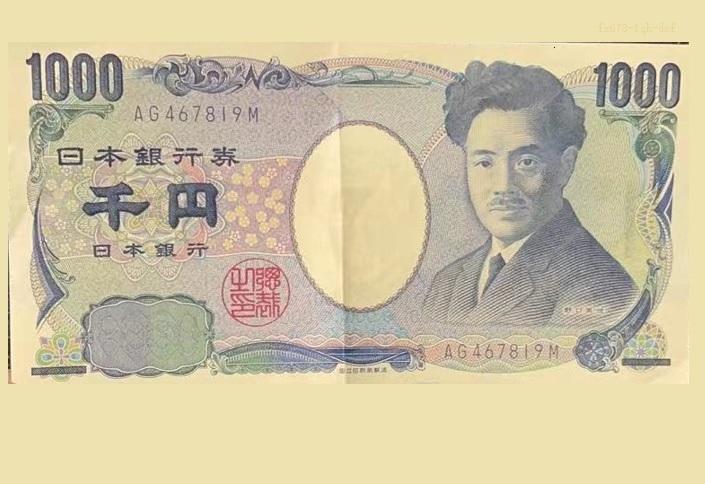 I. Root Cause: Long-Term Interest Rate Imbalance Between the US and Japan Lays the Foundation for the Yen's Depreciation Trend The current multi-year depreciation cycle of the yen began in 2022 with the divergence in monetary policies between the US and Japan. This is the core fundamental factor determining the yen's long-term trend and the root of all problems. To combat high inflation in the post-pandemic era, the Federal Reserve initiated an aggressive interest rate hike cycle, continuously raising the yields of dollar assets; while the Bank of Japan, to support its weak economy, maintained a long-term negative interest rate policy, keeping market interest rates at extremely low levels. This inverse exchange of monetary policies between the two countries has continuously widened the US-Japan interest rate differential: in 2023, US interest rates exceeded 5%, while Japanese interest rates remained in the negative range of -0.1%. This huge yield gap has led to a continuous sell-off of yen assets and an influx of high-yield dollar assets by global capital, forming a fixed trend of "capital outflow and yen weakening." Even if the Bank of Japan ends its 17-year period of zero or negative interest rates and begins a rate hike cycle in 2024, maintaining a pace of rate hikes every six months, the small magnitude and conservative pace of these hikes will be far from enough to close the long-accumulated interest rate differential and fundamentally reverse capital flows. II. Core Negative Factor: Japan's Uncontrolled Fiscal Policy Completely Shakes Market Confidence. After the Sanae Takaichi government took office in October 2025, it became a key driver of a new round of accelerated yen depreciation, completely shattering market expectations for a balanced fiscal and monetary policy in Japan. At the beginning of her term, Takaichi explicitly opposed rate hikes, publicly criticizing the Bank of Japan's rate hikes as "absurd," and firmly pursued a combination of loose, low-interest-rate policies and large-scale fiscal stimulus. To stimulate the economy and improve people's livelihoods, her government implemented several easing policies: abolishing the gasoline tax surcharge, restarting electricity and fuel subsidies, and reducing the food consumption tax (from 8% to 1% for two years). The continuous expansion of government spending further exacerbated Japan's fiscal pressure. Japan already had a fatal debt problem, with its public debt far exceeding its economic size and reaching more than twice its GDP. Japan's continued expansion of spending and loose fiscal policy on a high-debt foundation have led global investors to extremely pessimistic expectations regarding the sustainability of Japan's fiscal policy. The market is no longer simply focused on short-term interest rate fluctuations, but rather on the risk of long-term fiscal instability in Japan. This collapse in confidence has deprived the yen of its core support and is the core reason why subsequent interest rate hikes have failed to boost the exchange rate. III. New Market Characteristics: Decoupling of Exchange Rates and Interest Rate Differentials, and Complete Ineffectiveness of Policy Intervention This is the most crucial new development in the yen's depreciation in 2026, and also the most unexpected aspect for the market. In previous years, the yen's rise and fall were basically tied to the US-Japan interest rate differential; a narrowing differential led to yen appreciation, and a widening differential led to yen depreciation. However, after Sanae Takashi took office, this classic logic completely failed. Currently, the Bank of Japan is in a continuous interest rate hike cycle, which theoretically should gradually narrow the US-Japan interest rate differential and benefit yen appreciation, but in reality, the yen continues to depreciate. The core reason is that the negative impact of fiscal policy has completely outweighed the positive effects of monetary policy. The market believes that a conservative pace of interest rate hikes is simply insufficient to offset the debt risks brought about by aggressive fiscal expansion. The short-term benefits of interest rate adjustments are completely offset by long-term fiscal risks, leading to a malfunction in policy regulation. IV. Core of Intervention Failure: One-off Foreign Exchange Market Operations Cannot Reverse Underlying Fundamentals. In late July, the US and Japan jointly intervened heavily in the foreign exchange market, briefly pushing the yen up to 155 yen to the dollar. However, the rebound was short-lived, quickly falling back to the 159 level. This failed intervention fully exposed the limitations of short-term foreign exchange market operations. Foreign exchange market intervention is a short-term technical stabilization measure; it can only repair disorderly market fluctuations and alleviate short-term depreciation panic, but it cannot change the core fundamentals of interest rate divergence, fiscal imbalance, and capital outflow. As long as Japan's underlying structure of loose fiscal policy and delayed interest rate hikes remains unchanged, the core logic of shorting the yen will not disappear. All interventions can only bring temporary rebounds and cannot form a long-term appreciation trend. V. US-Japan Dual Game: Dilemma of Interest Rate Hikes, Risk of Cross-border Backlash The yen's depreciation is not simply a Japanese problem; it also involves the core interests of the United States, creating a policy dilemma. On the one hand, the US continues to pressure Japan to raise interest rates, believing that a weak yen will exacerbate imported inflation in Japan, forcing Japan to tighten its monetary policy. On the other hand, excessive interest rate hikes by Japan could trigger a chain reaction of negative consequences. Japan is the world's largest foreign holder of US Treasury bonds. If Japan continues to raise interest rates significantly, the attractiveness of its domestic assets will increase, leading to a large influx of capital from US Treasury bonds back to Japan, depressing US Treasury bond prices and pushing up US borrowing costs. Currently, US Treasury yields are at multi-decade highs since 2001, and the US cannot withstand further upward pressure on US Treasury bond yields. This is the core reason why the US and Japan dare not intervene forcefully and continuously: they need to stabilize the yen exchange rate while avoiding excessive interest rate hikes by Japan that could negatively impact the US financial market, severely compressing their policy space. VI. Expert Opinions Marcel Tillient, Head of Asia Pacific at Capital Economics, stated that the yen's depreciation is an inevitable result driven by fundamentals, and short-term intervention has no long-term value; the depreciation trend is difficult to reverse. The market's current core anxiety is not short-term exchange rate fluctuations, but rather the long-term uncertainty surrounding Japan's fiscal policy. Even though Japan's current fiscal easing has not yet triggered an explicit crisis, the Takaichi Sanae government's continued tendency to expand spending has led investors to anticipate that Japan will fall into a state of excessive fiscal imbalance in the future. Given that the underlying logic of debt risks, policy biases, and capital flows remains unchanged, any single intervention in the foreign exchange market or a small interest rate hike is merely a superficial fix and cannot reverse the market's long-term pessimistic expectations; the overall trend of yen depreciation will not change. VII. Potential Market Turnarounds Currently, there are only two potential positive factors that could alleviate the yen's weakness: First, the market's overly pessimistic interpretation of Japanese fiscal risks will lead investors to reassess Japan's fiscal resilience (the growth rate of Japanese government investment income has exceeded the growth rate of debt interest payments, and the debt-to-GDP ratio continues to decline); second, Japan's implementation of supporting reforms, in addition to continued interest rate hikes, will guide large amounts of overseas capital, such as domestic pension funds, back to the country, fundamentally improving the capital outflow pattern. However, under the current policy environment, these two turning points are unlikely to materialize in the short term.
I. Root Cause: Long-Term Interest Rate Imbalance Between the US and Japan Lays the Foundation for the Yen's Depreciation Trend The current multi-year depreciation cycle of the yen began in 2022 with the divergence in monetary policies between the US and Japan. This is the core fundamental factor determining the yen's long-term trend and the root of all problems. To combat high inflation in the post-pandemic era, the Federal Reserve initiated an aggressive interest rate hike cycle, continuously raising the yields of dollar assets; while the Bank of Japan, to support its weak economy, maintained a long-term negative interest rate policy, keeping market interest rates at extremely low levels. This inverse exchange of monetary policies between the two countries has continuously widened the US-Japan interest rate differential: in 2023, US interest rates exceeded 5%, while Japanese interest rates remained in the negative range of -0.1%. This huge yield gap has led to a continuous sell-off of yen assets and an influx of high-yield dollar assets by global capital, forming a fixed trend of "capital outflow and yen weakening." Even if the Bank of Japan ends its 17-year period of zero or negative interest rates and begins a rate hike cycle in 2024, maintaining a pace of rate hikes every six months, the small magnitude and conservative pace of these hikes will be far from enough to close the long-accumulated interest rate differential and fundamentally reverse capital flows. II. Core Negative Factor: Japan's Uncontrolled Fiscal Policy Completely Shakes Market Confidence. After the Sanae Takaichi government took office in October 2025, it became a key driver of a new round of accelerated yen depreciation, completely shattering market expectations for a balanced fiscal and monetary policy in Japan. At the beginning of her term, Takaichi explicitly opposed rate hikes, publicly criticizing the Bank of Japan's rate hikes as "absurd," and firmly pursued a combination of loose, low-interest-rate policies and large-scale fiscal stimulus. To stimulate the economy and improve people's livelihoods, her government implemented several easing policies: abolishing the gasoline tax surcharge, restarting electricity and fuel subsidies, and reducing the food consumption tax (from 8% to 1% for two years). The continuous expansion of government spending further exacerbated Japan's fiscal pressure. Japan already had a fatal debt problem, with its public debt far exceeding its economic size and reaching more than twice its GDP. Japan's continued expansion of spending and loose fiscal policy on a high-debt foundation have led global investors to extremely pessimistic expectations regarding the sustainability of Japan's fiscal policy. The market is no longer simply focused on short-term interest rate fluctuations, but rather on the risk of long-term fiscal instability in Japan. This collapse in confidence has deprived the yen of its core support and is the core reason why subsequent interest rate hikes have failed to boost the exchange rate. III. New Market Characteristics: Decoupling of Exchange Rates and Interest Rate Differentials, and Complete Ineffectiveness of Policy Intervention This is the most crucial new development in the yen's depreciation in 2026, and also the most unexpected aspect for the market. In previous years, the yen's rise and fall were basically tied to the US-Japan interest rate differential; a narrowing differential led to yen appreciation, and a widening differential led to yen depreciation. However, after Sanae Takashi took office, this classic logic completely failed. Currently, the Bank of Japan is in a continuous interest rate hike cycle, which theoretically should gradually narrow the US-Japan interest rate differential and benefit yen appreciation, but in reality, the yen continues to depreciate. The core reason is that the negative impact of fiscal policy has completely outweighed the positive effects of monetary policy. The market believes that a conservative pace of interest rate hikes is simply insufficient to offset the debt risks brought about by aggressive fiscal expansion. The short-term benefits of interest rate adjustments are completely offset by long-term fiscal risks, leading to a malfunction in policy regulation. IV. Core of Intervention Failure: One-off Foreign Exchange Market Operations Cannot Reverse Underlying Fundamentals. In late July, the US and Japan jointly intervened heavily in the foreign exchange market, briefly pushing the yen up to 155 yen to the dollar. However, the rebound was short-lived, quickly falling back to the 159 level. This failed intervention fully exposed the limitations of short-term foreign exchange market operations. Foreign exchange market intervention is a short-term technical stabilization measure; it can only repair disorderly market fluctuations and alleviate short-term depreciation panic, but it cannot change the core fundamentals of interest rate divergence, fiscal imbalance, and capital outflow. As long as Japan's underlying structure of loose fiscal policy and delayed interest rate hikes remains unchanged, the core logic of shorting the yen will not disappear. All interventions can only bring temporary rebounds and cannot form a long-term appreciation trend. V. US-Japan Dual Game: Dilemma of Interest Rate Hikes, Risk of Cross-border Backlash The yen's depreciation is not simply a Japanese problem; it also involves the core interests of the United States, creating a policy dilemma. On the one hand, the US continues to pressure Japan to raise interest rates, believing that a weak yen will exacerbate imported inflation in Japan, forcing Japan to tighten its monetary policy. On the other hand, excessive interest rate hikes by Japan could trigger a chain reaction of negative consequences. Japan is the world's largest foreign holder of US Treasury bonds. If Japan continues to raise interest rates significantly, the attractiveness of its domestic assets will increase, leading to a large influx of capital from US Treasury bonds back to Japan, depressing US Treasury bond prices and pushing up US borrowing costs. Currently, US Treasury yields are at multi-decade highs since 2001, and the US cannot withstand further upward pressure on US Treasury bond yields. This is the core reason why the US and Japan dare not intervene forcefully and continuously: they need to stabilize the yen exchange rate while avoiding excessive interest rate hikes by Japan that could negatively impact the US financial market, severely compressing their policy space. VI. Expert Opinions Marcel Tillient, Head of Asia Pacific at Capital Economics, stated that the yen's depreciation is an inevitable result driven by fundamentals, and short-term intervention has no long-term value; the depreciation trend is difficult to reverse. The market's current core anxiety is not short-term exchange rate fluctuations, but rather the long-term uncertainty surrounding Japan's fiscal policy. Even though Japan's current fiscal easing has not yet triggered an explicit crisis, the Takaichi Sanae government's continued tendency to expand spending has led investors to anticipate that Japan will fall into a state of excessive fiscal imbalance in the future. Given that the underlying logic of debt risks, policy biases, and capital flows remains unchanged, any single intervention in the foreign exchange market or a small interest rate hike is merely a superficial fix and cannot reverse the market's long-term pessimistic expectations; the overall trend of yen depreciation will not change. VII. Potential Market Turnarounds Currently, there are only two potential positive factors that could alleviate the yen's weakness: First, the market's overly pessimistic interpretation of Japanese fiscal risks will lead investors to reassess Japan's fiscal resilience (the growth rate of Japanese government investment income has exceeded the growth rate of debt interest payments, and the debt-to-GDP ratio continues to decline); second, Japan's implementation of supporting reforms, in addition to continued interest rate hikes, will guide large amounts of overseas capital, such as domestic pension funds, back to the country, fundamentally improving the capital outflow pattern. However, under the current policy environment, these two turning points are unlikely to materialize in the short term.
- Risk Warning and Disclaimer
- The market involves risk, and trading may not be suitable for all investors. This article is for reference only and does not constitute personal investment advice, nor does it take into account certain users’ specific investment objectives, financial situation, or other needs. Any investment decisions made based on this information are at your own risk.