The first joint US-Japan intervention in 30 years has failed, and the yen's volatility will impact the global financial system.
2026-08-17 15:07:03
The joint foreign exchange intervention by the US and Japan, the first in 30 years, was initially hoped to stabilize the continuously plummeting yen. However, this large-scale intervention only provided a temporary boost and failed to truly quell the panic in the foreign exchange market. Intervention measures can only alleviate the surface symptoms of yen depreciation, but cannot address deeper issues such as high debt levels and lagging monetary policy. The unique intervention model also exposed the US's own debt concerns. Many market researchers warn that as a core funding currency for global carry trades, a sharp fluctuation in the yen could potentially destabilize the entire global financial system.
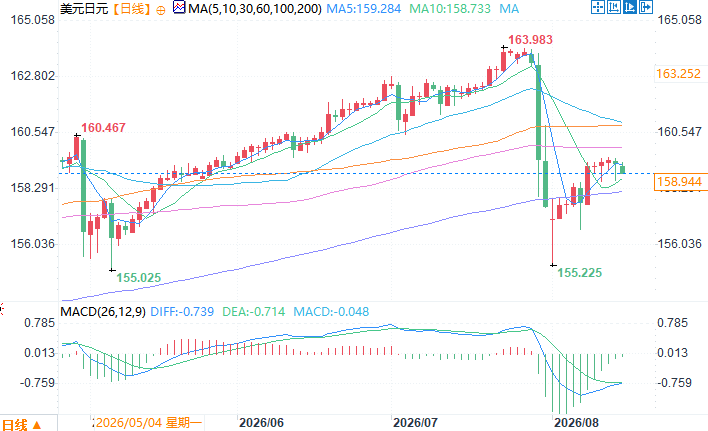 USD/JPY Daily Chart Source: FX678 At 15:05 Beijing time on August 17, USD/JPY was trading at 158.94/95.
Massive interventions have short-lived effects and are merely a temporary fix.
According to records from US Treasury Secretary Scott Bessent, the US invested between $5 billion and $10 billion to buy yen, while Japan's intervention exceeded $50 billion. After the intervention, the USD/JPY exchange rate quickly fell from nearly 164 to around 157, but the positive effect was quickly exhausted, and on Friday (August 14), the exchange rate rebounded to around 159 and fluctuated. Fundamentally, the yen's weakness stems from multiple structural problems: Japan's government debt-to-GDP ratio has exceeded 200%, fiscal stimulus plans will further expand the fiscal deficit, and the Bank of Japan's interest rate hike pace has remained conservative in the face of rising inflation. These problems cannot be resolved by short-term foreign exchange market intervention. Even with cooling US inflation data and the market lowering its expectations for Fed rate hikes, the yen still failed to maintain the gains brought by the intervention, demonstrating the strong pressure from fundamental factors.Intervention tactics harbor hidden risks, sending warning signals to the global financial system.
The method of this intervention has sparked widespread discussion in the market. The US chose to sell euros to buy yen, without using dollars; Japan, on the other hand, used its holdings of US Treasury bonds as collateral for financing, without directly selling them. Ed Yardeni, a senior Wall Street analyst, stated in a research report last Tuesday that traders are currently highly wary of the risks of yen carry trades. The market relies on low-cost yen borrowing to invest in high-yield assets globally, and the entire financial system resembles a giant Jenga tower, with the yen being one of the load-bearing blocks. Japan holds over one trillion dollars in US Treasury bonds, making it the largest foreign holder of US Treasury bonds. If Japan were to directly sell its US Treasury bonds, it would push up US Treasury yields and increase the pressure on US debt payments. Yardeni stated that the long-standing expectation of Asian central banks to buy US Treasury bonds is changing, and every adjustment in this variable could trigger a chain reaction. Compared to the 1998 Asian financial crisis, Asian economies are now more resilient, but potential risks cannot be ignored. Robin Brooks, a senior fellow at the Brookings Institution, stated that the environment of declining relative interest rates in the United States should have been beneficial to the yen, but the yen has continued to weaken, which is a highly alarming signal. He has long warned that the continued depreciation of the yen is brewing a debt crisis, and that simple foreign exchange intervention will eventually fail, only creating a temporary illusion of stability. He added that to truly boost the yen, the Bank of Japan must make significant policy adjustments, reduce its bond purchases, and push up the yields on long-term Japanese government bonds, thereby narrowing the interest rate differential with US Treasuries.Conclusion
In summary, the joint US-Japan intervention only resulted in a short-term rebound in the yen and cannot reverse the structural weakness. The special operations employed in the intervention reflect the deep-seated concerns of the US regarding the stability of the US Treasury market. As a crucial pillar of global liquidity, the stability of yen carry trades influences global asset prices; therefore, the subsequent policy shift by the Bank of Japan will be the key factor determining the yen's exchange rate trajectory. USD/JPY Daily Chart Source: FX678 At 15:05 Beijing time on August 17, USD/JPY was trading at 158.94/95.
- Risk Warning and Disclaimer
- The market involves risk, and trading may not be suitable for all investors. This article is for reference only and does not constitute personal investment advice, nor does it take into account certain users’ specific investment objectives, financial situation, or other needs. Any investment decisions made based on this information are at your own risk.