The Canadian dollar is supported by high inflation and oil prices, and the USD/CAD pair continues to fluctuate at low levels, awaiting stabilization.
2026-08-18 11:16:57
The USD/CAD pair remained around 1.3870 in early Asian trading on Tuesday, having rebounded overnight from the 200-day simple moving average around 1.3845 before consolidating in a narrow range. The exchange rate has recently been influenced by two opposing forces: on the one hand, renewed inflation in Canada, coupled with strong international oil prices, has strengthened the Canadian dollar's commodity currency characteristics; on the other hand, escalating risks in the Middle East and inflation concerns stemming from rising energy prices have revived safe-haven demand for the US dollar.  Canada's Consumer Price Index (CPI) rose 0.5% month-over-month in July, with the year-over-year increase reaching 3.0%, higher than the market expectation of 2.9% and also higher than June's 2.8%. Meanwhile, Canada's core inflation gauge rose 2.3% year-over-year, accelerating from the previous 2.1%, and the monthly increase also rose from 0.1% to 0.2%. This renewed acceleration in Canadian inflation has further reduced the likelihood of a significant easing by the Bank of Canada in the short term. From a monetary policy perspective, the Bank of Canada still has reason to remain cautious. Although economic growth faces some pressure, the return of inflation to around 3% means policymakers need to avoid prematurely signaling further easing. Therefore, the Canadian dollar has received some short-term support from interest rate expectations. However, the market currently tends to believe that the Bank of Canada will maintain its policy rate unchanged for the remainder of the year, meaning that while inflation data is positive for the Canadian dollar, it is not enough to drive a sustained one-sided appreciation trend. Oil prices have become an important external variable affecting the USD/CAD exchange rate. WTI crude oil is currently hovering around $84, and the supply risk premium in the international energy market has resurfaced. Because Canada's economy and export structure are highly correlated with energy prices, rising oil prices typically benefit the Canadian dollar. Therefore, the recent strength in oil prices has been a significant factor suppressing the USD/CAD exchange rate. However, rising oil prices are not entirely beneficial for the Canadian dollar. If energy prices continue to rise rapidly and push up US inflation expectations again, the market may reduce its bets on the Federal Reserve's easing policies, thus supporting the US dollar. This means that the relationship between oil and USD/CAD is not a simple negative correlation. In the current environment, rising oil prices provide direct support for the Canadian dollar, but if oil prices rise too quickly and evolve into an inflation trade, the US dollar's interest rate advantage and safe-haven status may regain dominance. In the US, the market is awaiting the Federal Reserve meeting minutes for more clues about the future policy path. Recent cooling in the US job market and more moderate inflation have lowered market expectations for further interest rate hikes. However, uncertainty surrounding energy prices remains a significant risk for the Federal Reserve. If the meeting minutes reveal policymakers' concerns about recurring inflation, the US dollar may receive new support and drive a rebound in USD/CAD. Meanwhile, the situation in the Middle East remains a significant short-term variable for exchange rates. Persistent regional risks will not only affect oil prices but also alter the risk appetite of global funds. Crude oil prices could rise rapidly should new supply disruption concerns emerge in the market; conversely, if risk sentiment deteriorates further, the safe-haven demand for the US dollar could also increase. Therefore, USD/CAD may experience a short-term two-way dynamic where "oil prices benefit the Canadian dollar, while safe-haven demand benefits the US dollar." From a market sentiment perspective, investors are currently not clearly aligned with a particular direction. Rising Canadian inflation and oil prices limit the downside for USD/CAD, while the safe-haven appeal of the US dollar prevents a rapid decline. The market is therefore more inclined to await new macroeconomic catalysts, particularly the Fed meeting minutes, US economic data, and whether crude oil prices break through key resistance levels. From a daily chart perspective, USD/CAD is currently testing a significant support area near the 200-day simple moving average, with the key level currently around 1.3850. The price finding support in this area indicates that bulls are still attempting to maintain the medium-term structure. If the price can regain a foothold above 1.3900, the short-term rebound is expected to continue, further testing resistance levels near 1.3950 and 1.4000; a break above 1.4000 could lead to further expansion towards the 1.4050 area. Conversely, if USD/CAD continues to be under pressure and effectively breaks below the 1.3850 area, the 200-day moving average support will fail, and the technical picture will release a more obvious bearish signal. At that point, the exchange rate may seek new support in the 1.3800 or even 1.3750 area. Currently, the market does not show a clear one-sided trend, so 1.3850 and 1.4000 constitute the most noteworthy upper and lower boundaries in the short term. From the 4-hour chart, USD/CAD formed an initial bottom near 1.3850 and entered a period of consolidation, but the rebound strength remains limited. 1.3900 is the first hurdle that short-term bulls need to break through. If it breaks through and holds above this level, short-term momentum will further improve; if the price breaks below 1.3850 again, the bears may regain the initiative. Overall, the 4-hour trend leans towards range-bound trading, and short-term trading is more suitable for waiting for a breakout at key levels to confirm the direction.
 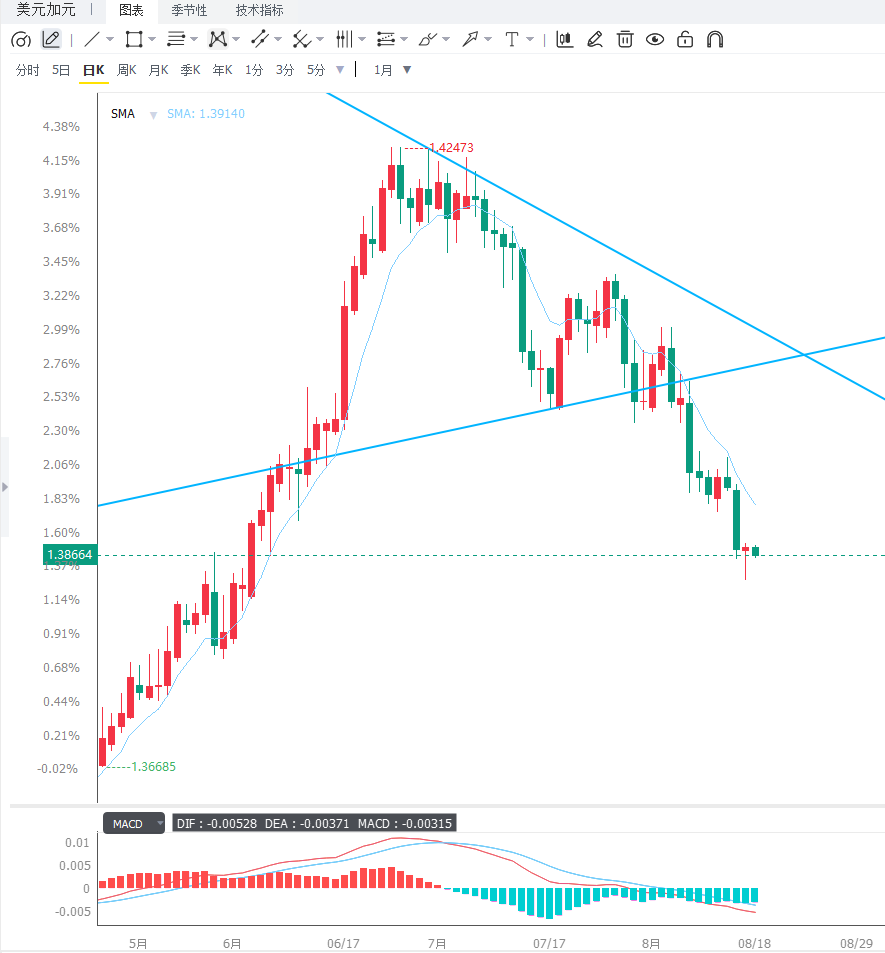 The USD/CAD pair is currently in a phase of tug-of-war between rising Canadian inflation, increasing oil prices, and safe-haven demand for the US dollar. The 200-day moving average around 1.3850 is the most important technical support level for the pair. As long as this level holds, USD/CAD still has room to rebound; if it falls below this level, the medium-term technical structure may weaken further. Going forward, the market will need to focus on the Fed meeting minutes, US inflation and employment expectations, changes in Canadian monetary policy, and oil price movements. If oil prices continue to rise and Canadian inflation remains high, the Canadian dollar may receive further support; if rising energy prices reignite US inflation expectations while demand for the US dollar strengthens, USD/CAD may retest the 1.4000 level.
Canada's Consumer Price Index (CPI) rose 0.5% month-over-month in July, with the year-over-year increase reaching 3.0%, higher than the market expectation of 2.9% and also higher than June's 2.8%. Meanwhile, Canada's core inflation gauge rose 2.3% year-over-year, accelerating from the previous 2.1%, and the monthly increase also rose from 0.1% to 0.2%. This renewed acceleration in Canadian inflation has further reduced the likelihood of a significant easing by the Bank of Canada in the short term. From a monetary policy perspective, the Bank of Canada still has reason to remain cautious. Although economic growth faces some pressure, the return of inflation to around 3% means policymakers need to avoid prematurely signaling further easing. Therefore, the Canadian dollar has received some short-term support from interest rate expectations. However, the market currently tends to believe that the Bank of Canada will maintain its policy rate unchanged for the remainder of the year, meaning that while inflation data is positive for the Canadian dollar, it is not enough to drive a sustained one-sided appreciation trend. Oil prices have become an important external variable affecting the USD/CAD exchange rate. WTI crude oil is currently hovering around $84, and the supply risk premium in the international energy market has resurfaced. Because Canada's economy and export structure are highly correlated with energy prices, rising oil prices typically benefit the Canadian dollar. Therefore, the recent strength in oil prices has been a significant factor suppressing the USD/CAD exchange rate. However, rising oil prices are not entirely beneficial for the Canadian dollar. If energy prices continue to rise rapidly and push up US inflation expectations again, the market may reduce its bets on the Federal Reserve's easing policies, thus supporting the US dollar. This means that the relationship between oil and USD/CAD is not a simple negative correlation. In the current environment, rising oil prices provide direct support for the Canadian dollar, but if oil prices rise too quickly and evolve into an inflation trade, the US dollar's interest rate advantage and safe-haven status may regain dominance. In the US, the market is awaiting the Federal Reserve meeting minutes for more clues about the future policy path. Recent cooling in the US job market and more moderate inflation have lowered market expectations for further interest rate hikes. However, uncertainty surrounding energy prices remains a significant risk for the Federal Reserve. If the meeting minutes reveal policymakers' concerns about recurring inflation, the US dollar may receive new support and drive a rebound in USD/CAD. Meanwhile, the situation in the Middle East remains a significant short-term variable for exchange rates. Persistent regional risks will not only affect oil prices but also alter the risk appetite of global funds. Crude oil prices could rise rapidly should new supply disruption concerns emerge in the market; conversely, if risk sentiment deteriorates further, the safe-haven demand for the US dollar could also increase. Therefore, USD/CAD may experience a short-term two-way dynamic where "oil prices benefit the Canadian dollar, while safe-haven demand benefits the US dollar." From a market sentiment perspective, investors are currently not clearly aligned with a particular direction. Rising Canadian inflation and oil prices limit the downside for USD/CAD, while the safe-haven appeal of the US dollar prevents a rapid decline. The market is therefore more inclined to await new macroeconomic catalysts, particularly the Fed meeting minutes, US economic data, and whether crude oil prices break through key resistance levels. From a daily chart perspective, USD/CAD is currently testing a significant support area near the 200-day simple moving average, with the key level currently around 1.3850. The price finding support in this area indicates that bulls are still attempting to maintain the medium-term structure. If the price can regain a foothold above 1.3900, the short-term rebound is expected to continue, further testing resistance levels near 1.3950 and 1.4000; a break above 1.4000 could lead to further expansion towards the 1.4050 area. Conversely, if USD/CAD continues to be under pressure and effectively breaks below the 1.3850 area, the 200-day moving average support will fail, and the technical picture will release a more obvious bearish signal. At that point, the exchange rate may seek new support in the 1.3800 or even 1.3750 area. Currently, the market does not show a clear one-sided trend, so 1.3850 and 1.4000 constitute the most noteworthy upper and lower boundaries in the short term. From the 4-hour chart, USD/CAD formed an initial bottom near 1.3850 and entered a period of consolidation, but the rebound strength remains limited. 1.3900 is the first hurdle that short-term bulls need to break through. If it breaks through and holds above this level, short-term momentum will further improve; if the price breaks below 1.3850 again, the bears may regain the initiative. Overall, the 4-hour trend leans towards range-bound trading, and short-term trading is more suitable for waiting for a breakout at key levels to confirm the direction. The USD/CAD pair is currently in a phase of tug-of-war between rising Canadian inflation, increasing oil prices, and safe-haven demand for the US dollar. The 200-day moving average around 1.3850 is the most important technical support level for the pair. As long as this level holds, USD/CAD still has room to rebound; if it falls below this level, the medium-term technical structure may weaken further. Going forward, the market will need to focus on the Fed meeting minutes, US inflation and employment expectations, changes in Canadian monetary policy, and oil price movements. If oil prices continue to rise and Canadian inflation remains high, the Canadian dollar may receive further support; if rising energy prices reignite US inflation expectations while demand for the US dollar strengthens, USD/CAD may retest the 1.4000 level.
- Risk Warning and Disclaimer
- The market involves risk, and trading may not be suitable for all investors. This article is for reference only and does not constitute personal investment advice, nor does it take into account certain users’ specific investment objectives, financial situation, or other needs. Any investment decisions made based on this information are at your own risk.