Geopolitical factors are supporting the dollar, while data is putting it down. Will the FOMC minutes "guide" the dollar or "extend its life"?
2026-08-19 10:40:57
On Wednesday (August 19) during Asian trading hours, the US dollar index fluctuated lower, currently trading around 99.55. While geopolitical tensions between the US and Iran provided safe-haven buying support for the dollar, recent weak retail sales, employment, and inflation data have significantly reduced the probability of a September rate hike from 47% to 35%, with this shift in policy expectations dominating the dollar's downward trend. The market is now focused on the minutes of the Federal Reserve's July meeting to explore the extent of disagreement within the committee. 
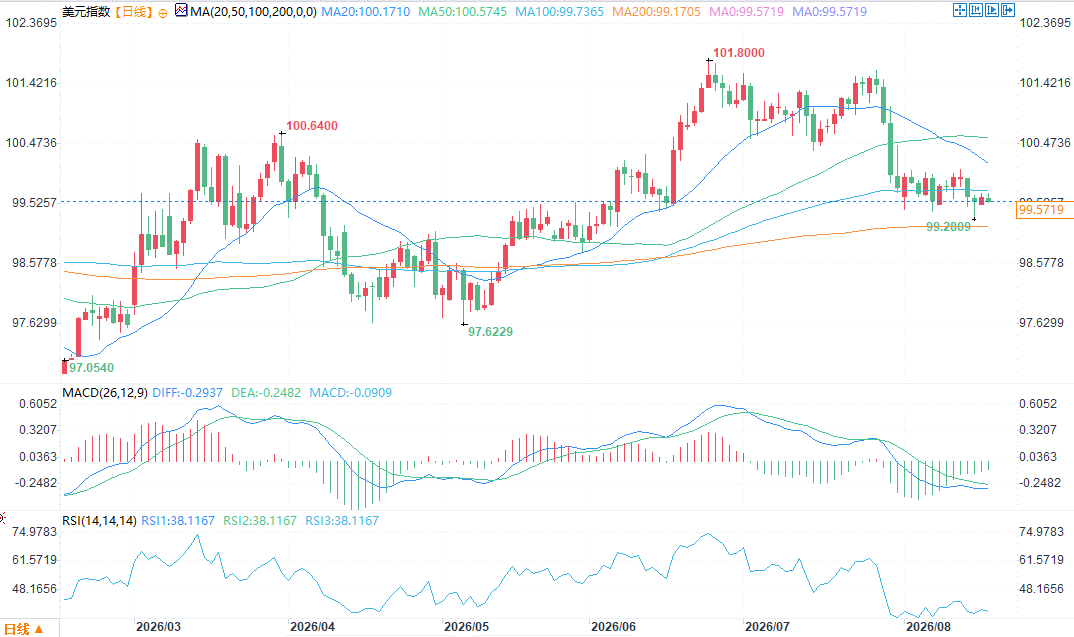 (US Dollar Index Daily Chart, Source: EasyForex) At 10:37 AM Beijing time on August 19, the US Dollar Index was at 99.57.
Geopolitics: Hormuz risk persists, safe-haven demand supports the US dollar.
Geopolitical risks between the US and Iran continue to escalate, and concerns about global energy supply disruptions persist, supporting safe-haven buying of the US dollar. With an agreement to end the conflict and reopen the Strait of Hormuz still a long way off, the market remains cautious. Trump confirmed that the US naval blockade is still in effect and there have been no negotiations with Tehran. Although officials say the waterway is open and mines have been cleared, shipping risks remain high, and passage is severely restricted. The persistently high geopolitical risk premium provides short-term support for the US dollar.Monetary Policy: Probability of a September rate hike drops to 35%, minutes become the focus
However, the dollar faces headwinds from monetary policy. US retail sales in July recorded their first month-on-month decline in nine months, coupled with unexpectedly weak non-farm payroll data and modest inflation readings, significantly weakening market expectations for a Fed rate hike in September. The CME FedWatch tool shows that the market's probability of a 25 basis point rate hike in September has fallen from 47% the previous month to 35%. The Fed kept interest rates unchanged at its July meeting, but three officials voted against a rate hike, marking the first time since September 2016 that there has been a three-way disagreement. The market is eagerly awaiting the upcoming meeting minutes to gain a deeper understanding of the extent of the internal divisions within the committee.US Treasury yield curve: Inflation concerns drive the curve steeper, further supporting the US dollar.
The US Treasury yield curve has recently steepened significantly, with inflation concerns being the core driver and further strengthening the buying momentum for the US dollar. Scotiabank strategists pointed out that mild risk aversion continued to provide broad support for the dollar throughout the day, with short-term interest rates only strengthening moderately, while long-term Treasury yields faced greater upward pressure due to rising inflation expectations. This divergence directly pushed the yield curve further steeper within its recent trading range, thus solidifying the intraday buying base for the dollar. Market concerns about inflation stickiness are intensifying, partly due to energy price volatility and potential supply shock risks, making long-term yields more sensitive to inflation premiums. Meanwhile, front-end interest rates are relatively stable due to expectations of Federal Reserve policy, resulting in limited volatility and highlighting the steepening of the curve. For the dollar, rising long-term yields often mean a widening real interest rate advantage, attracting cross-border capital inflows, thus providing support under the combined effect of risk aversion and interest rate differentials.Summarize
The US dollar index is currently trading around 99.55, with geopolitical safe-haven demand and shifting monetary policy expectations creating a balance between bullish and bearish sentiment. The US-Iran standoff and shipping risks in the Strait of Hormuz are providing tactical support for the dollar, but weak US data has reduced the probability of a September rate hike to 35%, constituting a ceiling for the dollar's upside. The FOMC minutes will be a key catalyst this week to break the balance—the degree of disagreement within the committee will determine the dollar's short-term direction. (US Dollar Index Daily Chart, Source: EasyForex) At 10:37 AM Beijing time on August 19, the US Dollar Index was at 99.57.
- Risk Warning and Disclaimer
- The market involves risk, and trading may not be suitable for all investors. This article is for reference only and does not constitute personal investment advice, nor does it take into account certain users’ specific investment objectives, financial situation, or other needs. Any investment decisions made based on this information are at your own risk.