Selling pressure on long-term US Treasury bonds eased temporarily, but the dollar fell first: How long can the Treasury's intervention signal last?
2026-08-20 18:56:58
On Thursday (August 20), the U.S. Treasury announced the previous day that it would double the size of its term liquidity repurchase operations, with each round of operations involving at least $4 billion, pushing long-term yields down rapidly overnight. During the European session on Thursday, the 10-year Treasury yield rose about 2 basis points to 4.67%, and the 30-year yield rose about 3 basis points to 5.23%, again approaching the 5.34% high reached on Tuesday. The dollar index fell nearly 1% on Wednesday, its biggest drop since March, and continued its slight weakening on Thursday. The repurchase operations conveyed to the market the policymakers' concern about rising long-term interest rates, but failed to reverse the pricing logic driven by inflation expectations and fiscal deficit pressures. 
 In the coming trading days, the market will likely oscillate between two key themes: policy intervention signals and fiscal fundamentals. Repurchase operations have reduced the tail risk of disorderly selling in the long term, but with no substantial improvement in term premiums and inflation expectations, yields are likely to remain volatile at high levels above their support range. The dollar's performance continues to be constrained by both real US Treasury yields and the recovery in risk appetite. If long-term yields repeatedly test recent highs, further dollar weakness may be limited. Attention should be paid to the Treasury's subsequent repurchase pace, the results of the 20-year bond auction, and the Fed's communication regarding its balance sheet reduction policy; these factors will determine the direction long-term yields will take near technical resistance levels.
Buyback signals and fundamental constraints: Short-term relief cannot resolve long-term contradictions.
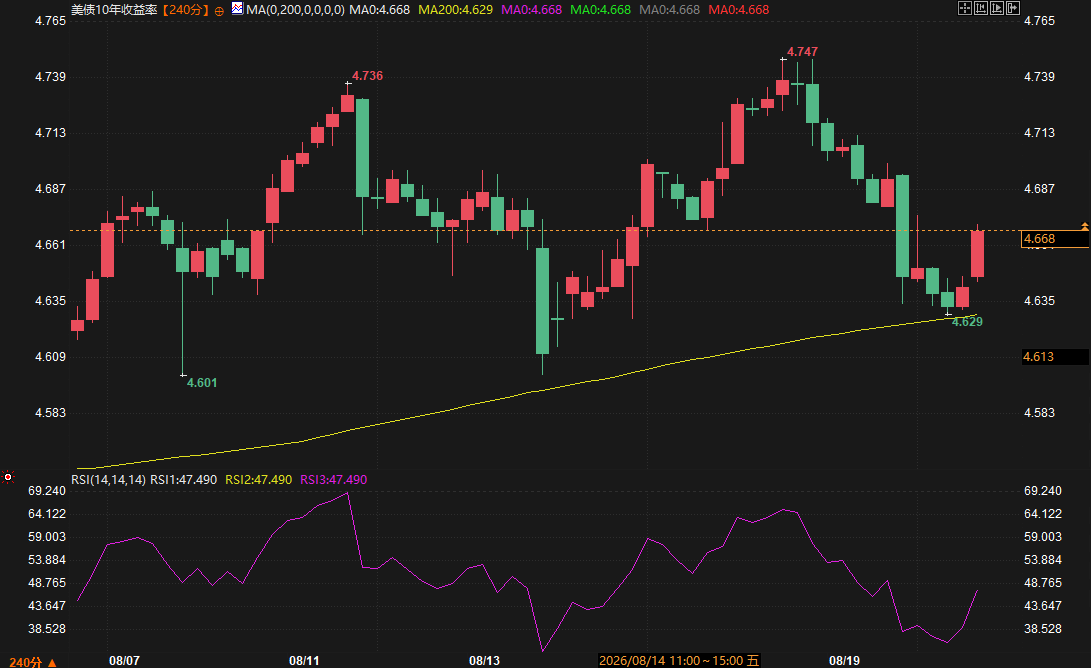
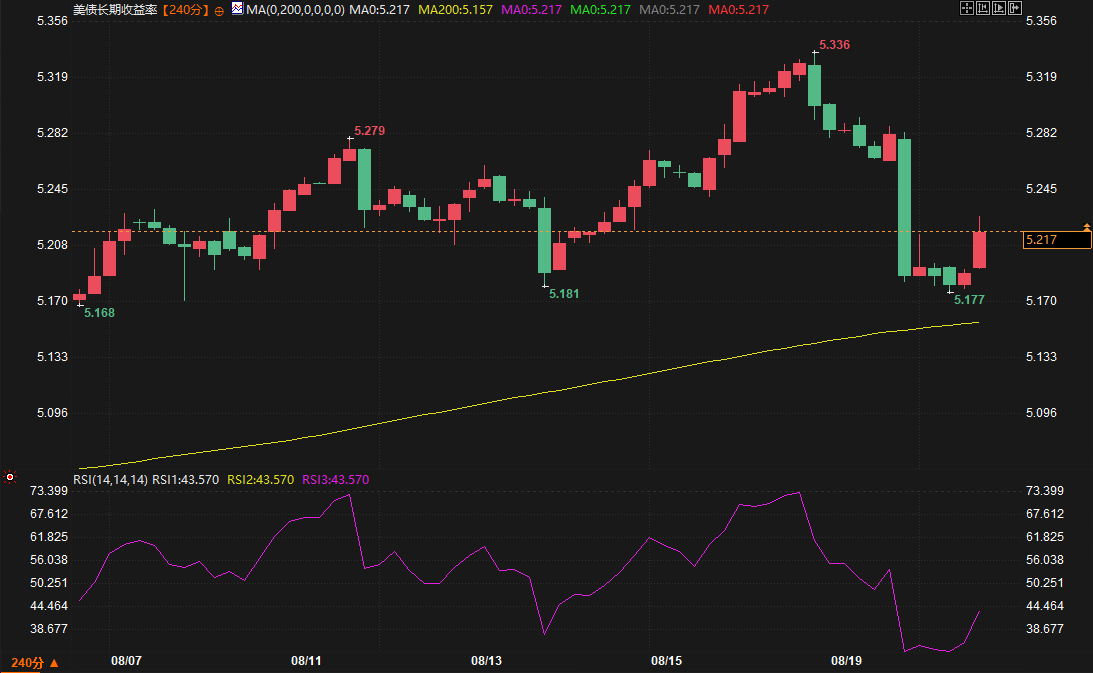
From a policy motivation perspective, the timing of this repurchase, announced on the same day as the 20-year Treasury auction and arranged within two months before the November election, is sensitive. Thomas Simons, an economist at Jefferies, believes the decision breaks with the usual transparency of financing decisions and is similar in style to recent yen intervention, carrying a certain emergency element. JPMorgan Chase analysis points out that the repurchase itself cannot change the core issues of unsustainable fiscal deficits and rising inflation expectations. Eric Robertson, Global Head of Research at Standard Chartered, stated that the rise in US Treasury yields is not driven by irrational market conditions; the current operation is more like an expression of the willingness to intervene at a certain yield level. Chris Turner, Global Head of Markets at ING, suggests that this move at least marginally reduces the probability of disorderly selling at the long end, supporting risk appetite while putting slight pressure on the dollar. In terms of fundamentals, the public's holdings of US Treasury bonds are approaching $32 trillion, with total outstanding debt exceeding $40 trillion, and the annual deficit has remained above 5.5% for six consecutive years. The 10-year term premium has risen to a 12-year high, reflecting the market's increased demand for risk compensation for holding long-term bonds. Federal Reserve Chairman Walsh's balance sheet reforms may lead to further expectations of balance sheet reduction, coupled with increased corporate bond issuance, leaving the long-term supply and demand structure still unfavorable. Repurchase agreements only change the debt maturity structure, not the total debt amount, and their suppression of the term premium is likely temporary. Technically, the 10-year Treasury yield on the 240-minute chart is oscillating between 4.601 and 4.747, currently at 4.668, above the 200-day moving average (MA200) (4.629), with an RSI of approximately 47.5, indicating a slightly weaker-to-neutral stance. Support levels are at 4.629 and 4.601, while resistance levels are at 4.736 and 4.747. The 30-year yield has fallen from 5.336 to 5.217, with the MA200 at 5.157 and an RSI of approximately 43.6, indicating weakening momentum after the initial rise. Support is concentrated in the 5.157-5.177 range, with secondary support at 5.168, and resistance at 5.279 and 5.336. The key focus during the session is whether the 10-year moving average can hold above 4.629; a break below this level could lead to a test of 4.601. Conversely, if the 30-year moving average regains 5.279, it could potentially challenge 5.336 again. In the coming trading days, the market will likely oscillate between two key themes: policy intervention signals and fiscal fundamentals. Repurchase operations have reduced the tail risk of disorderly selling in the long term, but with no substantial improvement in term premiums and inflation expectations, yields are likely to remain volatile at high levels above their support range. The dollar's performance continues to be constrained by both real US Treasury yields and the recovery in risk appetite. If long-term yields repeatedly test recent highs, further dollar weakness may be limited. Attention should be paid to the Treasury's subsequent repurchase pace, the results of the 20-year bond auction, and the Fed's communication regarding its balance sheet reduction policy; these factors will determine the direction long-term yields will take near technical resistance levels.Frequently Asked Questions
Why does the Treasury's repurchase operations lower long-term yields? Repurchases replace older, less liquid bonds with new ones, improving market liquidity and signaling the policymakers' focus on long-term interest rates. This operation doesn't change the total debt, but it has a significant calming effect on short-term sentiment. Can repurchases sustainably lower US Treasury yields? It's unlikely to be sustainable. The scale of repurchases is very limited relative to the $32 trillion stock market, and it doesn't address core pricing factors such as fiscal deficits, inflation expectations, and balance sheet reduction expectations. Upward pressure on long-term yields remains. How should we observe the key ranges for 10-year and 30-year US Treasury yields? Support levels for the 10-year yield are 4.629 and 4.601, with resistance levels at 4.736 and 4.747; support levels for the 30-year yield are 5.157-5.177, with resistance levels at 5.279 and 5.336. Prices are oscillating between support and resistance, and the direction is unclear. What is the correlation between a weakening dollar and US Treasury yields? If the downside for US Treasury prices is limited by policy intervention, overseas investors may adjust their portfolio returns through exchange rate channels. Deutsche Bank strategist George Saravilos believes that if US Treasury market prices do not adjust downwards, a weaker dollar will become the adjustment method for overseas holders. What variables need to be monitored going forward? Attention should be paid to the demand in 20-year Treasury auctions, the pace of Treasury repurchase operations, the Fed's communication regarding its balance sheet reduction path, and the squeeze on long-term supply and demand from corporate bond issuance. These variables will determine the direction of yields near technical resistance levels.- Risk Warning and Disclaimer
- The market involves risk, and trading may not be suitable for all investors. This article is for reference only and does not constitute personal investment advice, nor does it take into account certain users’ specific investment objectives, financial situation, or other needs. Any investment decisions made based on this information are at your own risk.