Cooling US inflation has dampened expectations of interest rate hikes, causing the US dollar index to weaken further.
2026-08-21 13:20:59
The US dollar index came under renewed pressure in Asian trading on Friday, falling back to the 98.80-98.75 range, a daily decline of about 0.1%, as the previous rebound from lows near 98.50 failed to continue. The dollar index is now approaching its lowest levels since mid-May, with a significant overall decline this week. The market's repricing of the outlook for US monetary policy is the main driver of the recent dollar weakness.  Previously released US inflation data showed relatively mild performance, lowering investors' expectations for an immediate interest rate hike by the Federal Reserve. With no clear signs of inflationary pressures spiraling out of control, the market believes the Fed still has room to wait for more economic data. Lower interest rate expectations typically reduce the attractiveness of dollar-denominated assets and put downward pressure on the dollar index. News of the US Treasury expanding its long-term debt buyback program initially pressured long-term Treasury yields and further weakened the dollar. However, this effect was short-lived. As inflationary risks from rising energy prices re-emerged, US Treasury yields rebounded, providing some support for the dollar. Changes in the oil market are a crucial variable in the current dollar trend. International oil prices hit a three-week high on Thursday, mainly driven by Middle East supply risks and further US pressure on Iran. The US signaled stricter economic restrictions and warned countries helping Iran circumvent sanctions or continuing business with Iran could face serious consequences. If these measures further impact Iranian oil exports and regional shipping, energy prices may remain high. Rising oil prices will increase inflationary pressures in the US and globally, thereby reducing market expectations for a rapid shift to easing by the Fed. Therefore, while rising energy prices typically put pressure on risk assets, in the current environment they could provide policy support for the US dollar by pushing up inflation expectations. The market has not yet completely ruled out the possibility of further interest rate hikes by the Federal Reserve. Interest rate market data shows that investors still expect a probability of at least one rate hike by the Fed before the end of this year, at around 68%. This expectation means that the US interest rate advantage has not completely disappeared, explaining why the dollar index still has some support after falling to lower levels. The trend of US Treasury yields is also worth noting. If long-term yields continue to rise, the dollar may receive renewed inflows, limiting the downside potential of the dollar index; conversely, if US economic data weakens further, yields fall again, and expectations of rate hikes cool further, the dollar index may continue to seek support at lower levels. From a global market perspective, the dollar is currently influenced by interest rate expectations, energy prices, and safe-haven demand simultaneously. As a major global safe-haven currency, the US dollar typically attracts capital inflows when geopolitical risks escalate. Therefore, even if US monetary policy expectations are bearish for the dollar, escalating tensions in the Middle East may still limit short sellers from establishing large-scale short positions in the dollar. Recent dollar weakness has also provided some support for gold, silver, and other dollar-denominated commodities. Especially given the high prices of precious metals, further dollar weakness could amplify the upward momentum in commodity markets. However, if energy prices continue to push up US inflation and cause the Fed's policy expectations to shift hawkish again, the dollar and US Treasury yields may rebound in tandem, potentially putting pressure on precious metals. The market will need to focus on the US Purchasing Managers' Index, inflation data, employment data, and speeches by Fed officials. If US economic activity cools significantly while inflation continues to decline, the dollar index may continue its weakness; if energy prices rise further and drive a rebound in inflation expectations, the probability of a Fed rate hike may increase again, providing an opportunity for a dollar rebound. From a daily chart perspective, the dollar index is currently still in a bearish state, with the price trading below the 200-day simple moving average of 99.16, indicating that the medium-term trend has not yet shown a clear reversal signal. The US dollar index previously failed to hold above the 78.6% Fibonacci retracement level of 98.52, reflecting limited bullish momentum. After the price returned to around 98.80, bears still hold a certain advantage. The first resistance level to watch is the 200-day moving average around 99.16, followed by the 61.8% Fibonacci retracement level around 99.22. The 99.16-99.22 range is currently the most important resistance zone for the US dollar index. If the index fails to break through this resistance zone, it may test the 98.50 area or even lower; a break above 99.22 would alleviate the short-term bearish structure. Looking at the 4-hour chart, the US dollar index previously saw a technical rebound from around 98.50, but the rebound was weak and has now weakened again. If the price continues to trade below 99.00 in the short term, the market may retest the support around 98.50. A break below this area could open up further downside potential. Conversely, if US economic data improves, US Treasury yields continue to rise, and the US dollar index climbs back above 99.16, a short-term reversal signal may form on the 4-hour chart. Overall, the current technical structure remains bearish, but given that the dollar is near its recent lows, shorting should be approached with caution due to the potential for a rapid rebound driven by geopolitical risks and changes in interest rate expectations.
 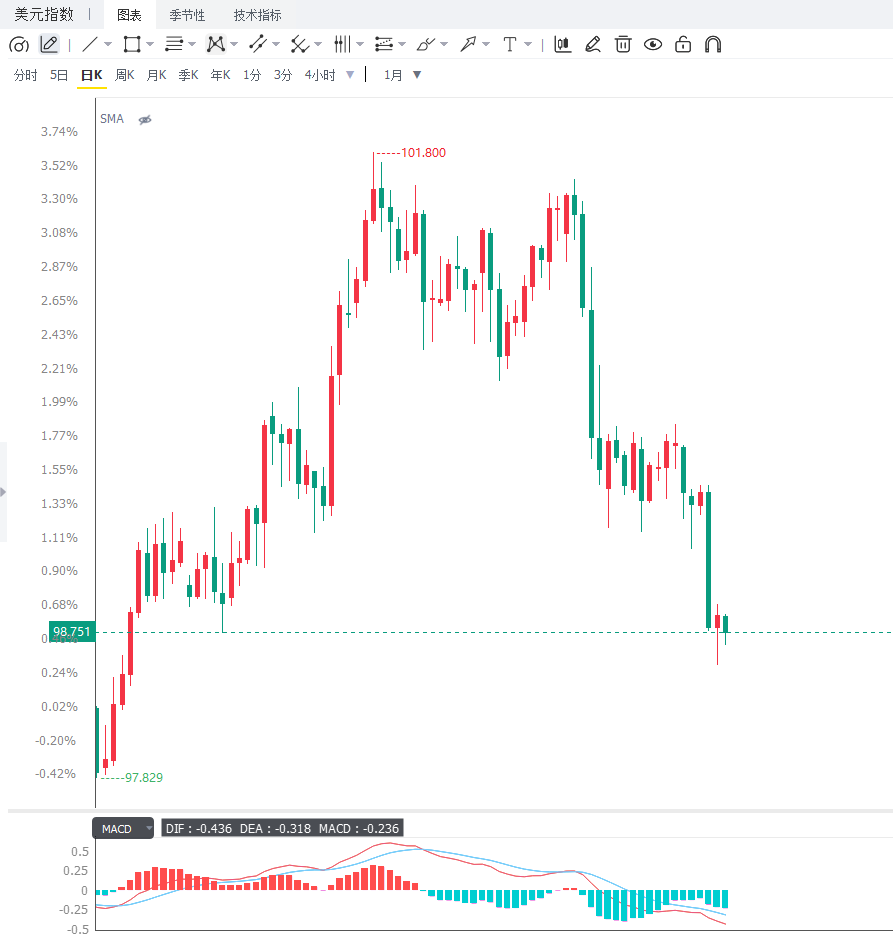 Editor's Summary: The recent weakening of the US dollar index is primarily due to moderate US inflation data and reduced market expectations for a near-term Fed rate hike. However, rising oil prices have renewed inflation risks, and the possibility of a rate hike before the end of the year still provides policy support for the dollar. In the short term, the area around 98.50 is a key support level, while 99.16 to 99.22 is a crucial resistance level that will determine the extent of any dollar rebound. If the dollar continues to fall below 98.50, the weakness may extend further; if US Treasury yields continue to rise and push the dollar above 99.22, the previous decline may enter a period of correction. Overall, the dollar remains weak in the short term, but shorting should wait for new confirmation signals.
Previously released US inflation data showed relatively mild performance, lowering investors' expectations for an immediate interest rate hike by the Federal Reserve. With no clear signs of inflationary pressures spiraling out of control, the market believes the Fed still has room to wait for more economic data. Lower interest rate expectations typically reduce the attractiveness of dollar-denominated assets and put downward pressure on the dollar index. News of the US Treasury expanding its long-term debt buyback program initially pressured long-term Treasury yields and further weakened the dollar. However, this effect was short-lived. As inflationary risks from rising energy prices re-emerged, US Treasury yields rebounded, providing some support for the dollar. Changes in the oil market are a crucial variable in the current dollar trend. International oil prices hit a three-week high on Thursday, mainly driven by Middle East supply risks and further US pressure on Iran. The US signaled stricter economic restrictions and warned countries helping Iran circumvent sanctions or continuing business with Iran could face serious consequences. If these measures further impact Iranian oil exports and regional shipping, energy prices may remain high. Rising oil prices will increase inflationary pressures in the US and globally, thereby reducing market expectations for a rapid shift to easing by the Fed. Therefore, while rising energy prices typically put pressure on risk assets, in the current environment they could provide policy support for the US dollar by pushing up inflation expectations. The market has not yet completely ruled out the possibility of further interest rate hikes by the Federal Reserve. Interest rate market data shows that investors still expect a probability of at least one rate hike by the Fed before the end of this year, at around 68%. This expectation means that the US interest rate advantage has not completely disappeared, explaining why the dollar index still has some support after falling to lower levels. The trend of US Treasury yields is also worth noting. If long-term yields continue to rise, the dollar may receive renewed inflows, limiting the downside potential of the dollar index; conversely, if US economic data weakens further, yields fall again, and expectations of rate hikes cool further, the dollar index may continue to seek support at lower levels. From a global market perspective, the dollar is currently influenced by interest rate expectations, energy prices, and safe-haven demand simultaneously. As a major global safe-haven currency, the US dollar typically attracts capital inflows when geopolitical risks escalate. Therefore, even if US monetary policy expectations are bearish for the dollar, escalating tensions in the Middle East may still limit short sellers from establishing large-scale short positions in the dollar. Recent dollar weakness has also provided some support for gold, silver, and other dollar-denominated commodities. Especially given the high prices of precious metals, further dollar weakness could amplify the upward momentum in commodity markets. However, if energy prices continue to push up US inflation and cause the Fed's policy expectations to shift hawkish again, the dollar and US Treasury yields may rebound in tandem, potentially putting pressure on precious metals. The market will need to focus on the US Purchasing Managers' Index, inflation data, employment data, and speeches by Fed officials. If US economic activity cools significantly while inflation continues to decline, the dollar index may continue its weakness; if energy prices rise further and drive a rebound in inflation expectations, the probability of a Fed rate hike may increase again, providing an opportunity for a dollar rebound. From a daily chart perspective, the dollar index is currently still in a bearish state, with the price trading below the 200-day simple moving average of 99.16, indicating that the medium-term trend has not yet shown a clear reversal signal. The US dollar index previously failed to hold above the 78.6% Fibonacci retracement level of 98.52, reflecting limited bullish momentum. After the price returned to around 98.80, bears still hold a certain advantage. The first resistance level to watch is the 200-day moving average around 99.16, followed by the 61.8% Fibonacci retracement level around 99.22. The 99.16-99.22 range is currently the most important resistance zone for the US dollar index. If the index fails to break through this resistance zone, it may test the 98.50 area or even lower; a break above 99.22 would alleviate the short-term bearish structure. Looking at the 4-hour chart, the US dollar index previously saw a technical rebound from around 98.50, but the rebound was weak and has now weakened again. If the price continues to trade below 99.00 in the short term, the market may retest the support around 98.50. A break below this area could open up further downside potential. Conversely, if US economic data improves, US Treasury yields continue to rise, and the US dollar index climbs back above 99.16, a short-term reversal signal may form on the 4-hour chart. Overall, the current technical structure remains bearish, but given that the dollar is near its recent lows, shorting should be approached with caution due to the potential for a rapid rebound driven by geopolitical risks and changes in interest rate expectations. Editor's Summary: The recent weakening of the US dollar index is primarily due to moderate US inflation data and reduced market expectations for a near-term Fed rate hike. However, rising oil prices have renewed inflation risks, and the possibility of a rate hike before the end of the year still provides policy support for the dollar. In the short term, the area around 98.50 is a key support level, while 99.16 to 99.22 is a crucial resistance level that will determine the extent of any dollar rebound. If the dollar continues to fall below 98.50, the weakness may extend further; if US Treasury yields continue to rise and push the dollar above 99.22, the previous decline may enter a period of correction. Overall, the dollar remains weak in the short term, but shorting should wait for new confirmation signals.
- Risk Warning and Disclaimer
- The market involves risk, and trading may not be suitable for all investors. This article is for reference only and does not constitute personal investment advice, nor does it take into account certain users’ specific investment objectives, financial situation, or other needs. Any investment decisions made based on this information are at your own risk.