The foreign exchange market is shifting towards "currency devaluation trading".
2026-08-24 18:28:59
Benefiting from the rapid rebound in US Treasury yields, the US dollar found support near a three-month low and its trend has stabilized. The 30-year US Treasury yield is returning to the level corresponding to the announcement following the Treasury's announcement that it would increase the minimum bond-buying program to $4 billion. The decline and weakening of US stock indices, the continued rise in Brent crude oil prices, and a series of positive US economic data have all contributed to providing bottom support for the US dollar. 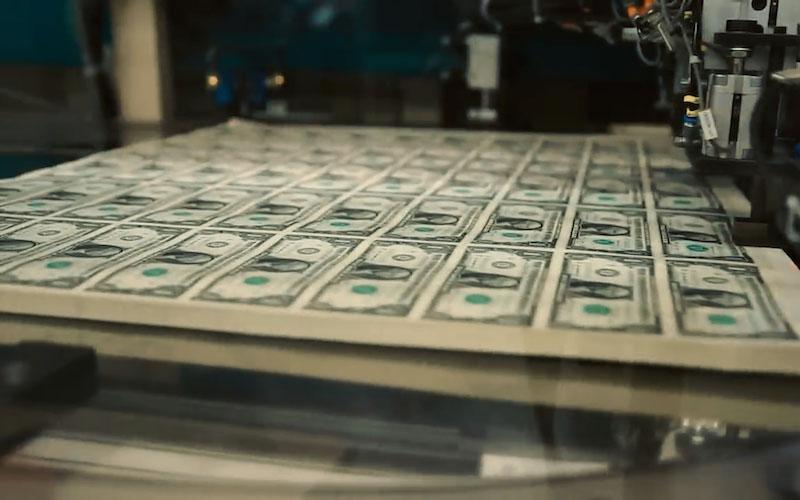 S&P Global's Purchasing Managers' Index (PMI) surged to 56 in August, the highest reading since April 2022. Bloomberg analysts have raised their forecast for US third-quarter GDP growth from 2% to 2.5%. The rise in US Treasury yields is driven not only by geopolitical risks, fiscal deficits, or the competitive effect of corporate bonds issued by large technology companies; the strong resilience of the US economy could also further fuel high inflation, indirectly pushing up Treasury yields. Goldman Sachs points out that the only way to lower US Treasury yields is to achieve a decline in inflation. To achieve this, Kevin Warsh cannot continue to let the market adjust itself and must begin tightening monetary policy. The upcoming Jackson Hole Economic Symposium is precisely the most crucial and appropriate stage to release such policy signals, and market participants are closely watching the statements made at this meeting. The US Treasury's policy intention to control Treasury yields has once again activated the logic of "currency devaluation trades." The policy operations of monetary authorities in various countries have continuously eroded market confidence in bonds and fiat currencies, prompting a large outflow of capital from the bond and foreign exchange markets to seek safe havens and value preservation opportunities in other asset classes. Decentralized assets, represented by gold, have been particularly favored by market funds. This market pattern is very similar to the logic of typical carry trades: when global markets are concerned about the outlook for the US dollar, capital in the foreign exchange market flows to low-interest currencies such as the Swiss franc and the Japanese yen. In traditional carry trades, the Swiss franc and the Japanese yen often serve as funding currencies; however, with the current market concerns about declining US Treasury yields, a large number of previously established carry trade positions are being liquidated, further amplifying the buying power of these two currencies. The Swiss franc's appreciation has been exceptionally strong, forcing the Swiss National Bank to intervene in the exchange rate. Petrarchudin, a member of the Swiss National Bank's Governing Council, stated that in order to keep inflation stable within the target range of 0-2%, regulators do not rule out the possibility of re-implementing negative interest rate policies.
S&P Global's Purchasing Managers' Index (PMI) surged to 56 in August, the highest reading since April 2022. Bloomberg analysts have raised their forecast for US third-quarter GDP growth from 2% to 2.5%. The rise in US Treasury yields is driven not only by geopolitical risks, fiscal deficits, or the competitive effect of corporate bonds issued by large technology companies; the strong resilience of the US economy could also further fuel high inflation, indirectly pushing up Treasury yields. Goldman Sachs points out that the only way to lower US Treasury yields is to achieve a decline in inflation. To achieve this, Kevin Warsh cannot continue to let the market adjust itself and must begin tightening monetary policy. The upcoming Jackson Hole Economic Symposium is precisely the most crucial and appropriate stage to release such policy signals, and market participants are closely watching the statements made at this meeting. The US Treasury's policy intention to control Treasury yields has once again activated the logic of "currency devaluation trades." The policy operations of monetary authorities in various countries have continuously eroded market confidence in bonds and fiat currencies, prompting a large outflow of capital from the bond and foreign exchange markets to seek safe havens and value preservation opportunities in other asset classes. Decentralized assets, represented by gold, have been particularly favored by market funds. This market pattern is very similar to the logic of typical carry trades: when global markets are concerned about the outlook for the US dollar, capital in the foreign exchange market flows to low-interest currencies such as the Swiss franc and the Japanese yen. In traditional carry trades, the Swiss franc and the Japanese yen often serve as funding currencies; however, with the current market concerns about declining US Treasury yields, a large number of previously established carry trade positions are being liquidated, further amplifying the buying power of these two currencies. The Swiss franc's appreciation has been exceptionally strong, forcing the Swiss National Bank to intervene in the exchange rate. Petrarchudin, a member of the Swiss National Bank's Governing Council, stated that in order to keep inflation stable within the target range of 0-2%, regulators do not rule out the possibility of re-implementing negative interest rate policies.
- Risk Warning and Disclaimer
- The market involves risk, and trading may not be suitable for all investors. This article is for reference only and does not constitute personal investment advice, nor does it take into account certain users’ specific investment objectives, financial situation, or other needs. Any investment decisions made based on this information are at your own risk.