Is confidence in the US dollar returning?
2026-08-25 19:27:00
Many traders in the market are beginning to reassess the medium- to long-term value of the US dollar. Amidst a series of escalating geopolitical and trade events, the dollar's safe-haven status is once again being heavily evaluated by market funds. Investors are also speculating whether this round of dollar rebound is merely a short-term impulsive move or the beginning of a new trend. The US sanctions against Iran, known as "economic isolation," have provided upward momentum for the dollar. 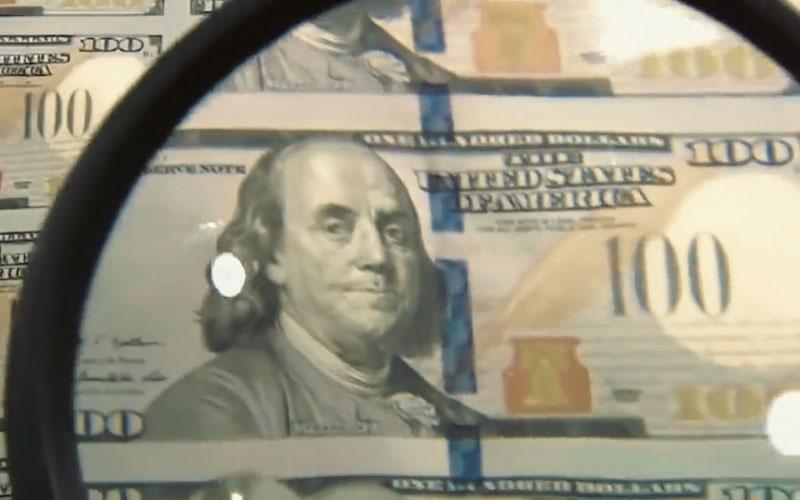 This sanctions package is not a simple list-based punishment, but a multi-dimensional economic containment strategy. It not only directly targets the assets of relevant entities but also utilizes multiple intelligence channels to track the Iranian oil smuggling routes. This further amplifies risk aversion in global markets, indirectly boosting safe-haven buying of the US dollar. Crude oil prices fell after the news was released, consistent with the market's "buy the rumor, sell the fact" trading pattern, but the medium- to long-term outlook for Brent crude remains bullish. Influenced by escalating trade tensions between the US and Canada, widespread US sanctions against Iran, and a simultaneous decline in stock indices, the US dollar began a three-day rebound from its May lows. Market risk appetite cooled rapidly, leading to increased demand for the US dollar, a traditional safe-haven asset. Scott Bessant spearheaded "Operation Economic Isolation" against Iran. This operation imposed sanctions on over 60 entities and comprehensively monitored all hubs, intermediaries, and networks in Tehran used for oil smuggling and circumventing sanctions. Brent crude oil prices retreated after six consecutive days of gains, perfectly illustrating the market principle of "buy the rumor, sell the fact." However, from a long-term perspective, Iran's international isolation poses a potential downside risk to the oil market. Iranian oil supply will further contract, which will drive oil prices higher in the future. The biggest variable now lies in China's reaction. Without China's cooperation, completely cutting off Iranian oil access to the global market is virtually impossible. Meanwhile, if the two sides fail to reach a proper solution, this could trigger a new round of trade conflicts, dragging down global economic growth. This pessimistic outlook has prompted investors to seek safe-haven assets, with the US dollar becoming a safe haven. At the same time, the market is increasingly aware that the implementation of these sanctions is based on the dollar-centric monetary system, which remains firmly in place. The strong inertia of the dollar settlement system allows various cross-border sanctions to be implemented efficiently, which in turn reinforces the dollar's core position in global trade and financial settlements. Even though many countries have been attempting to de-dollarize, it will be difficult to shake this mature system that has been operating for many years in the short term. Another risk stems from the breakdown of US-Canada negotiations and the US imposing large-scale tariffs on Canada. Canada has signaled that it will implement retaliatory tariffs of equal scale, raising the risk of further escalation. As a result, the USD/CAD pair experienced its best single-day performance in two months. The escalating trade friction will simultaneously dampen economic expectations in both countries. The US dollar, with its stronger resilience, has attracted speculative funds into the USD/CAD pair, amplifying its short-term volatility. After a prolonged period of gains, profit-taking by bulls, coupled with a stronger dollar, has caused gold to retreat from its recent highs. Even so, the core logic for gold – the "currency devaluation trading logic" – remains valid. Bullish traders can wait for the right opportunity to launch a new round of upward movement. The global economic environment remains relatively loose, and the long-term dilution of the purchasing power of paper money remains unchanged. This provides a fundamental support for gold; the short-term pullback is merely profit-taking during the upward trend and will not directly reverse the overall bullish trend in gold. The USD/JPY pair has resumed its upward trend and is steadily approaching the 160 level. Once the price reaches this level, the risk of verbal intervention by the Bank of Japan, and even subsequent direct intervention in the exchange rate, will increase significantly. Futures market pricing indicates an 82% probability of a rate hike by the Bank of Japan in September, and a series of speeches by Bank of Japan officials will likely confirm this market expectation. If the price breaks through the psychological level of 160, the statement from the Japanese monetary authorities will become the focus of the market, and traders need to be wary of a rapid reversal caused by intervention; if the central bank releases a hawkish signal, it will also limit the further upside potential of USD/JPY.
This sanctions package is not a simple list-based punishment, but a multi-dimensional economic containment strategy. It not only directly targets the assets of relevant entities but also utilizes multiple intelligence channels to track the Iranian oil smuggling routes. This further amplifies risk aversion in global markets, indirectly boosting safe-haven buying of the US dollar. Crude oil prices fell after the news was released, consistent with the market's "buy the rumor, sell the fact" trading pattern, but the medium- to long-term outlook for Brent crude remains bullish. Influenced by escalating trade tensions between the US and Canada, widespread US sanctions against Iran, and a simultaneous decline in stock indices, the US dollar began a three-day rebound from its May lows. Market risk appetite cooled rapidly, leading to increased demand for the US dollar, a traditional safe-haven asset. Scott Bessant spearheaded "Operation Economic Isolation" against Iran. This operation imposed sanctions on over 60 entities and comprehensively monitored all hubs, intermediaries, and networks in Tehran used for oil smuggling and circumventing sanctions. Brent crude oil prices retreated after six consecutive days of gains, perfectly illustrating the market principle of "buy the rumor, sell the fact." However, from a long-term perspective, Iran's international isolation poses a potential downside risk to the oil market. Iranian oil supply will further contract, which will drive oil prices higher in the future. The biggest variable now lies in China's reaction. Without China's cooperation, completely cutting off Iranian oil access to the global market is virtually impossible. Meanwhile, if the two sides fail to reach a proper solution, this could trigger a new round of trade conflicts, dragging down global economic growth. This pessimistic outlook has prompted investors to seek safe-haven assets, with the US dollar becoming a safe haven. At the same time, the market is increasingly aware that the implementation of these sanctions is based on the dollar-centric monetary system, which remains firmly in place. The strong inertia of the dollar settlement system allows various cross-border sanctions to be implemented efficiently, which in turn reinforces the dollar's core position in global trade and financial settlements. Even though many countries have been attempting to de-dollarize, it will be difficult to shake this mature system that has been operating for many years in the short term. Another risk stems from the breakdown of US-Canada negotiations and the US imposing large-scale tariffs on Canada. Canada has signaled that it will implement retaliatory tariffs of equal scale, raising the risk of further escalation. As a result, the USD/CAD pair experienced its best single-day performance in two months. The escalating trade friction will simultaneously dampen economic expectations in both countries. The US dollar, with its stronger resilience, has attracted speculative funds into the USD/CAD pair, amplifying its short-term volatility. After a prolonged period of gains, profit-taking by bulls, coupled with a stronger dollar, has caused gold to retreat from its recent highs. Even so, the core logic for gold – the "currency devaluation trading logic" – remains valid. Bullish traders can wait for the right opportunity to launch a new round of upward movement. The global economic environment remains relatively loose, and the long-term dilution of the purchasing power of paper money remains unchanged. This provides a fundamental support for gold; the short-term pullback is merely profit-taking during the upward trend and will not directly reverse the overall bullish trend in gold. The USD/JPY pair has resumed its upward trend and is steadily approaching the 160 level. Once the price reaches this level, the risk of verbal intervention by the Bank of Japan, and even subsequent direct intervention in the exchange rate, will increase significantly. Futures market pricing indicates an 82% probability of a rate hike by the Bank of Japan in September, and a series of speeches by Bank of Japan officials will likely confirm this market expectation. If the price breaks through the psychological level of 160, the statement from the Japanese monetary authorities will become the focus of the market, and traders need to be wary of a rapid reversal caused by intervention; if the central bank releases a hawkish signal, it will also limit the further upside potential of USD/JPY.
- Risk Warning and Disclaimer
- The market involves risk, and trading may not be suitable for all investors. This article is for reference only and does not constitute personal investment advice, nor does it take into account certain users’ specific investment objectives, financial situation, or other needs. Any investment decisions made based on this information are at your own risk.