The Canadian dollar is under pressure! Oil prices are falling and the trade war is escalating, but PCE data may be the deciding factor.
2026-08-26 11:35:05
On Wednesday (August 26) during Asian trading hours, the US dollar rose slightly against the Canadian dollar, trading around 1.3850. Although still within the previous day's trading range, it has now initially broken above the 200-day moving average of 1.3843. Crude oil prices fell to a two-week low due to hopes for a diplomatic solution between the US and Iran, weakening the Canadian dollar's performance; the escalating US-Canada trade war further pressured the Canadian dollar. However, the US dollar remained constrained overall – the continued cooling of expectations for a Fed rate hike, the decline in US Treasury yields, and hopes for a diplomatic solution between the US and Iran all limited the dollar's upside potential. The market is focusing on Wednesday's US PCE data for more clues about the Fed's policy path. Regarding the US-Canada trade war, Canada announced retaliatory tariffs on US goods in response to the US imposing a 50% tariff on $20 billion worth of Canadian goods. 
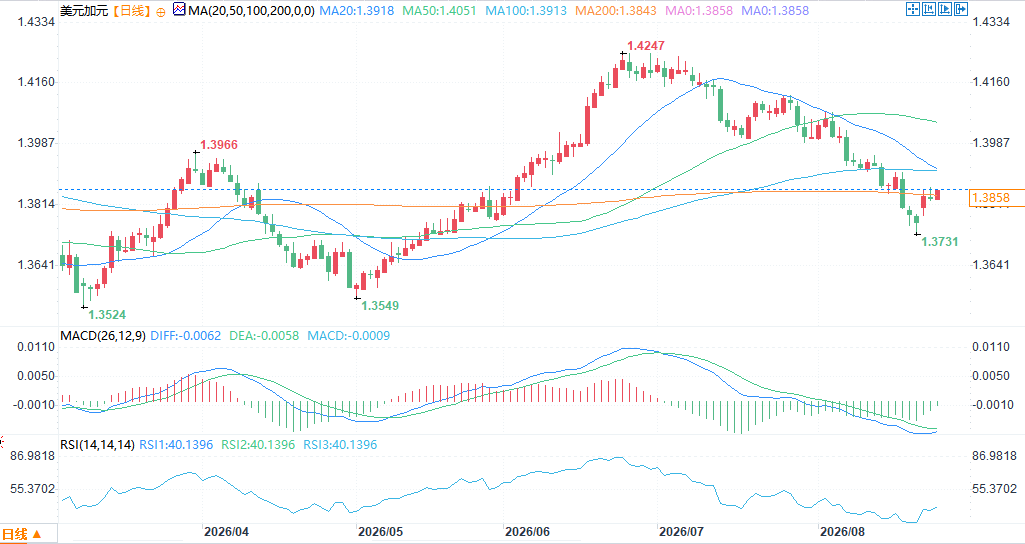 (USD/CAD daily chart, source: EasyForex) At 11:30 Beijing time on August 26, the USD/CAD exchange rate was 1.3857/58.
Weaker oil prices and the trade war put pressure on the Canadian dollar, but a weaker US dollar limited its upside.
The USD/CAD pair edged higher in Asian trading, hovering around 1.3850 with relatively limited intraday volatility. Crude oil prices fell to a two-week low on hopes of a diplomatic solution between the US and Iran, becoming a major factor weighing on the Canadian dollar. Markets are focused on a proposed US solution—sanctions relief and the lifting of the naval blockade in exchange for the reopening of the Strait of Hormuz and a halt to proxy attacks. This prospect of a diplomatic breakthrough significantly reduces the risk of supply disruptions, pushing oil prices lower and thus weakening the Canadian dollar as a commodity currency. Meanwhile, the US-Canada trade friction further pressured the Canadian dollar. Canada announced retaliatory tariffs on US goods in response to the US imposing a 50% tariff on approximately C$20 billion worth of goods. Canada's countermeasures cover multiple categories, including steel, aluminum, furniture, clothing, dairy products, and electrical appliances, with tariffs reaching up to 50%, expected to take effect on September 8th, roughly equivalent in scale to the US measures. The escalating trade war increases bilateral economic uncertainty, putting pressure on the Canadian dollar. Despite these negative factors for the Canadian dollar, the weakness of the US dollar itself limited the upside potential for the USD/CAD pair. The upward momentum around 1.3850 failed to extend further, indicating insufficient bullish momentum. The market is generally in a wait-and-see mode, awaiting a clearer catalyst to break the current narrow trading range. While the dual pressures of oil prices and trade frictions are unfavorable for the Canadian dollar, they have not completely offset the constraints from the US dollar.The US dollar remains constrained by cooling interest rate hike expectations and US Treasury repurchase agreements.
The upside potential of the US dollar continues to be constrained by multiple factors. The generally moderate US inflation data for July reinforced market reassessment of the Federal Reserve's policy path. Previously, some traders had priced in a September rate hike, but with accumulating evidence of declining inflation, expectations have cooled significantly, and the mainstream view has shifted to holding rates steady. This shift directly weakened the dollar's interest rate support. Media reports indicate that the US Treasury may use nearly $1 trillion from its total Treasury account to support expanded long-term bond repurchase operations. This move aims to further lower US Treasury yields and alleviate pressure on the long-term market. Lower yields typically weigh on the dollar as they reduce the relative attractiveness of holding dollar assets. Hopes for a diplomatic solution between the US and Iran have also weakened safe-haven demand for the dollar, and geopolitical risk premiums have declined. In summary, cooling expectations of a rate hike, potential large-scale repurchase operations, and weakened risk aversion have collectively limited the dollar's rebound. Even with the Canadian dollar facing dual pressures from oil prices and the trade war, the dollar's own weakness makes a significant one-sided rise in the USD/CAD exchange rate unlikely. The market tends to maintain cautious trading while awaiting further policy and data signals.This week's focus: PCE data and policy path clues
The market is highly focused on the US PCE price index, due on Wednesday. As the Federal Reserve's most closely watched inflation indicator, the core PCE will provide crucial evidence of whether price pressures are continuing to ease and directly influence pricing in the September policy meeting. If the data remains moderate, it will further solidify expectations of no change in interest rates; a surprise rebound could reignite discussions about rate hikes. Before the PCE data release, the USD/CAD pair is likely to continue fluctuating within the 1.3800-1.3900 range, awaiting a new catalyst. Traders need to closely monitor data details, including the difference between the overall and core readings, and the degree of deviation from previous forecasts. Furthermore, subsequent speeches by Fed officials and other economic data may provide supplementary clues. Overall, this week's PCE will be a key watershed for short-term exchange rate direction. Against the backdrop of intertwined factors such as oil prices, trade frictions, and expectations regarding dollar policy, the data results will determine whether the market continues its current range-bound trading or breaks out of its existing equilibrium.Summarize
Crude oil prices fell to a two-week low on hopes for a diplomatic solution to the US-Iran conflict, weakening the Canadian dollar; escalating trade tensions between the US and Canada further pressured the Canadian dollar. However, the US dollar's upside was limited – cooling expectations of interest rate hikes, declining US Treasury yields, and renewed hopes for a diplomatic solution to the US-Iran conflict. The market is focused on Wednesday's PCE data for clues about the Federal Reserve's policy path. The exchange rate is expected to fluctuate within the 1.3800-1.3900 range in the short term, awaiting guidance from the US PCE data, and watching whether it can hold above the 200-day moving average support. (USD/CAD daily chart, source: EasyForex) At 11:30 Beijing time on August 26, the USD/CAD exchange rate was 1.3857/58.
- Risk Warning and Disclaimer
- The market involves risk, and trading may not be suitable for all investors. This article is for reference only and does not constitute personal investment advice, nor does it take into account certain users’ specific investment objectives, financial situation, or other needs. Any investment decisions made based on this information are at your own risk.